

I bought my first set of living room curtains based purely on the color and pattern, grabbed the standard length off the shelf without really thinking about it, and hung them up expecting the room to instantly look pulled together. Instead, they ended up hovering a few awkward inches above the floor, which somehow made the whole window look smaller and the ceiling lower than it actually was. It wasn’t until I actually measured properly and understood the different length options available that I realized curtain length isn’t a minor afterthought, it’s one of the details that most affects whether a room reads as polished or slightly off, even when everything else is decorated well.
Getting curtain length right comes down to a handful of measurements and a clear sense of which look you’re going for, floor-length, puddling, or something shorter for a specific practical reason. Here’s how to actually get it right the first time.
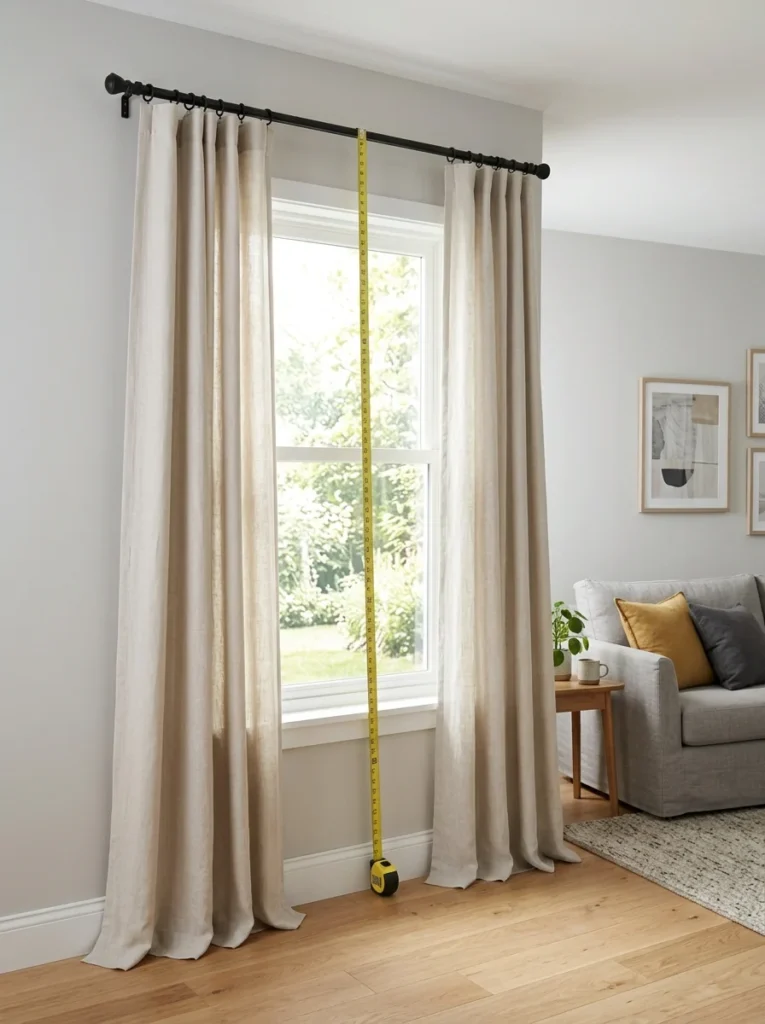
Understand the standard curtain length options
Curtains typically come in a handful of standard lengths, most commonly around sixty-three, eighty-four, ninety-six, and one hundred eight inches, though exact options vary by retailer. These standard lengths are designed to accommodate a range of ceiling heights and rod placements, but they won’t automatically fit your specific window and rod setup without checking your own room’s measurements first, which is exactly the mistake that left my first curtains hovering awkwardly above the floor.
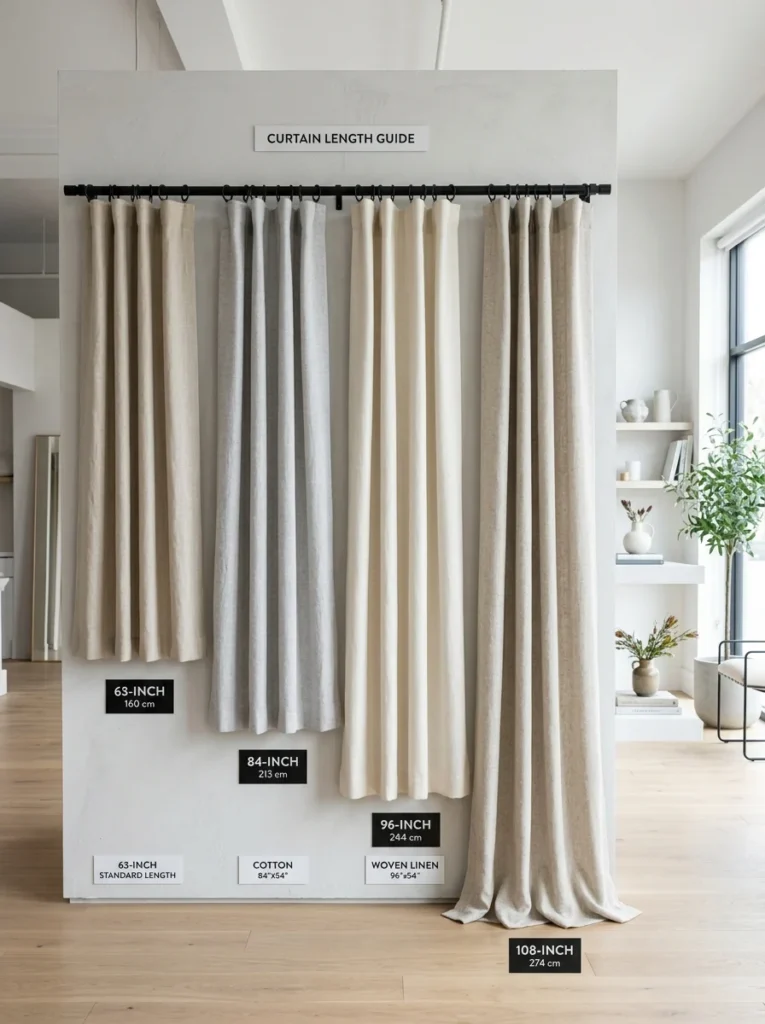
Measure from the rod, not the window frame
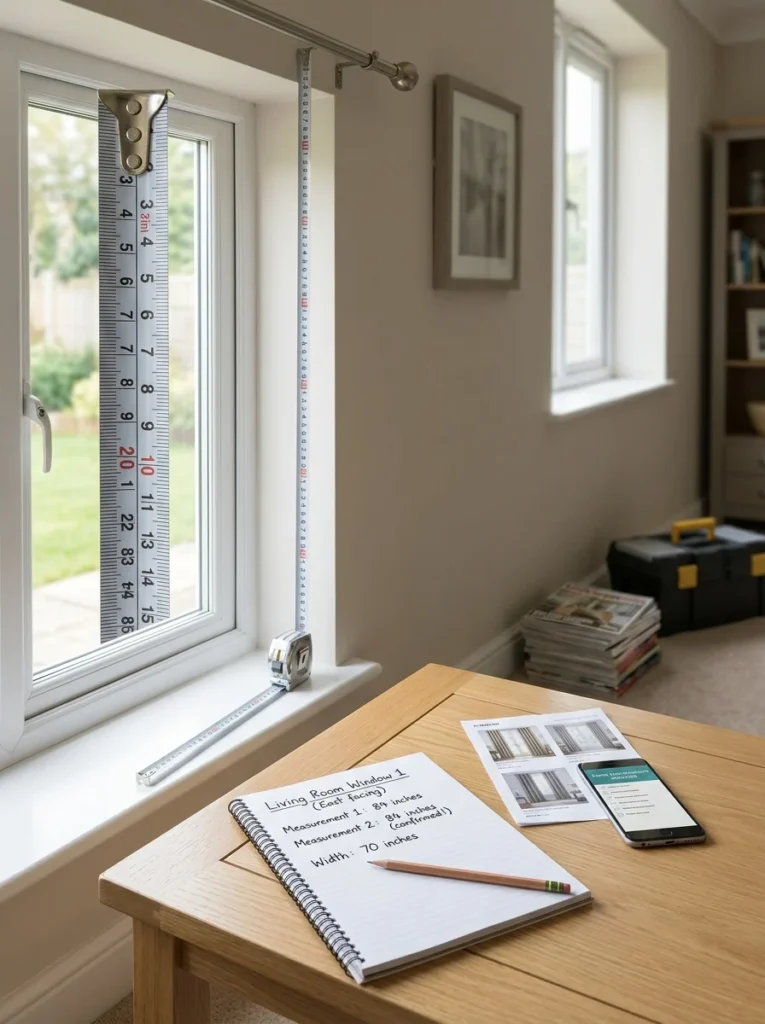
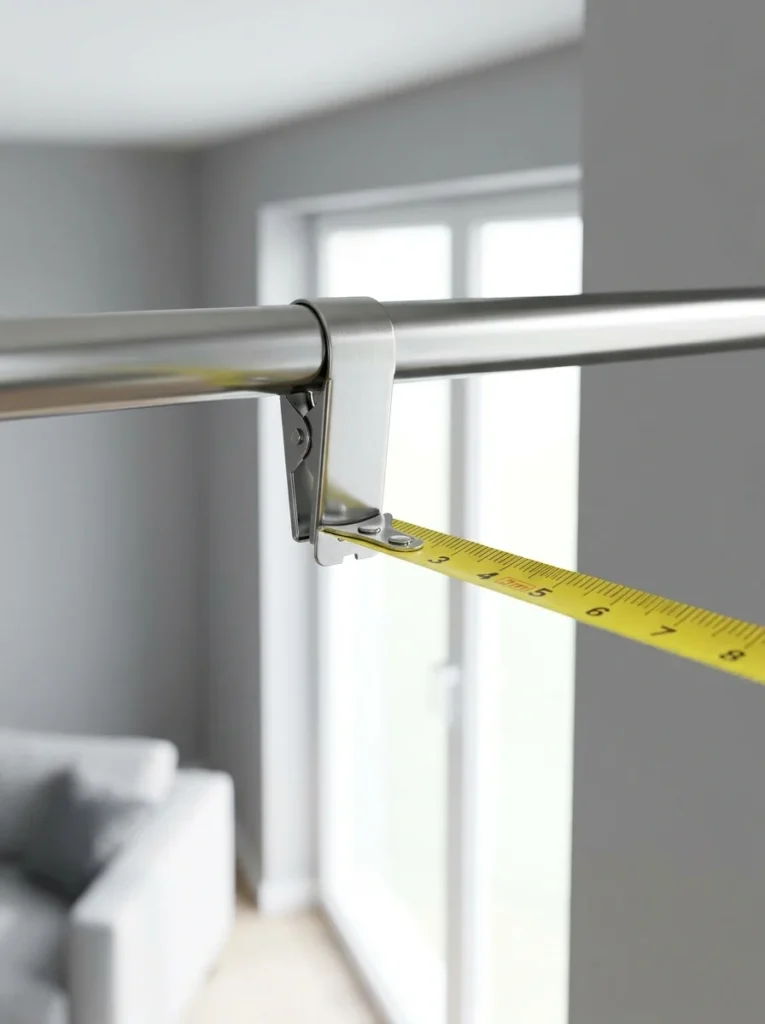
The single most important measurement for getting curtain length right is measuring from where the curtain rod itself will sit, not from the top of the window frame, since these are rarely the same height once you factor in proper rod placement for style and light control. Using a steel tape measure, measure straight down from the rod’s exact height to whichever floor point you’re aiming for, the true floor, just above the floor, or a slight puddle, since even a small measuring error compounds into a curtain that visibly hangs wrong once installed.
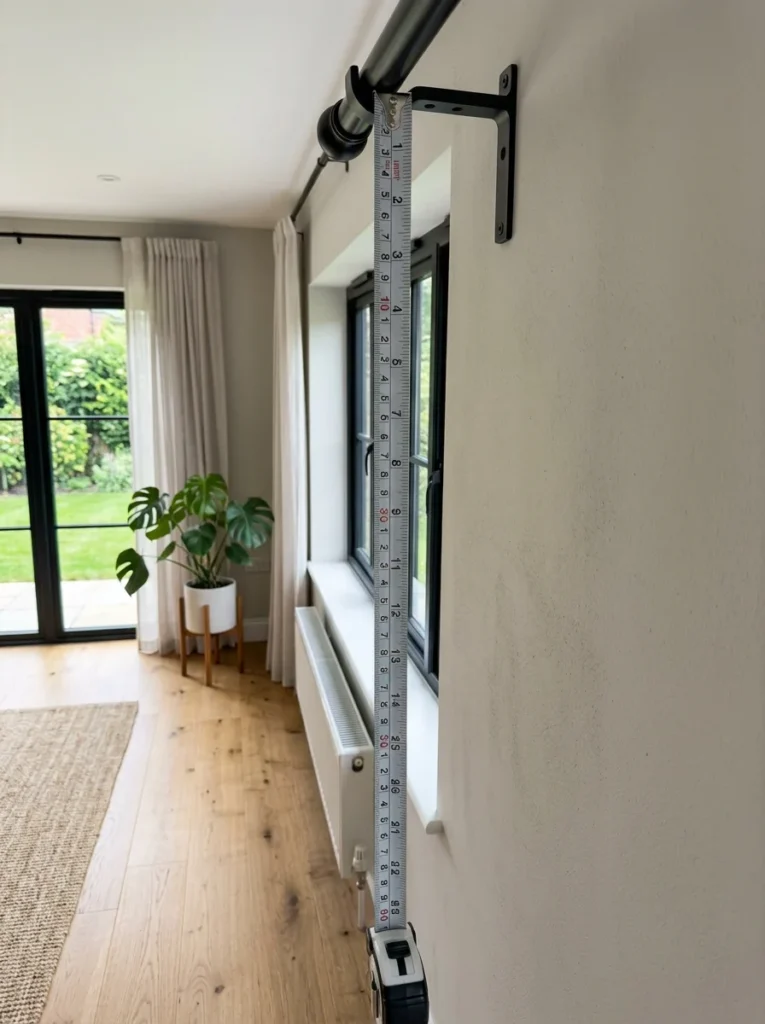
Choose the floor-grazing length for a clean, tailored look
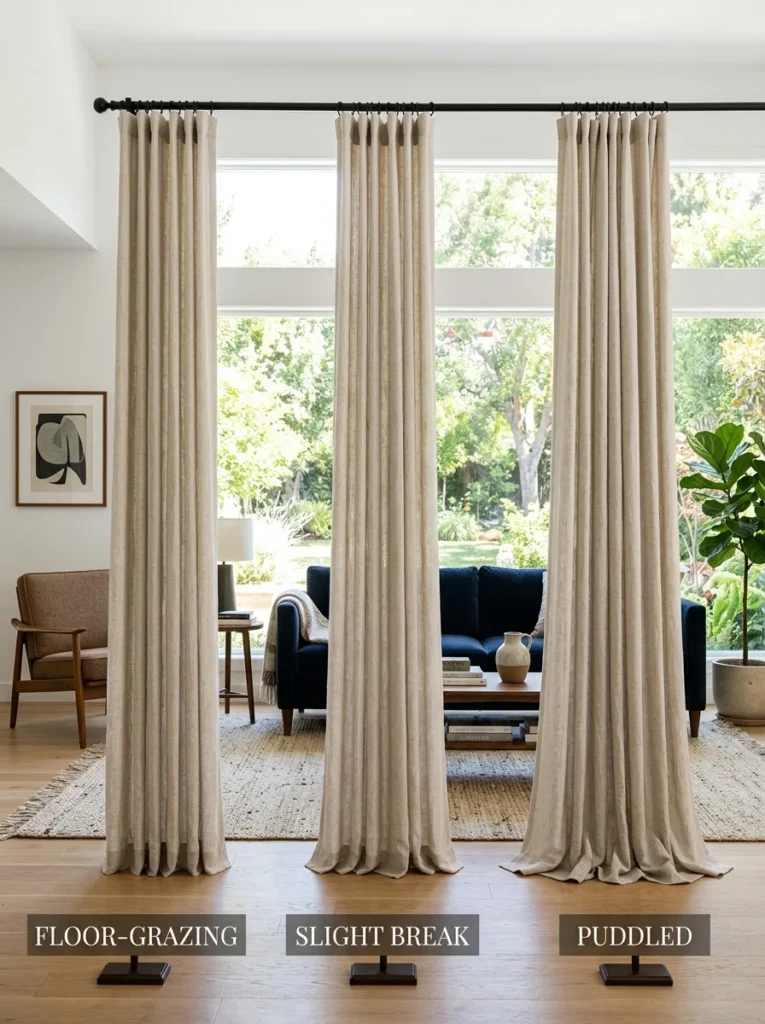
A floor-grazing length, where the curtain hem sits just barely above the floor, roughly half an inch to an inch, creates a crisp, tailored appearance that reads as intentional and precise rather than either too short or overly dramatic. This length works particularly well in a more modern or minimalist living room where clean lines and precision are the goal, and it’s generally the safest, most universally flattering choice if you’re unsure which specific length to choose for your space.

Consider a slight break for a softer, more relaxed feel
A curtain with a slight break, where the fabric just touches the floor and creates a small, soft fold similar to how dress pants break over a shoe, offers a more relaxed, lived-in look compared to the precise floor-grazing length. This works well in a more traditional or transitional living room where a bit of softness and informality suits the overall design better than a crisp, exact hem.

Choose a puddle length for a formal, dramatic statement
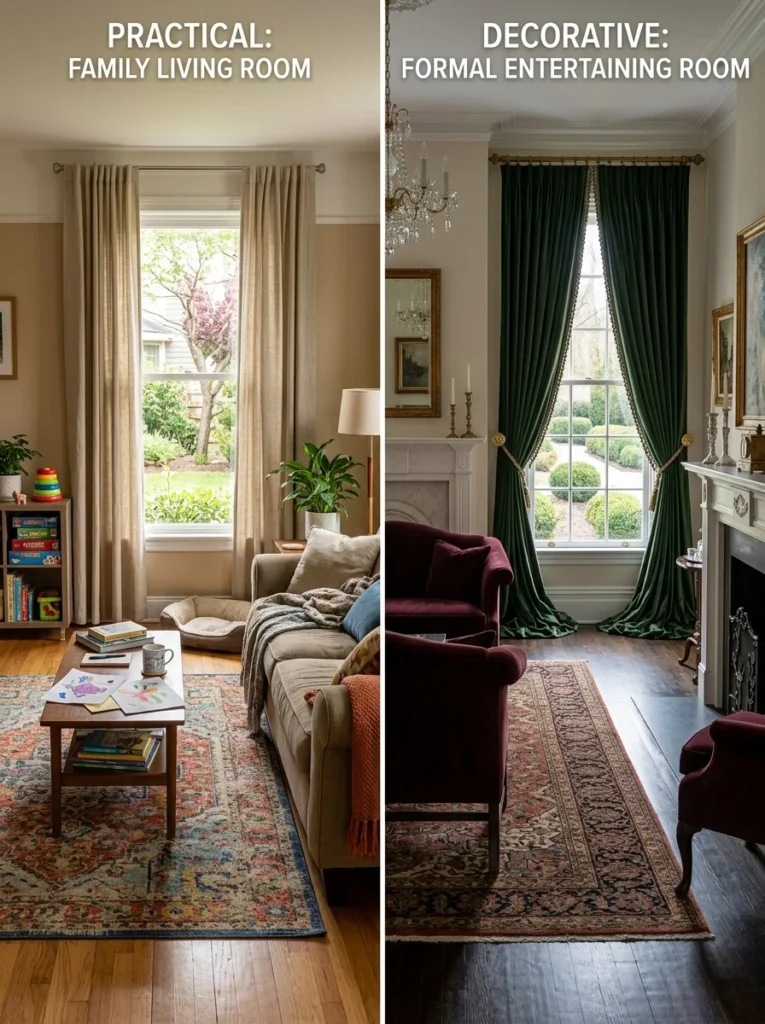
A puddled curtain, where several extra inches of fabric pool onto the floor, creates a luxurious, dramatic look often associated with more formal or traditional interior design. This length requires notably more fabric, and by extension a higher cost, and it’s genuinely more difficult to keep looking neat over time, since the pooled fabric needs occasional straightening and collects more dust than a curtain that doesn’t touch the floor at all. Puddling works best in a formal living room that sees relatively low foot traffic directly in front of the window, rather than a busy family space where the extra fabric would quickly become impractical.

Consider an above-the-floor length for practical reasons
In specific situations, a radiator beneath the window, a high-traffic area where longer fabric would be a tripping hazard, or a household with pets that might snag or soil longer fabric, a curtain intentionally hemmed a few inches above the floor can be the more practical choice despite floor-length generally being considered the more polished default. If practicality genuinely outweighs the slightly more finished look of a floor-length curtain in your specific situation, this shorter option is a reasonable, deliberate choice rather than a compromise.
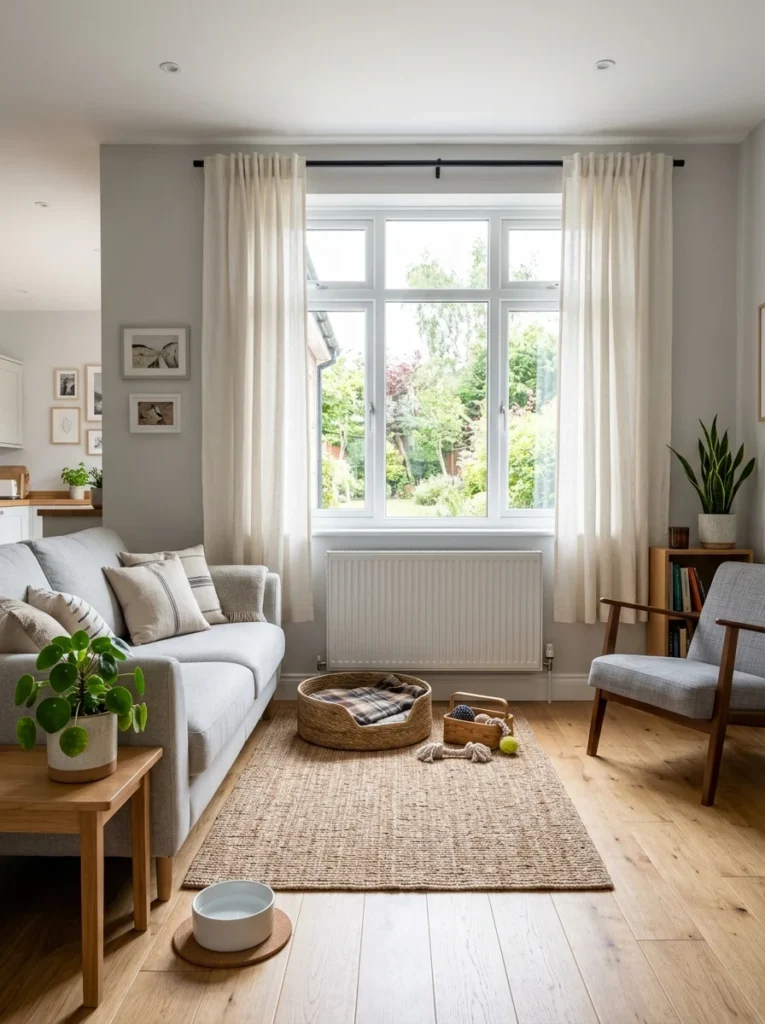
Account for rod placement when calculating total length
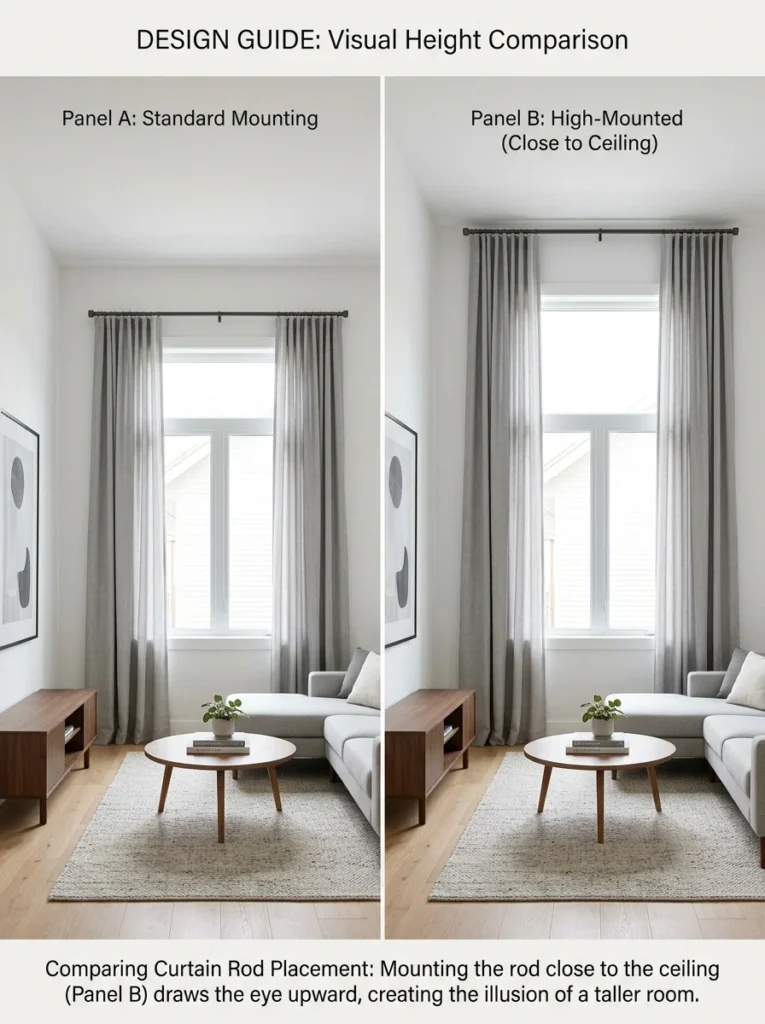
Where you mount the curtain rod significantly affects your final length calculation, and rod placement itself is worth getting right before ever ordering curtains. Mounting the rod higher than the window frame, closer to the ceiling, and extending it several inches wider than the window frame on each side, makes a window appear larger and the ceiling feel taller, a common and effective styling trick, but it also means your curtains need to be considerably longer than the window’s own height alone would suggest, since the total drop is measured from the higher rod position all the way down to the floor.
Measure multiple times before ordering or hemming
Because curtain length mistakes are difficult and sometimes costly to fix after the fact, particularly with ready-made curtains that can’t easily be lengthened if cut too short, measuring your intended rod height and desired floor relationship at least twice, ideally on two different occasions, helps catch any measuring error before you commit to a purchase or a hem. This extra diligence upfront avoids the frustrating scenario of curtains arriving that are noticeably too short or unexpectedly puddle far more than intended.
Know when to buy custom or have curtains hemmed
If your ceiling height or desired rod placement doesn’t align well with any standard ready-made curtain length, custom curtains, or ready-made ones professionally hemmed to your exact measurement, ensure a precise fit rather than settling for an imperfect standard length that’s either too long and needs awkward folding under, or too short and hovering unattractively above the floor. This costs more than a standard ready-made option, but it’s often worth the investment for a genuinely tailored, professional-looking result, particularly in a prominent room like a living room where the curtains are a significant visual element.

Consider the room’s proportions, not just the exact measurement
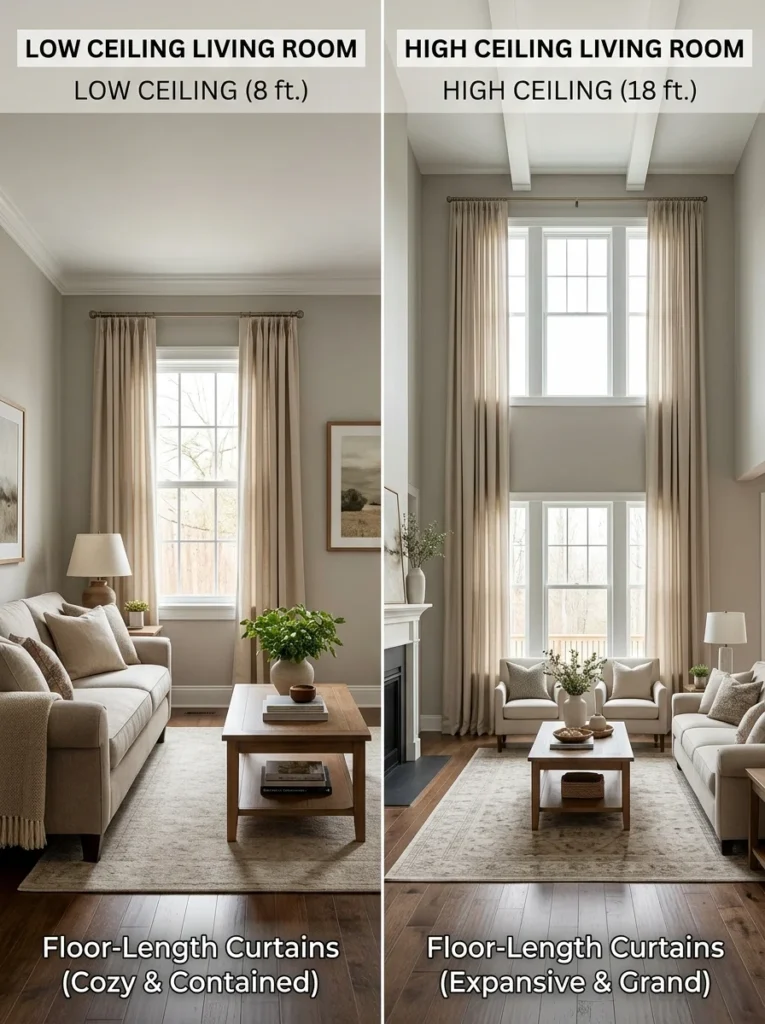
Beyond the precise measurement itself, consider how the curtain length interacts with your specific room’s proportions; a very tall ceiling with floor-to-ceiling curtains reads dramatically different than the same length curtain in a room with a standard eight-foot ceiling. In a room with lower ceilings, floor-length curtains mounted high above the window frame can help the room feel taller than it actually is, while in a room with already tall ceilings, this effect matters less and other length choices become more about style preference than a functional trick for improving perceived proportions.
Match curtain length to the practical use of the space
A living room that doubles as a high-traffic family space, with kids or pets regularly moving through the area directly in front of the window, generally benefits from a floor-grazing or even slightly above-floor length rather than a dramatic puddle that would quickly become impractical and require constant readjustment. A more formal living room used primarily for entertaining, with less regular foot traffic directly at the window, has more flexibility to embrace a fuller puddle length without the same practical downsides.
Consider fabric weight alongside length
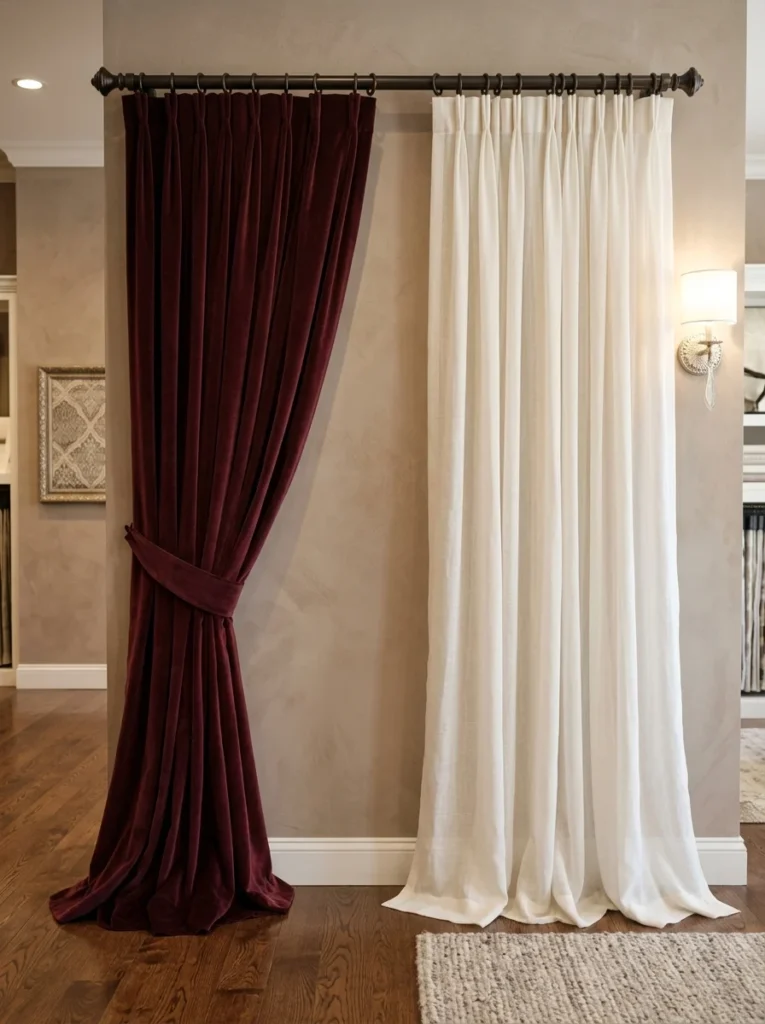
The way a curtain’s length actually reads in the room depends partly on the fabric’s weight and drape, since a heavier fabric, like a velvet or a lined cotton, holds a puddle or break more elegantly than a very lightweight sheer, which tends to look thin and slightly limp if it stops short of the floor without pooling. If you’re set on a specific length effect, a soft break or a gentle puddle, choosing a fabric weight that naturally supports that look, rather than fighting against a fabric too flimsy or too stiff for the intended effect, makes a noticeable difference in the finished result beyond the measurement alone.
Double-check hem finishing before final installation
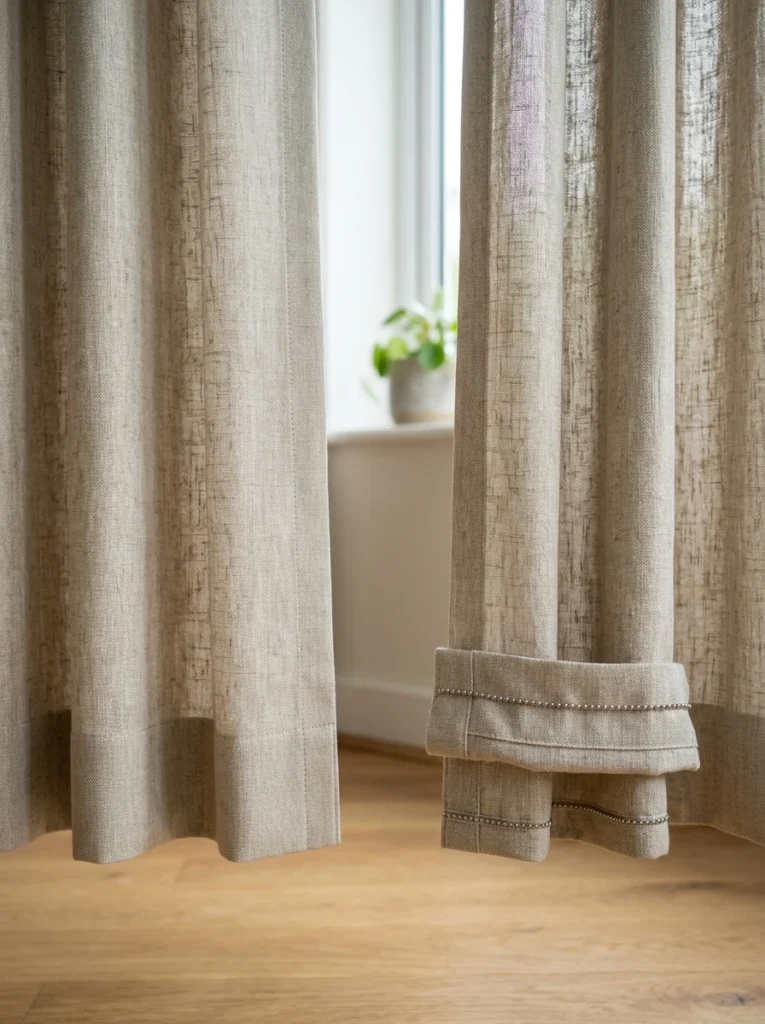
A curtain’s hem finish, whether it’s a simple straight hem or a weighted hem with a discreet chain sewn along the bottom edge, affects how consistently the fabric hangs and holds its intended length over time. A weighted hem in particular helps a curtain hang straight and resist billowing from drafts or air conditioning, which keeps your carefully measured length looking consistent day to day rather than shifting and bunching unpredictably. Checking this detail before final installation, and adding a weighted hem tape yourself if the curtains don’t already include one, is a small step that protects the polished look you’ve worked to measure and achieve.
Should curtains touch the floor?
For most living rooms, curtains that just graze the floor or have a slight break create the most polished, versatile look. Full puddling is a more formal, dramatic choice best suited to lower-traffic spaces, while stopping a few inches above the floor works well for practical reasons like a nearby radiator or high foot traffic.
How do I measure for curtain length correctly?
Measure straight down from the exact height where the curtain rod will be mounted to your desired floor relationship, whether that’s just above the floor, grazing it, or puddling, using a steel tape measure rather than estimating, since even small errors become noticeable once the curtains are hung.
What curtain length is best for a room with low ceilings?
Mounting the rod high above the window frame and choosing floor-length curtains that extend all the way down makes a room with lower ceilings feel taller, since the extended vertical line draws the eye upward and creates the illusion of additional height.

Is it better to buy standard length curtains or have them custom hemmed?
If a standard ready-made length happens to align well with your specific rod height and ceiling, standard curtains work fine and cost less. If your measurements fall between standard sizes or you want a precisely tailored result, custom curtains or professional hemming of ready-made panels ensures a more exact, polished fit.

The right length changes everything
Choosing the right curtain length comes down to measuring accurately from the actual rod position, deciding which floor relationship, above, grazing, or puddling, suits your room’s style and practical needs, and accounting for how rod placement itself affects the room’s overall proportions. This single detail, more than color or pattern in many cases, is what separates curtains that look intentional and polished from ones that look slightly off despite an otherwise well-decorated room.
My own living room’s curtains, once awkwardly hovering above the floor from that first rushed purchase, now hang with a clean, precise floor-grazing length that finally makes the whole window, and the room around it, look considerably more finished. If you’re about to buy or hang your own curtains, measure from the rod first, twice, before you order anything; that single step will save you from the exact mistake that sent me back to the store for a second, more carefully measured set.