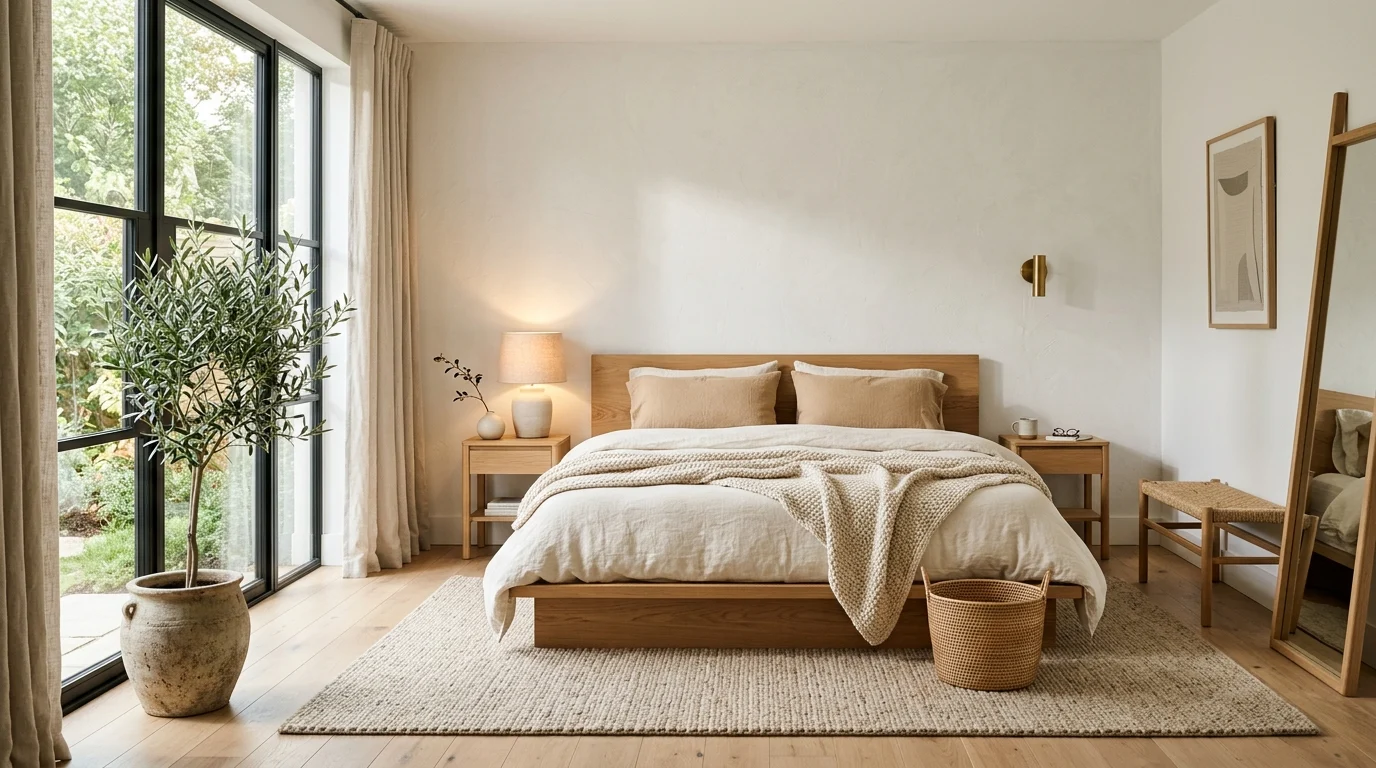
My first attempt at a minimalist bedroom left me with a room that technically had very little in it, and also felt genuinely cold and uninviting, more like a hotel room I was passing through than a bedroom I actually wanted to spend time in. I’d stripped away clutter and extra furniture, which was the right instinct, but I’d also stripped away texture, warmth, and any real personality along with it, mistaking emptiness for minimalism. It took a second, more thoughtful attempt to understand that genuine minimalist design isn’t about having as little as possible; it’s about being deliberate with what stays, and that distinction is what finally made the room feel calm and inviting rather than just sparse.
A minimalist bedroom that still feels warm comes down to choosing quality over quantity, layering texture even within a restrained color palette, and understanding that minimalism is a filter for intentionality, not a mandate for emptiness. Here’s how to actually achieve that balance.
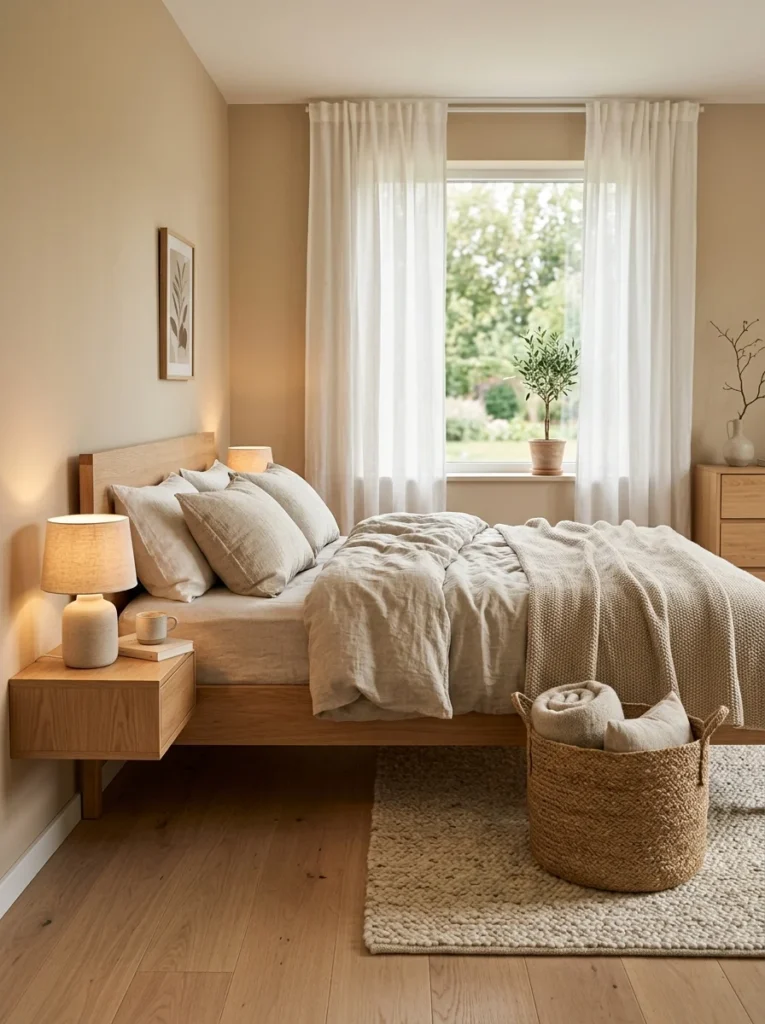
Start with a warm, not stark, color palette
The coldest-feeling minimalist rooms tend to lean on stark white and grey almost exclusively, which can read as clinical rather than calm. Choosing warmer neutrals instead, soft creams, warm greiges, gentle taupes, or a muted, earthy tone, maintains the calm, uncluttered feeling central to minimalist design while avoiding the sterile quality that gives minimalism its cold reputation. A single warmer accent color, used sparingly through one or two elements rather than throughout the room, can add just enough visual interest without compromising the overall restrained palette.
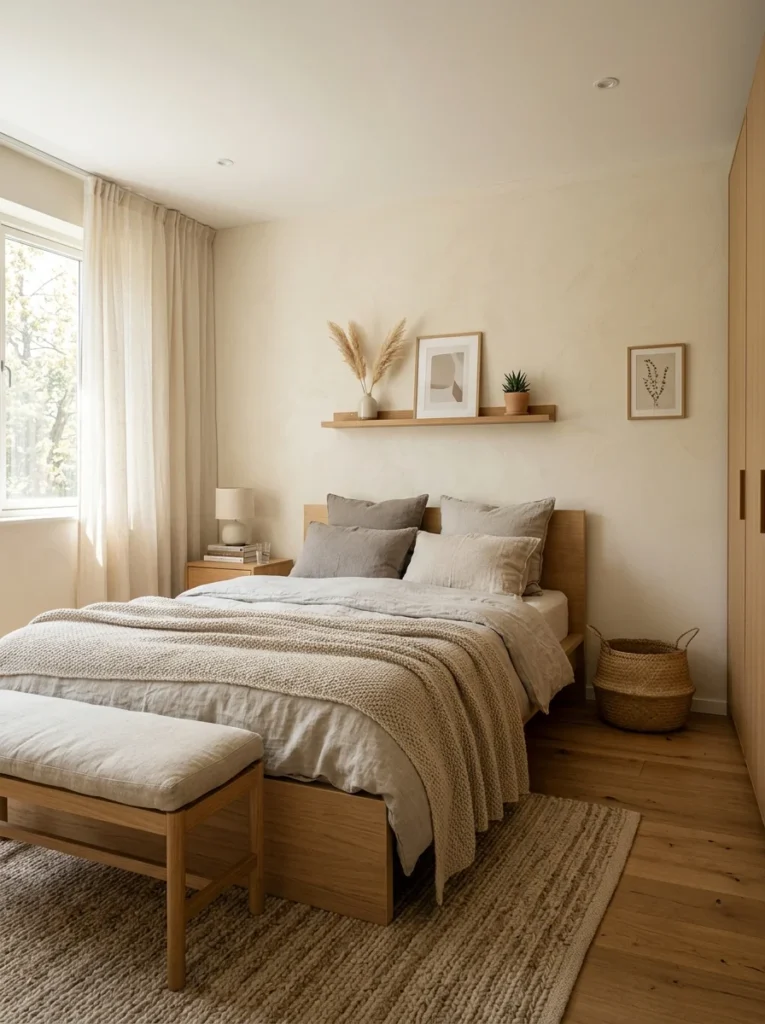
Layer in natural materials and textures
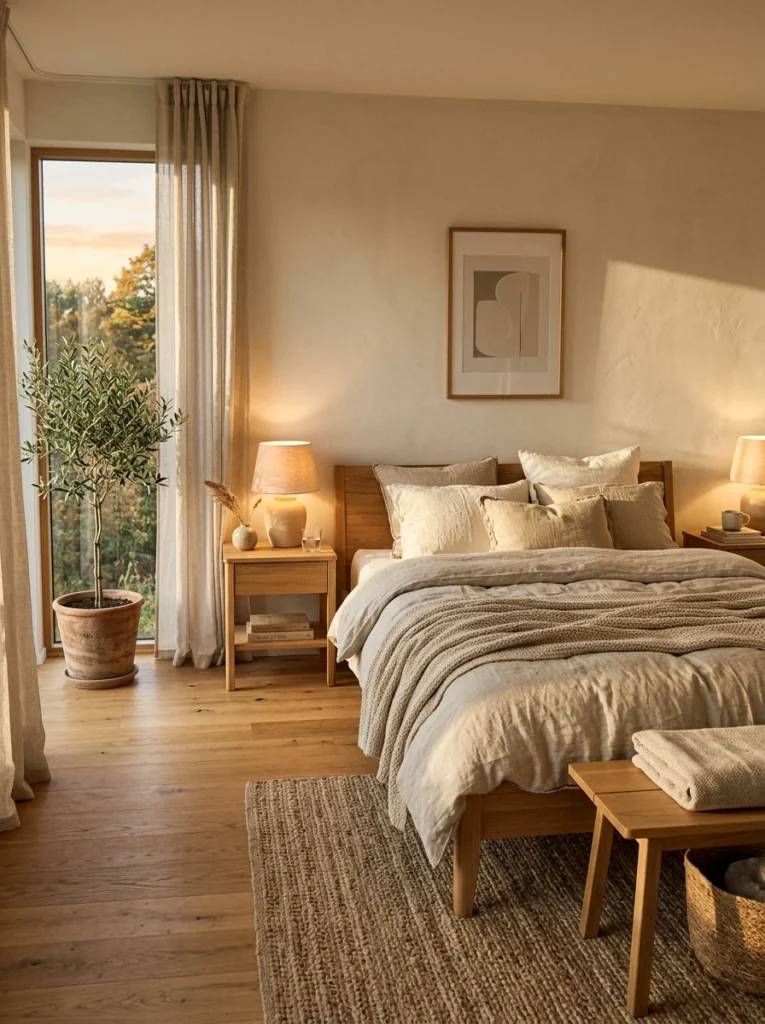
A minimalist room built entirely from smooth, hard surfaces, glossy paint, sleek metal, flat fabric, will always feel colder than one that incorporates a variety of natural textures even within a simple, restrained design. Wood furniture with visible grain, a woven or textured rug, linen bedding with a slight nubby texture, and a few natural fiber baskets or accents all add tactile warmth without adding visual clutter or breaking from a minimalist approach, since texture and color restraint aren’t mutually exclusive design principles.
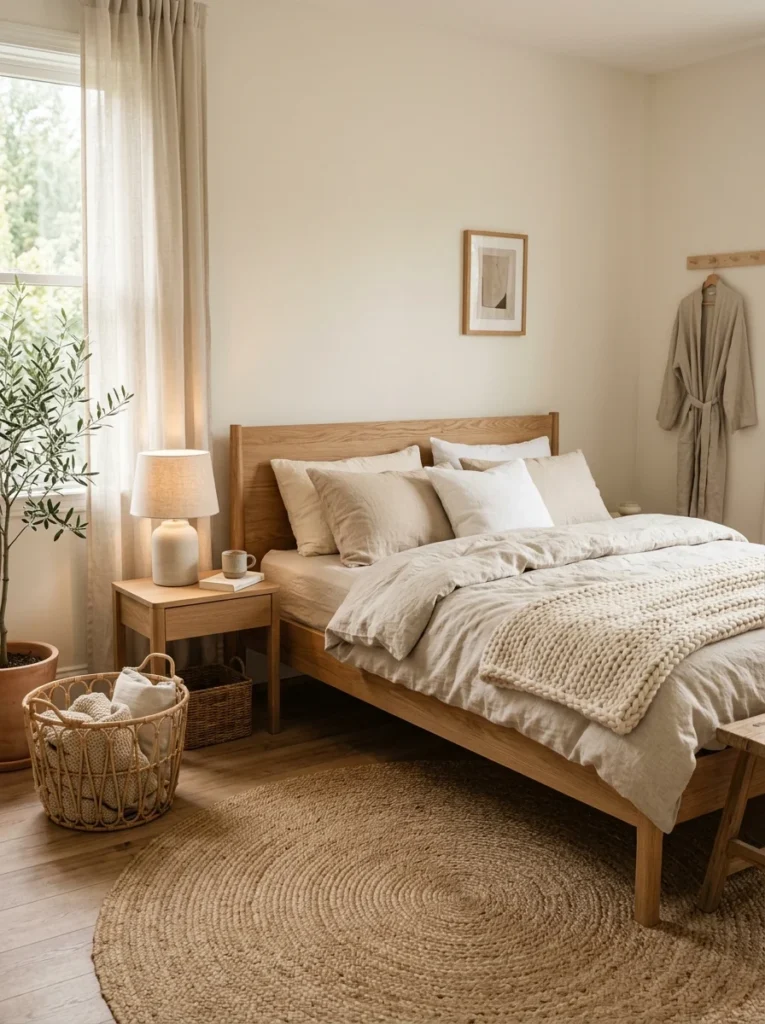
Choose fewer, better-quality pieces rather than many mediocre ones
Minimalism at its core is about intentionality, not deprivation, which means investing in a smaller number of well-made, genuinely loved pieces rather than filling the room sparsely with whatever was cheapest or most convenient. A beautifully made wood nightstand, one meaningful piece of art, and quality bedding chosen specifically for how it looks and feels will always read as warmer and more considered than a room technically emptier but furnished with mismatched, low-quality items chosen without much thought.
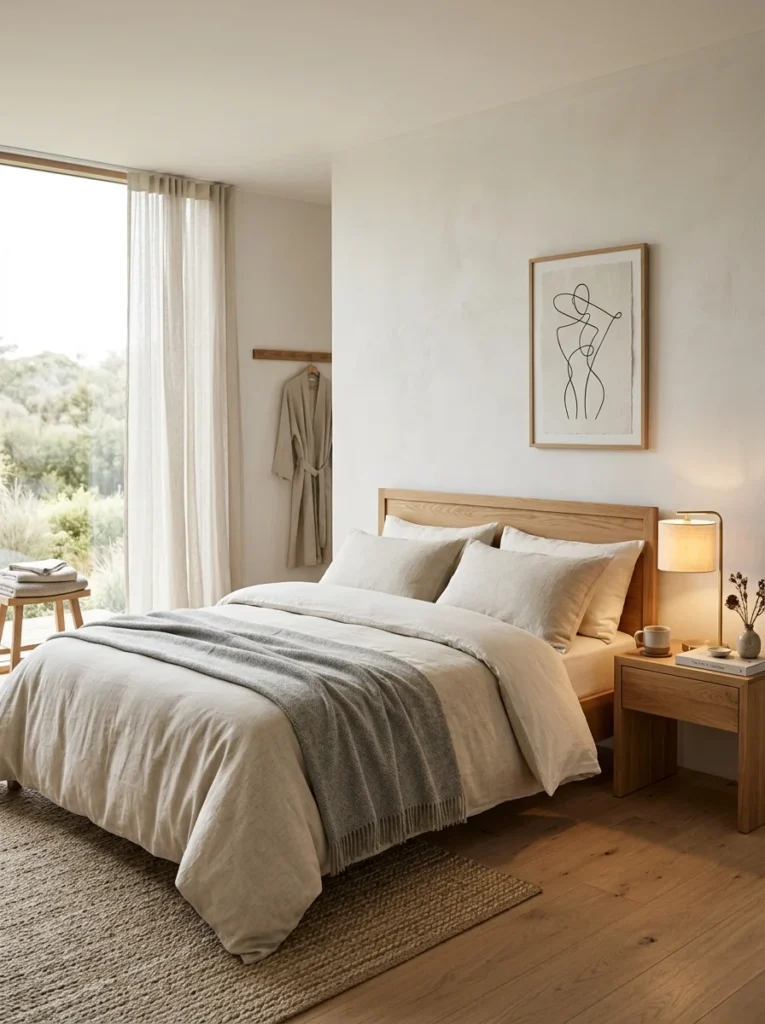
Don’t mistake empty walls for good minimalist design
Bare walls throughout an entire bedroom often read as unfinished or cold rather than intentionally restrained, which is a common overcorrection when someone associates minimalism purely with removing things rather than choosing thoughtfully. One or two pieces of art, a single large, meaningful piece rather than several small ones, or a textured wall hanging, gives the eye somewhere to rest and adds warmth and personality without cluttering the walls or contradicting the room’s overall restrained approach.
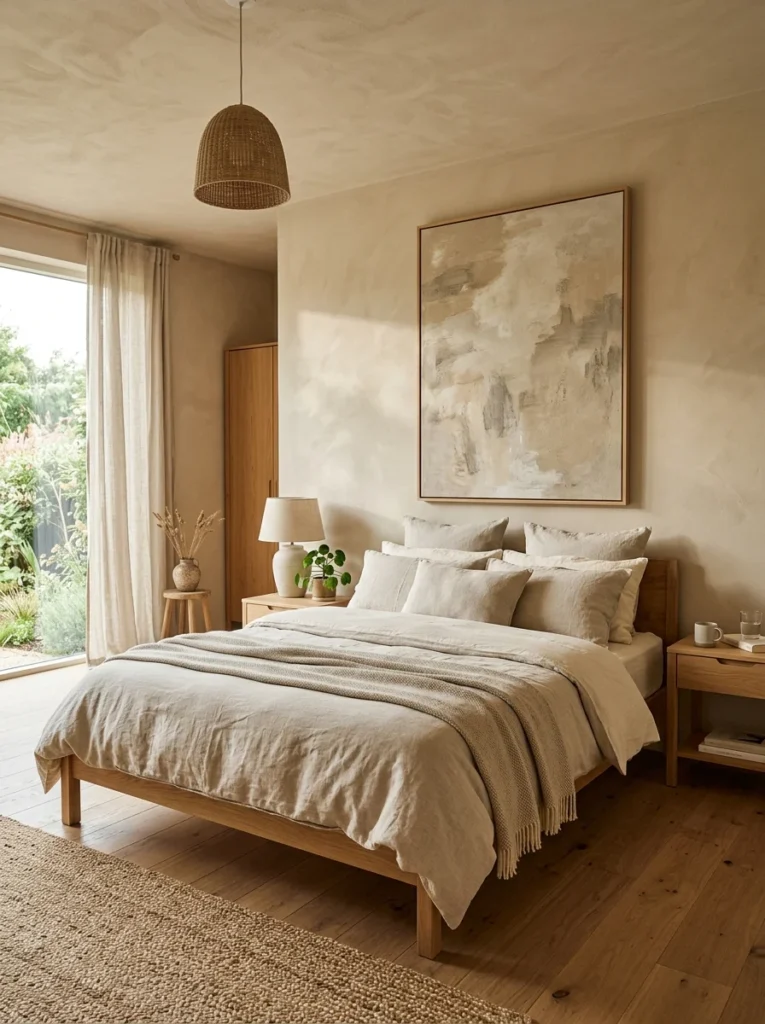
Use layered bedding even within a simple palette
A minimalist bed doesn’t need to mean a single flat duvet with no additional layering; a textured throw blanket, one or two well-chosen pillows in a complementary neutral tone, and quality linens with some natural texture all add warmth and comfort to the bed without requiring an elaborate, maximalist pillow arrangement. The key is choosing a smaller number of intentional layers, rather than either an entirely bare bed or an overloaded one, keeping the restrained principle intact while still achieving a cozy, inviting look.
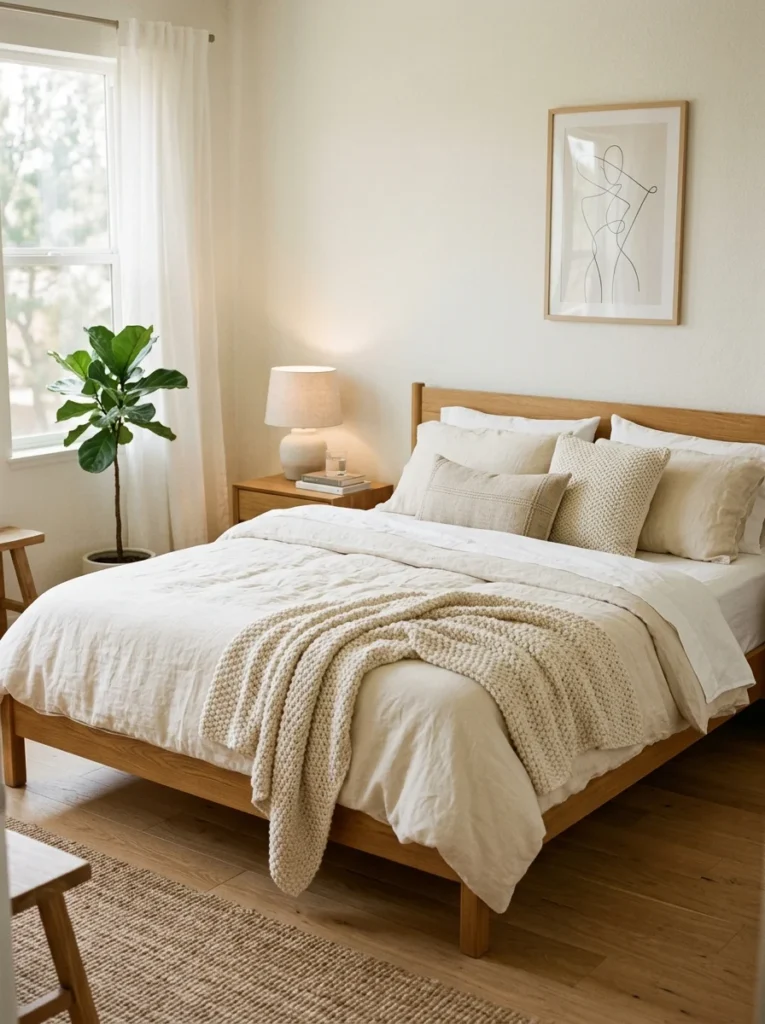
Bring in a few living plants
A plant or two, chosen deliberately rather than scattered throughout the room, adds a genuine sense of life and softness that a purely inanimate, if beautifully curated, room can otherwise lack. A single larger plant in a simple, natural-material pot often works better within a minimalist aesthetic than several smaller plants, which can start to feel visually busy even if each individual plant is attractive on its own.
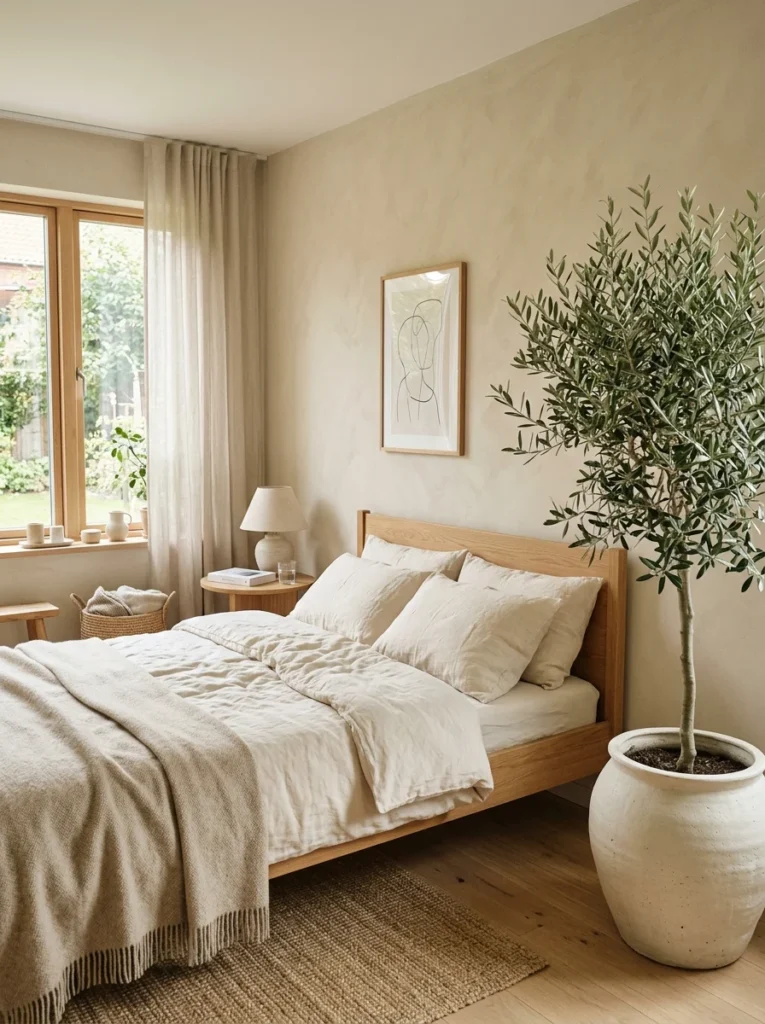
Prioritize warm, layered lighting over a single overhead fixture
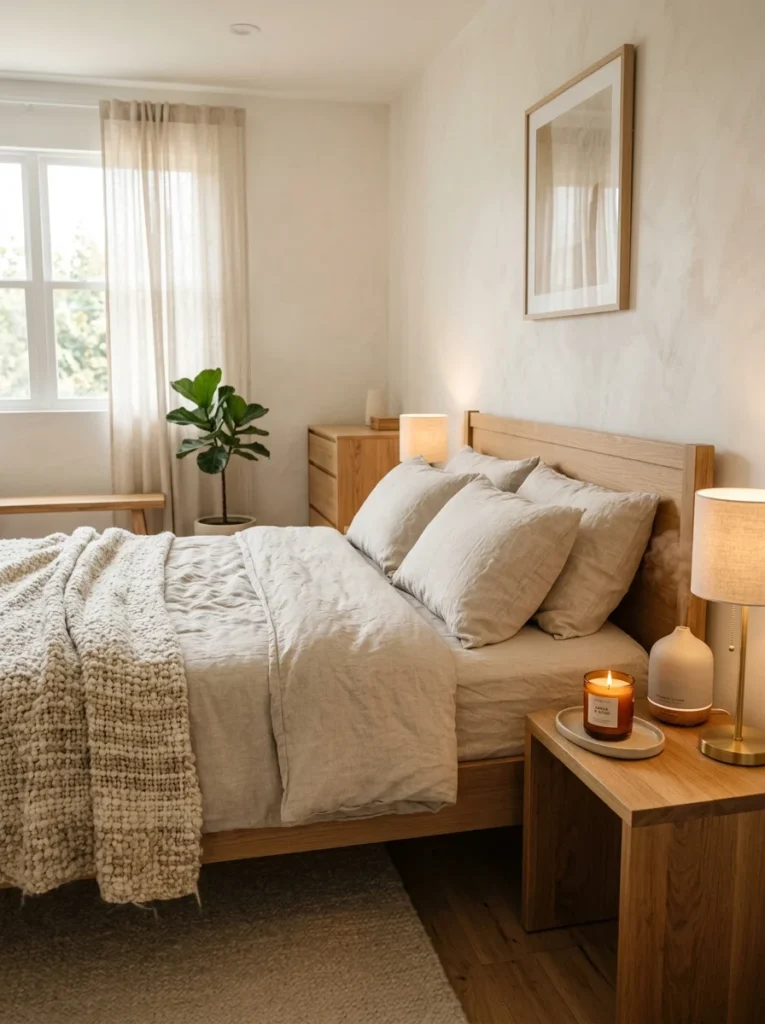
Just as in any bedroom, a single bright overhead light reads as cold and clinical regardless of how thoughtfully the rest of the room is designed. A warm-toned bedside lamp or two, paired with soft, indirect lighting rather than one harsh central source, does significant work in making a minimalist room feel warm and inviting in the evening, when much of the room’s actual daily use happens.
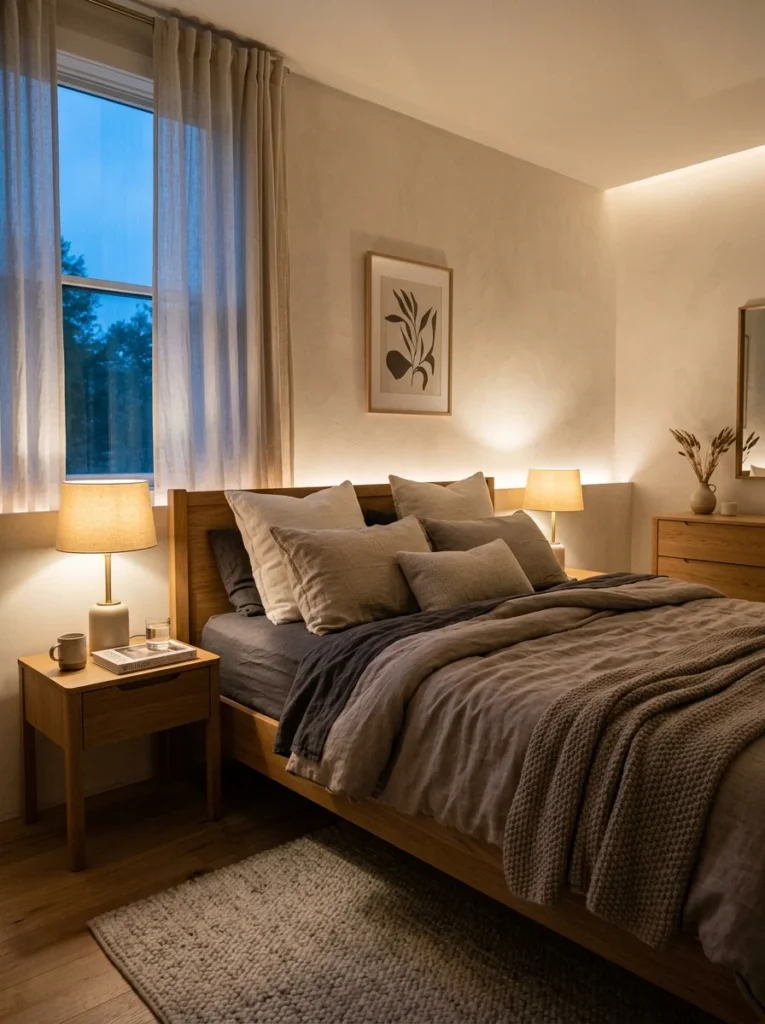
Use a rug to add warmth underfoot and visual softness
Hard flooring left completely bare throughout a bedroom, while visually clean, can feel cold both physically and visually. A single, well-chosen rug, in a natural fiber or a simple, subtly textured weave, adds warmth underfoot and a layer of softness to the room’s overall look, without needing a busy pattern or bold color that would clash with a restrained, minimalist palette.
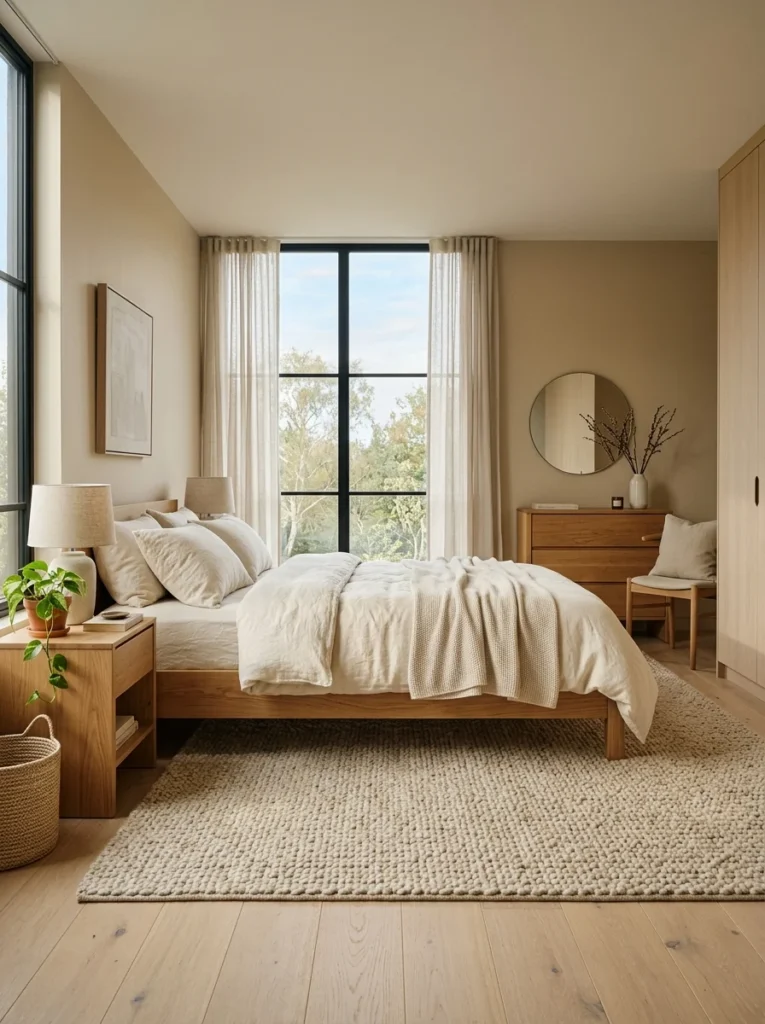
Keep storage thoughtfully concealed rather than absent
A genuinely minimalist-looking room still needs somewhere for everyday items, clothes, chargers, books, to actually live; the trick is concealing this storage within simple, clean-lined furniture rather than eliminating storage altogether, which usually just results in visible clutter undermining the calm look you’re going for. A dresser with clean lines and no ornate hardware, or a closet system that keeps items organized and out of sight, supports the minimalist look far more effectively than a room with too little storage where daily items end up scattered on visible surfaces.
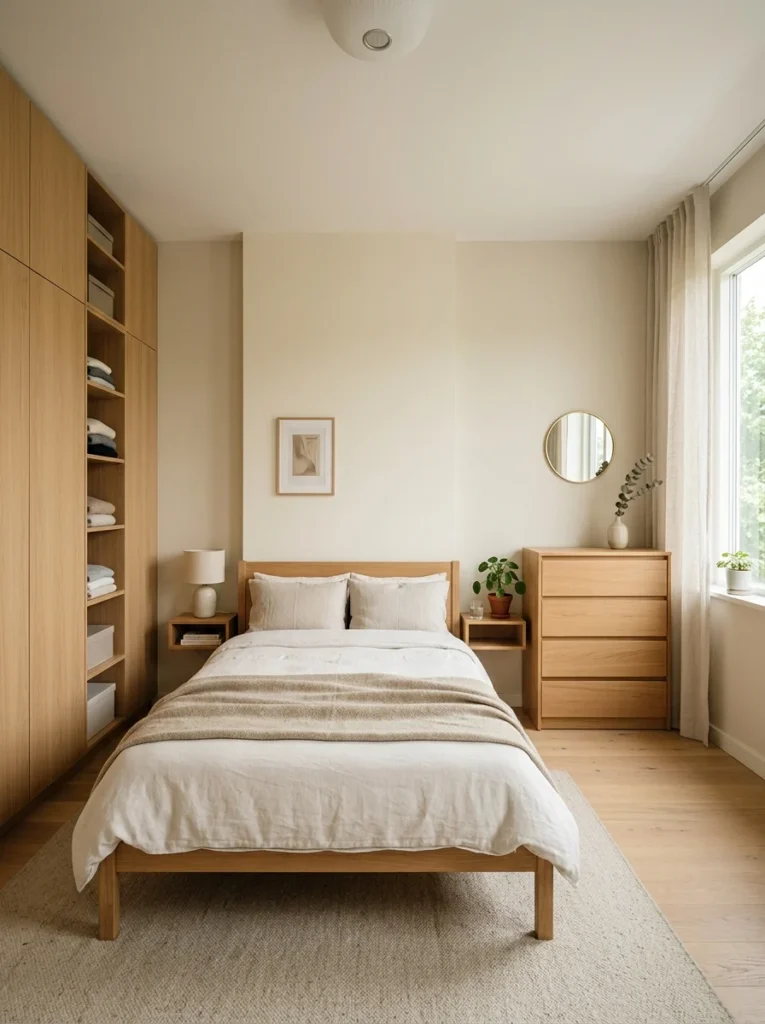
Add one or two personal, meaningful objects
A completely impersonal room, however beautifully designed, often lacks the warmth that comes from a space clearly reflecting the person who actually lives in it. One or two carefully chosen personal items, a meaningful photo in a simple frame, a treasured object from travel, a piece of art with genuine significance, add warmth and personality without contradicting a minimalist approach, as long as they’re chosen deliberately rather than accumulated without much thought.
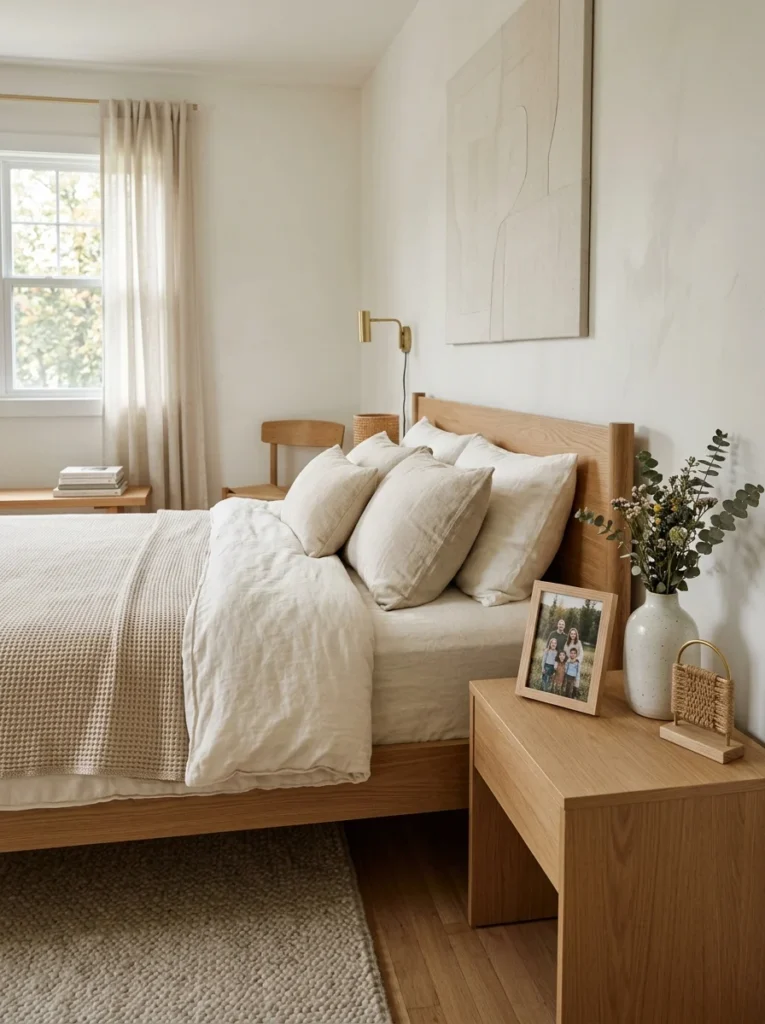
Choose soft window treatments over bare or purely functional ones
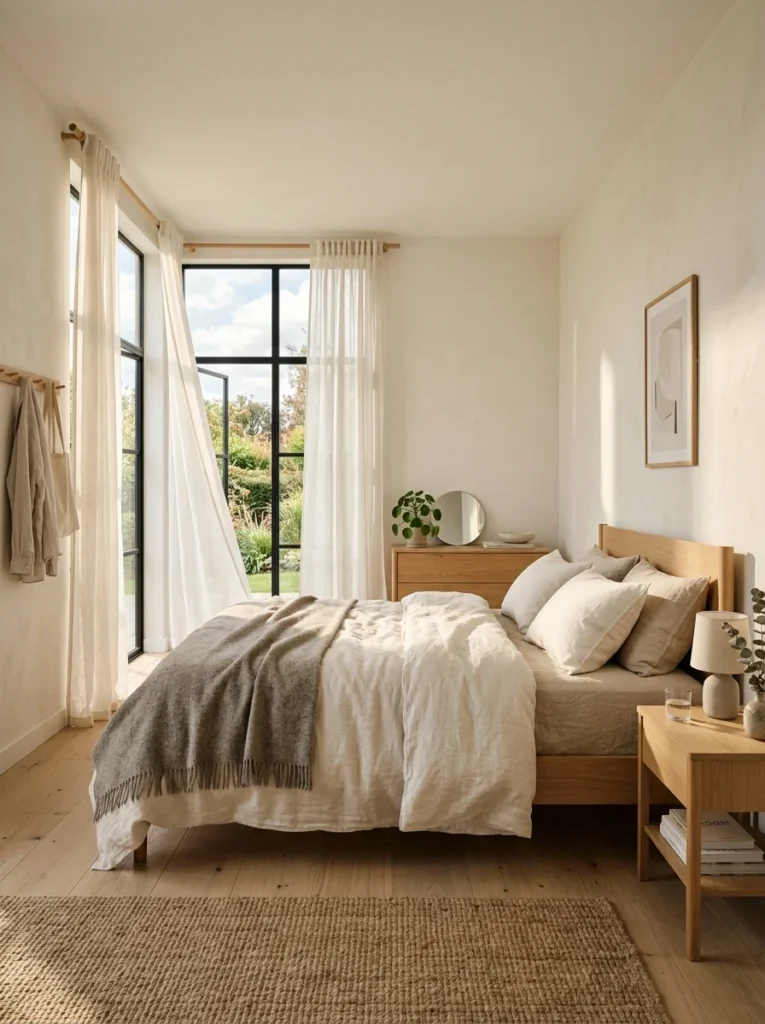
Bare windows, or purely functional blinds with no fabric softness at all, can contribute to that cold, unfinished feeling in an otherwise well-designed minimalist room. Simple, unfussy curtains in a natural fabric like linen or a soft cotton blend, hung without an elaborate pattern or excessive layering, add warmth and softness to a window while still keeping the overall look clean and restrained. Choosing a curtain color that closely matches or gently complements the wall color keeps the look cohesive and calm rather than introducing an unrelated pattern or contrasting shade that would disrupt the room’s simplicity.
Engage more than just sight in the room’s design
A minimalist bedroom that only considers visual design can still feel a bit sterile even with all the textural and color adjustments already covered, since a genuinely warm room engages more of the senses than sight alone. A simple, pleasant-smelling candle or diffuser, soft, natural-fiber bedding that feels good against the skin, and even the subtle sound of a small fan or white noise machine all contribute to a room that feels warm and comforting in a way that purely visual choices can’t fully achieve on their own. These sensory details are often what separates a bedroom that merely looks calm in photos from one that genuinely feels relaxing to spend time in every day.
Let the room evolve slowly rather than forcing instant perfection
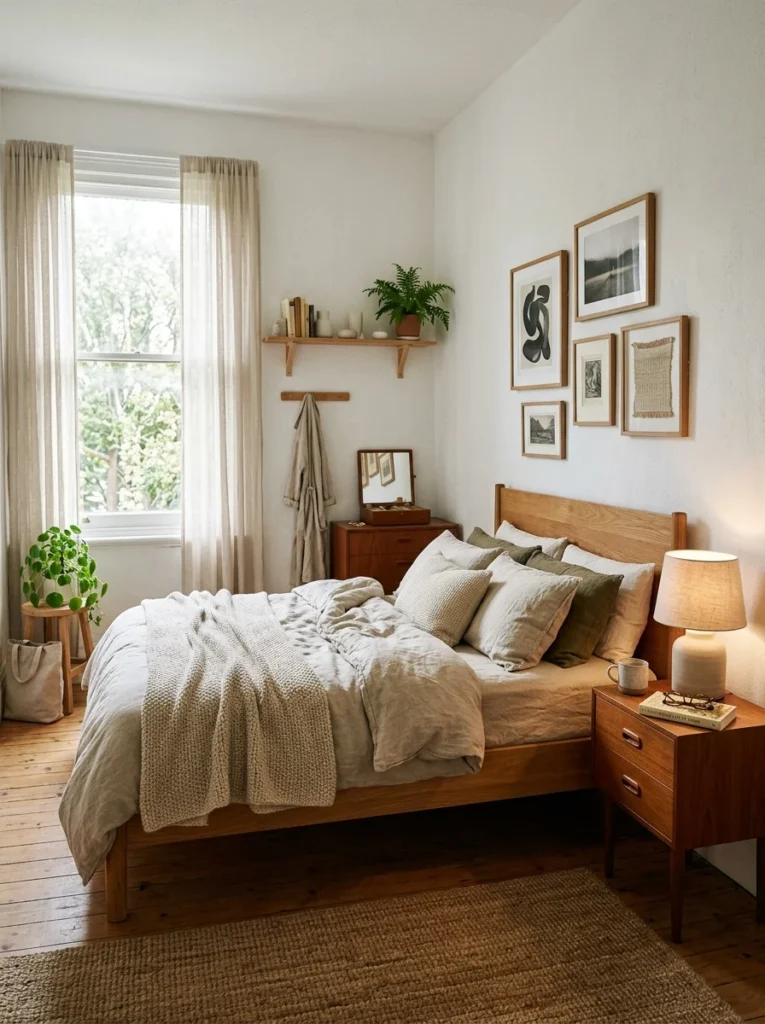
A common mistake in pursuing minimalist design is trying to achieve the finished look immediately, buying an entire matched set of furniture and decor all at once rather than allowing the room to develop more organically over time. A room furnished gradually, with pieces genuinely chosen and loved rather than purchased together as a quick, complete set, often ends up feeling warmer and more personal, since each piece carries some individual intention behind it rather than blending into an anonymous, showroom-style collection assembled in a single shopping trip.
Does minimalist design mean having as few things as possible?
Not exactly. Genuine minimalist design is about intentionality, choosing fewer, better-quality pieces you genuinely value, rather than simply having the smallest possible number of items regardless of quality or meaning. A room can feel warm and personal while still following minimalist principles.
How do I add warmth to an all-white minimalist bedroom?
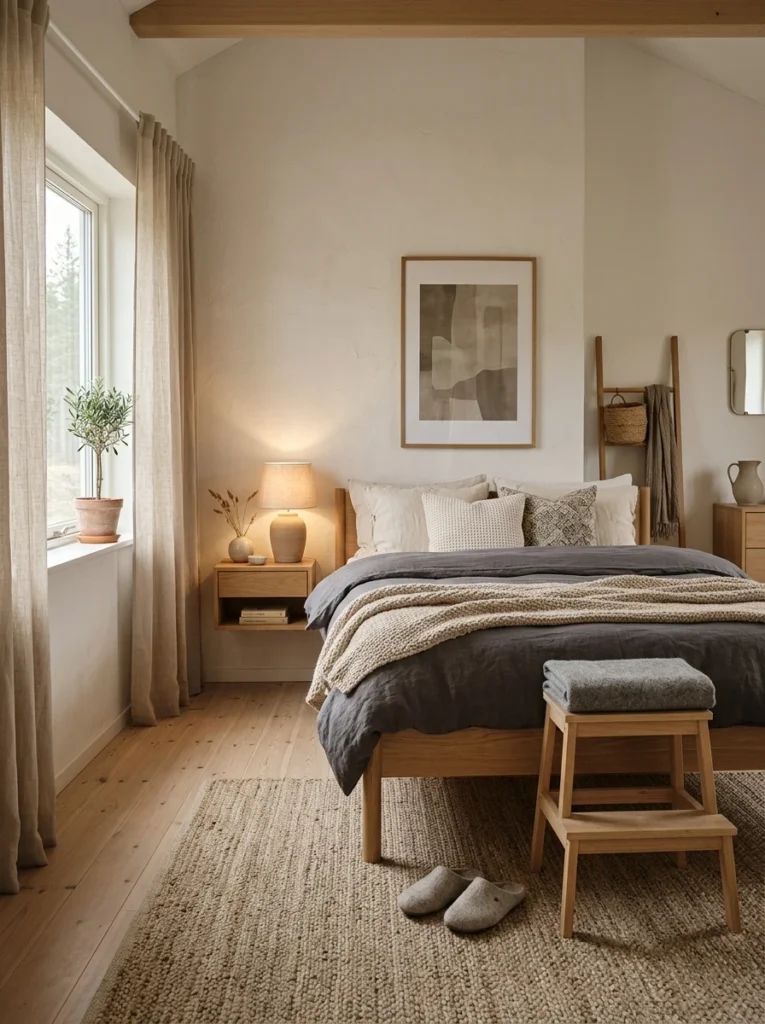
Incorporating natural textures, wood furniture, woven textiles, a soft rug, along with warm-toned lighting and one or two meaningful decorative pieces, adds warmth to an all-white palette without requiring a significant color change or compromising the room’s clean, minimalist feel.
Can a minimalist bedroom still have decorative pillows and a rug?
Yes, minimalism doesn’t require a completely bare bed or floor. A few well-chosen decorative layers, a textured throw, one or two pillows, a simple rug, actually support a warmer, more inviting minimalist look, as long as the overall approach remains restrained and intentional rather than cluttered.
What’s the biggest mistake people make with minimalist bedrooms?
Mistaking emptiness for minimalism is the most common mistake, stripping out not just clutter but also texture, warmth, and personality, which results in a room that feels cold and unfinished rather than calm and intentional.
How can I make a minimalist bedroom feel less sterile?
Engaging senses beyond sight helps significantly, soft, natural-fiber bedding, a pleasant candle or diffuser, simple curtains rather than bare windows, and warm, layered lighting all contribute to a room that feels genuinely comforting rather than just visually calm.
A genuinely warm minimalist bedroom comes down to choosing fewer, better pieces, layering in natural texture even within a restrained palette, and including just enough personal, meaningful touches to keep the room feeling lived-in rather than staged. Minimalism, done well, is a filter for what actually deserves space in the room, not a mandate to strip everything down to bare walls and a single flat duvet.
My own bedroom’s second attempt at this look kept the restraint of the first version but added back warmth through a textured throw, a single meaningful piece of art, and a pair of warm bedside lamps, and the difference in how the room actually feels to spend time in has been significant. If your own minimalist attempt has ended up feeling more cold than calm, start by adding back one layer of natural texture and one warm light source; that combination alone often solves most of the coldness without undoing the simplicity you were originally going for, and the rest of the room can continue to evolve slowly from there.