
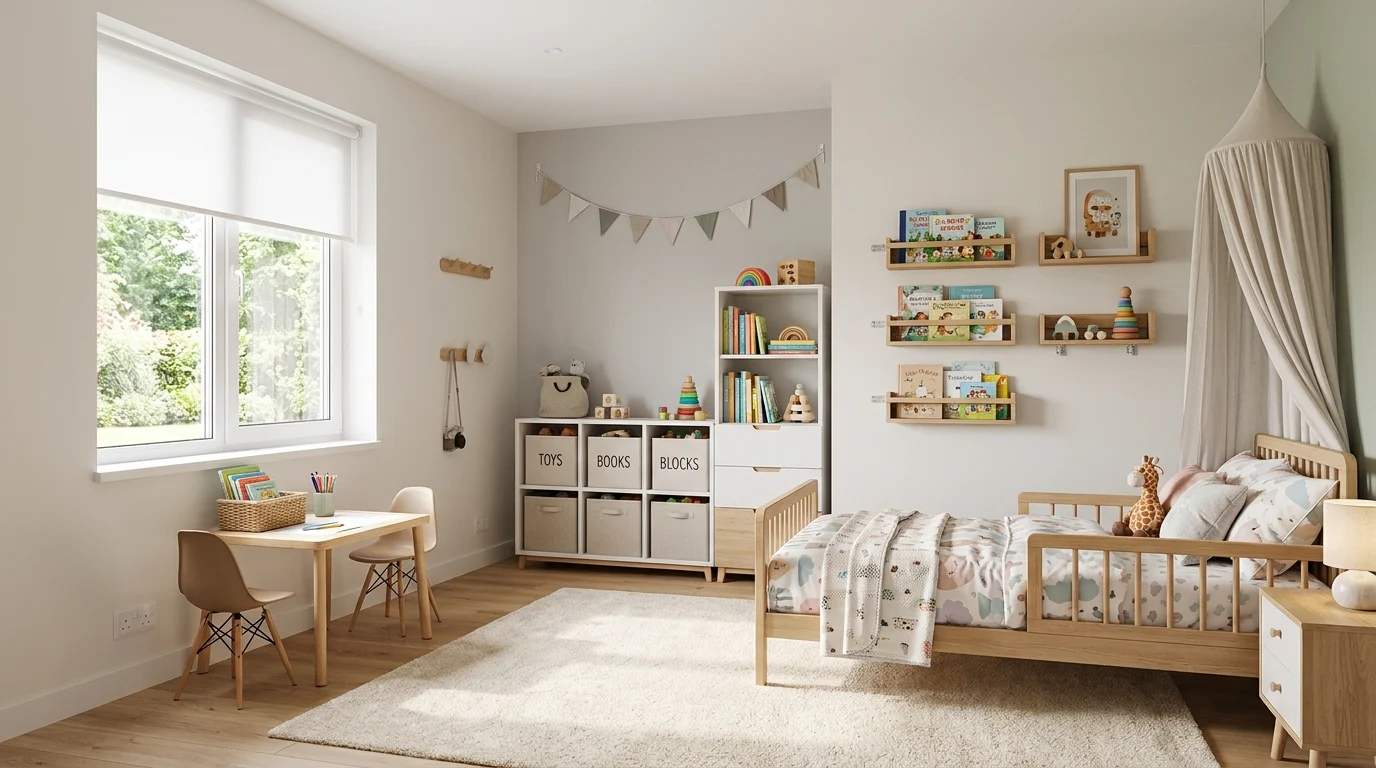
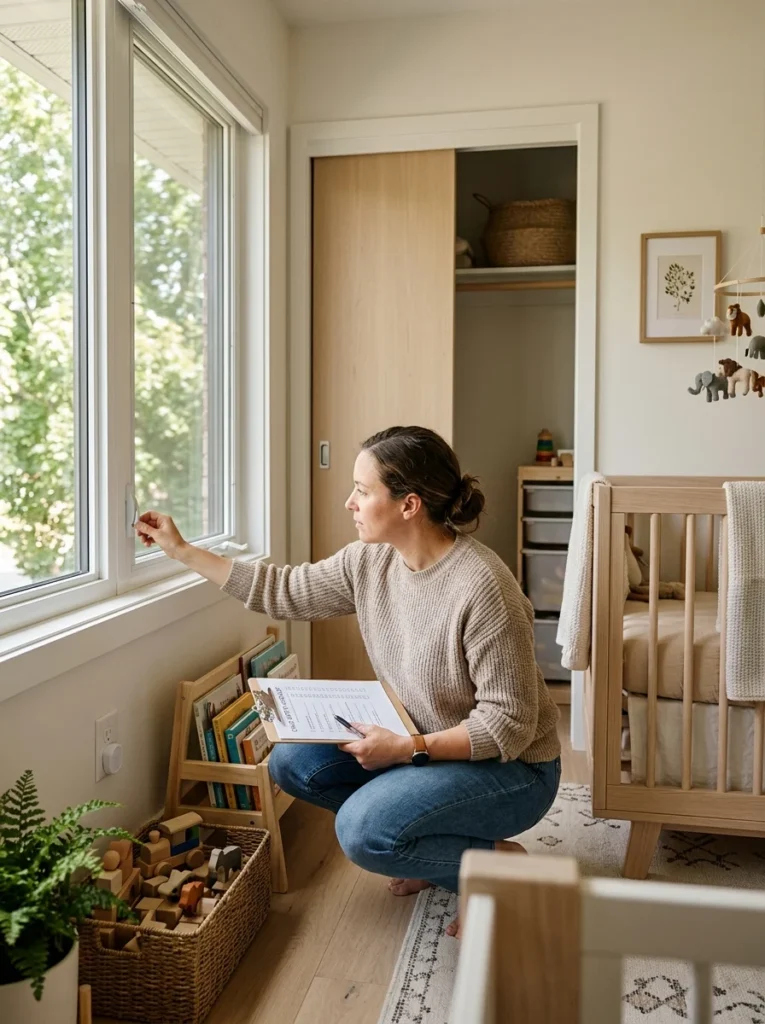
When our son started pulling himself up on furniture, I assumed I’d already covered the basics of childproofing his room, mostly because I’d covered the outlets and called it done months earlier during the newborn stage. It wasn’t until I actually walked through his room zone by zone, the closet, the window, the furniture, the toy storage, treating each area as its own distinct childproofing project rather than one general sweep, that I realized how many specific hazards I’d genuinely missed simply because I hadn’t broken the task down that way. Going through it systematically, section by section, caught several things a single quick walkthrough had missed entirely.
Childproofing a kids’ bedroom works best as a systematic, zone-by-zone process rather than one general pass through the room. Here’s how to approach each area specifically.
The furniture zone: securing anything that could tip
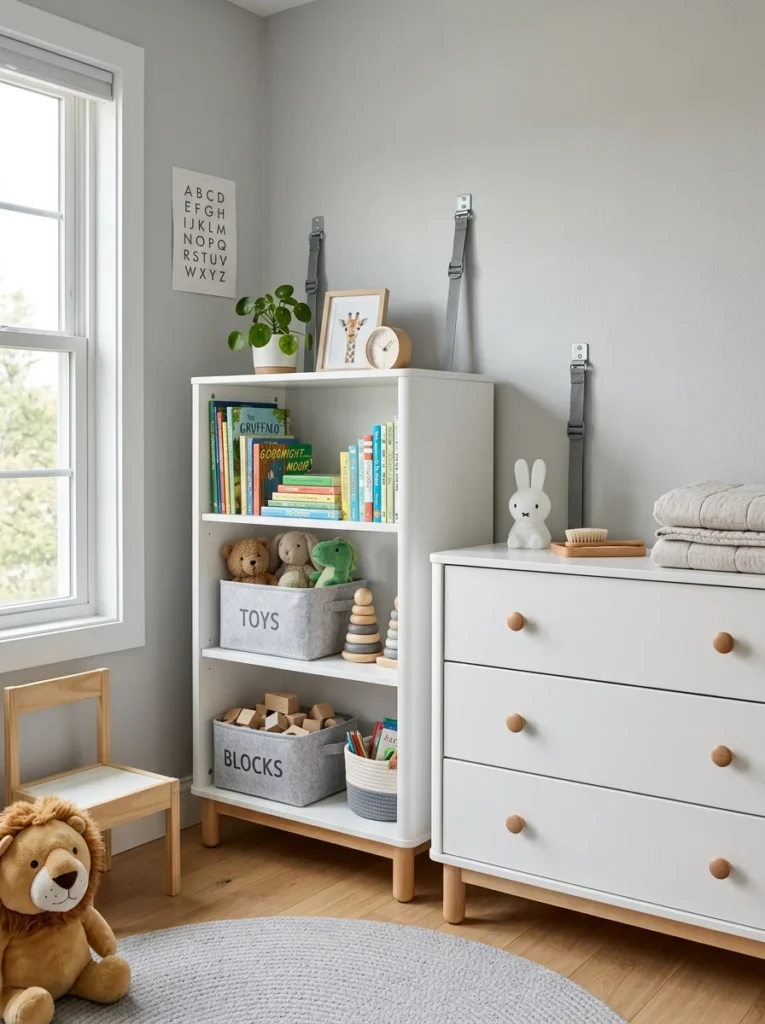
Every piece of freestanding furniture in the room, dressers, bookshelves, a toy chest, should be anchored to the wall using furniture straps or brackets rated for the piece’s weight, since tip-over incidents remain a genuine, documented hazard once a child becomes mobile enough to climb or pull themselves up using furniture for support. Check that any furniture with drawers has a mechanism preventing multiple drawers from being pulled open simultaneously, since a child climbing open drawers like steps is a common way tip-overs actually happen in practice.
The window zone: cords, screens, and fall prevention
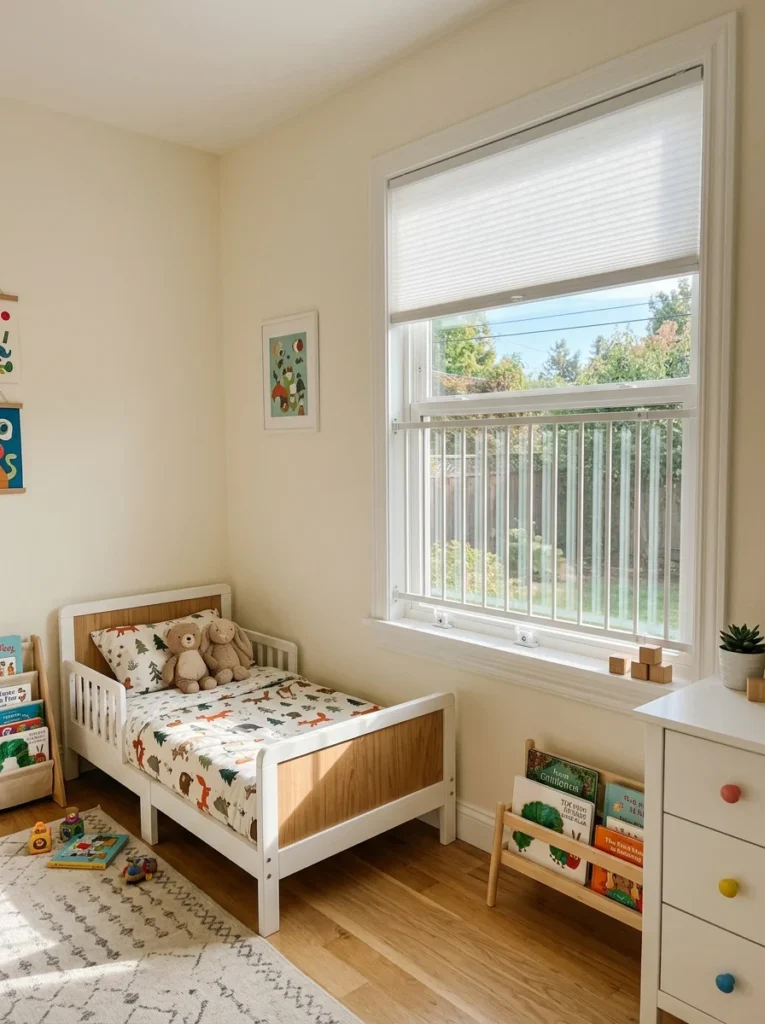
Window blind and curtain cords should be secured well out of reach, ideally through cordless window covering options, or cord cleats and wind-up devices if cordless isn’t feasible, given the documented strangulation risk loose cords present. Window screens should not be relied upon to prevent a fall, since standard screens are designed to keep insects out rather than to support a child’s weight, so window guards or stops specifically designed to prevent a window from opening wide enough for a child to fall through are worth installing on any window a child’s bed or furniture sits near.
The electrical zone: outlets, cords, and nearby fixtures
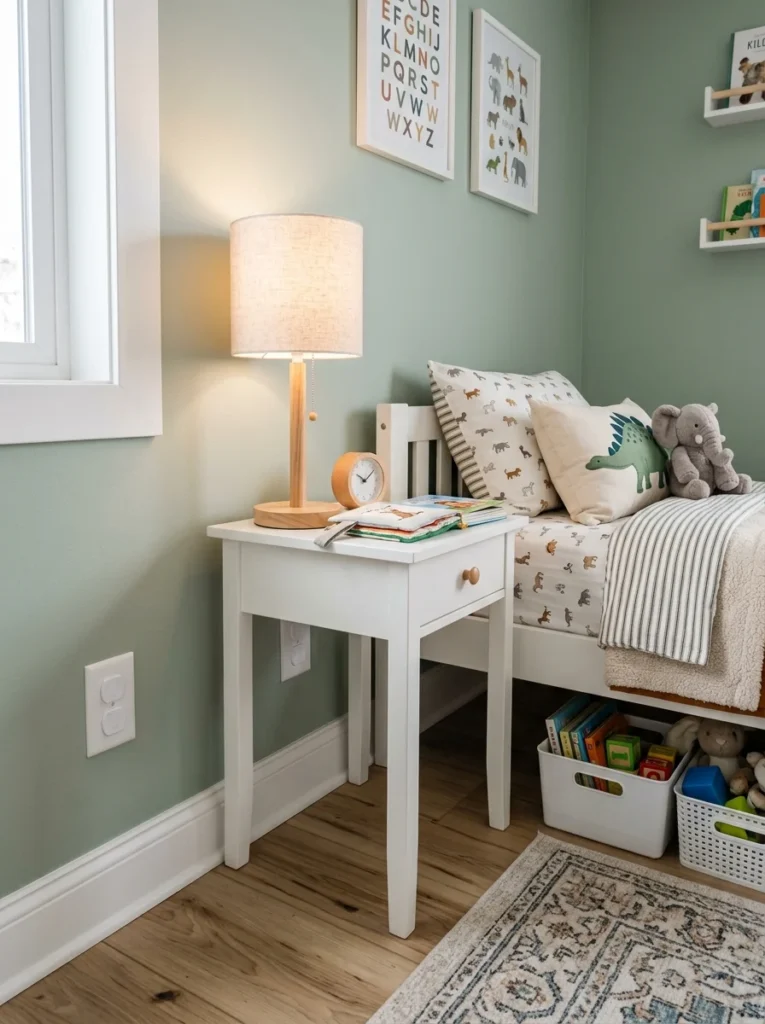
Every accessible outlet in the room should have a cover or safety plug installed, and cords from lamps, chargers, or any electronics should be secured and routed away from areas a child regularly plays or climbs, since a dangling cord is both a strangulation risk and a tempting object for a child to pull on, potentially bringing down whatever’s attached to the other end.
The closet zone: reachable hazards and door safety
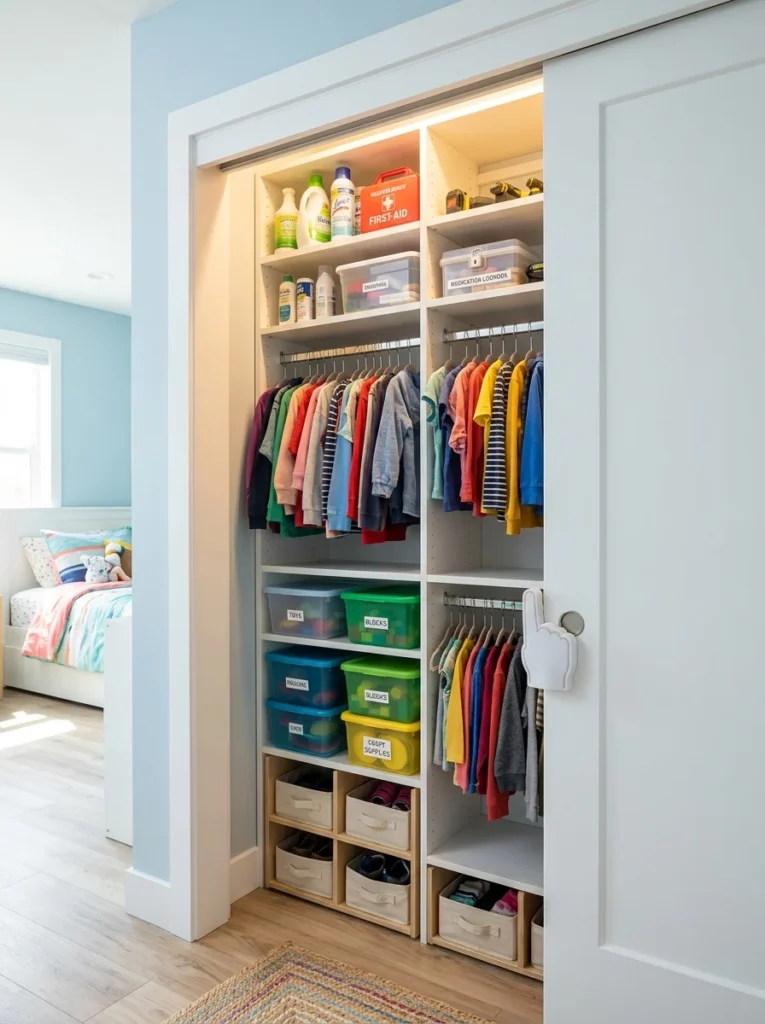
A closet, particularly one within a child’s reach, should be checked for anything hazardous stored there, cleaning supplies occasionally kept in a bedroom closet, small objects, plastic bags that pose a suffocation risk if a child were to pull one down and play with it. Bifold or sliding closet doors should be checked for finger-pinch points, and any door stops or guards needed to prevent a child from getting fingers caught should be installed proactively rather than after an incident prompts the realization.
The toy storage zone: choking hazards and organizational safety
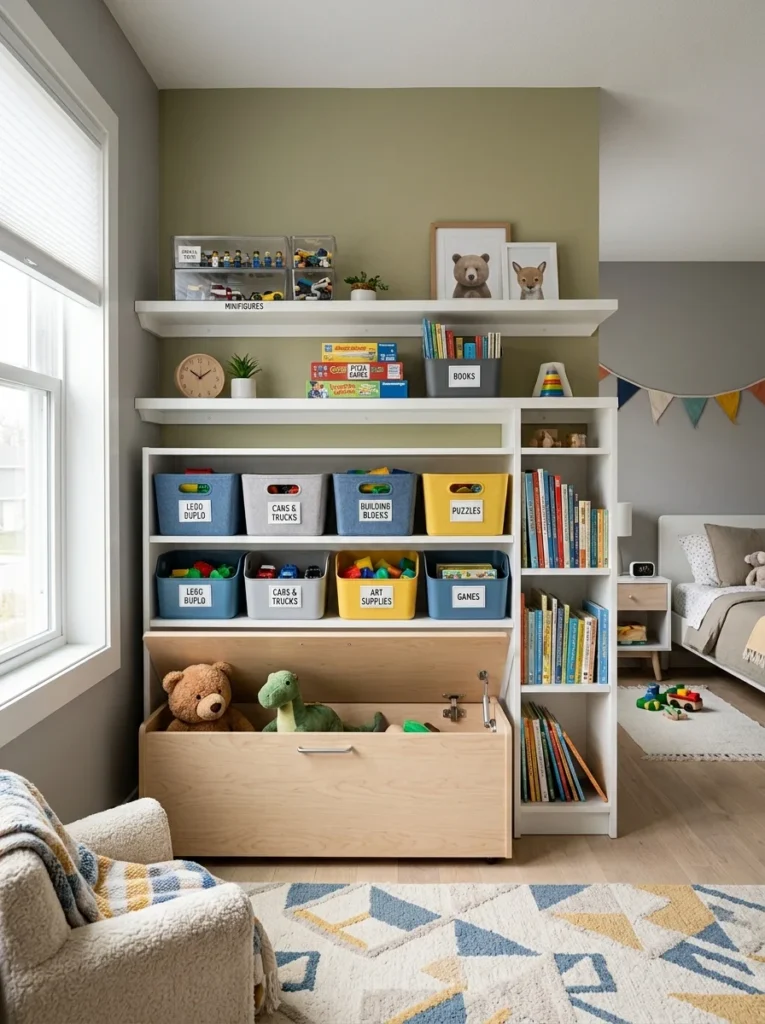
Toy storage should be organized with an eye toward keeping genuinely age-appropriate items accessible while storing anything with small parts, intended for an older sibling or simply inappropriate for a younger child’s current developmental stage, out of reach or in a container the younger child can’t independently access. Toy chests specifically should have a safety-hinged lid that won’t slam shut on small fingers, or no lid at all, rather than a heavy, unsupported lid that poses its own distinct hazard.
The bed and sleep zone: fall prevention and safe setup
For a toddler transitioning out of a crib, bed rails on any elevated bed frame help prevent falls during sleep, while a floor bed eliminates this specific risk entirely by removing the elevation altogether. Check that the mattress fits the bed frame snugly with no gap that could pose an entrapment risk, similar to the crib mattress fit consideration during the earlier infant stage.

The doorway and hallway transition zone
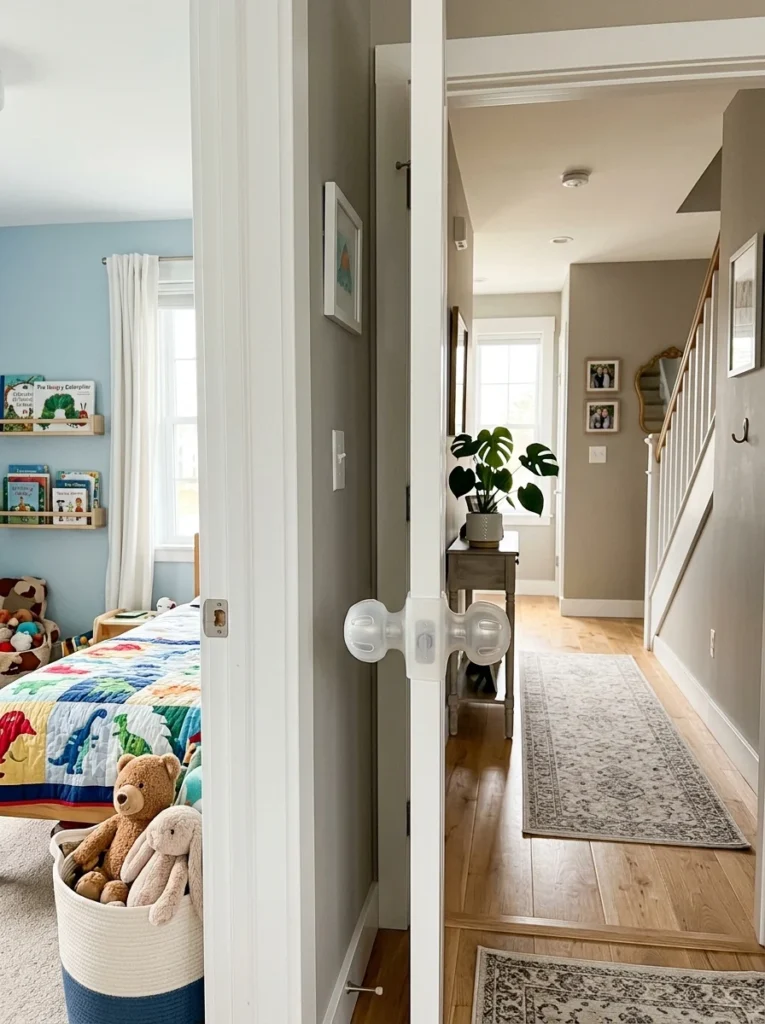
If a child’s bedroom door doesn’t fully latch or could be accidentally locked from inside, addressing this, either through a doorknob cover that still allows adult access in an emergency or ensuring the lock mechanism can be easily overridden from outside, prevents a child from becoming accidentally locked in or, in some cases, locking a door in a way that delays access during an actual emergency.
The flooring zone: rugs, cords, and trip hazards
Any rug in the room should have a non-slip backing or be secured to prevent sliding, since a sliding rug is a slip and fall hazard for both a young, still-unsteady walker and any adult carrying the child through the room. Cords from any device or lamp should be tucked away from walking paths rather than crossing the floor where they present a trip hazard.
The decor and wall zone: securing hung items
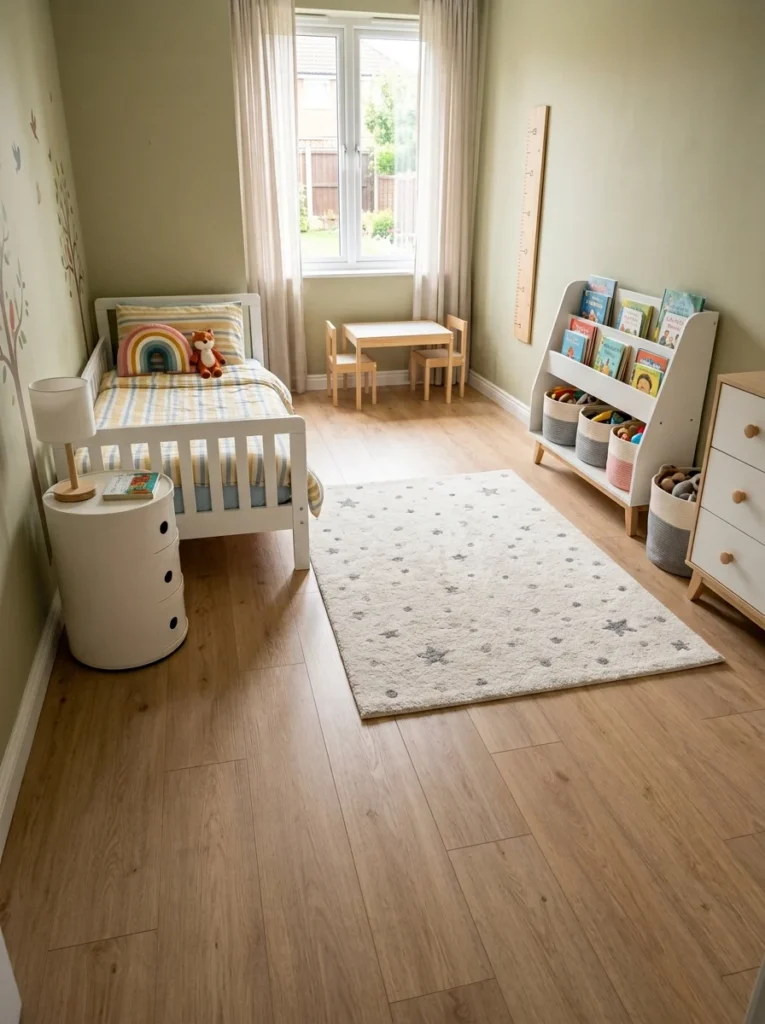
Any mirror, shelf, or piece of wall art within a child’s reach should be securely mounted using hardware appropriate to its weight, following the same general principles covered in dedicated guides on hanging heavy items safely, since a child pulling on a wall-mounted item they can reach is a realistic scenario worth planning for rather than assuming won’t happen.

Reassess every zone as your child’s mobility and reach change
Childproofing isn’t a one-time task completed and then forgotten; a room properly secured for a newly mobile crawler may have new gaps once that same child is walking, climbing, and reaching considerably higher and further than they could just months earlier. Revisiting each zone periodically as your child’s abilities develop catches new risks before they become relevant, rather than relying on an initial childproofing pass that assumed a fixed level of mobility indefinitely.
The lighting zone: nightlights and safe navigation
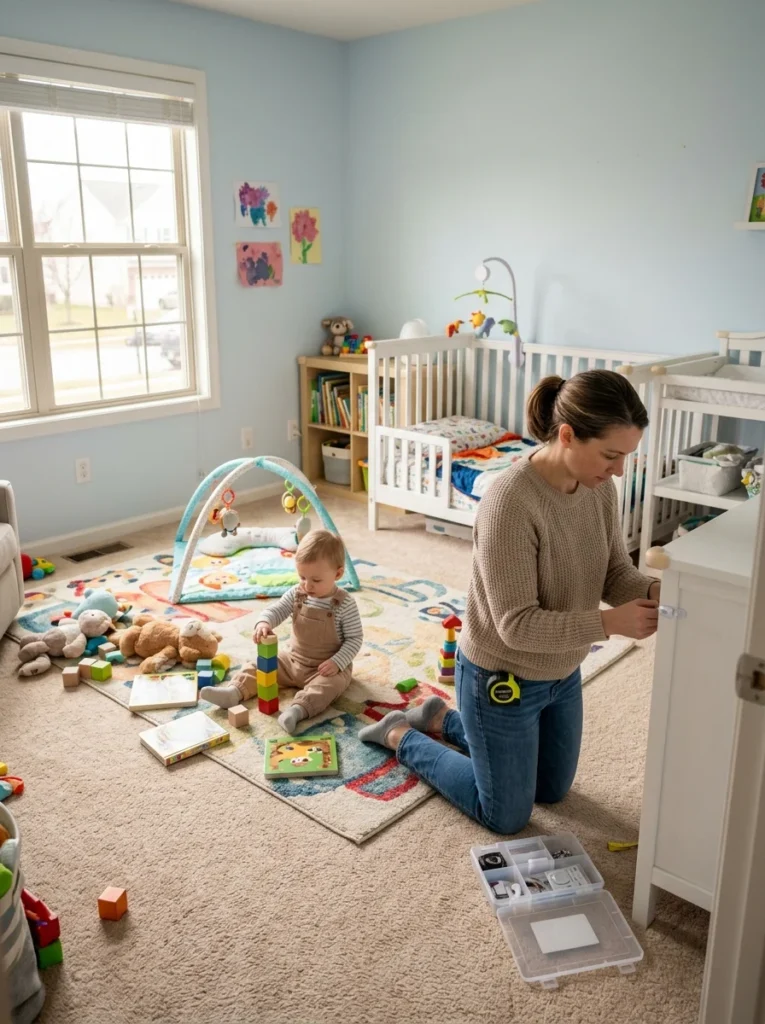
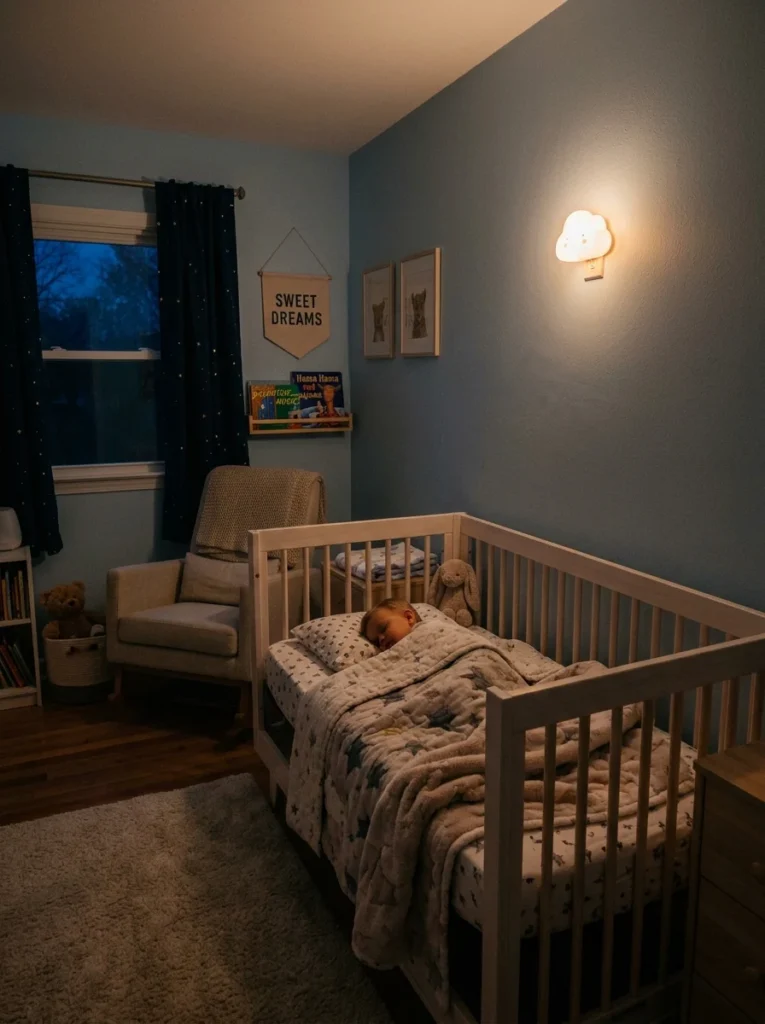
A soft nightlight positioned away from direct reach but bright enough to allow safe nighttime navigation helps reduce fall risk if a child gets out of bed during the night, whether to use the bathroom or simply because they’ve woken up, without needing to fumble in complete darkness. Choosing a nightlight that stays cool to the touch and doesn’t have an accessible cord within a child’s reach addresses both burn and strangulation concerns that a poorly chosen lighting solution could otherwise introduce.
The doorway barrier zone: gates and room access
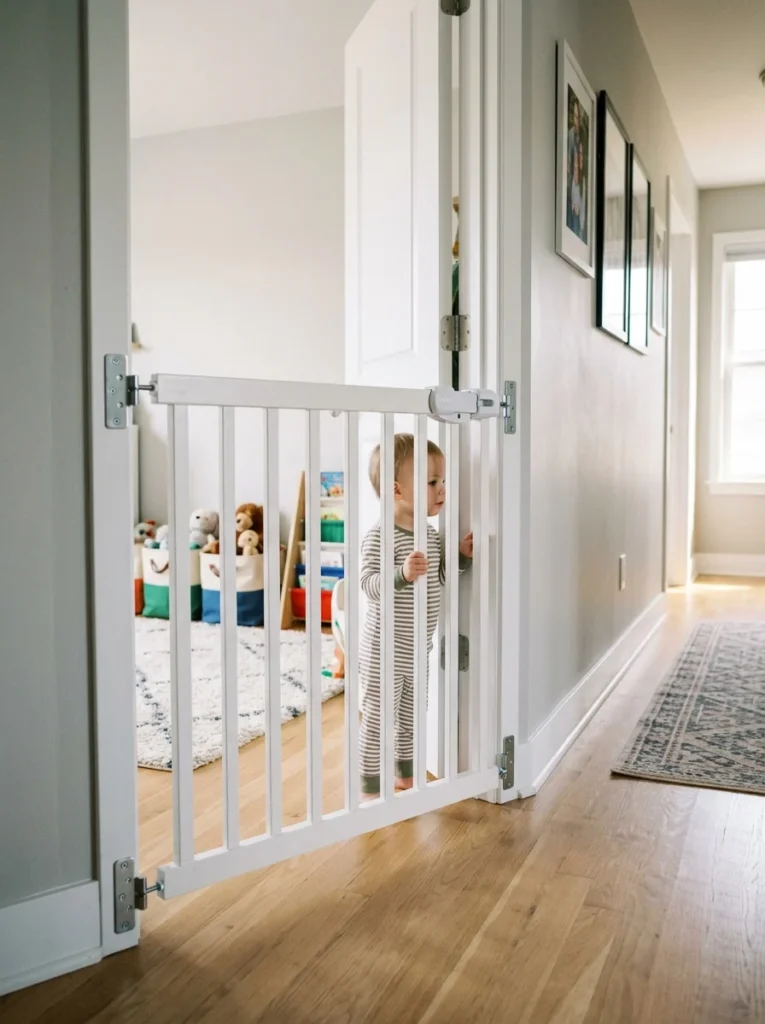
If a child’s room is near a staircase or an area of the home that needs to remain off-limits during unsupervised moments, a properly installed safety gate, rated for the specific location, pressure-mounted for the top of stairs versus hardware-mounted as appropriate, prevents access to genuinely hazardous areas beyond the bedroom itself. This is worth considering as part of the broader bedroom childproofing process, since a child’s mobility within their own room is only part of the overall safety picture once they’re capable of leaving the room independently as well.
The monitoring zone: baby monitors and camera placement
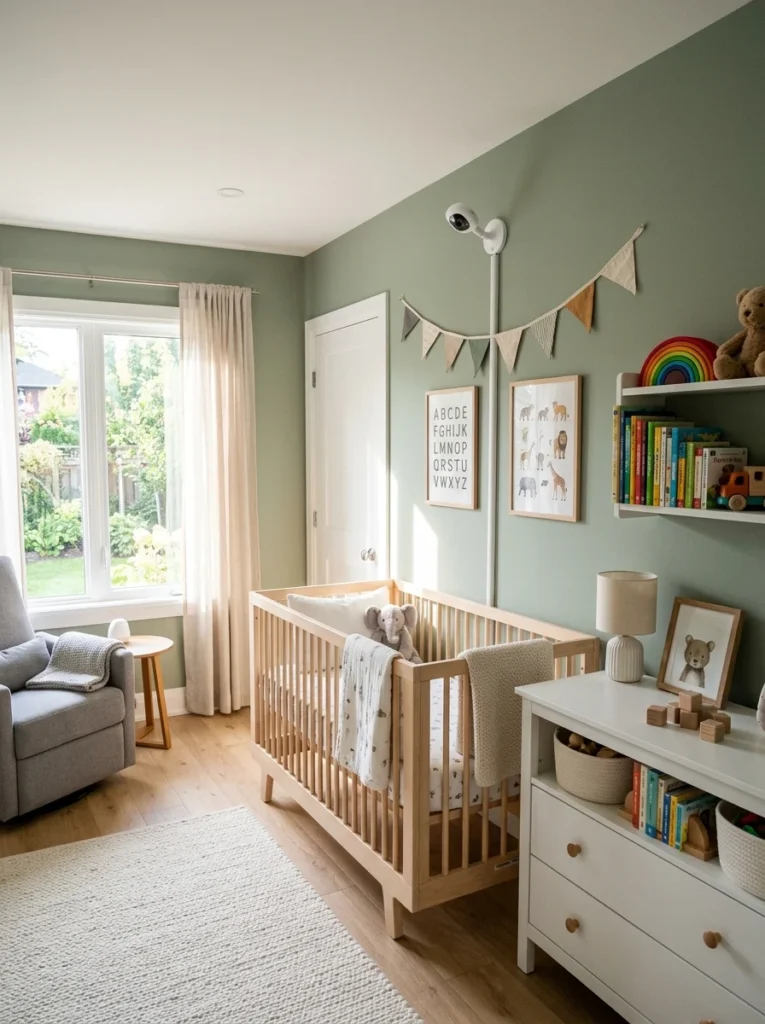
If using a baby monitor or camera, ensure it’s mounted securely well out of a child’s reach, with any cords tucked away and inaccessible, since the monitor itself, meant to support safety, can introduce its own cord-related hazard if placed carelessly close to a crib or bed. Wall-mounted or shelf-mounted placement, rather than resting the monitor on furniture within a child’s reach, addresses this consideration directly.
The seasonal and temporary hazard zone
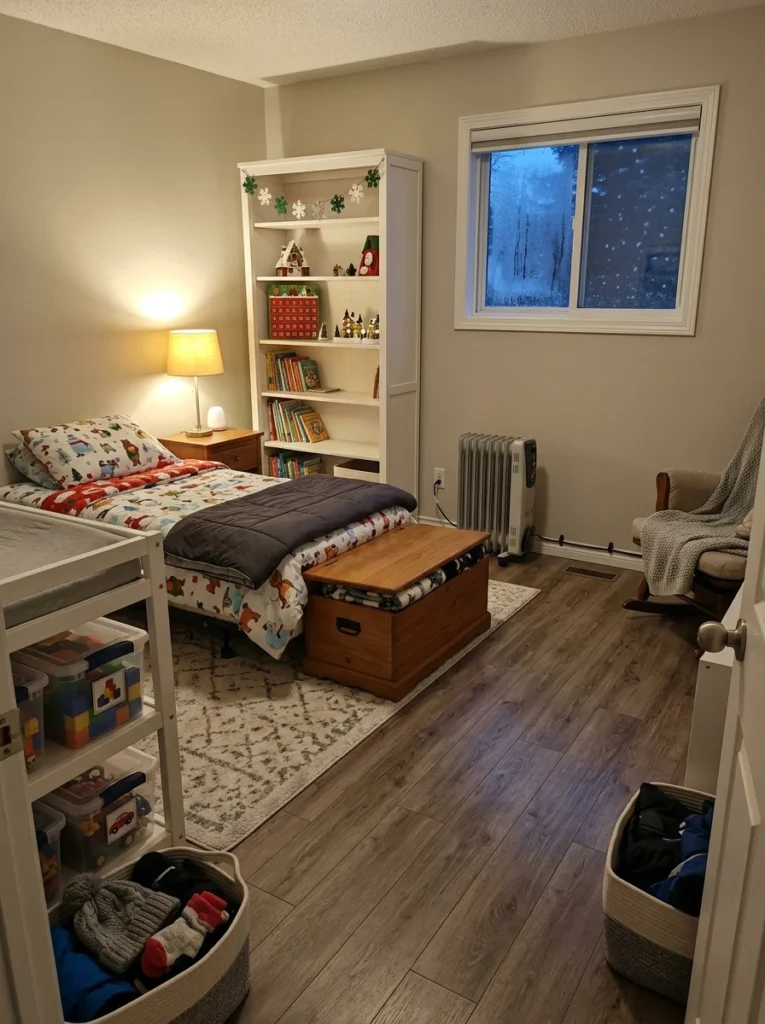
Certain hazards come and go with specific circumstances, a space heater used temporarily during a cold snap, holiday decorations with small parts or cords, a temporary air mattress or inflatable item during a visitor’s stay, and each of these temporary additions deserves the same zone-specific safety consideration as the room’s permanent fixtures. Treating temporary items with the same scrutiny as permanent furniture and fixtures prevents a seasonal or occasional addition from introducing a hazard that a standard, one-time childproofing pass wouldn’t have anticipated.
Do I need to anchor bookshelves even if they seem sturdy?
Yes, anchoring any freestanding furniture, including bookshelves that seem stable, is important since tip-over incidents remain a genuine, documented hazard once a child is mobile enough to climb or pull up using the furniture, regardless of how sturdy it may seem under normal, non-climbing use.
Are window screens enough to prevent a child from falling out a window?
No, standard window screens are designed to keep insects out, not to support a child’s weight, so window guards or stops specifically designed to prevent a window from opening wide enough for a fall should be installed on windows near a child’s bed or furniture.
What should I check in a closet for childproofing purposes?
Check for anything hazardous stored within reach, like cleaning supplies or small objects, and confirm bifold or sliding doors don’t have exposed finger-pinch points, installing door stops or guards proactively if needed.
How often should I recheck my child’s room for new hazards?
Revisiting each area of the room periodically as your child’s mobility and reach develop, rather than assuming an initial childproofing pass covers the room indefinitely, catches new risks that emerge as your child becomes more capable of climbing, reaching, and exploring further.
Where should a nightlight be placed for safety?
A nightlight should be positioned away from a child’s direct reach, stay cool to the touch, and avoid having an accessible cord, providing enough light for safe nighttime navigation while addressing both burn and strangulation concerns a poorly placed option could otherwise introduce.
Should temporary items like holiday decorations be childproofed too?
Yes, temporary additions to a room, seasonal decorations, a space heater, a visitor’s air mattress, deserve the same zone-specific safety consideration as permanent furniture and fixtures, since these occasional items can introduce hazards a standard, one-time childproofing pass wouldn’t have anticipated.
Effective childproofing comes down to treating each area of a child’s bedroom, furniture, windows, electrical, closet, toy storage, bed, flooring, and decor, as its own distinct check rather than one general walkthrough that risks missing zone-specific hazards. Revisiting this process as your child’s abilities change keeps the room genuinely safe throughout the different stages of early childhood.
Our own son’s room, once checked zone by zone rather than through my original quick, general pass, caught several gaps I’d genuinely missed the first time around, and going through the same systematic process again as he’s grown more mobile has continued catching new details worth addressing. If you’ve only ever done one general childproofing sweep of your own child’s room, it’s worth going back through zone by zone; that more deliberate process tends to reveal more than a single overall walkthrough ever will.