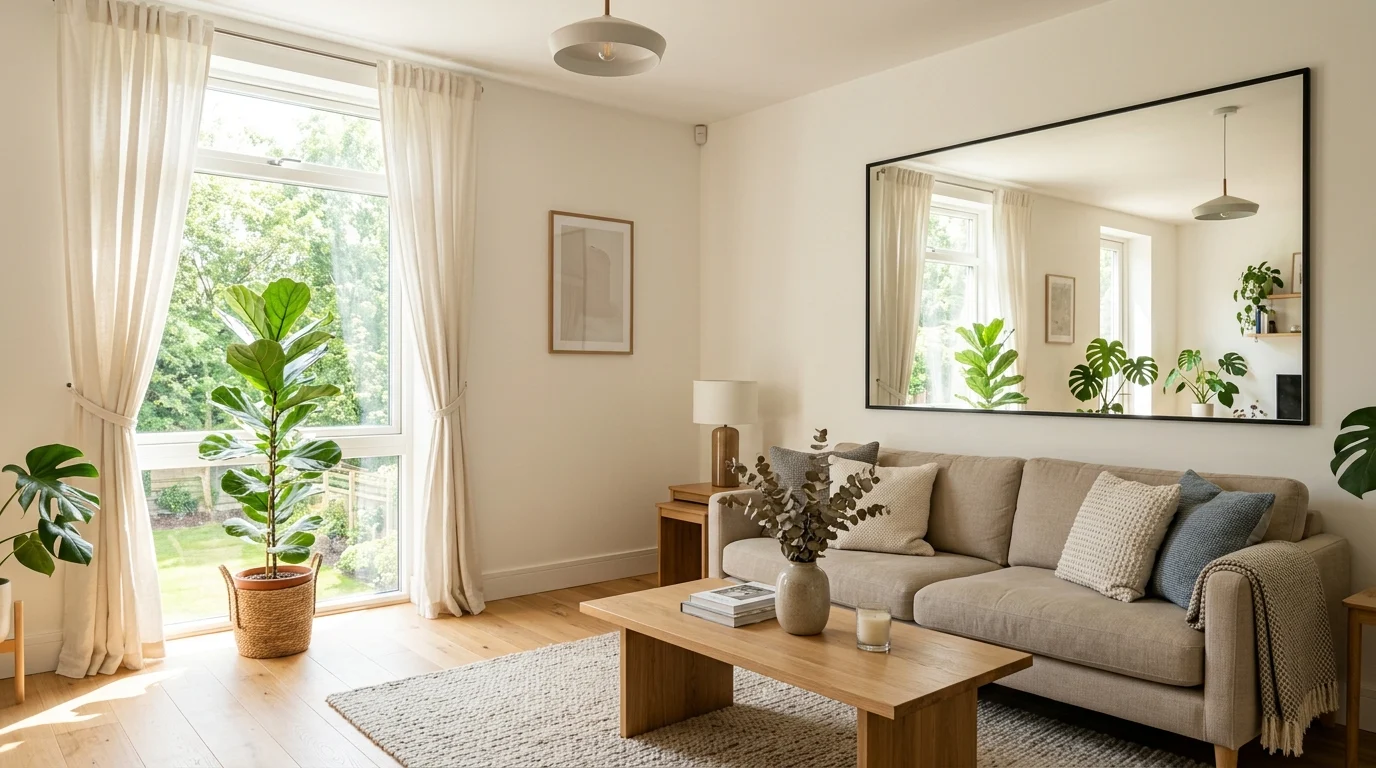
Our living room has exactly one window, north-facing and never particularly generous with direct sunlight, and for years I assumed that was simply the room’s permanent character, a bit dim no matter the time of day. It wasn’t until I finally hung a large mirror directly across from that window, after months of having it propped uselessly against a different wall entirely, that I realized how much difference correct placement actually makes. The room wasn’t transformed into a sun-drenched space overnight, but the difference between the mirror sitting in the wrong spot for months and the right spot for an afternoon was immediately, noticeably obvious.
A mirror’s ability to brighten a room depends almost entirely on where it’s placed relative to your light sources, not just its size or how nice it looks. Here’s how to actually think through placement to get a genuine light-boosting effect, rather than just hanging a mirror somewhere convenient and hoping for the best.
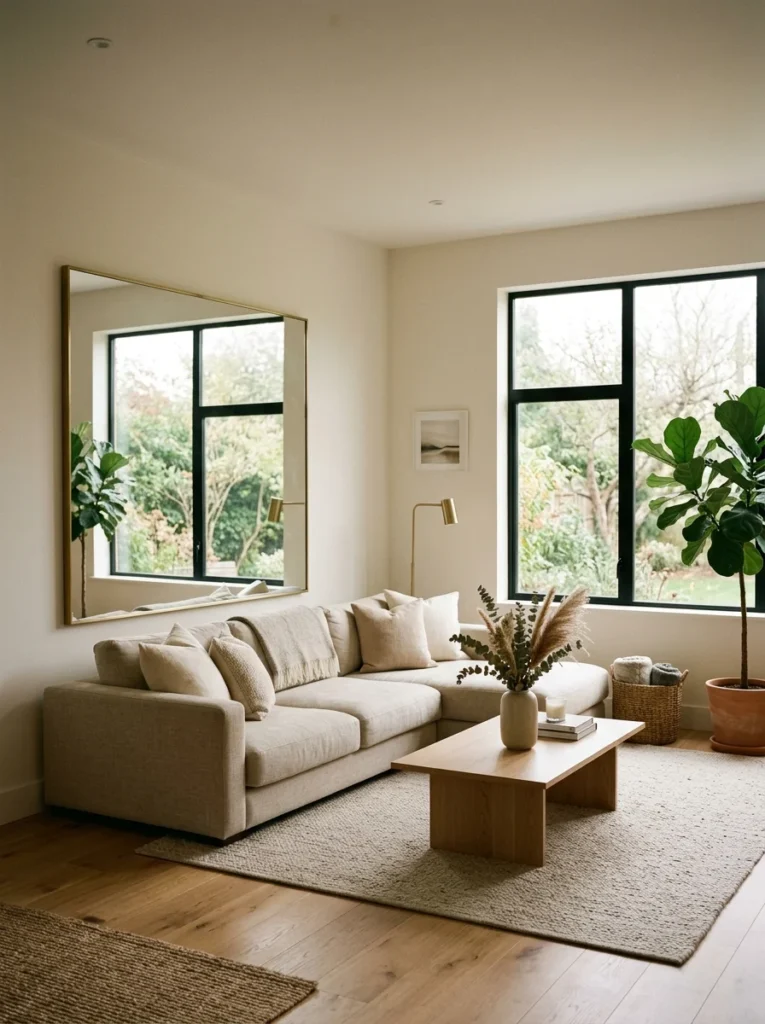
Position the mirror directly across from your main window
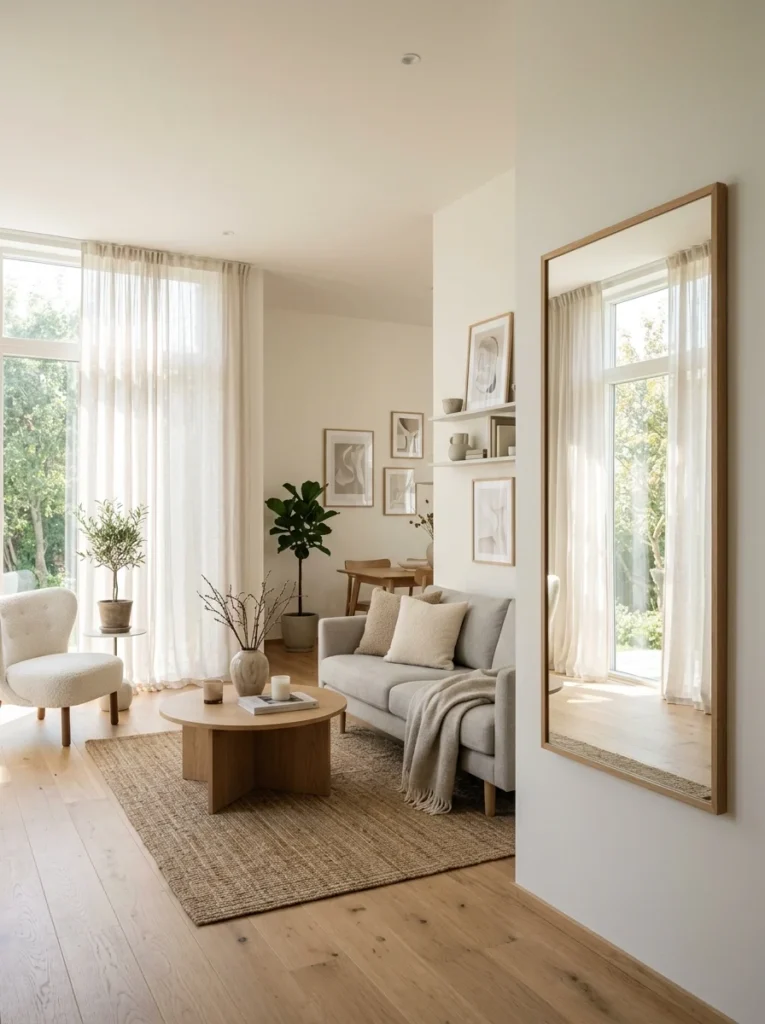
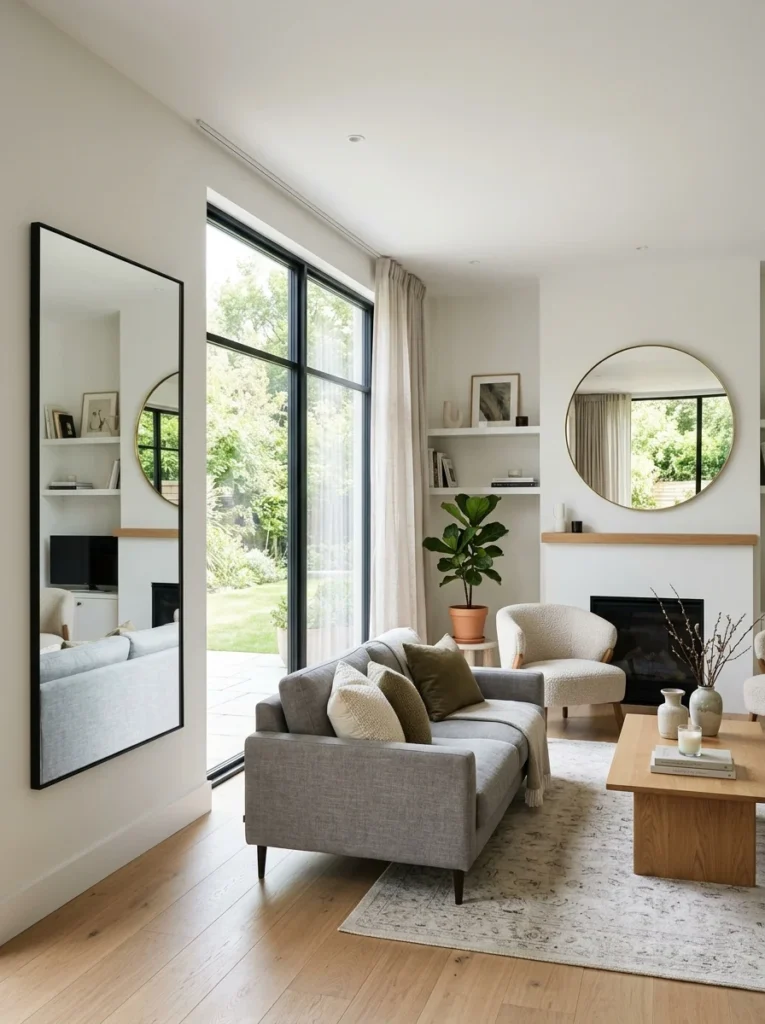
The single most effective placement for maximizing natural light is hanging a mirror on the wall directly opposite your primary window, since this position allows the mirror to catch and reflect the incoming light straight back across the room rather than at an awkward angle that sends light somewhere less useful. This is the placement that made the real difference in our own living room, and it remains the most reliable starting point if brightening the room is your primary goal for the mirror.
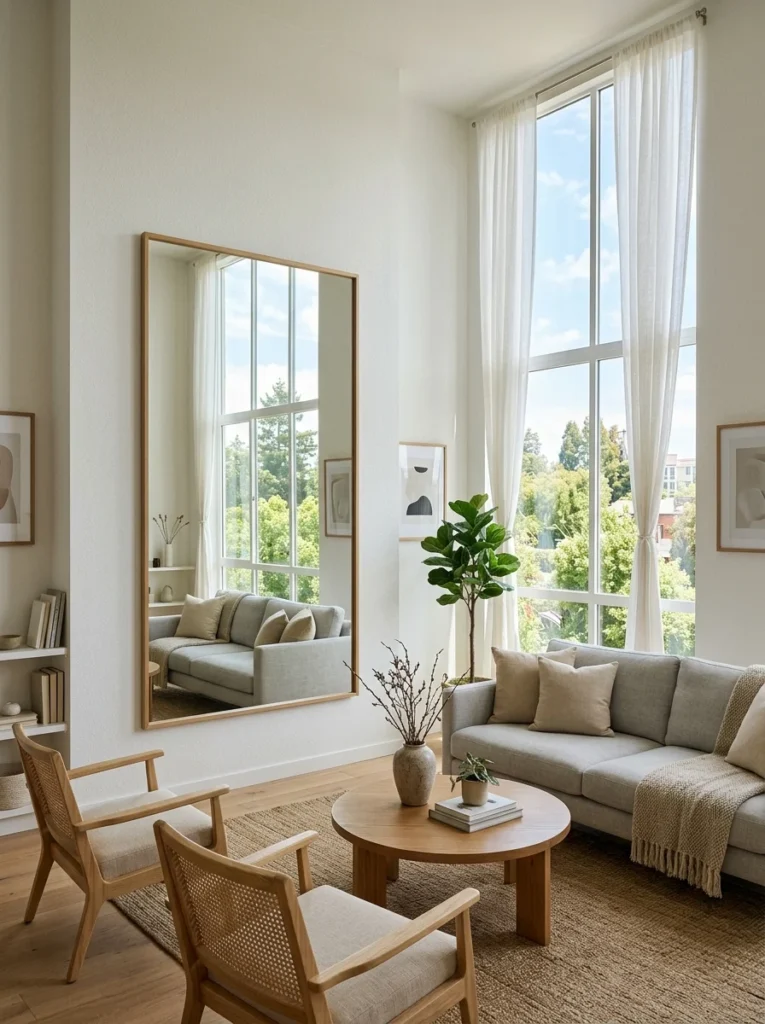
Angle mirrors on adjacent walls to catch light at different times of day
If a direct opposite-the-window placement isn’t possible due to your room’s layout, a mirror on a wall adjacent to the window, angled slightly to catch light as it moves across the room throughout the day, still contributes meaningfully to the room’s overall brightness, even if the effect isn’t quite as dramatic as a direct opposite placement. This approach can also help distribute light into corners of the room that a single opposite-window mirror might not reach as effectively.
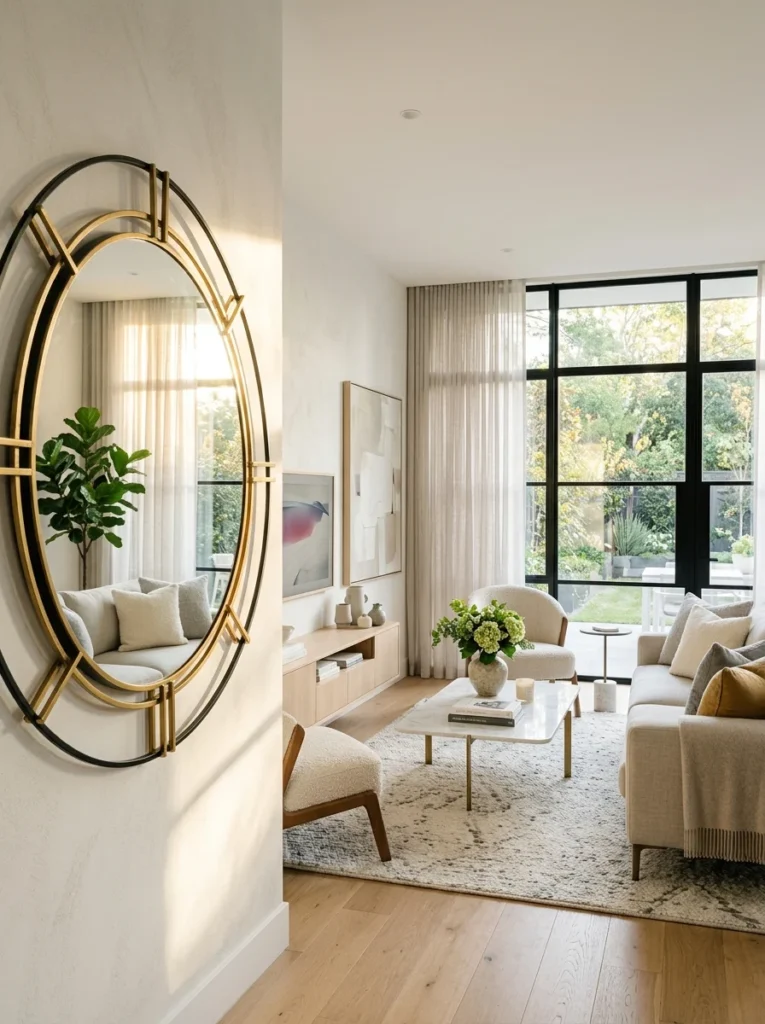
Choose a larger mirror surface for a stronger light-boosting effect
A larger mirror simply has more surface area to reflect light, so when the primary goal is brightening a room, sizing up within what’s proportionally reasonable for the wall and nearby furniture generally delivers a stronger effect than a smaller decorative mirror chosen purely for style. This doesn’t mean the mirror needs to dominate the entire wall, but leaning toward the larger end of what looks proportionally appropriate serves the light-maximizing goal better than a smaller, more subtle piece.
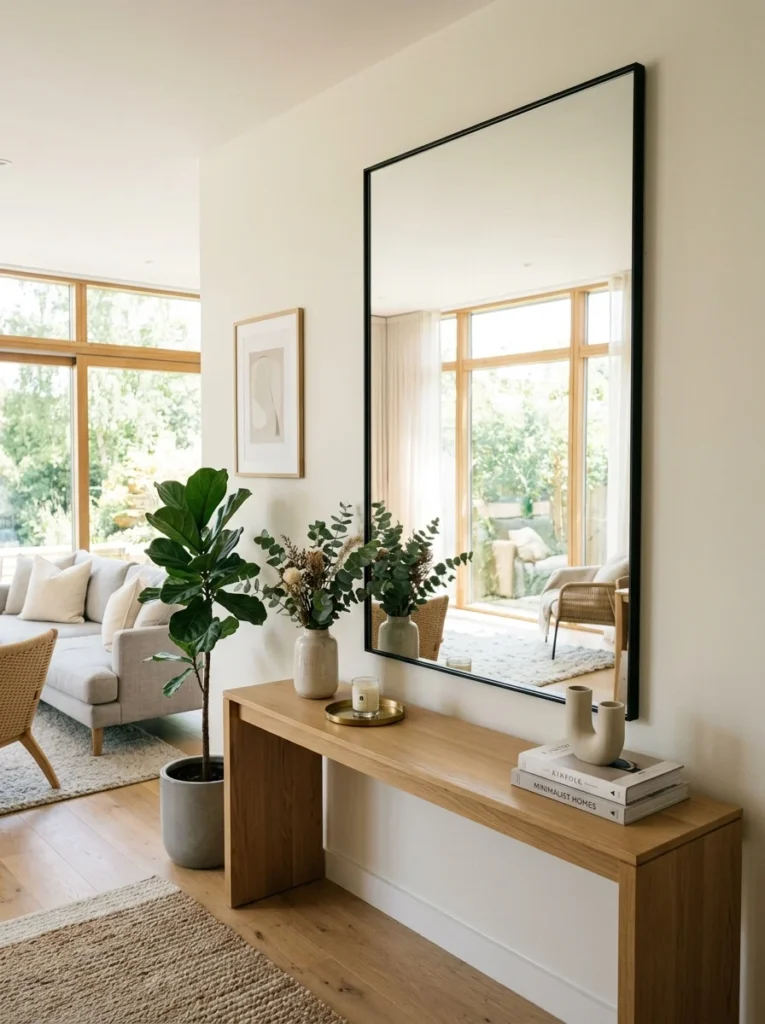
Avoid placing mirrors where they’d reflect an unattractive view
A mirror reflects whatever is directly across from it, which means a mirror positioned to catch light from a window will also reflect whatever else is visible through that window or positioned in that sightline. Before finalizing placement, check what the mirror will actually show once hung, an attractive view of greenery outside is a bonus, while a reflection of a cluttered corner, an unattractive utility area, or a neighboring building’s blank wall undermines the overall effect even if the light-reflecting benefit is technically still working as intended.
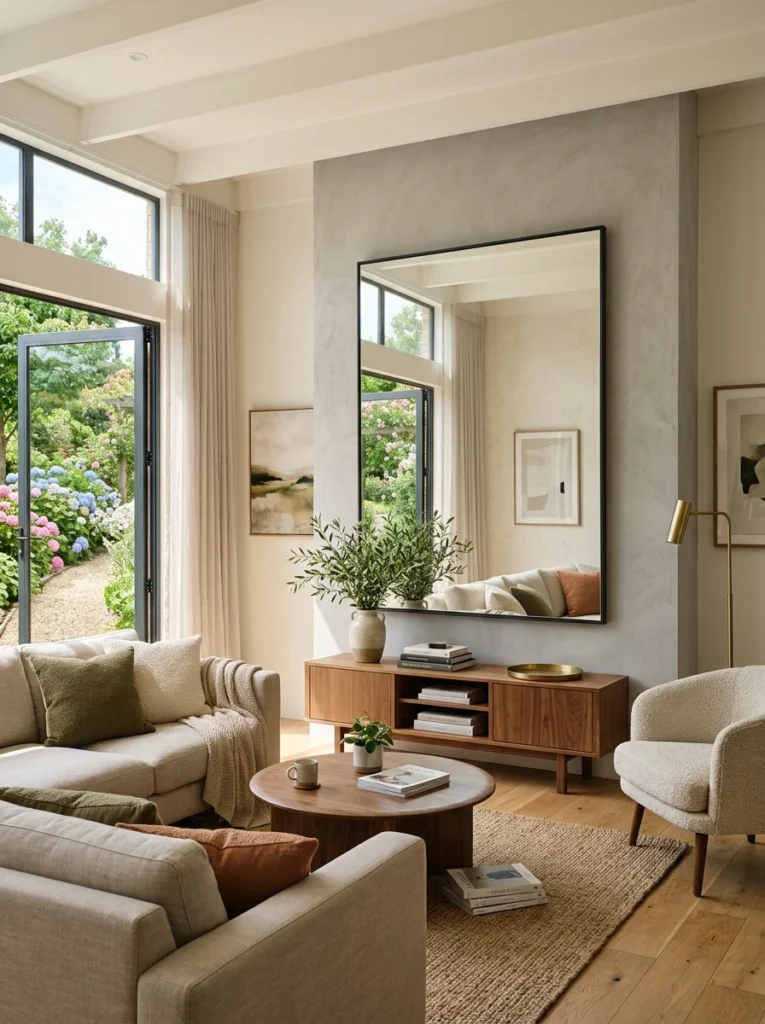
Consider mirrored furniture or accents for additional light distribution
Beyond a single wall-mounted mirror, incorporating a mirrored coffee table, console, or decorative tray surface adds additional reflective area throughout the room at a different height and angle than a wall mirror alone provides. These smaller reflective touches won’t transform a dim room on their own, but combined with a well-placed larger mirror, they contribute incrementally to the overall sense of brightness and openness throughout the space.
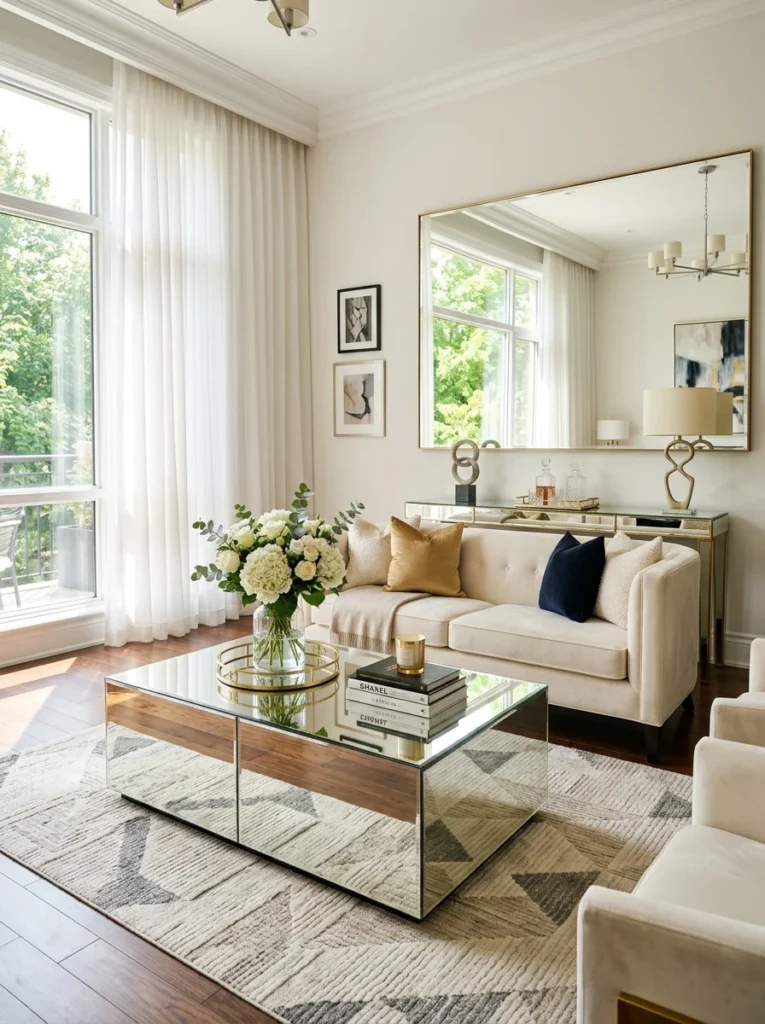
Use a mirror to bounce light into a specific dark corner
If your living room has one specific persistently dark corner, rather than an overall dim quality throughout, a smaller mirror positioned specifically to catch and redirect light into that corner can address the problem directly, without necessarily requiring a large, room-dominating mirror as the primary solution. This targeted approach works well when the rest of the room already receives reasonable natural light and only one specific area needs additional help.
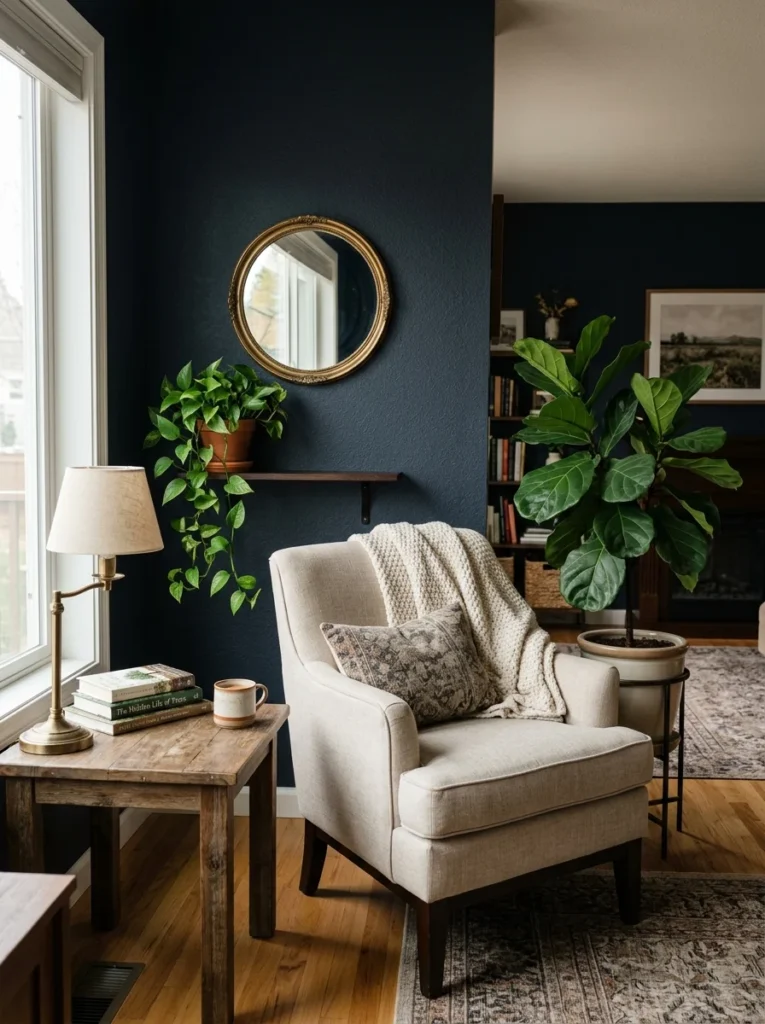
Position mirrors perpendicular to windows for a different lighting effect
A mirror positioned on a wall perpendicular to the window, rather than directly opposite or fully adjacent, catches light at a different angle and can help distribute brightness more evenly across the width of the room rather than concentrating the reflected light toward one specific area. This placement works particularly well in a longer, narrower living room, where a single opposite-window mirror might brighten one end effectively while leaving the far end of the room comparatively dim.
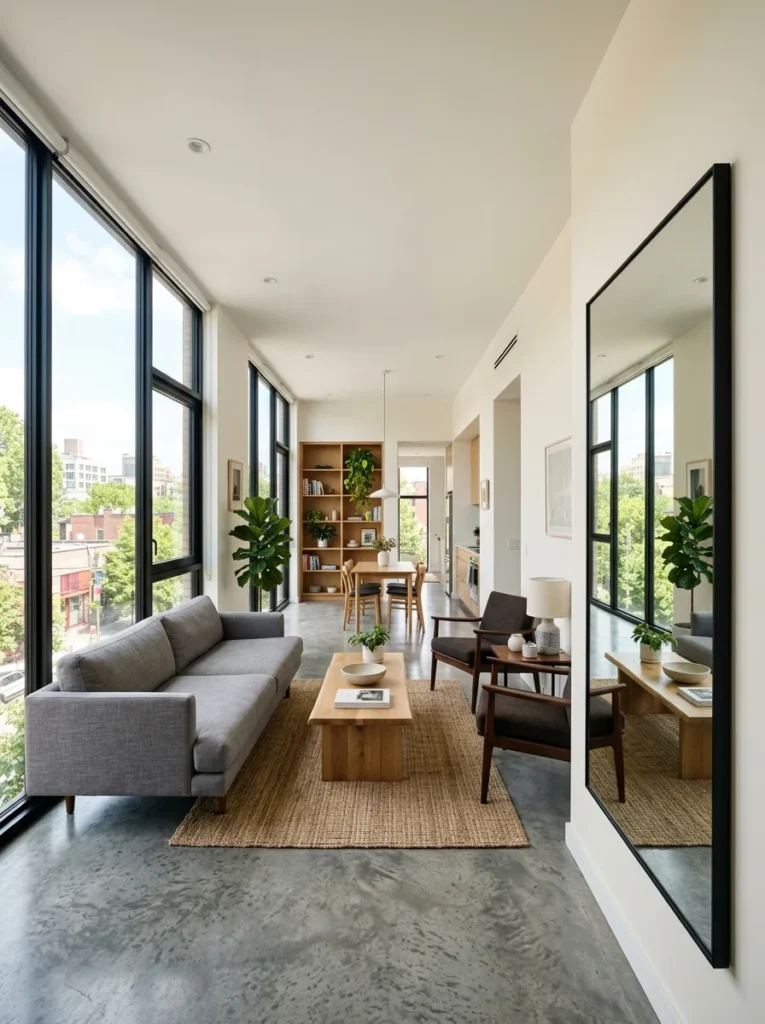
Pair mirror placement with lighter wall colors and finishes
A mirror’s light-reflecting benefit is amplified when paired with lighter wall colors, since the mirror is reflecting both the direct natural light and the ambient light already bouncing around a room finished in lighter tones. In a room with darker walls, a mirror still helps, but the overall brightening effect tends to be less dramatic than the same mirror placement in a room with a lighter base palette to begin with, which is worth considering together rather than treating mirror placement and wall color as entirely separate decisions.
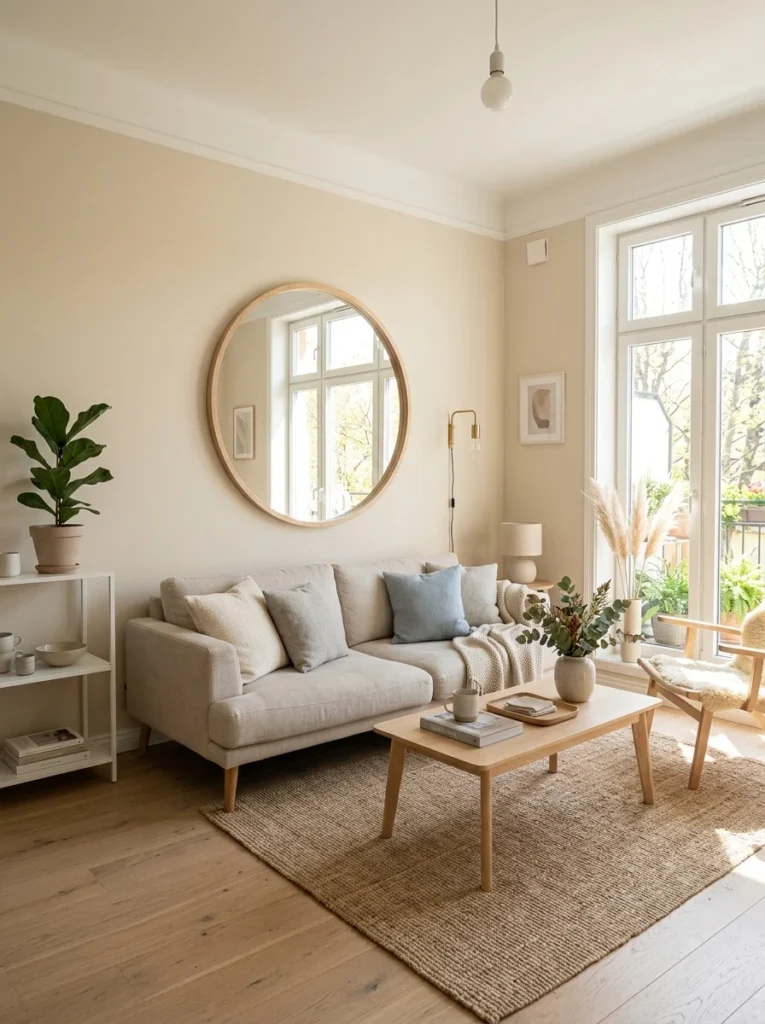
Avoid mirrors directly facing a television or other screen
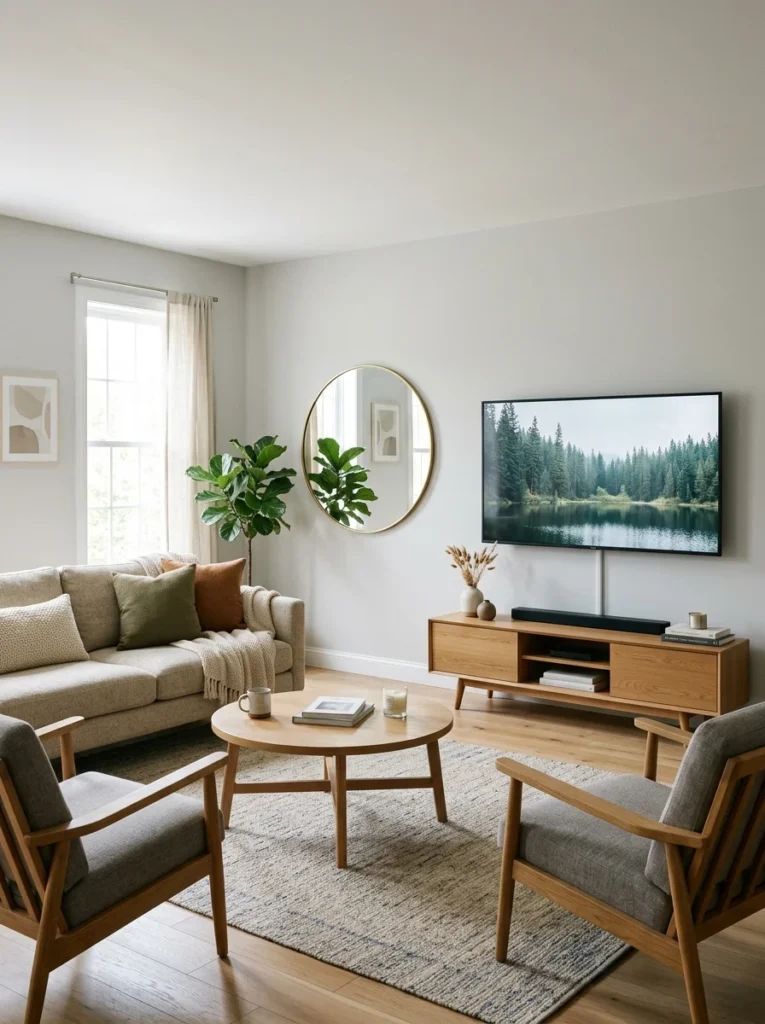
While maximizing light is often the primary goal, it’s worth checking that your planned mirror placement doesn’t create an awkward reflection or glare issue for anyone watching television or working at a screen elsewhere in the room. A mirror positioned to catch great natural light but also reflecting glare directly into the primary seating area’s sightline toward the television creates a genuine daily annoyance that’s worth avoiding through a slightly adjusted placement, even if it means a marginally less optimal light-reflecting angle.
Test placement before committing to permanent installation
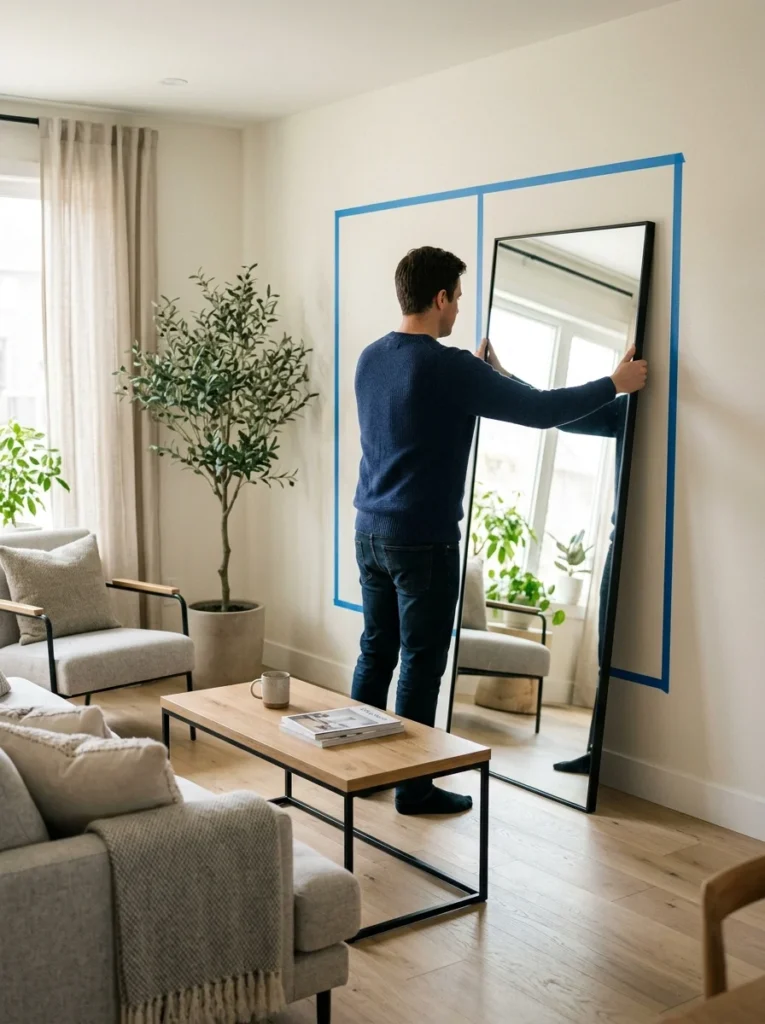
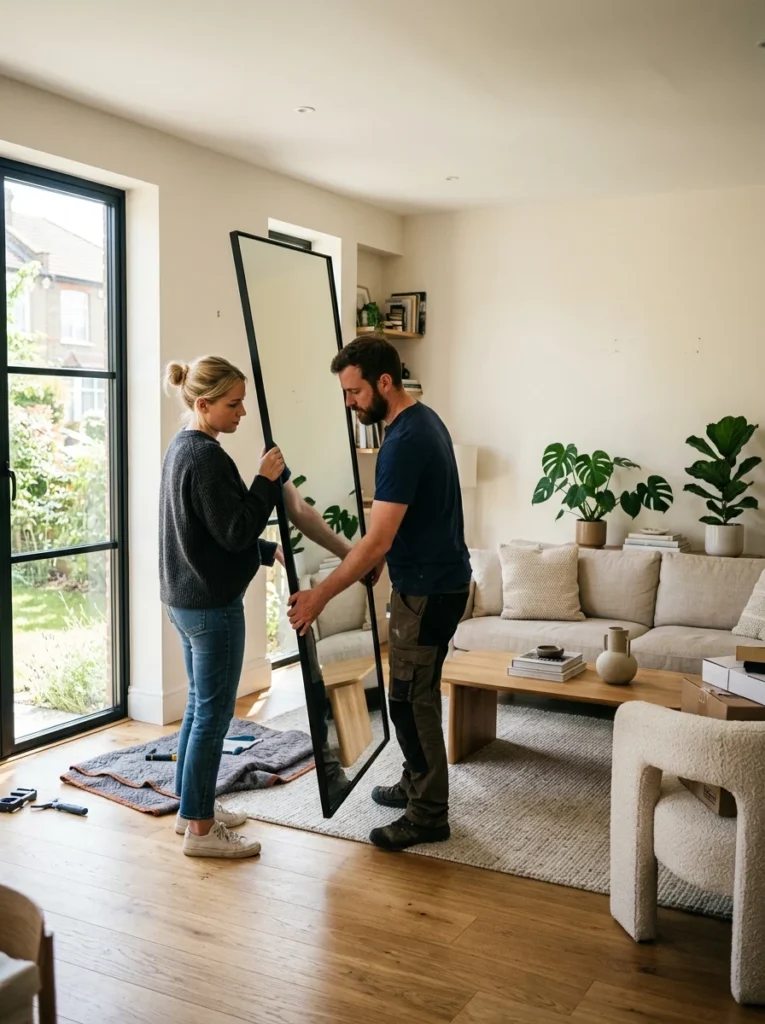
Before drilling any holes, prop the mirror in your planned spot, or use painter’s tape to mark its outline directly on the wall, and observe the room at different times of day to confirm the placement actually delivers the light benefit you’re expecting. Natural light shifts considerably between morning, midday, and evening, and a placement that looks great at noon might not be doing much useful work during the hours you actually spend the most time in the room.
Choose a frame finish that supports rather than distracts from the light effect
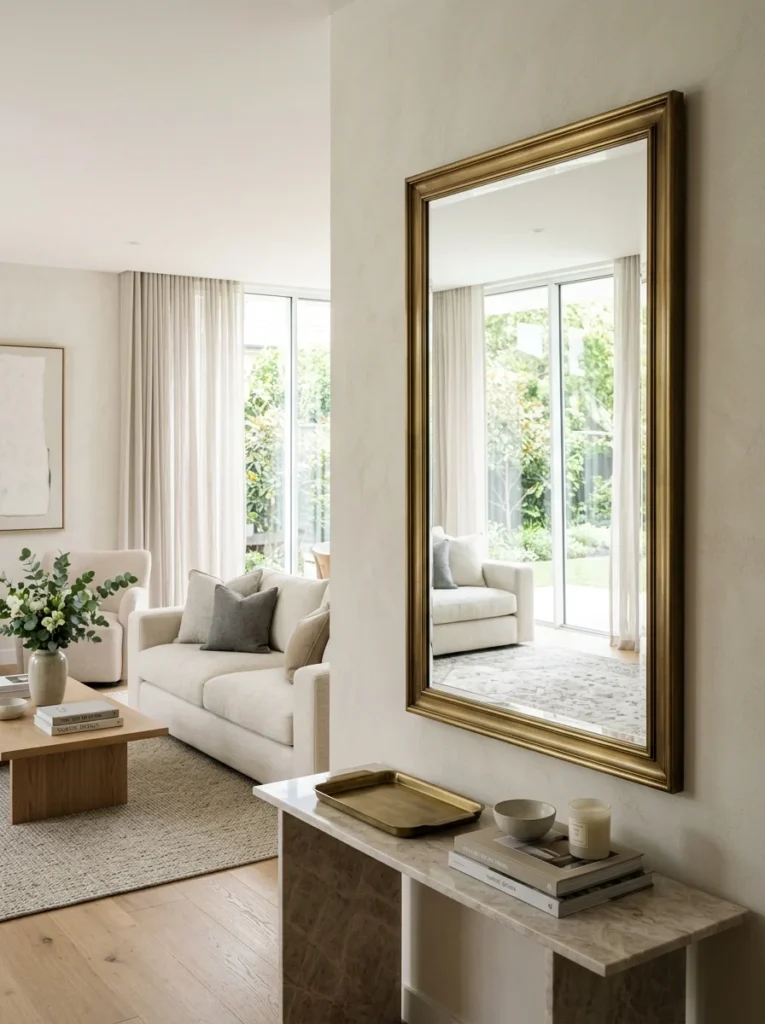
A frame with a reflective or metallic finish, brass, chrome, or a polished silver tone, adds a subtle secondary reflective quality around the mirror’s edge, contributing marginally to the overall light-bouncing effect compared to a matte, non-reflective frame material. This is a smaller factor than the mirror’s core placement and size, but it’s worth considering as a supporting detail rather than choosing a frame based purely on color coordination without any thought to its own reflective properties.
Use multiple smaller mirrors instead of one large piece if needed
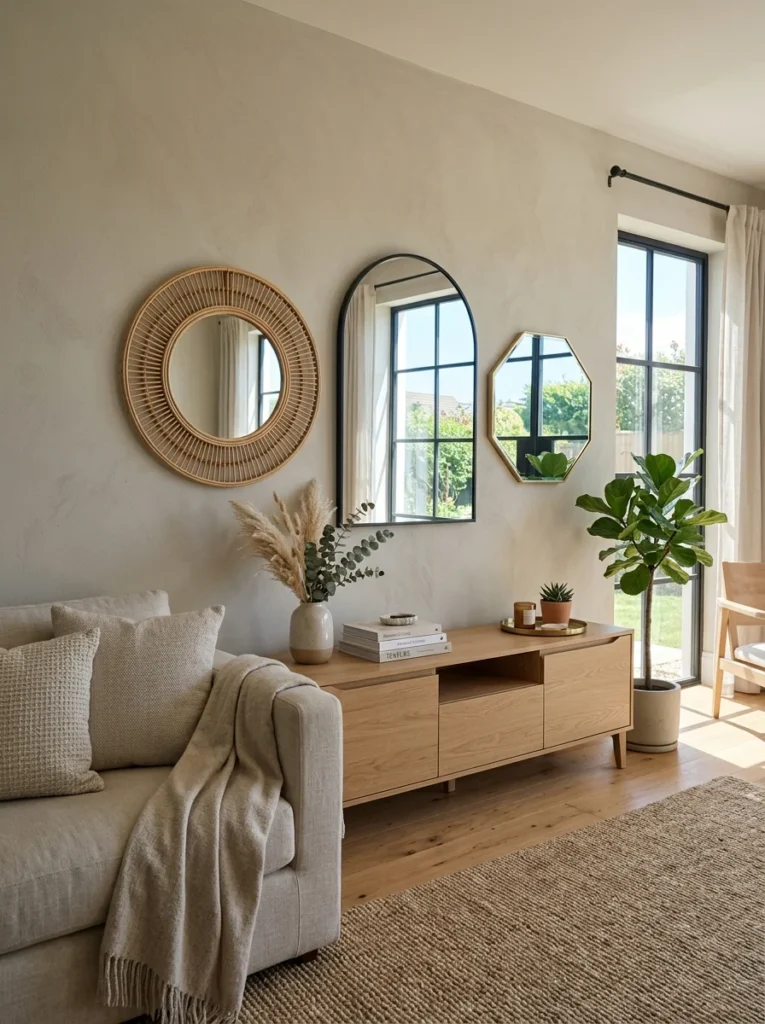
In a living room where a single large mirror doesn’t fit well due to furniture arrangement or wall space constraints, a cluster of two or three smaller mirrors positioned thoughtfully across a wall or on adjacent walls can achieve a meaningfully similar light-distributing effect to one larger piece. This approach requires a bit more planning to avoid looking scattered rather than intentional, similar to the considerations involved in planning a gallery wall arrangement, but it offers a genuine alternative when a single large mirror simply isn’t practical for the specific room’s layout.
Reassess mirror placement if you rearrange furniture or renovate
A mirror placement that worked well for maximizing light in a previous furniture arrangement may no longer serve that purpose as effectively after a significant furniture rearrangement or a small renovation that changes window treatments, wall colors, or nearby light-blocking elements like new shelving. Revisiting whether your existing mirror is still positioned optimally after any of these changes ensures the light-maximizing benefit isn’t quietly lost simply because the room evolved around a mirror placement decision made under different circumstances.
Factor in window treatments when planning mirror placement
Heavy curtains or blinds that block a significant portion of the window during the day reduce how much natural light actually reaches a mirror positioned to reflect it, regardless of how well-placed that mirror otherwise is. If maximizing light is a genuine priority, pairing your mirror placement strategy with lighter, more sheer window treatments, or simply keeping existing curtains open further during daylight hours, ensures the mirror has adequate light to actually reflect in the first place, rather than working against a window treatment that’s inadvertently limiting the light supply.
Common living room mirror placement questions
Where should I hang a mirror to maximize natural light?
Directly across from your main window is generally the most effective placement, since it allows the mirror to catch and reflect incoming light straight back across the room rather than at an angle that redirects it less usefully.
Does mirror size matter for brightening a room?
Yes, a larger mirror has more surface area to reflect light, generally delivering a stronger brightening effect than a smaller decorative mirror, provided the size still remains proportional to the wall and surrounding furniture.
Can a mirror actually fix a dark corner in a living room?
A smaller mirror positioned specifically to catch and redirect light into a persistently dark corner can meaningfully help with that specific area, particularly if the rest of the room already receives reasonable natural light and only one spot needs additional brightness.
Should I avoid certain mirror placements even if they maximize light?
Yes, avoid placements that reflect an unattractive view, clutter, or a blank neighboring wall, and check that the mirror doesn’t create glare or an awkward reflection for anyone watching television or working at a screen in the room’s main seating area.
Do window treatments affect how well a mirror brightens a room?
Yes, heavy curtains or blinds that block significant light reduce how much a well-placed mirror can actually reflect. Using lighter, sheer treatments or keeping curtains open further during the day ensures the mirror has adequate natural light available to work with in the first place.
Maximizing natural light with a mirror comes down almost entirely to placement: directly opposite the main window for the strongest effect, on an adjacent or perpendicular wall for a more distributed effect, and always checked against what the mirror will actually reflect before committing to a permanent installation. A larger mirror paired with lighter wall colors amplifies the benefit further.
Our own living room’s single north-facing window never became a sun-drenched showpiece, but moving that mirror to the correct wall made a genuine, immediately noticeable difference that months in the wrong spot never delivered. If your own room feels dimmer than it should, before assuming you simply need more or bigger windows, try testing a mirror directly opposite whatever natural light source you do have; the placement itself may be doing more of the work than you’d expect.