
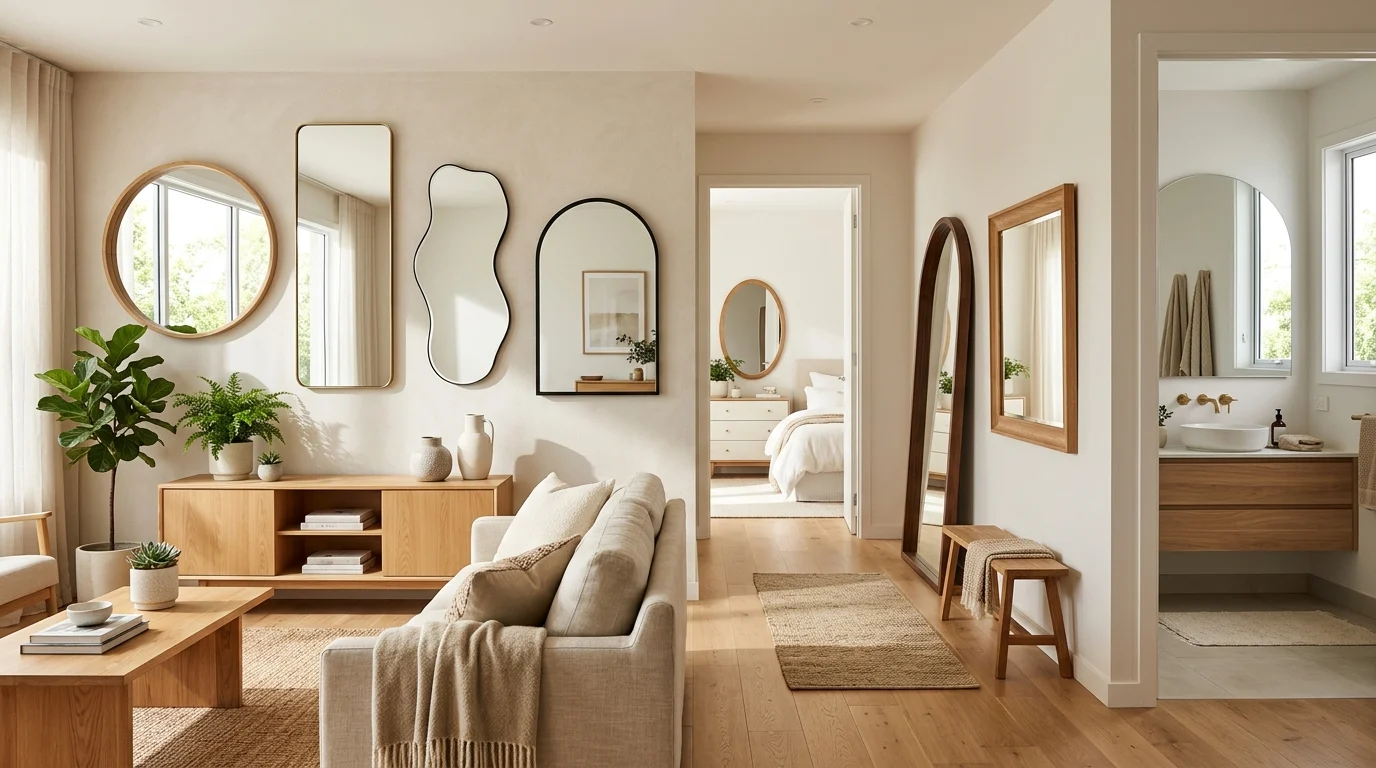
I bought my first statement mirror almost entirely on impulse, a huge round mirror I loved in the store, and brought it home only to realize it fought visually with almost everything else in the room, the rectangular furniture, the straight lines of the window trim, even the shape of the room itself. It sat in a closet for months before I finally rehung it somewhere it actually worked, in a small round entryway nook where its shape complemented rather than competed with the space. That experience taught me that mirror shape isn’t just a style preference; it genuinely interacts with a room’s proportions, existing lines, and function in ways that are worth understanding before you buy.
Below is an honest breakdown of the most common mirror shapes, what each one does well, and how to think through choosing the right one for a specific room rather than just picking whatever looks appealing in a showroom photo.
Rectangular mirrors: the versatile, reliable default
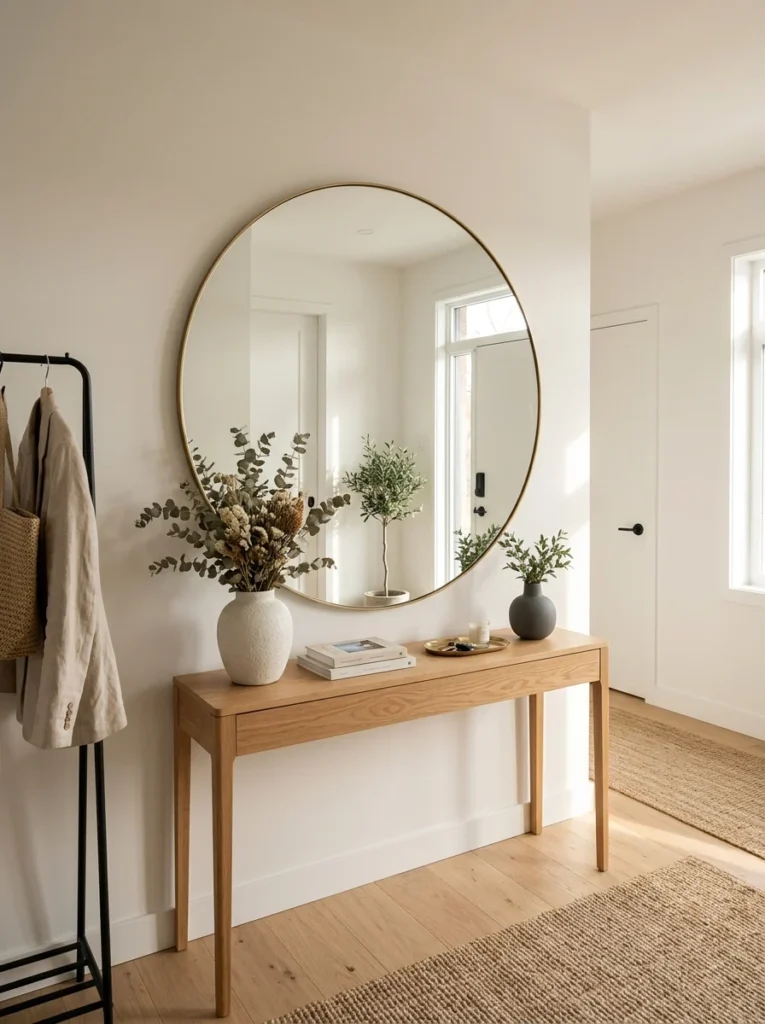
Rectangular mirrors are the most common shape for good reason: they suit almost any room, echo the straight lines already present in most furniture, door frames, and windows, and are available in an enormous range of sizes to fit nearly any wall. A rectangular mirror hung vertically over a console table or dresser adds height to a room, while one hung horizontally above a sofa or headboard adds width and helps anchor a furniture grouping. This shape is a safe, versatile choice when you’re uncertain, since it rarely clashes with a room’s existing architecture.
Round mirrors: softening hard lines and adding visual relief
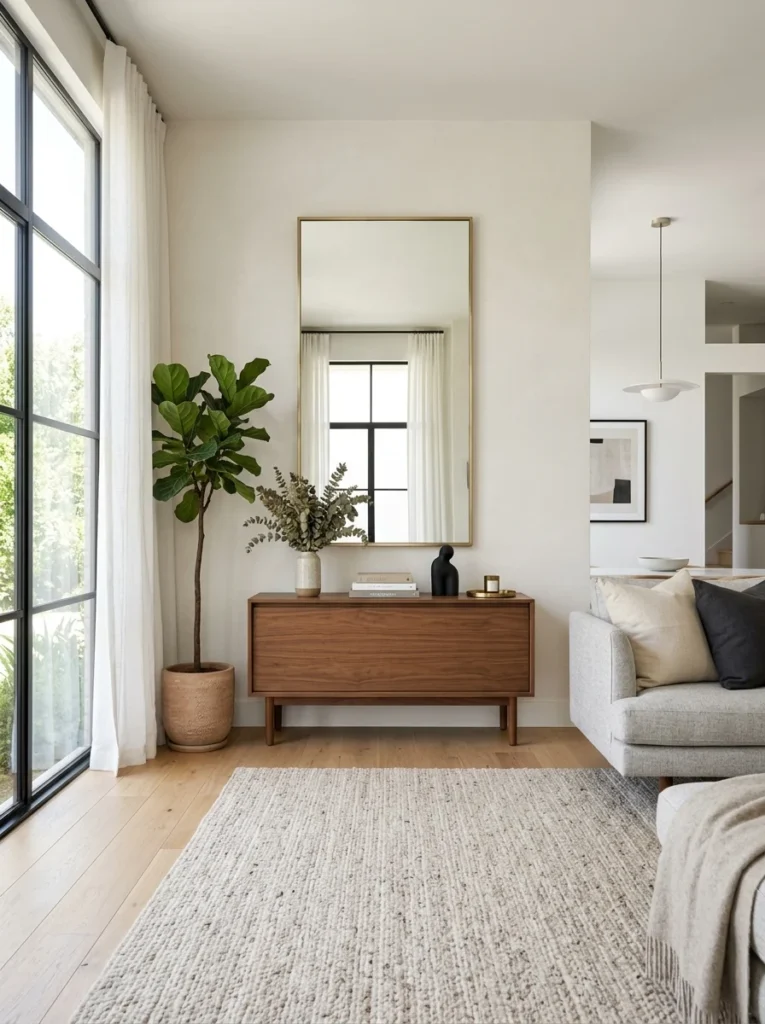
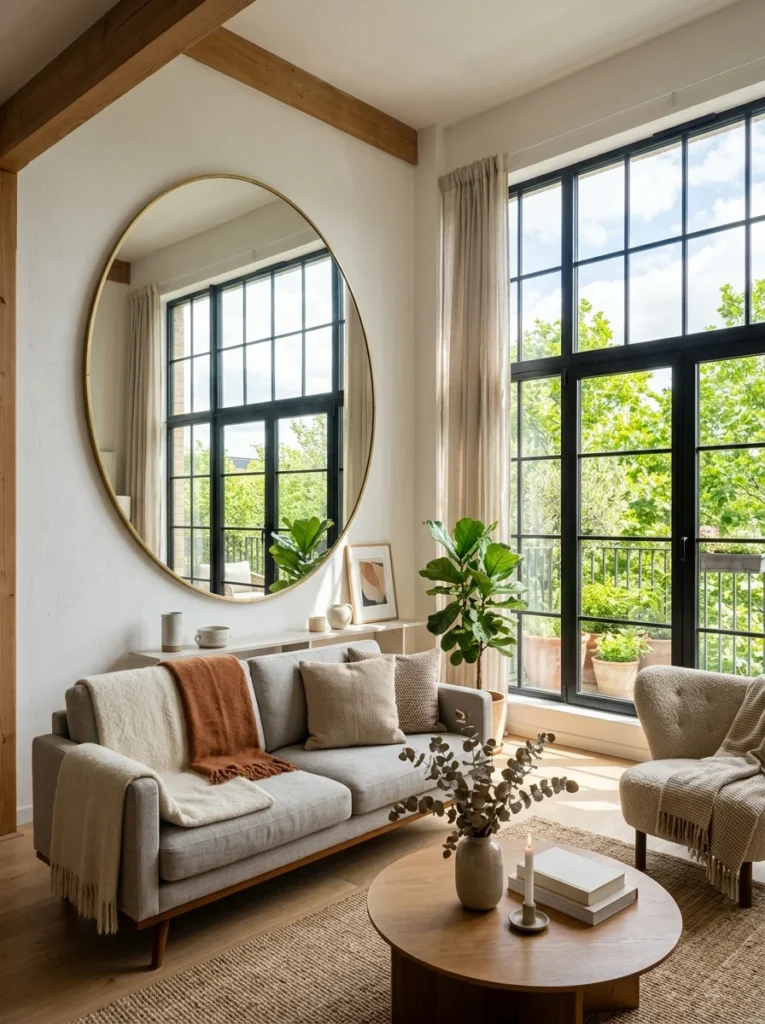
A round mirror introduces a soft, curved counterpoint in a room dominated by straight lines, square furniture, rectangular windows, angular shelving, which is exactly why my own impulse purchase eventually worked so well once it found the right spot. Round mirrors work particularly well above a rectangular console or vanity, where the contrast in shape creates visual interest rather than simply repeating the same rectangular silhouette found throughout the rest of the room. They’re also a strong choice in smaller spaces, since a round shape has no sharp corners to visually compete with a tight room’s existing boundaries.
Oval mirrors: a softer alternative with more presence than round
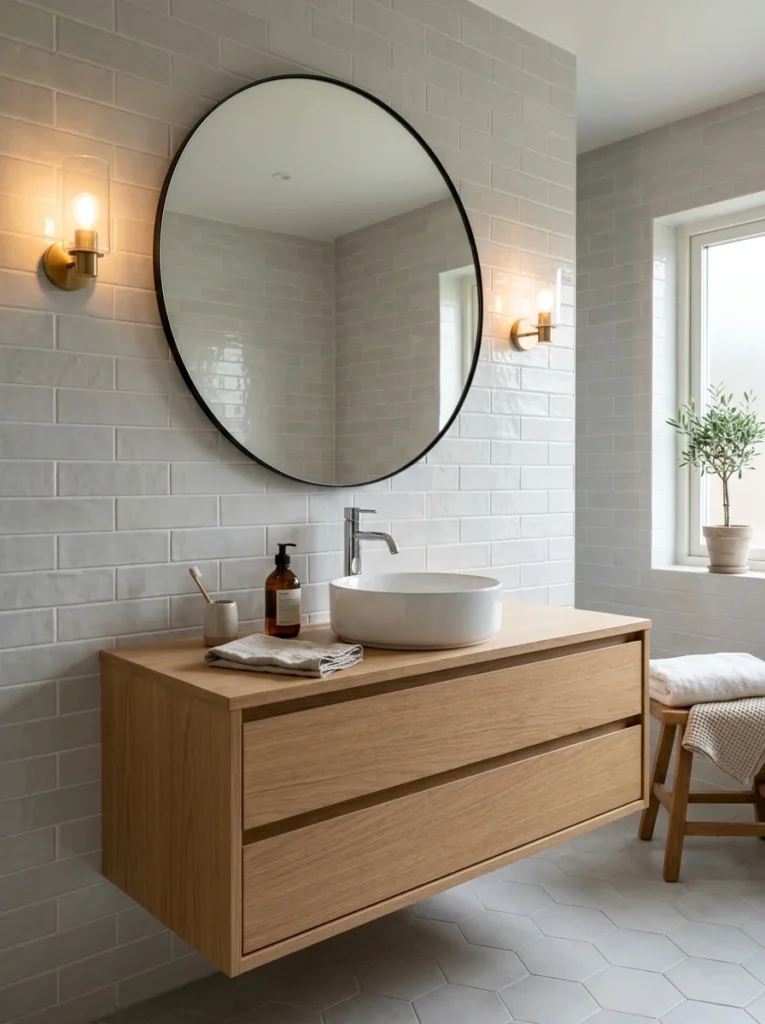
An oval mirror offers much of the same soft, curved relief a round mirror provides, but with more vertical or horizontal presence depending on its orientation, making it a strong choice above a wider console table or a narrower entryway where a perfectly round shape might feel too compact. Oval mirrors also tend to read as slightly more traditional or classic than a round mirror, which can matter if you’re working within a more formal or vintage-inspired design scheme.
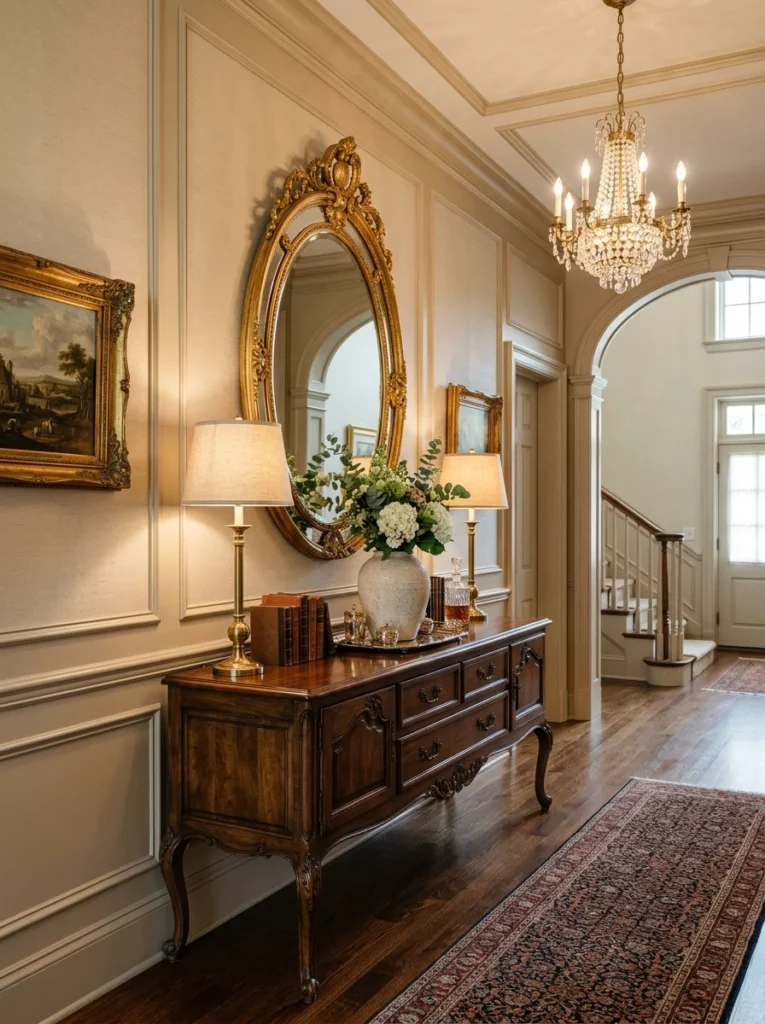
Square mirrors: bold, grounded, and architecturally clean
A square mirror shares rectangular mirrors’ clean lines but reads as more grounded and symmetrical, often working particularly well in a modern or minimalist room where its balanced proportions echo a broader design philosophy built around clean geometry. Square mirrors are a strong choice for a bathroom vanity or a small entryway, where their compact, contained shape doesn’t demand the same wall footprint a larger rectangular or round mirror might require.
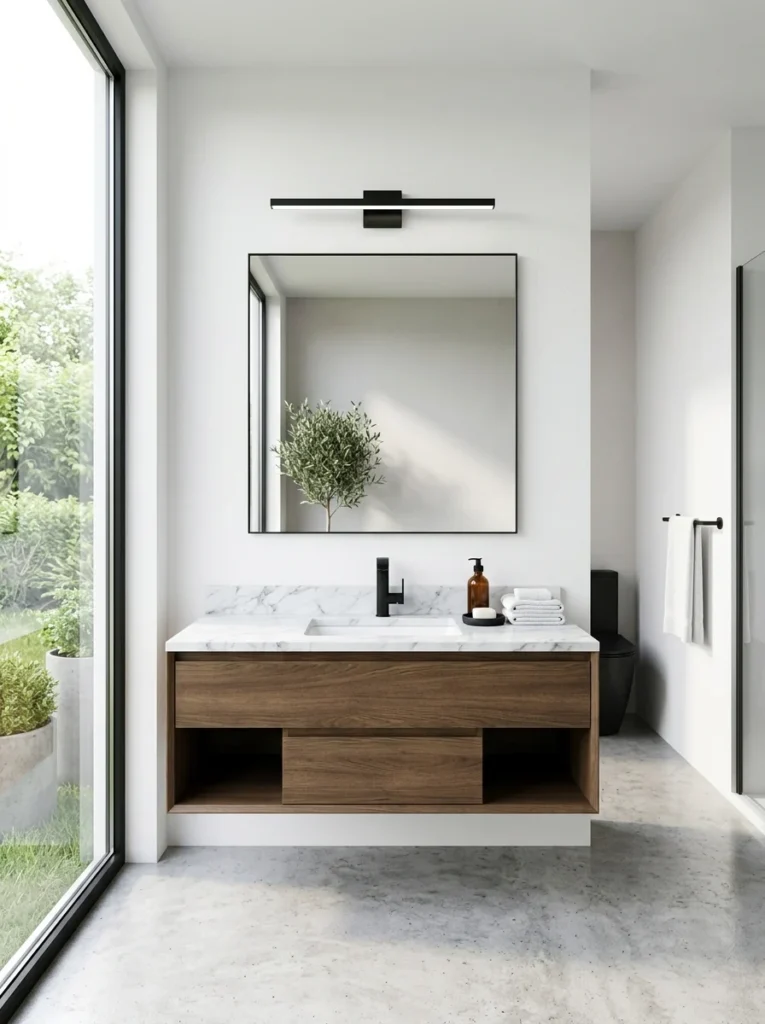
Arched mirrors: a trending shape that softens a room’s top edge
Arched mirrors, whether a full arch or a mirror with just the top corners rounded, have become increasingly popular for their ability to add a bit of architectural interest without committing to a fully round or oval shape. This shape works particularly well in a room with architectural details worth echoing, an arched doorway, a curved window, or in a room that could use a softer visual transition at eye level without losing the more grounded footprint a fully round mirror doesn’t offer.
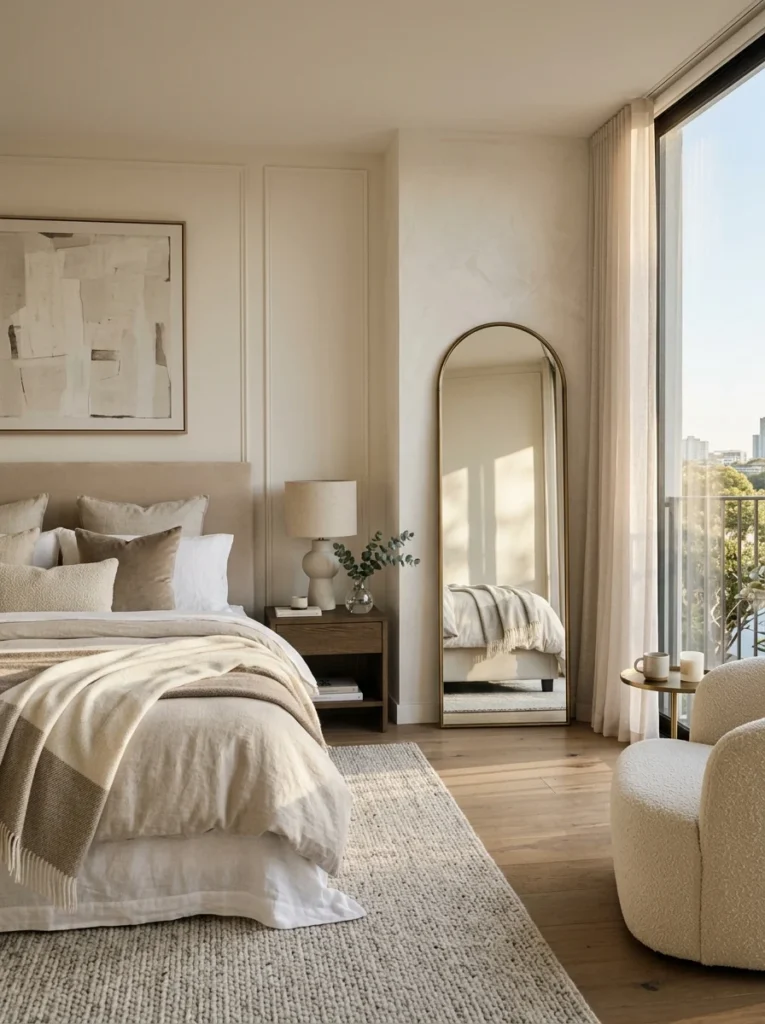
Irregular and asymmetrical mirrors: a bolder, more artistic choice
Irregular shapes, an organic freeform silhouette, an asymmetrical cluster of small mirrors, or a distinctly sculptural frame, work best as a genuine focal point rather than a purely functional mirror, since their unusual shape draws significant visual attention wherever they’re placed. These suit a room already built around a more eclectic, artistic, or maximalist design sensibility, where a mirror functioning partly as art fits the broader aesthetic, but they can feel out of place in a more traditional or minimalist room where every other element follows more conventional lines.
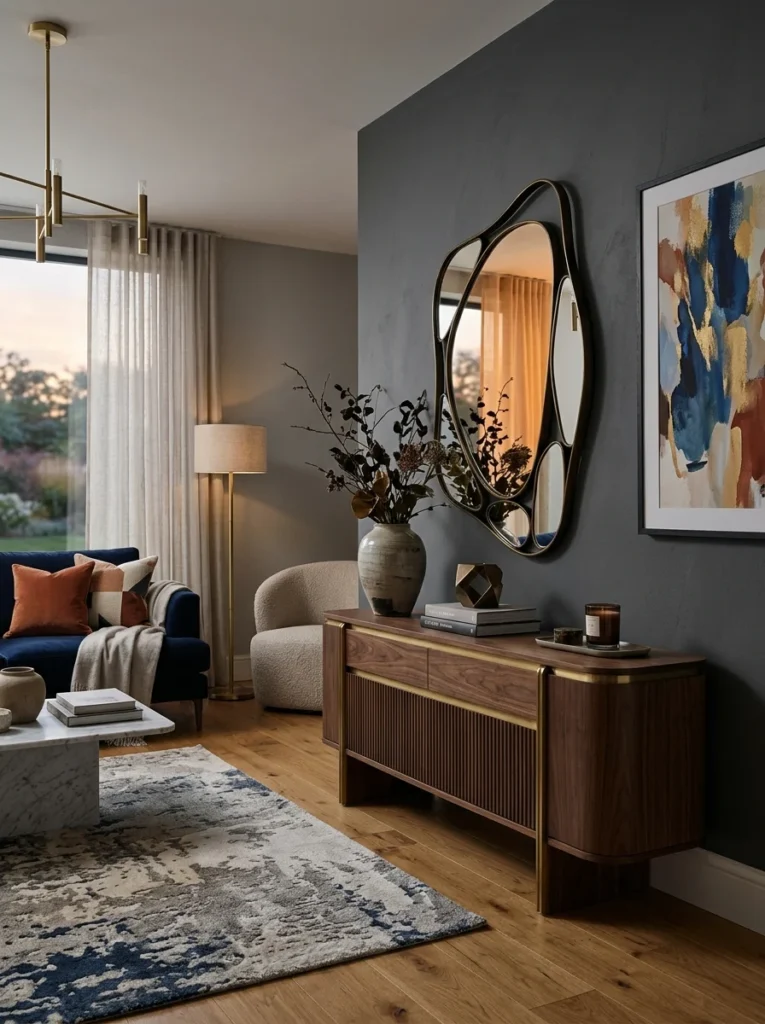
Match mirror shape to the room’s existing furniture lines
Before choosing a shape, look at the dominant lines already present in the room’s furniture and architecture. A room full of straight-edged, angular furniture often benefits from a round or oval mirror to introduce some visual softness and relief, while a room with a lot of curved furniture, rounded armchairs, a curved sofa, an organic coffee table, might actually benefit from a rectangular or square mirror to provide grounding structure and contrast. The goal isn’t necessarily matching every shape in the room, but creating an intentional, considered relationship between the mirror and what surrounds it.
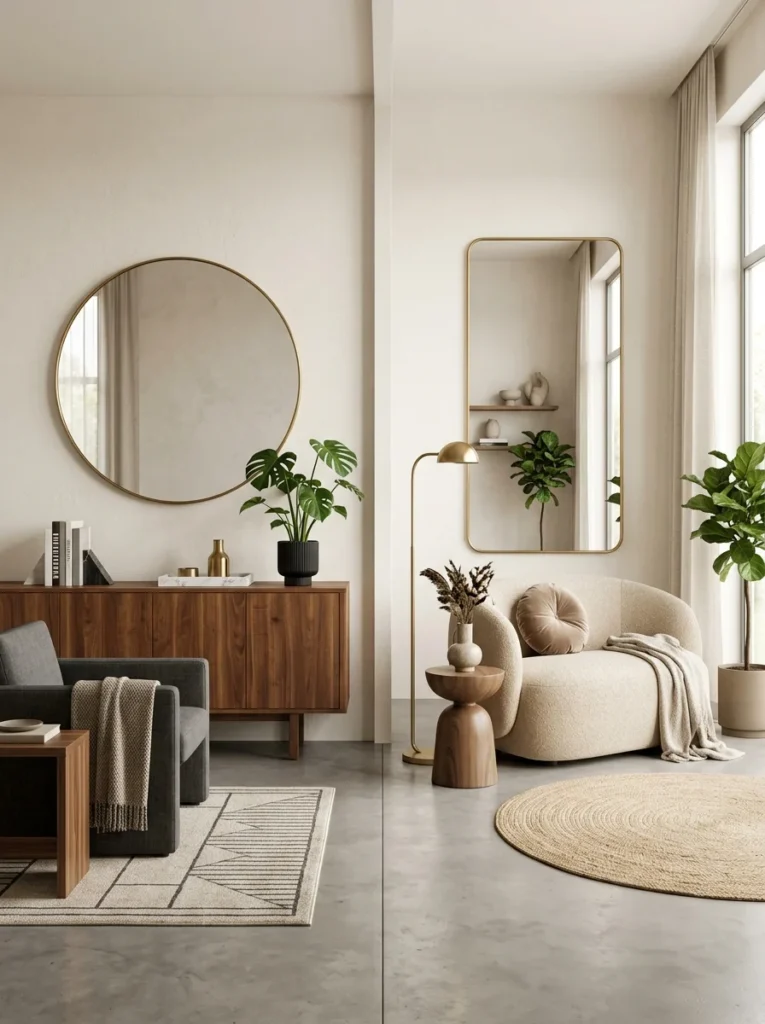
Consider the room’s function, not just its existing furniture
A mirror in an entryway, meant for a quick daily check before heading out the door, benefits from being large enough to see a good portion of yourself, making a taller rectangular, oval, or arched mirror generally more functional than a smaller round one in this specific spot. A decorative mirror above a mantel or console, meant more for visual impact and light reflection than practical daily use, has more flexibility to prioritize shape and style over functional viewing size, since its role in the room is different from a mirror used for a genuine daily grooming check.
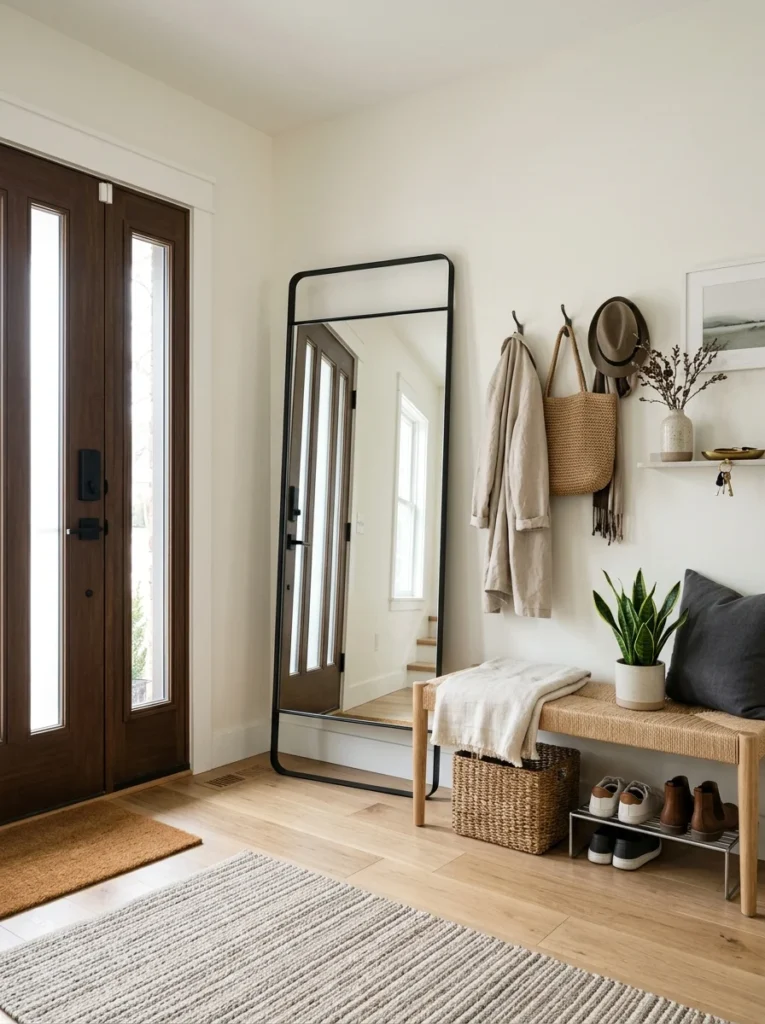
Think about how the mirror’s shape affects perceived room size
A large mirror, in any shape, reflects light and visually expands a room, but the shape itself also plays a role in this effect. A round or oval mirror tends to add a softer sense of expansiveness, since there are no hard corners drawing the eye to a stopping point, while a rectangular or square mirror creates a cleaner, more defined visual break that can make a small room feel more structured but slightly less expansive than a curved alternative of a similar size. In a genuinely small room where maximizing the sense of space matters most, this is worth factoring into the shape decision alongside overall size.
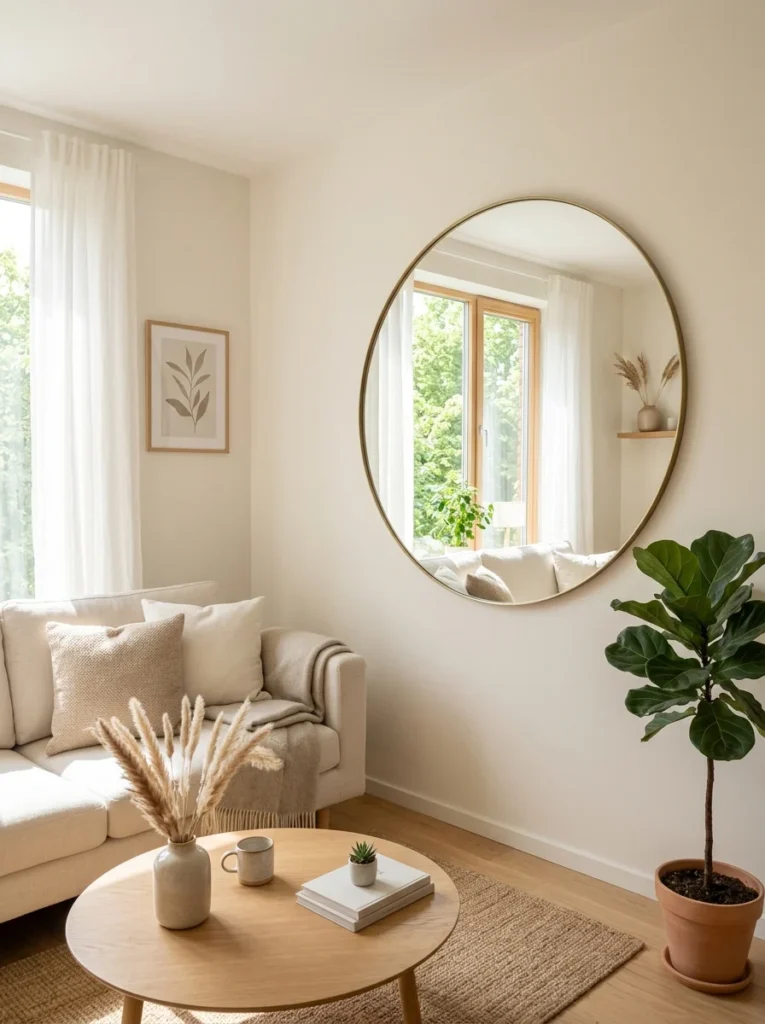
Choose shape based on placement above specific furniture
A mirror hung above a rectangular console or dresser generally looks most proportional in a shape that either closely matches the furniture’s width, a rectangular mirror roughly two-thirds the width of the piece below it, or deliberately contrasts it, a round or oval mirror centered above the same rectangular piece. Avoiding a mirror that’s either significantly narrower or significantly wider than the furniture beneath it, regardless of shape, keeps the overall grouping looking proportional and intentional rather than mismatched.
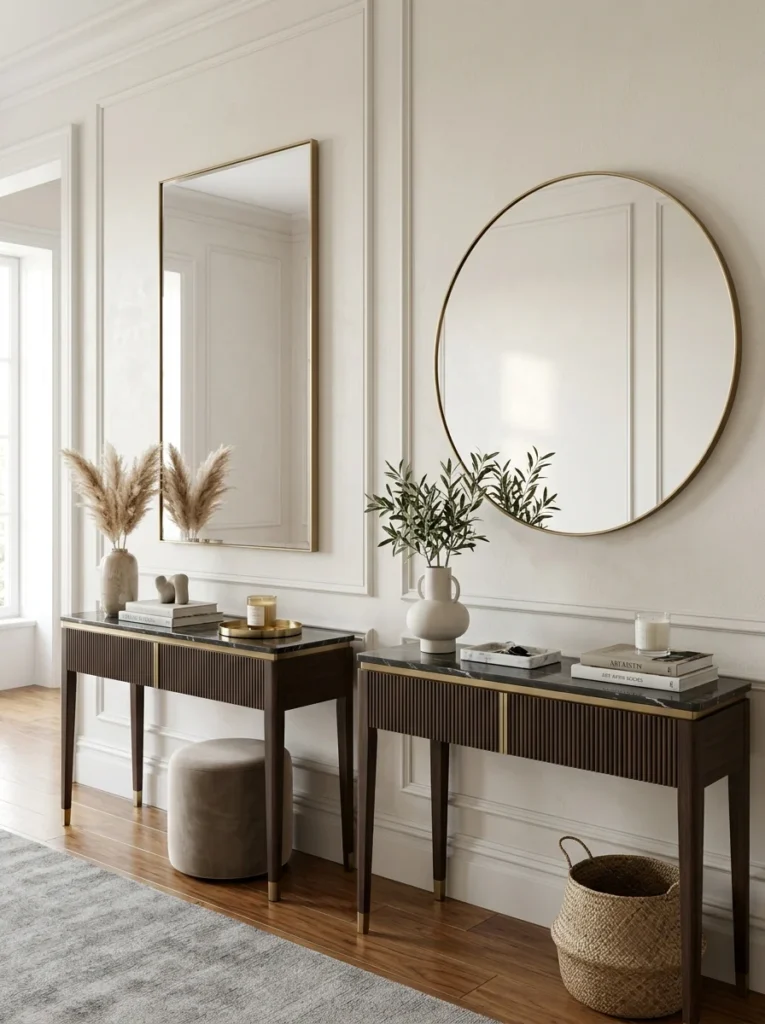
Layer multiple mirror shapes carefully if attempting a gallery-style display
A cluster or gallery-style arrangement of multiple mirrors in varying shapes and sizes can create a striking, layered look, but it requires more careful planning than a single mirror choice, since too many competing shapes without any consistent unifying element, a shared frame color, a similar general size range, can read as chaotic rather than intentional. Sticking to a limited color palette for the frames themselves, even while varying the actual mirror shapes, helps a multi-mirror display feel cohesive rather than random.
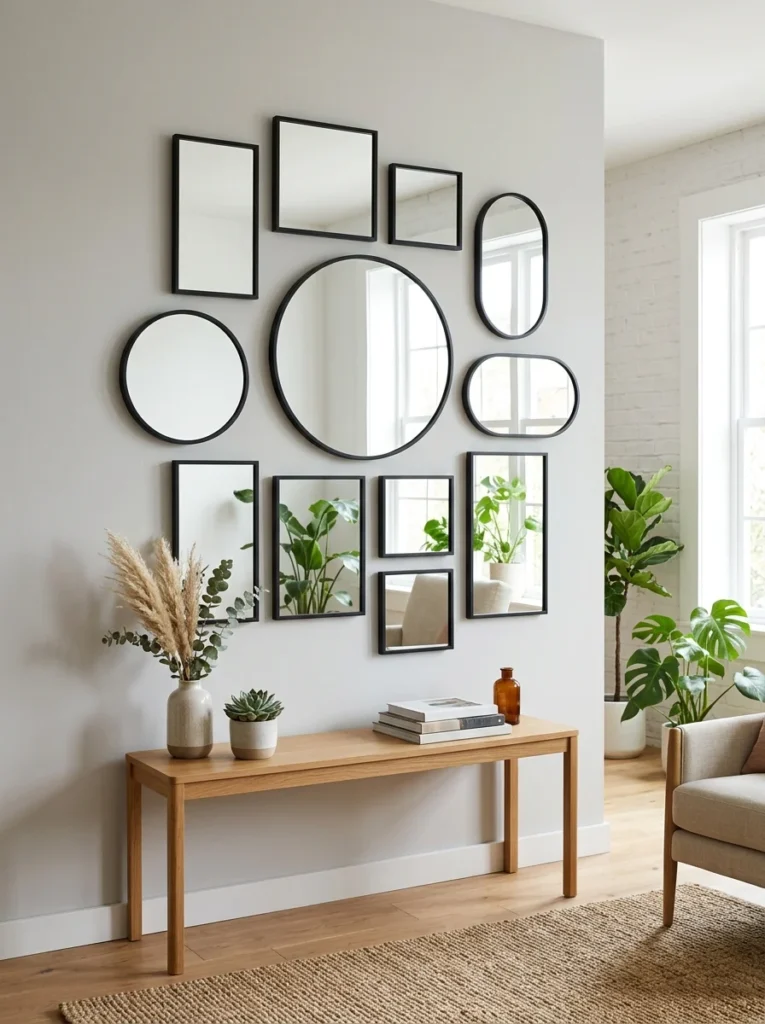
Don’t overlook the frame when choosing a shape
A mirror’s shape and its frame work together to determine the overall style, and the same shape can read completely differently depending on the frame material and finish. A round mirror with a thin, minimal metal frame feels sleek and contemporary, while the same round shape in a chunky, carved wood frame reads as considerably more traditional or rustic. When choosing a shape for a specific room, think about the frame style alongside it, since the combination of the two is really what determines whether the mirror fits the room’s overall design language, not the shape alone.

Consider how the mirror’s shape interacts with natural light
Beyond style, a mirror’s placement relative to natural light sources affects how much it brightens a room, and shape plays a subtle role here too. A wider rectangular or oval mirror positioned to catch light from a window at an angle reflects more of that light back into the room across a broader surface area than a smaller round mirror in the same spot might. If maximizing natural light is a priority in a specific room, this is worth factoring in alongside the shape’s purely stylistic considerations, since the practical lighting benefit and the aesthetic choice don’t always point toward the exact same shape and size.
What mirror shape works best in a small room?
Round or oval mirrors often work particularly well in small rooms, since their lack of hard corners creates a softer, more expansive feeling compared to a rectangular or square mirror of a similar size, which can read as more visually contained.
Should a mirror’s shape match the furniture below it?
Not necessarily. A mirror can either echo the furniture’s existing lines for a cohesive look, or deliberately contrast them, a round mirror above rectangular furniture, for visual interest. What matters most is that the mirror’s width feels proportional to the furniture beneath it, regardless of shape.
Are arched mirrors a passing trend or a lasting design choice?
Arched mirrors have grown significantly in popularity recently, but their softened, architectural shape draws from long-standing design traditions, suggesting they’re likely to remain a solid, versatile choice rather than a shape that will feel dated quickly.
Can I mix different mirror shapes in the same room?
Yes, particularly in a gallery-style arrangement, though it works best when unified by a consistent element like frame color or a similar general size range, since too many competing shapes without any cohesive thread can look disorganized rather than intentional.
Does the mirror frame matter as much as the shape itself?
Yes, the frame material and finish significantly affect how a given shape reads stylistically. The same round or rectangular shape can feel sleek and modern in a thin metal frame or considerably more traditional in a chunky wood frame, so the two choices should be considered together rather than separately.
The right mirror shape depends on the room’s existing furniture lines, its function, its size, and how the mirror will be positioned relative to whatever sits beneath or around it. Rectangular mirrors offer safe versatility, round and oval shapes soften angular rooms, square mirrors ground a modern space, and arched or irregular shapes add architectural interest or artistic flair for rooms built around that kind of design sensibility.
My once-impulsive round mirror eventually found its place in exactly the kind of small, angular entryway nook it was always going to work best in, proof that even a genuinely beautiful mirror still needs the right room to actually shine. Before buying your next mirror, take a few minutes to really look at your room’s existing lines and proportions; that assessment will point you toward the right shape far more reliably than simply picking whatever caught your eye in a store.