
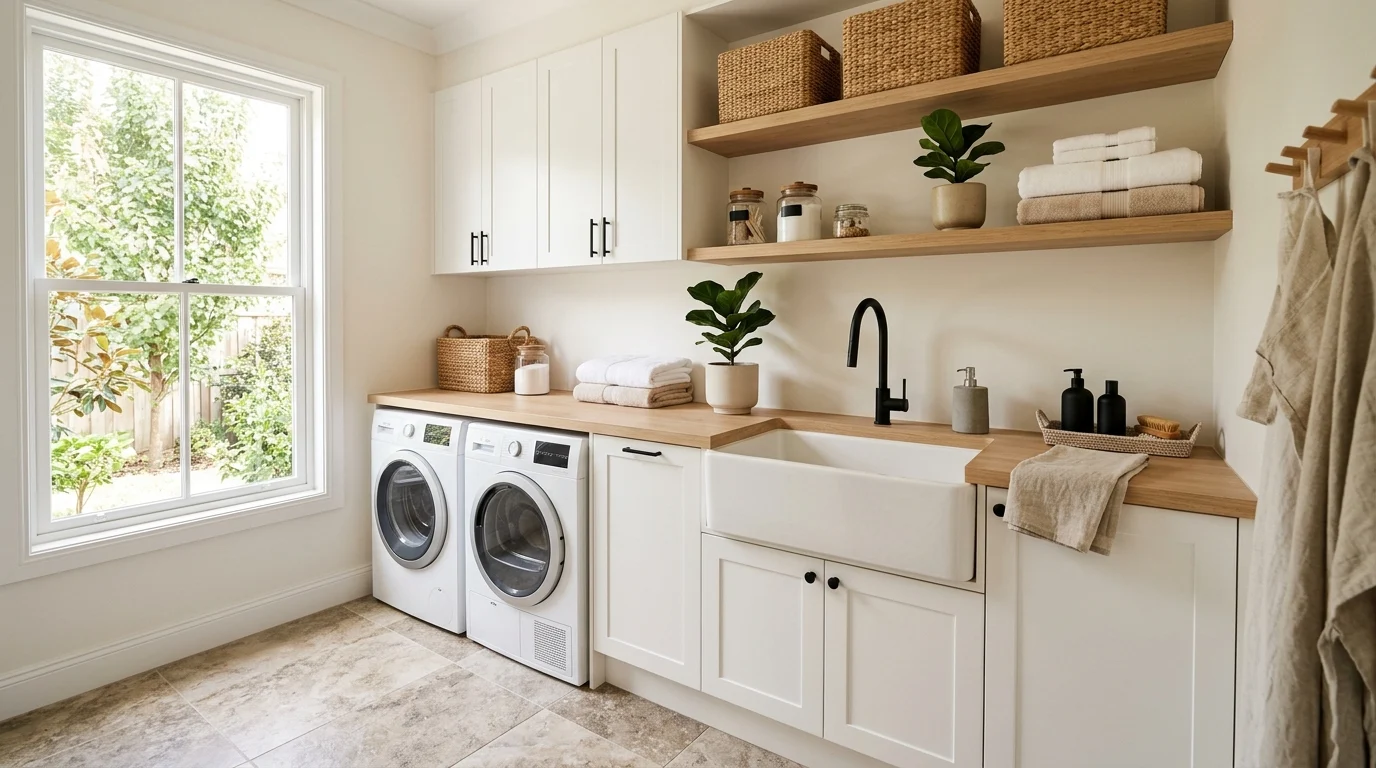
When we finally got around to replacing the flooring in our laundry room, I made the mistake of choosing based almost entirely on how a sample looked under the store’s lighting, without giving much thought to how it would actually hold up to the water, detergent spills, and general wear a laundry room deals with daily. Within a year, the grout lines had discolored and the surface had started showing wear in a way that made the whole room look prematurely tired, despite the floor being brand new. Replacing it again, this time with real research into water resistance and durability specific to laundry room conditions, gave us a floor that’s actually held up the way I originally expected the first one to.
A laundry room floor deals with more than most people initially account for, water from occasional leaks or spills, detergent and fabric softener drips, heavy foot traffic if it doubles as a mudroom, and the vibration from washer and dryer cycles over time. Below is an honest look at the most common flooring options, weighing durability against style so you can choose one that actually holds up in this specific room.
Vinyl: the practical, budget-friendly workhorse
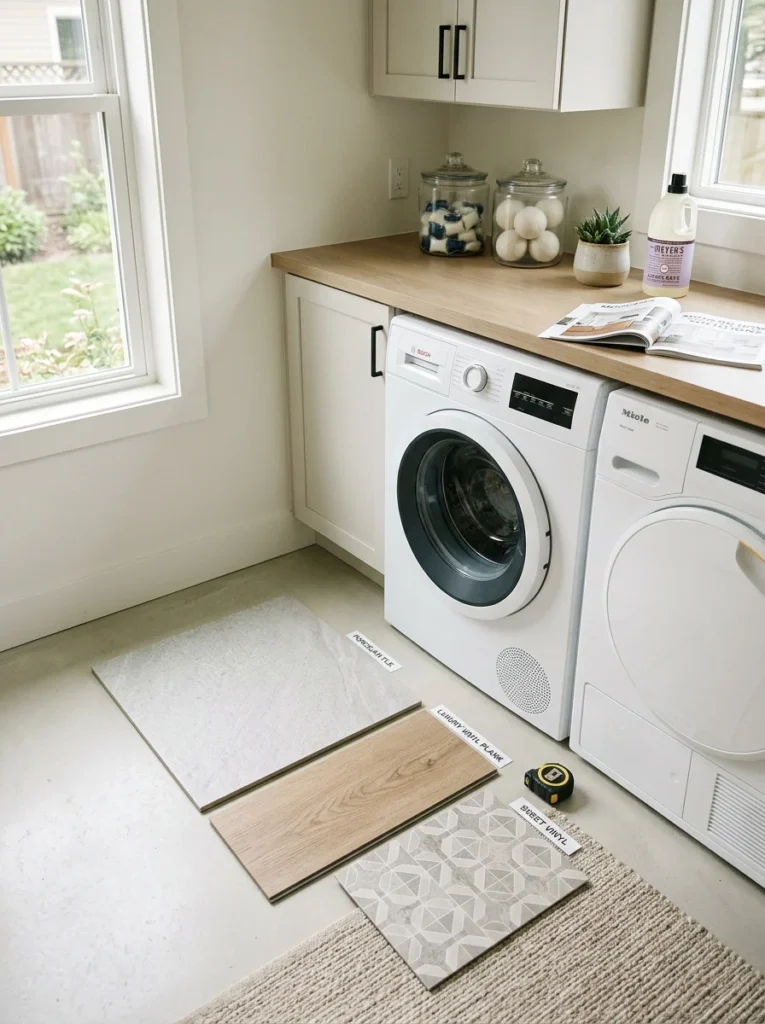
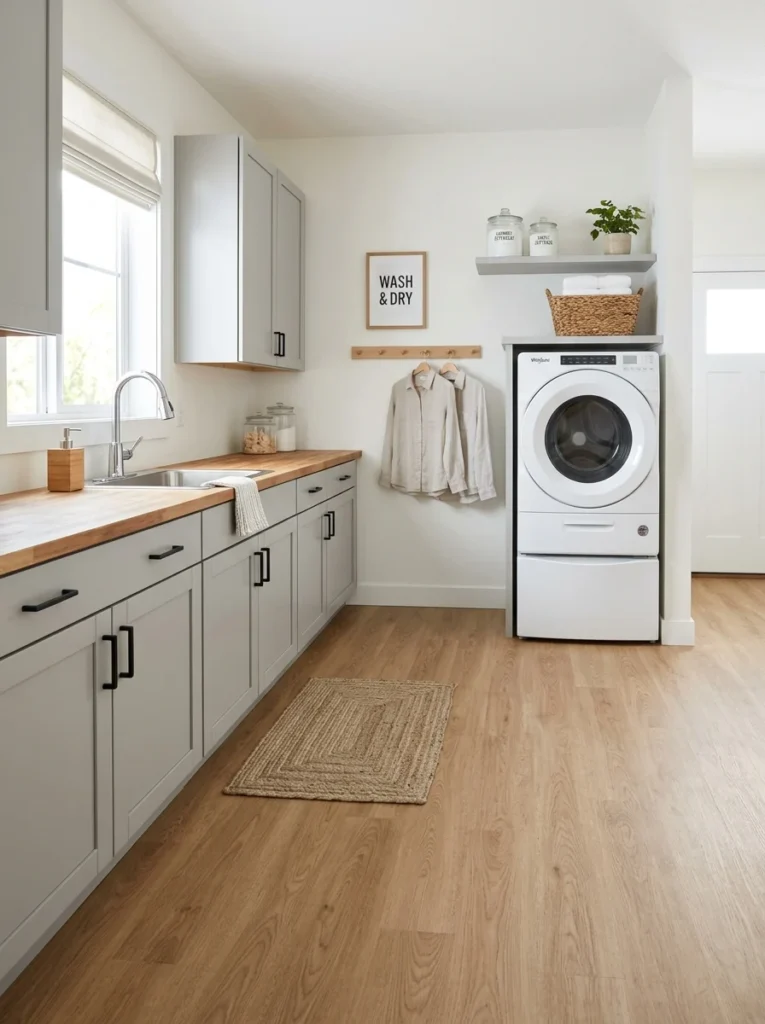
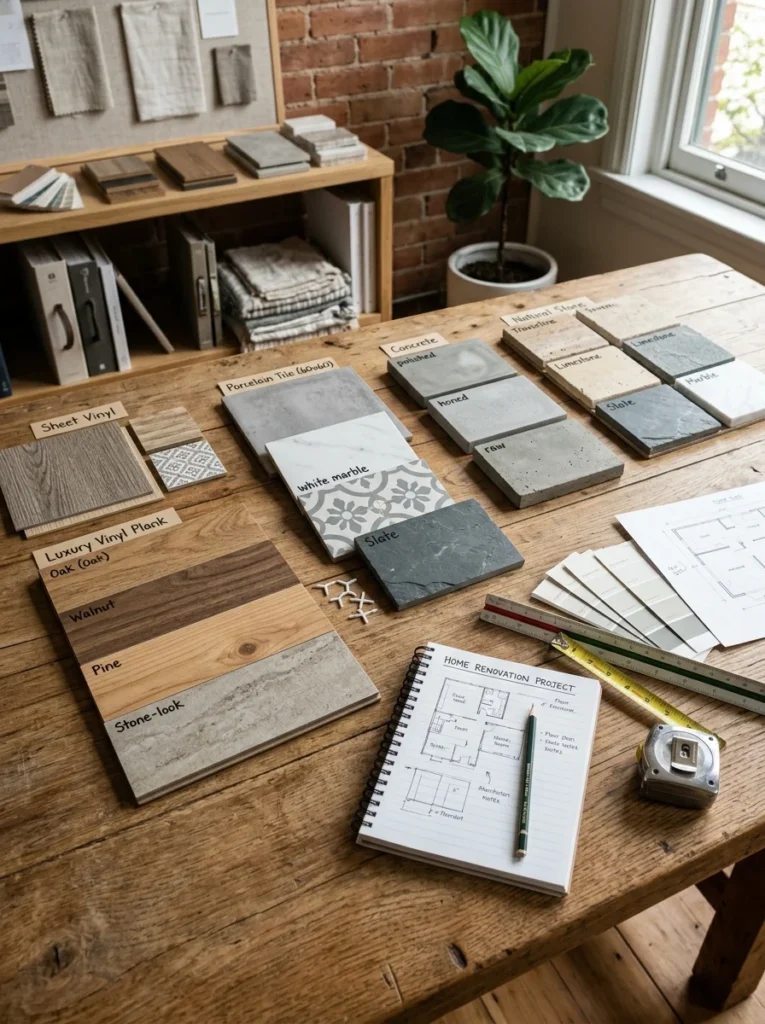
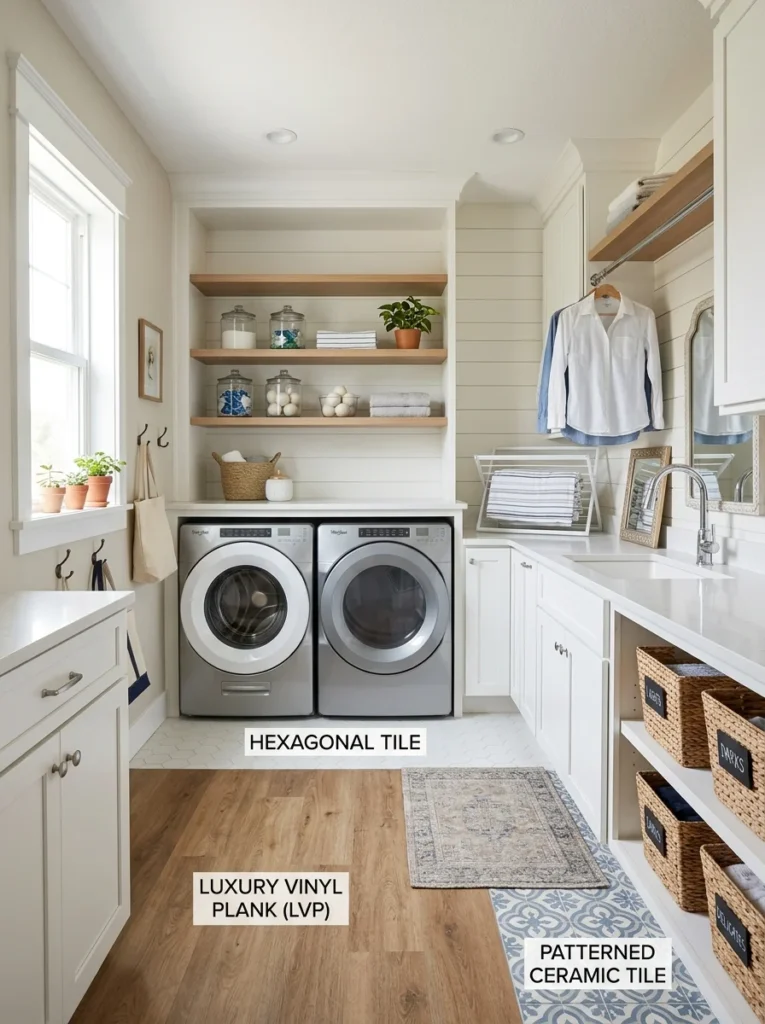
Luxury vinyl plank or tile has become one of the most popular choices for laundry rooms, and for good reason: it’s highly water-resistant, relatively inexpensive compared to many alternatives, and available in an extensive range of styles, including convincing wood-look and stone-look finishes. It’s also comfortable underfoot and generally easier to install than harder materials, with some peel-and-stick or click-lock options approachable enough for a confident do-it-yourself project. The main tradeoff is that lower-quality vinyl can show wear, scratching, or denting under heavy or sharp impact over time, so investing in a mid-to-higher-tier product specifically rated for water exposure pays off in a room that deals with this kind of use daily.
Porcelain tile: the most water-resistant option available
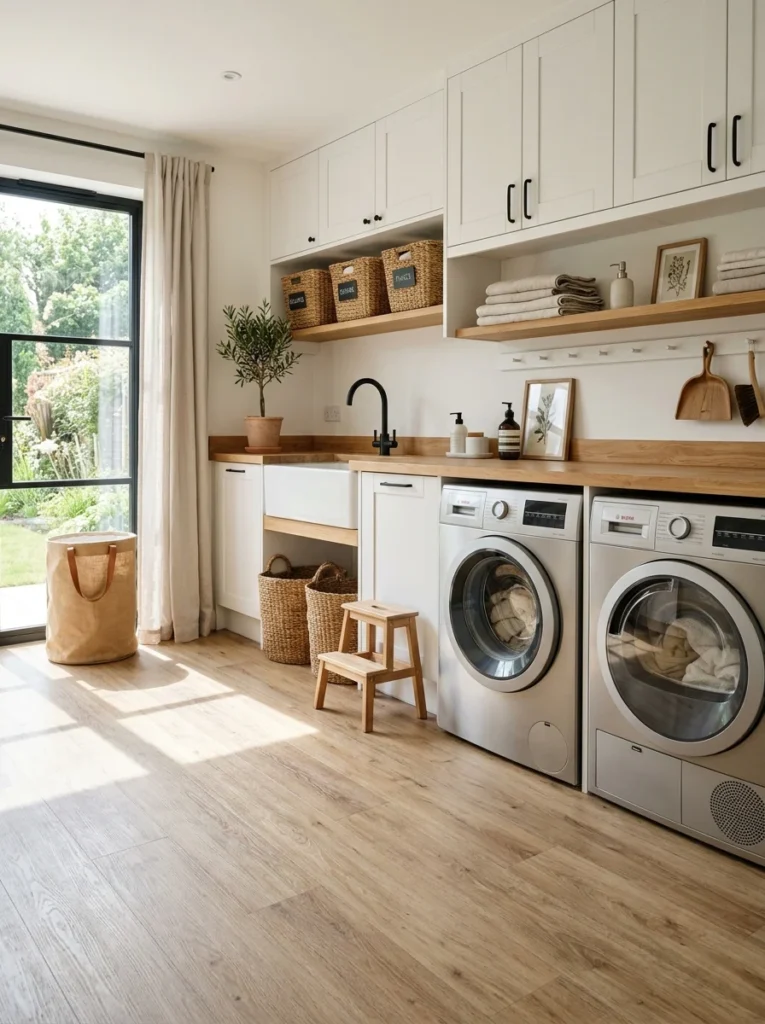
Porcelain tile offers outstanding water resistance and durability, making it one of the most reliable choices for a room that regularly deals with water exposure. It resists staining, scratching, and general wear better than most other flooring materials, and it’s available in a wide range of colors, patterns, and finishes, including textured options that improve slip resistance, an important consideration in a room where water spills are a genuine possibility. The tradeoffs are a harder, cooler surface underfoot compared to vinyl, a higher cost, and a less approachable installation process that generally requires professional work rather than a confident do-it-yourself weekend project.
Sheet vinyl: a seamless, budget-conscious choice
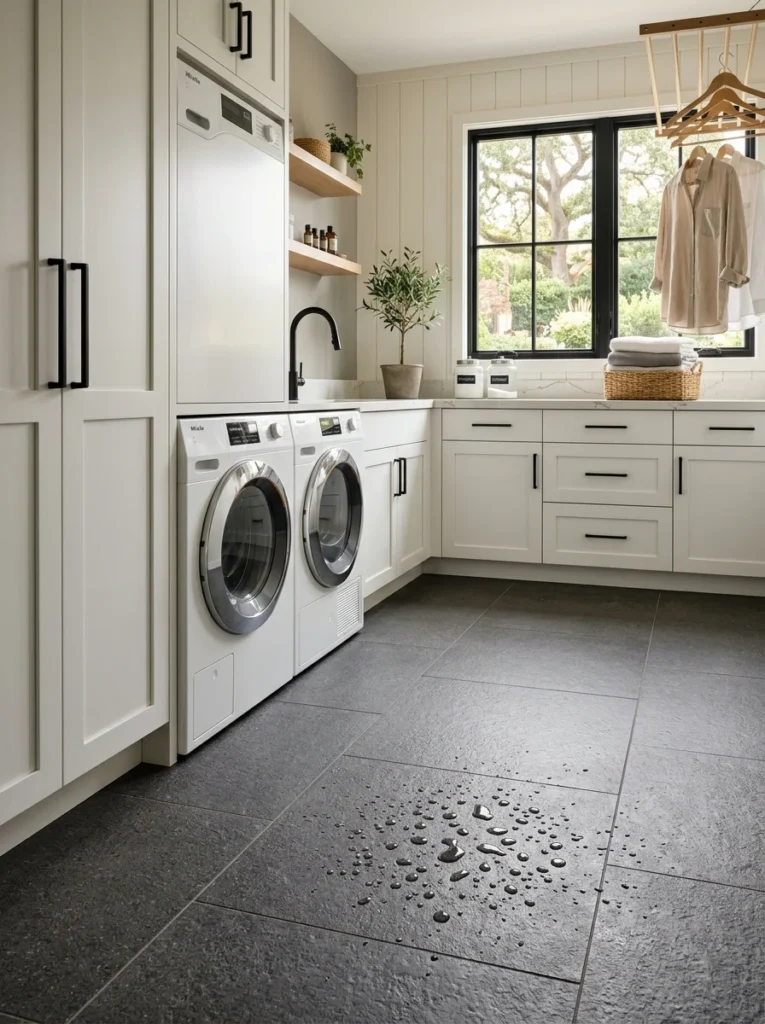
Sheet vinyl offers similar water resistance benefits to luxury vinyl plank but comes in large, continuous sheets rather than individual planks or tiles, which minimizes seams where water could potentially seep through to the subfloor beneath. This makes it a particularly practical choice for a laundry room prone to occasional water exposure from a washer supply line issue or an overflow. It tends to be one of the most affordable flooring options available, though the style range, while improved in recent years, is still generally somewhat more limited than luxury vinyl plank or tile.
Sealed concrete: durable and increasingly stylish
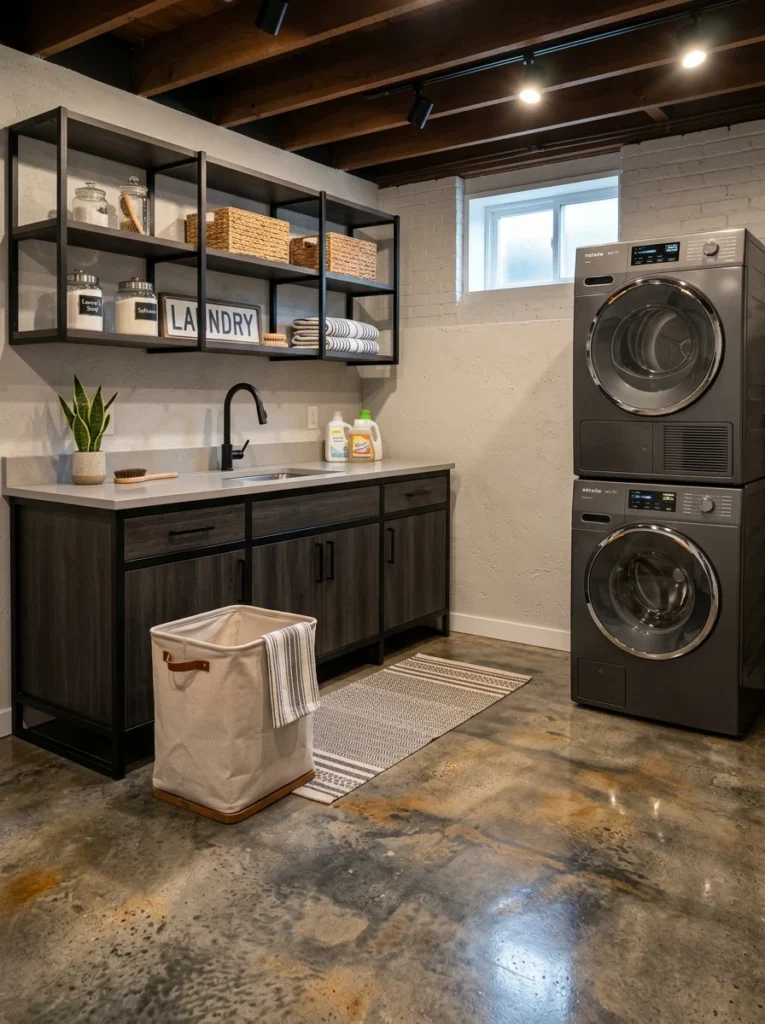
If your laundry room already has a concrete subfloor, having it professionally sealed and finished, sometimes with a decorative stain or polish, provides an extremely durable, water-resistant surface without the cost of installing a separate flooring material on top. Modern concrete staining and polishing techniques have expanded the design possibilities considerably, moving well beyond the plain grey slab many people associate with the material. This option works particularly well in a basement laundry room, where concrete is often already the existing subfloor and moisture concerns from the ground below make a fully sealed surface especially practical.
Laminate flooring: use with caution in a laundry room
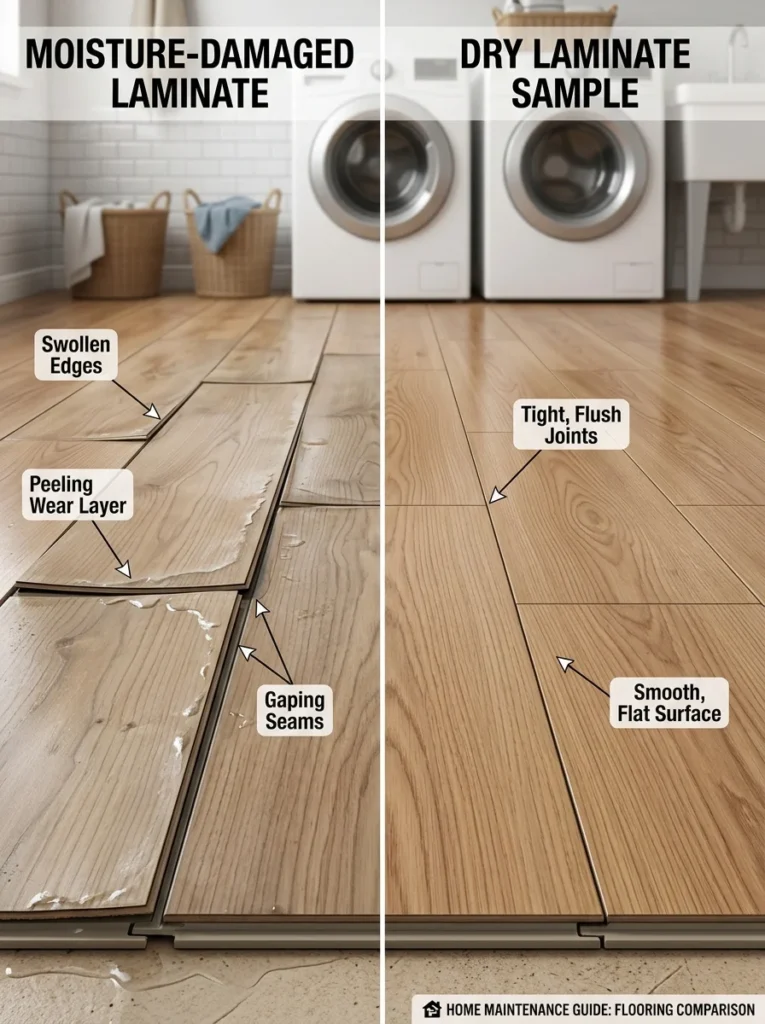
Standard laminate flooring, while attractive and often more budget-friendly than hardwood-look alternatives, is generally not recommended for laundry rooms due to its vulnerability to water damage, swelling and warping if moisture seeps into the seams between planks. Some newer, specifically water-resistant laminate products have improved this vulnerability considerably, but even these should be chosen carefully and installed with attention to sealing seams properly if used in a room with this level of consistent water exposure risk.
Natural stone: a premium option with real maintenance demands
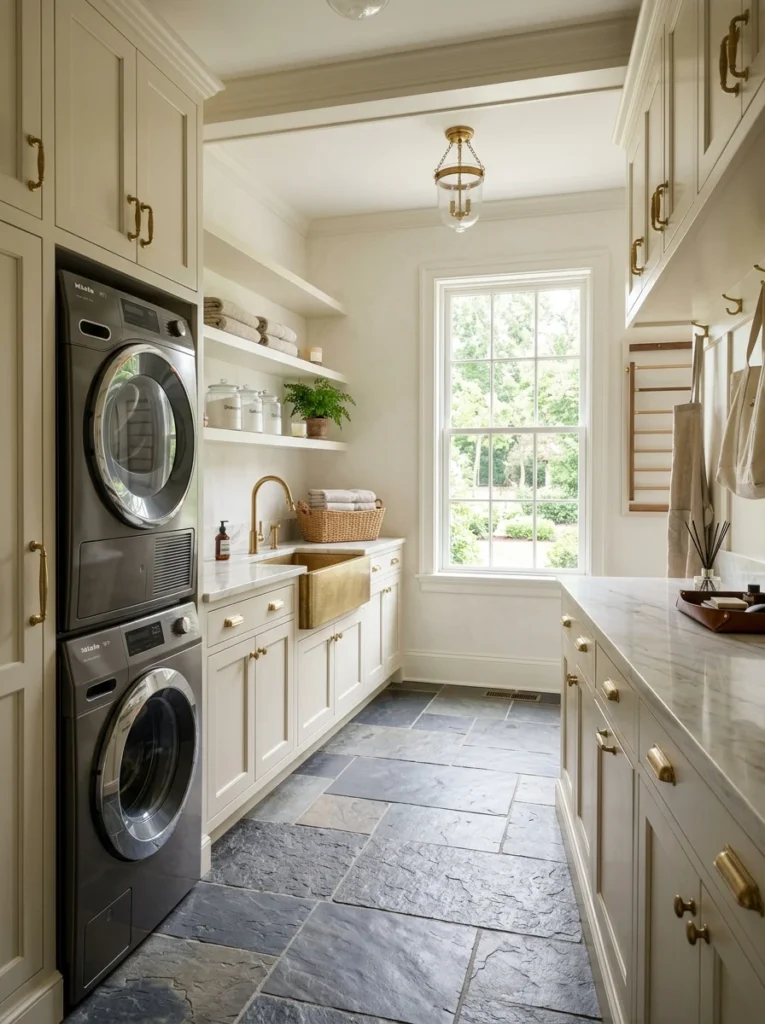
Natural stone tile, travertine, slate, or granite, offers a distinctive, high-end look that manufactured materials still struggle to fully replicate, and it holds up well structurally to daily wear. However, natural stone is porous and requires regular sealing to maintain its water resistance and prevent staining, making it a higher-maintenance choice than porcelain tile or vinyl for a room that deals with frequent water and detergent exposure. This option suits homeowners specifically drawn to its natural aesthetic and willing to commit to the sealing maintenance it requires.
Avoid hardwood and carpet in a laundry room
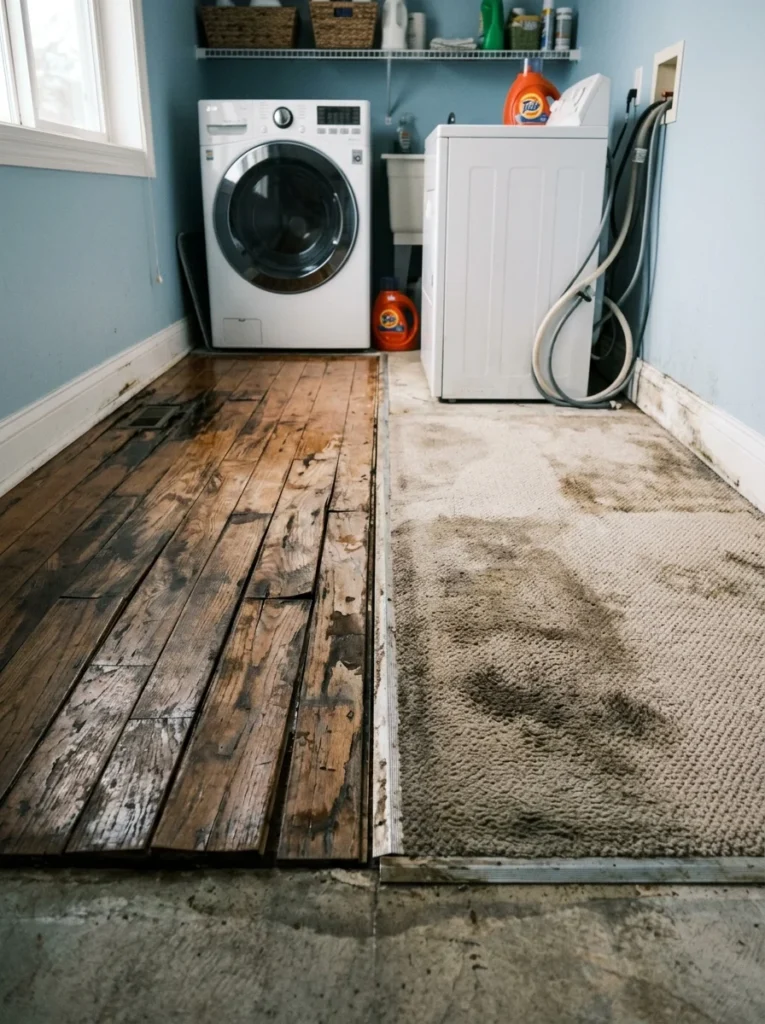
Traditional hardwood flooring is particularly vulnerable to water damage, warping, and staining, making it a poor choice for a room where water exposure is a regular possibility rather than an occasional accident. Carpet should be avoided for similar reasons, since it absorbs moisture, holds onto detergent spills and odors, and is considerably harder to clean thoroughly compared to any hard flooring surface, making it one of the least practical choices available for this specific room regardless of budget.
Consider slip resistance, not just water resistance
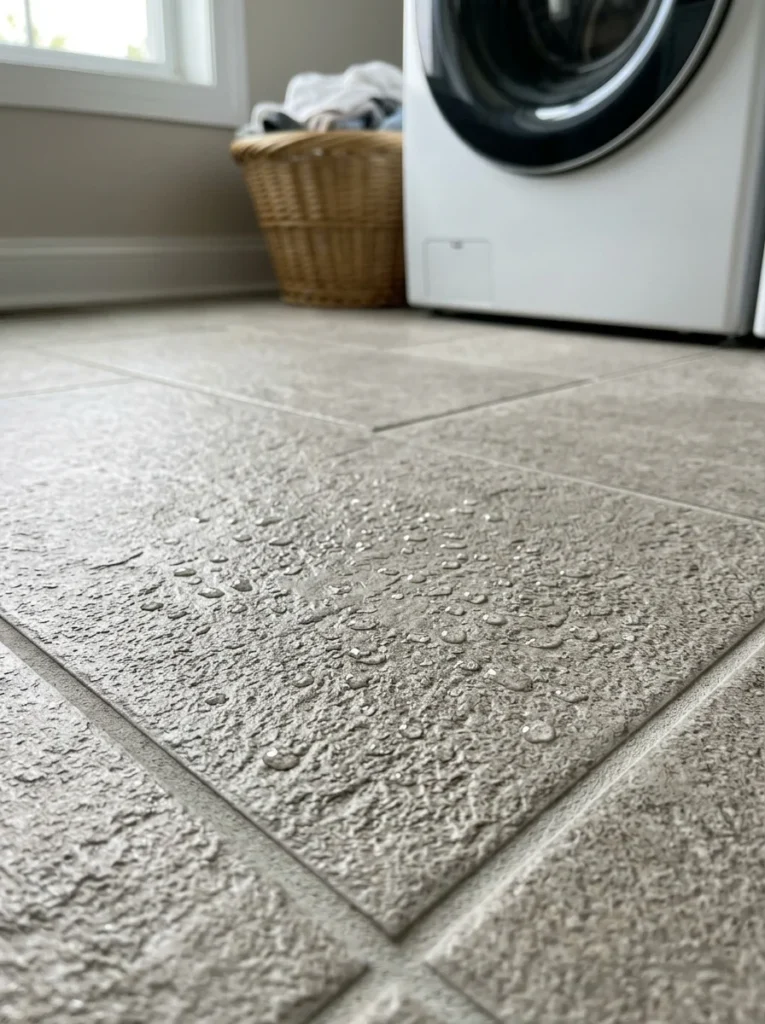
A laundry room floor that resists water damage but becomes dangerously slippery when wet only solves half the problem. Textured or matte-finish tile and vinyl options provide meaningfully better traction underfoot than glossy, polished finishes, which is worth prioritizing given how likely this specific room is to occasionally have water on the floor from a spill, a small leak, or simply a wet load carried from the washer to the dryer.
Factor in comfort if the room sees extended standing time
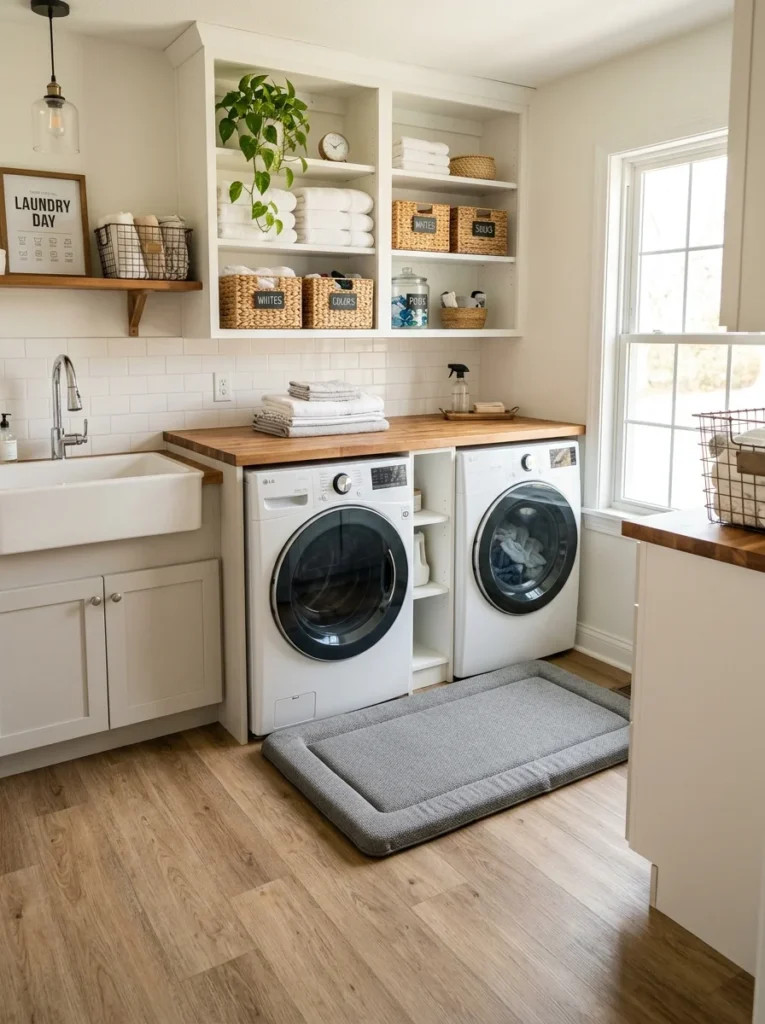
If your laundry room also serves as a folding or ironing station where you spend meaningful time standing, a harder material like porcelain tile or sealed concrete can feel less comfortable underfoot over extended periods compared to vinyl, which has a bit more give. A cushioned, washable mat placed at the primary standing spot, in front of the folding counter or ironing board, can bridge this gap, adding comfort without compromising the durability of the underlying floor material.
Match the flooring to the room’s full range of uses
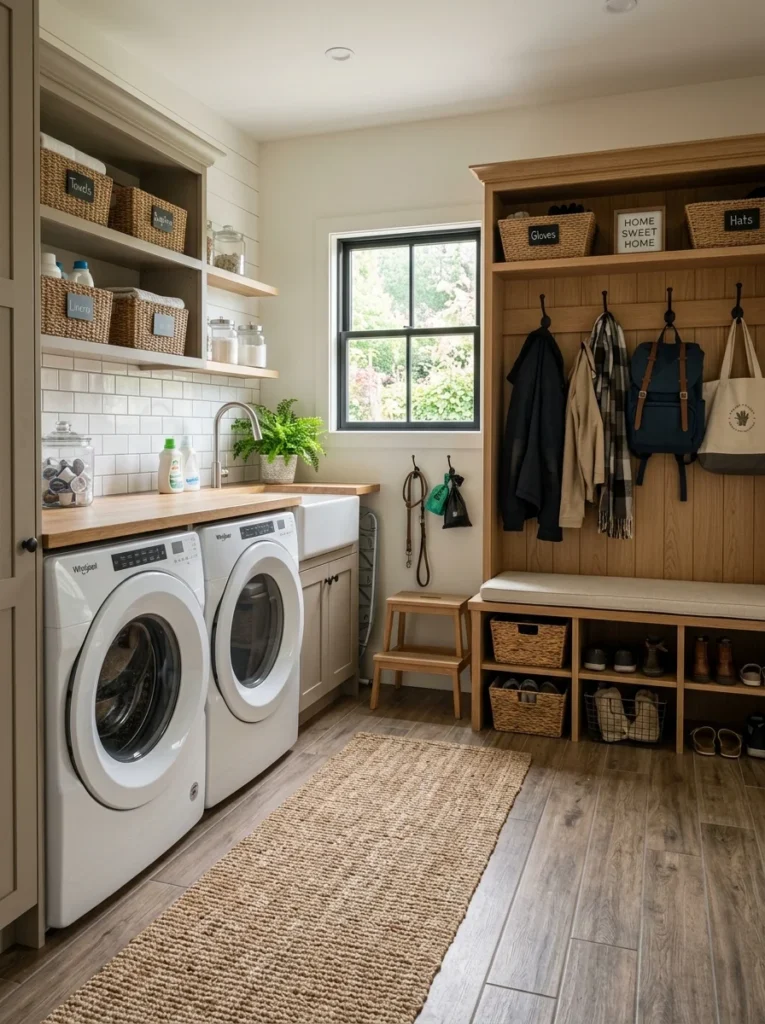
If your laundry room also functions as a mudroom or general entryway, durability against dirt, gravel, and heavier foot traffic becomes an additional consideration beyond just water resistance from the laundry function alone. In this case, porcelain tile or a higher-durability vinyl product generally outperforms options chosen purely with washing and drying in mind, since they need to handle the additional wear a mudroom function brings to the same space.
Comparing typical costs across flooring options
Sheet vinyl and standard luxury vinyl plank generally sit at the more affordable end of the spectrum, making them accessible choices for a budget-conscious renovation while still offering strong water resistance. Porcelain tile costs more, both in material and installation labor, given the more involved installation process it typically requires. Sealed concrete, if a concrete subfloor already exists, can be one of the more cost-effective options overall, since it avoids the cost of an entirely separate flooring material, though the sealing and staining process itself still involves some cost depending on the finish quality desired. Natural stone generally sits at the highest end of the cost spectrum, reflecting both the material cost and the ongoing sealing maintenance it requires.
Don’t overlook proper subfloor preparation
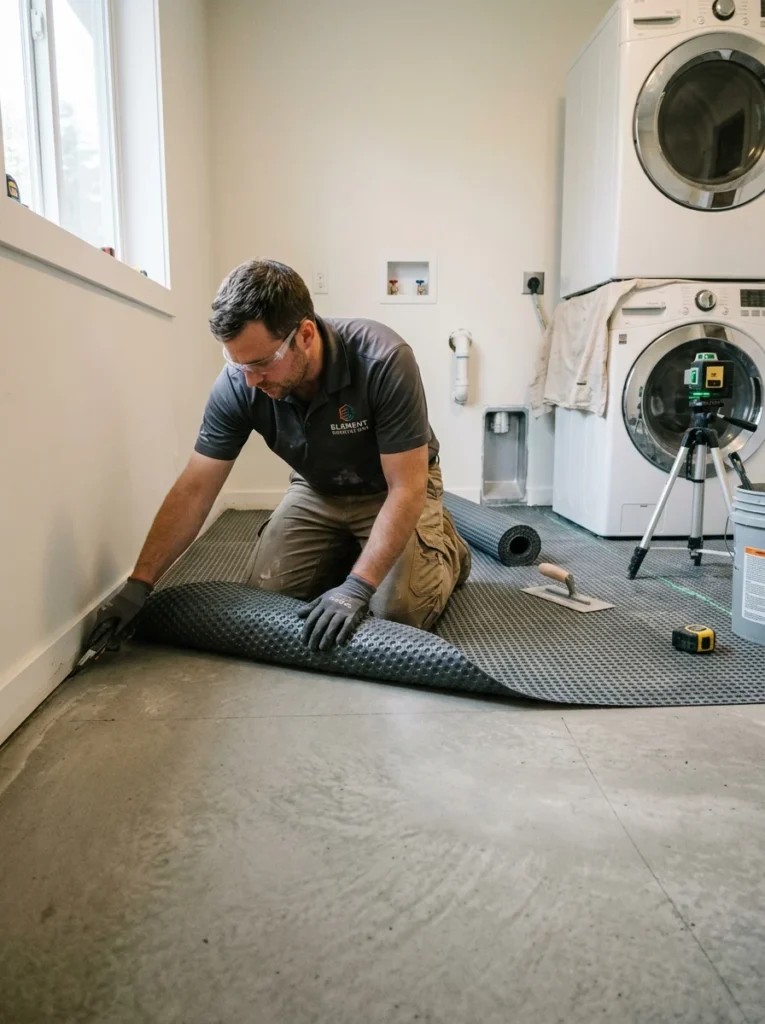
Regardless of which flooring material you choose, proper subfloor preparation matters enormously for how well that flooring performs over time, particularly in a room with elevated water exposure risk. Ensuring the subfloor is level, clean, and, if there’s any risk of moisture from below such as in a basement laundry room, properly sealed against moisture intrusion before installing the finished flooring on top, protects your investment regardless of which specific material you’ve chosen. Skipping this step to save time or money is one of the more common reasons a flooring installation underperforms its expected lifespan, even when the flooring material itself was a sound choice.
Consider the impact of appliance vibration on flooring choice
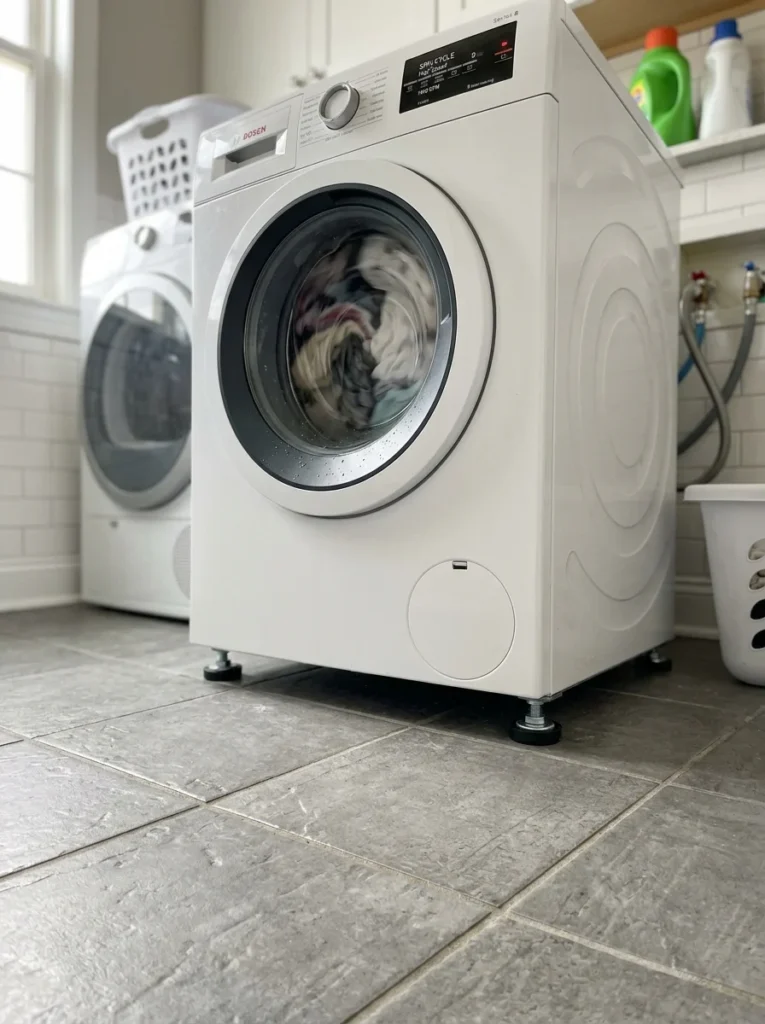
Washers and dryers, particularly during high-speed spin cycles, create meaningful vibration that transfers into the surrounding floor over years of regular use. Rigid materials like porcelain tile and sealed concrete handle this vibration well without any noticeable long-term effect, while some floating floor installations, including certain vinyl plank products, can develop slight movement or seam separation over time if not installed with adequate attention to a stable, well-adhered subfloor beneath them. Choosing a flooring installation method specifically suited to handling this kind of sustained vibration, rather than one intended for a lower-vibration room elsewhere in the house, helps the floor perform as expected for its full intended lifespan.
Common laundry room flooring questions
What’s the best overall flooring option for a laundry room?
Luxury vinyl plank and porcelain tile are generally considered the best overall options, balancing strong water resistance, durability, and a wide range of style choices, though the right pick depends on your specific budget and whether the room also serves other functions like a mudroom.
Can I use laminate flooring in a laundry room?
Standard laminate is generally not recommended due to its vulnerability to water damage and swelling. Specifically water-resistant laminate products have improved this issue but should still be chosen and installed carefully, with particular attention to sealing seams.
Is porcelain tile better than vinyl for a laundry room?
Porcelain tile offers superior water resistance and durability but costs more and feels harder and cooler underfoot. Vinyl offers strong water resistance at a lower cost with more comfort underfoot, making the choice largely dependent on budget and comfort priorities.
Should laundry room flooring be slip-resistant?
Yes, given how likely a laundry room is to have occasional water on the floor from spills or minor leaks, choosing a textured or matte-finish material rather than a glossy, polished one meaningfully improves safety underfoot.
Is subfloor preparation really necessary before installing new flooring?
Yes, a level, clean, and properly sealed subfloor, particularly against moisture in a basement laundry room, protects the flooring investment regardless of which material you choose. Skipping this step is a common reason an otherwise well-chosen flooring material underperforms its expected lifespan.
The right laundry room flooring balances genuine water resistance and durability against your specific budget, comfort preferences, and whether the space serves any additional functions like a mudroom. Vinyl and porcelain tile generally offer the most reliable combination of these factors, while materials like carpet, standard laminate, and traditional hardwood are best avoided given the water exposure this room regularly deals with.
Our replacement floor, a durable, textured porcelain tile chosen specifically for its water resistance and slip resistance rather than just its appearance under store lighting, has held up beautifully through daily use in a way the original floor never managed. If you’re choosing flooring for your own laundry room, resist the temptation to decide purely on how a sample looks; ask about its water resistance rating and durability specifically for this kind of room before falling in love with any particular style.