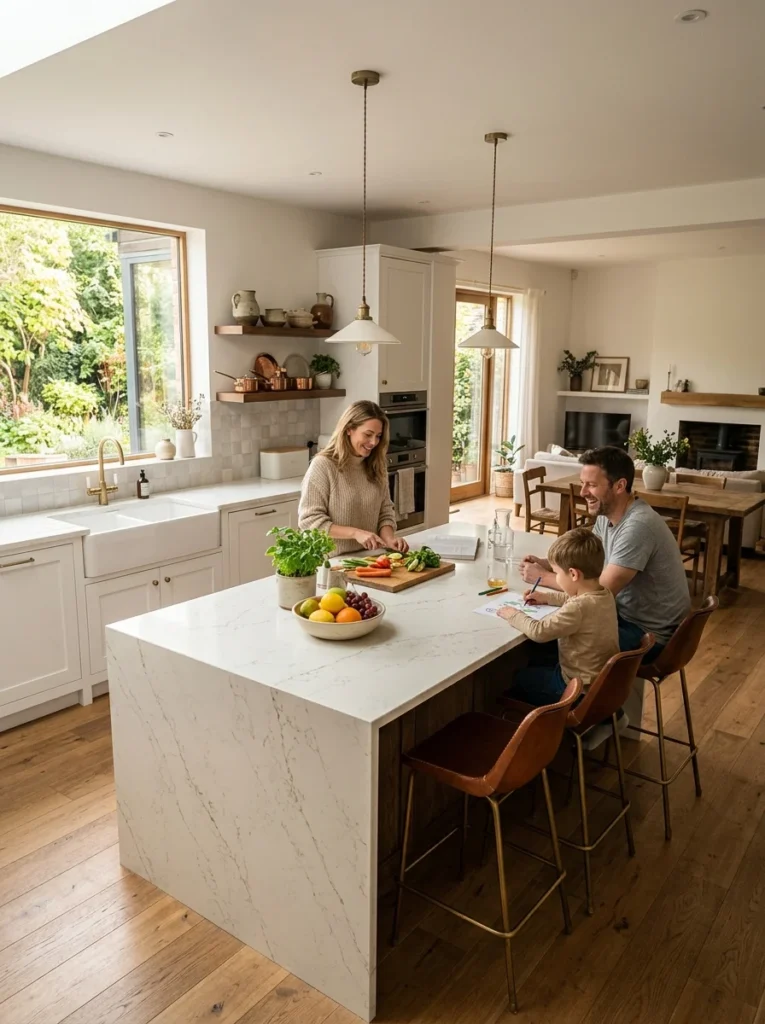
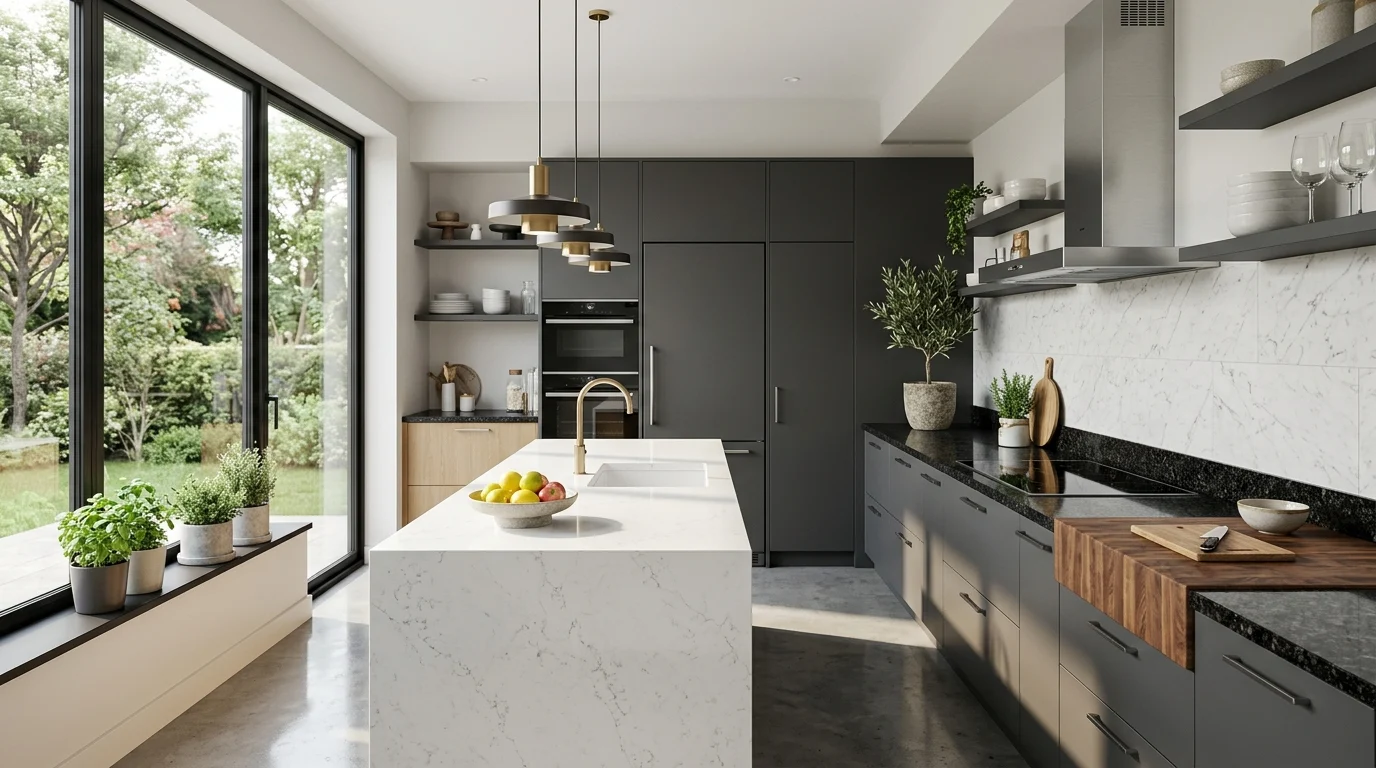
When I chose my first proper countertop, I picked with my eyes and nothing else. I fell for a beautiful pale marble-look surface in a showroom, signed off on it, and spent the next two years learning what a porous, easily-marked worktop means when you cook the way I do, with turmeric, oil, lemon and hot pans in constant rotation. Every faint etch and stain was a small lesson I’d have happily skipped. The countertop was gorgeous. It was also, for my kitchen and my habits, the wrong choice, and I chose it because I asked how it looked and never how it lived.
A countertop is the hardest-working surface in the kitchen and one of the most expensive to replace, so it’s the last place you want to buy on looks alone. The good news is that choosing well isn’t complicated once you ask the right questions in the right order. It comes down to how you actually cook, how much maintenance you’ll genuinely keep up with, and what your budget really is, and only then how it looks. Below I’ll give you that framework, then walk through the main materials with honest pros and cons, so you can match a surface to your real life rather than to a showroom fantasy. Let me start with the questions that matter more than the material names.
Choose in this order: how you cook, then upkeep, then budget, then looks
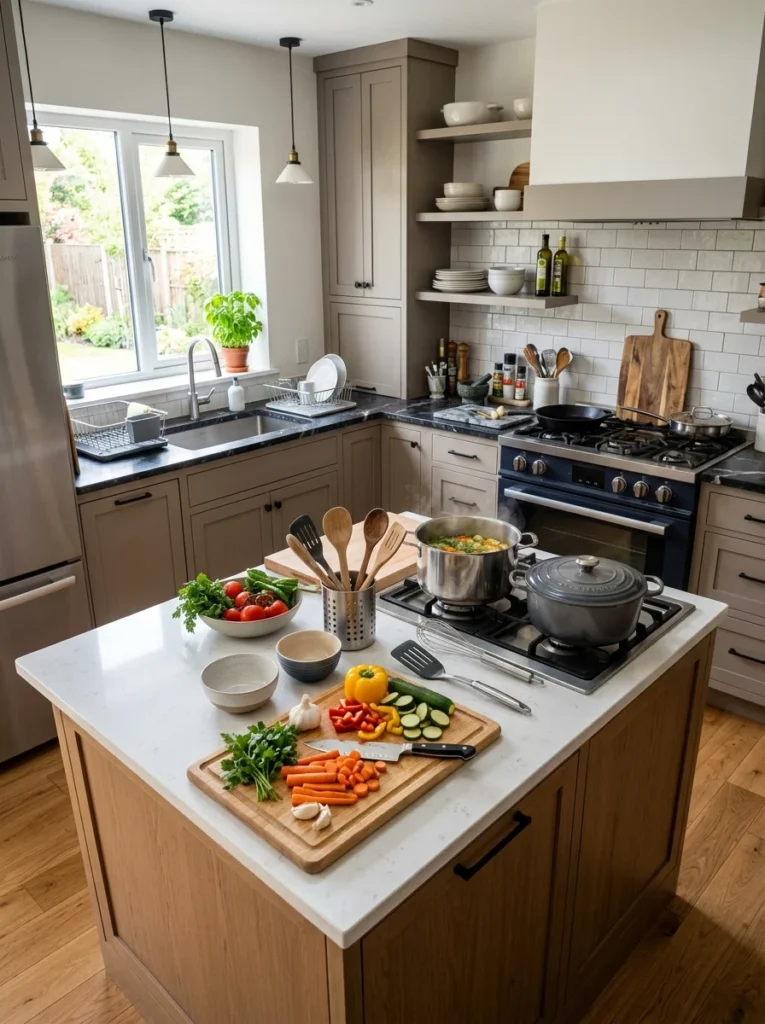
The mistake nearly everyone makes, me included, is starting with the look. Start instead with how you use a kitchen. Are you a heavy, messy cook who sears, chops directly on surfaces and deals with acidic, staining ingredients daily? Or a lighter cook whose worktop mostly holds a kettle and the odd sandwich? A heavy cook needs a tough, non-porous, forgiving surface and will be miserable with a delicate one, while a light cook can happily choose something prettier and more sensitive. Be honest about which you are, because the surface has to survive your actual habits, not your aspirational ones.
Then weigh maintenance realistically. Some surfaces need sealing once or twice a year and careful treatment of spills; others you can abuse and just wipe down. If you know you won’t keep up a maintenance routine, don’t buy a material that demands one, no matter how lovely, because a stained, etched high-maintenance surface looks far worse than a well-chosen low-maintenance one. After that, set your true budget including installation, which is a real cost for stone. Only once those three filters, cooking style, upkeep and budget, have narrowed the field do you choose between the survivors on looks. Do it in that order and you almost can’t go wrong.
The main countertop materials, honestly compared
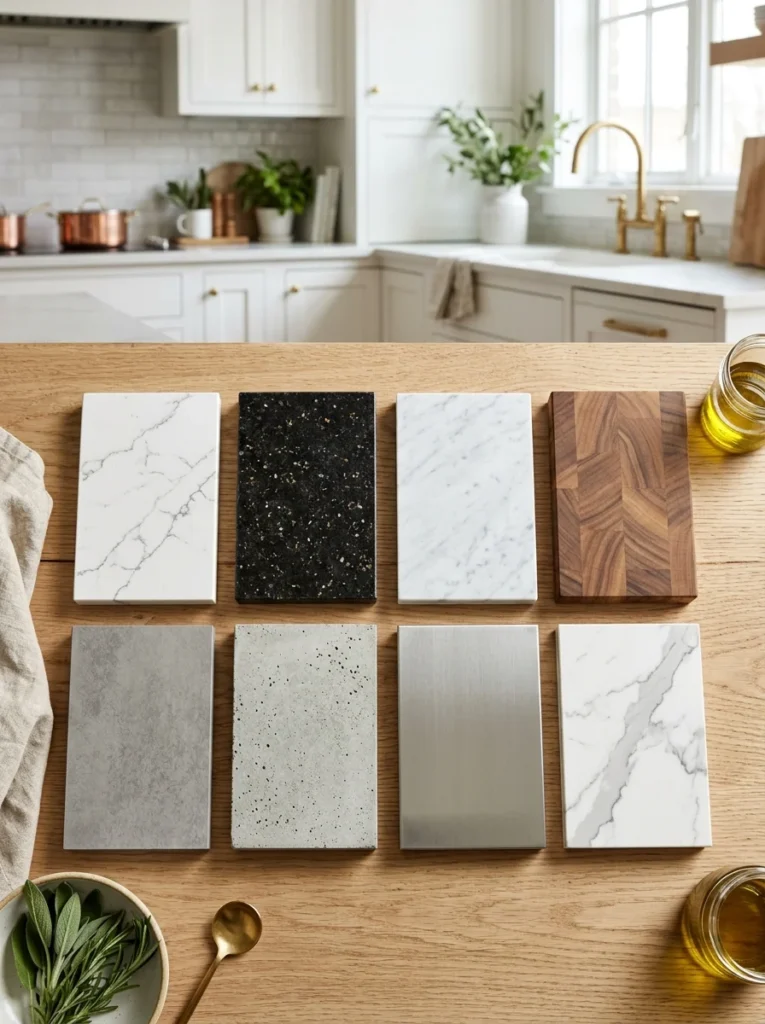
Quartz (engineered stone)
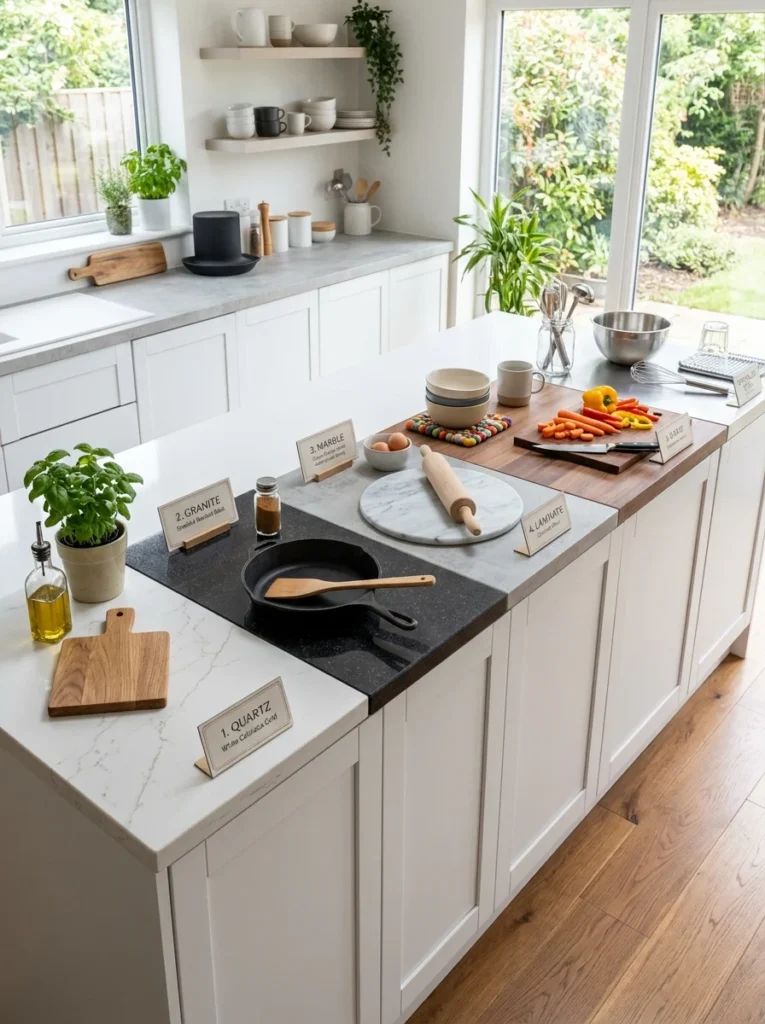
Quartz, the engineered stone made from ground natural quartz bound with resin, is the surface I now recommend to most people, and it’s what I’d choose again. Its great advantage is that it’s non-porous, so it doesn’t need sealing, resists stains and bacteria, and shrugs off the acidic, oily, colourful cooking that wrecked my marble. It’s hard-wearing, comes in a huge range of colours and patterns including convincing marble looks, and is very low-maintenance. The trade-offs: it’s not cheap, though usually less than premium natural stone, and it isn’t heat-proof, so you must use trivets rather than putting hot pans straight on it, and strong direct sunlight can, over a very long time, affect some colours. For a busy home kitchen where you want beauty without babysitting, though, it’s hard to beat.
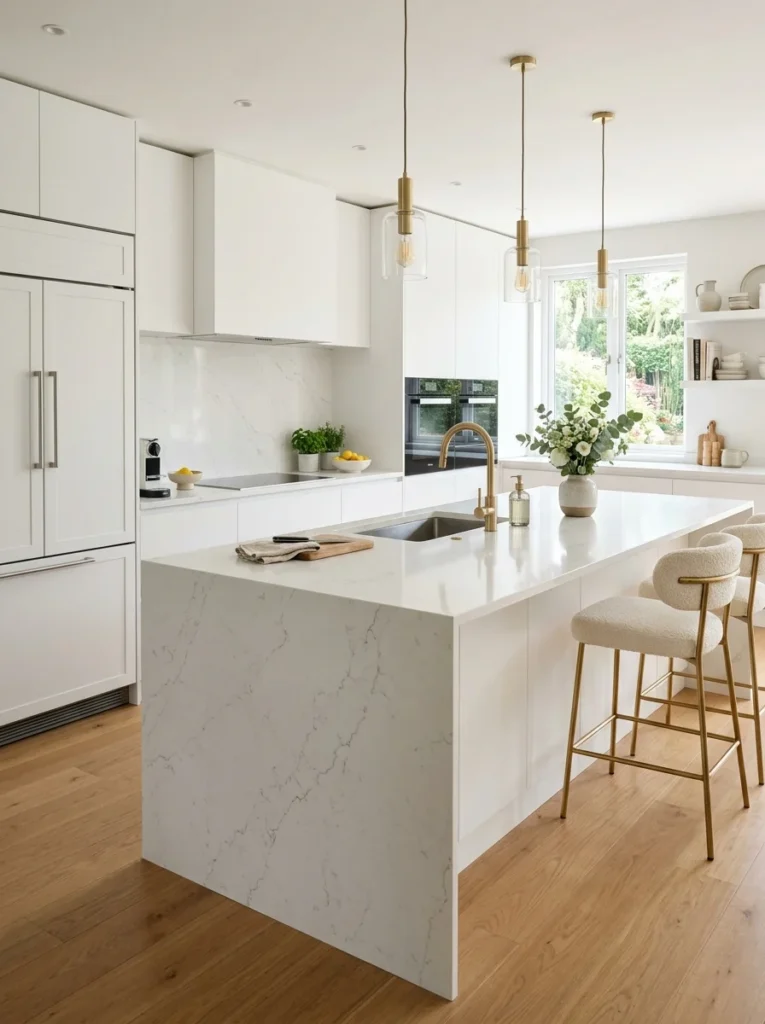
Granite
Granite is the classic natural stone worktop, and it’s genuinely tough: very hard, heat-resistant and, with each slab being unique, full of natural character no engineered surface quite replicates. If you love the idea of a one-of-a-kind natural stone, granite delivers. The main caveat is that it’s porous to varying degrees, so it needs sealing, usually once a year or so, to keep it stain-resistant, and if you let that lapse it can absorb oil and marks. It’s also a premium-priced material with real installation costs. But for someone who wants natural stone, will keep up with occasional sealing, and values durability and heat resistance, granite is a strong, timeless choice.
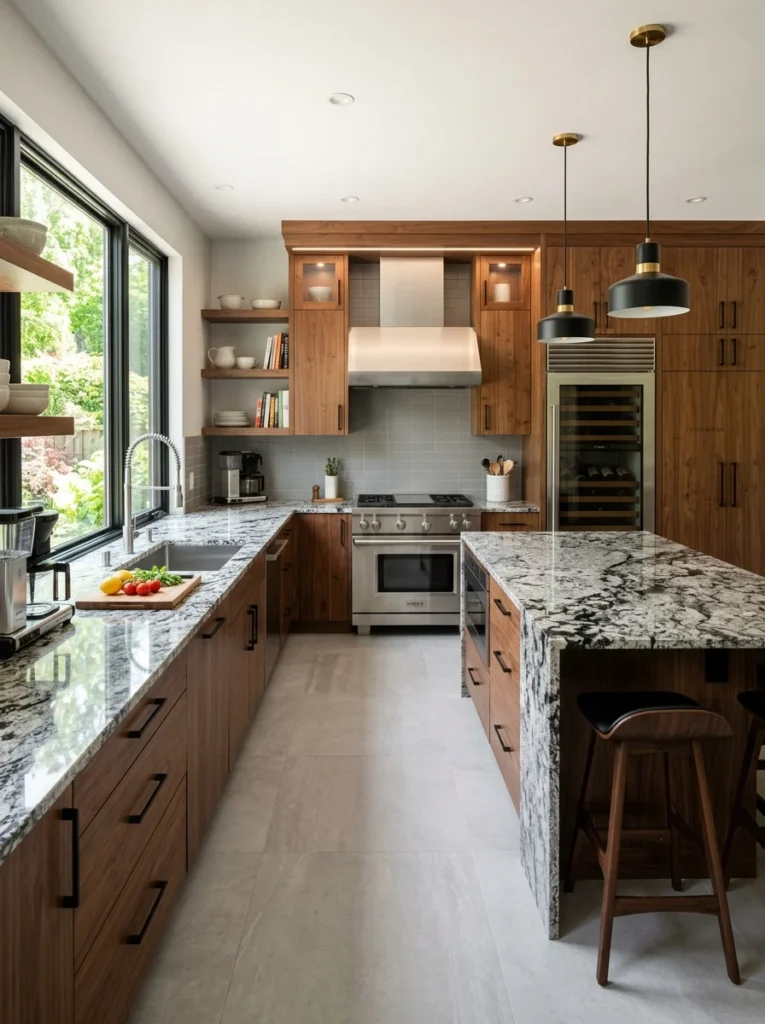
Marble
Marble is the one I fell for, and I understand why: nothing matches its soft, veined, luminous beauty, and for baking, its naturally cool surface is a genuine bonus. But I’ll be blunt, because someone should have been with me. Marble is soft and porous, which means it stains and etches, dulls from acids like lemon and vinegar, more easily than almost any other worktop. In a hard-working kitchen it will show the life you live on it, and you have to either make peace with that lived-in, marked patina or choose it only for a low-use area like a baking station. If you adore marble, go in clear-eyed: seal it, wipe spills instantly, and accept it won’t stay pristine. Or get the look through quartz and save yourself the heartache I earned.
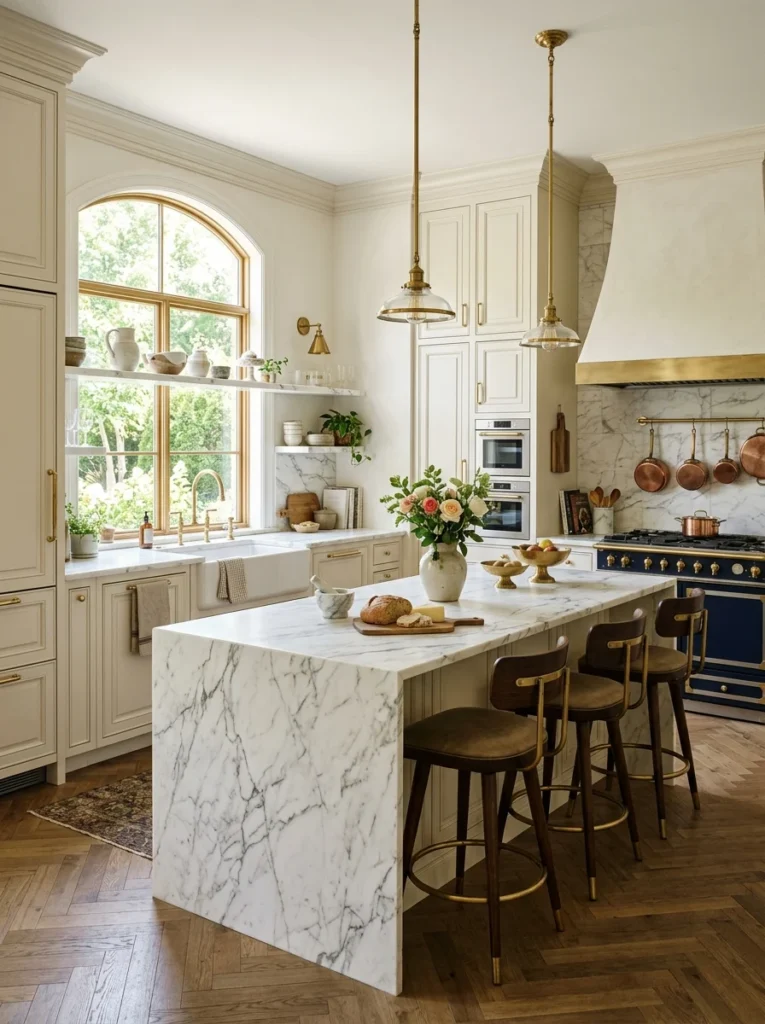
Laminate
Laminate worktops get looked down on, and unfairly, because modern ones look far better than their reputation and they’re by a distance the most budget-friendly option. If your budget is tight, laminate lets you have a fresh, clean, decent-looking worktop, in an enormous range of designs including stone and wood looks, for a fraction of the cost of stone. The honest limits: it’s not heat-resistant, so hot pans will damage it, it can chip or scratch at the edges, and once the surface is cut or burned it can’t really be repaired the way stone can be. But for a rental, a first home, or anyone who wants a cheap, cheerful refresh, a good laminate is a sensible, unshowy choice that does the job.
Solid wood / butcher block
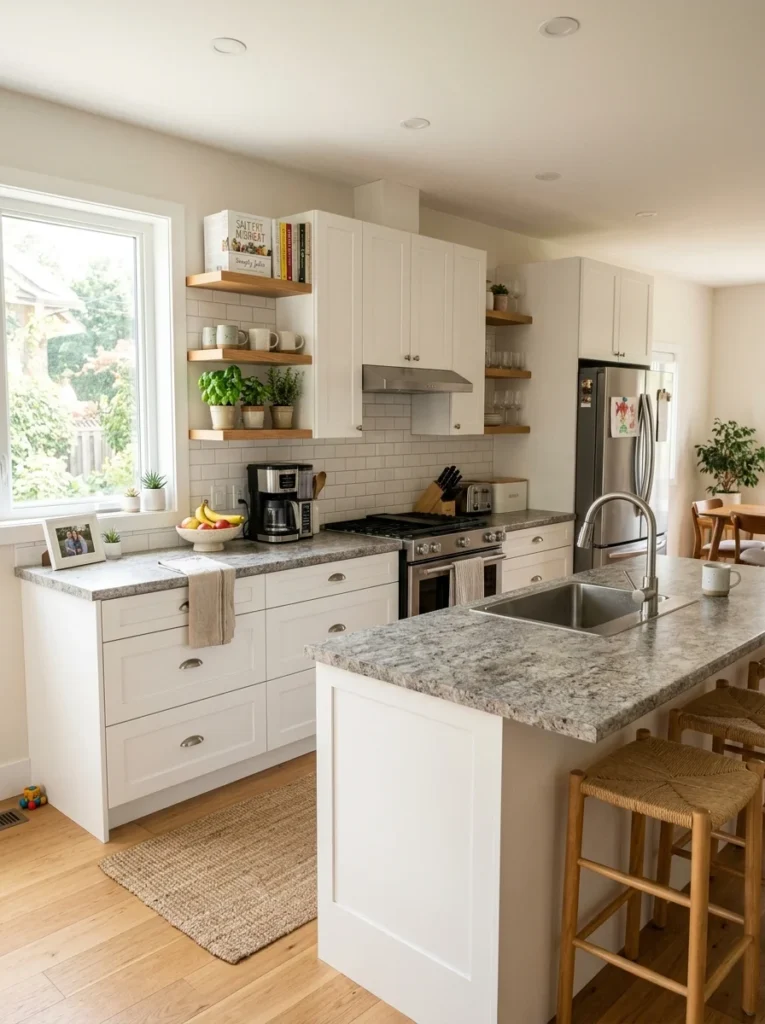
A wooden worktop brings a warmth and softness that hard surfaces can’t, and it’s lovely to work on and relatively affordable. I love wood as an accent, on an island or a section, more than as the whole kitchen. The catch is maintenance and water: wood needs regular oiling to stay sealed, it can scorch, stain and be marked by knives, and it really doesn’t like standing water, so the areas around the sink and hob are its weak spots. It also ages and patinas, which some people love and others don’t. If you enjoy a bit of upkeep and a surface that shows character over time, wood is beautiful; if you want low-maintenance and don’t want to think about water near the sink, it may frustrate you.
Stainless steel
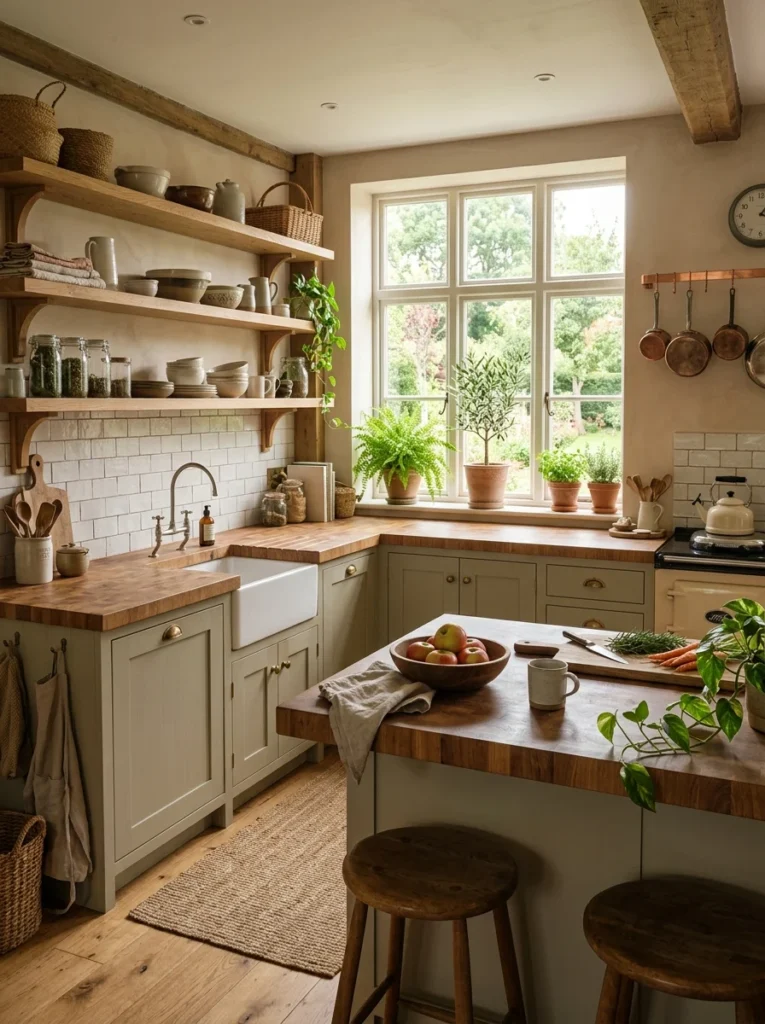
Stainless steel, the professional-kitchen surface, is worth considering precisely because restaurants use it: it’s extremely hygienic, non-porous, heat-resistant and easy to sanitise, so you can put hot pans down and wipe it clean without a second thought. For a serious cook, those are real virtues. The downsides are aesthetic and practical: it scratches and shows fingerprints and water spots readily, developing a used, slightly scuffed look over time, and its cool industrial character isn’t to everyone’s taste or right for every kitchen style. If you cook hard and value hygiene and heat resistance over a soft, homely look, steel is superb; if you want warmth and hate visible scratches, look elsewhere.
Concrete, solid surface and porcelain
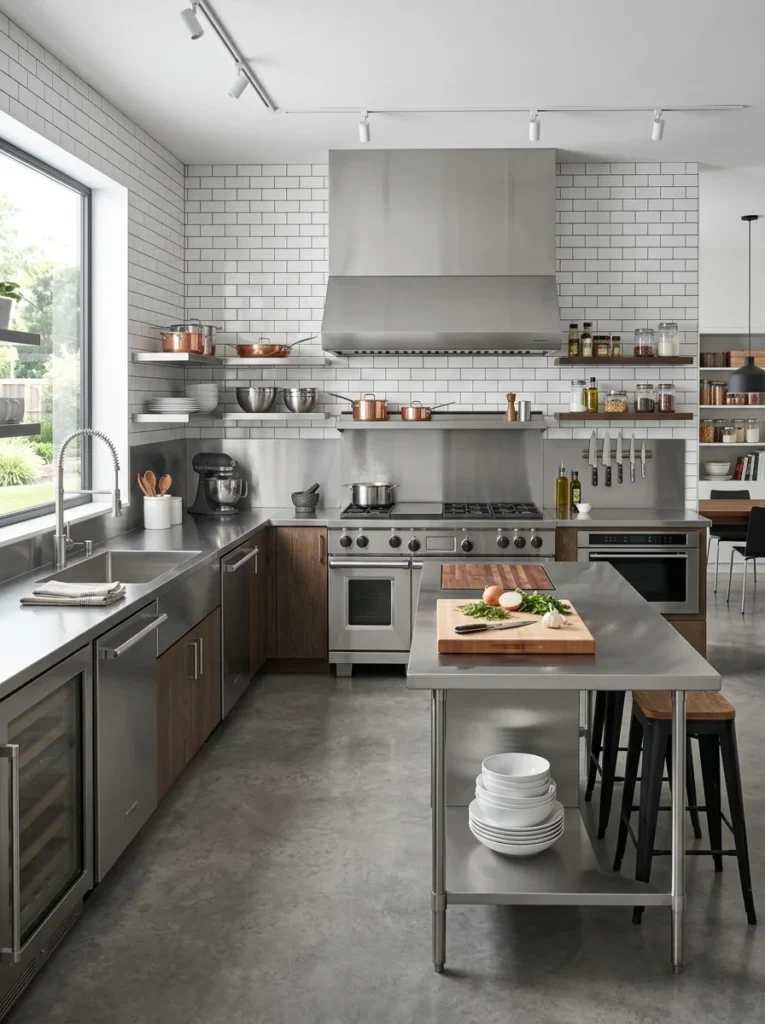
A few more worth knowing. Concrete gives a custom, industrial, seamless look and can be cast to any shape, but it’s heavy, can crack hairline over time, and needs sealing, so it’s a specialist, higher-maintenance choice for a particular aesthetic. Solid surface materials (the seamless acrylic-type worktops) are non-porous, repairable by sanding out scratches, and can be moulded with integrated sinks and invisible seams, though they scratch and aren’t very heat-resistant. Porcelain or sintered-stone worktops are a newer option that’s extremely hard, heat- and scratch-resistant, non-porous and UV-stable, genuinely impressive performance, at a premium price and with fewer fitters experienced in it. Each of these suits a specific priority, so they’re worth a look if the mainstream materials don’t quite fit what you’re after.
Matching the material to how you actually live
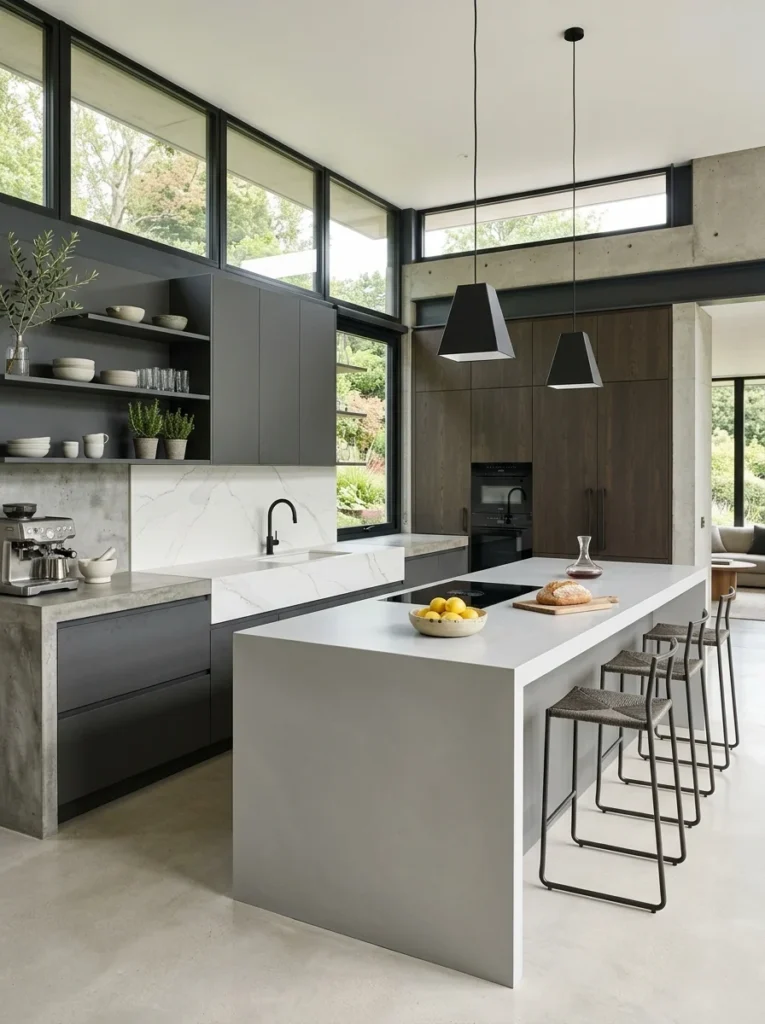
Here’s the shortcut, now that you’ve met the materials. If you’re a busy, messy cook who wants beauty with minimal fuss, quartz is very hard to beat, and it’s where I’d point most people. If you specifically want unique natural stone and will do occasional sealing, granite. If you adore marble, use it only where it’ll get gentle use, or get the look in quartz. If budget is the deciding factor, a good modern laminate. If you want warmth as an accent and enjoy upkeep, add a section of wood. If you cook seriously and prize hygiene and heat resistance above a soft look, stainless steel. And if you have a specific aesthetic and budget for it, concrete, solid surface or porcelain each fill a niche.
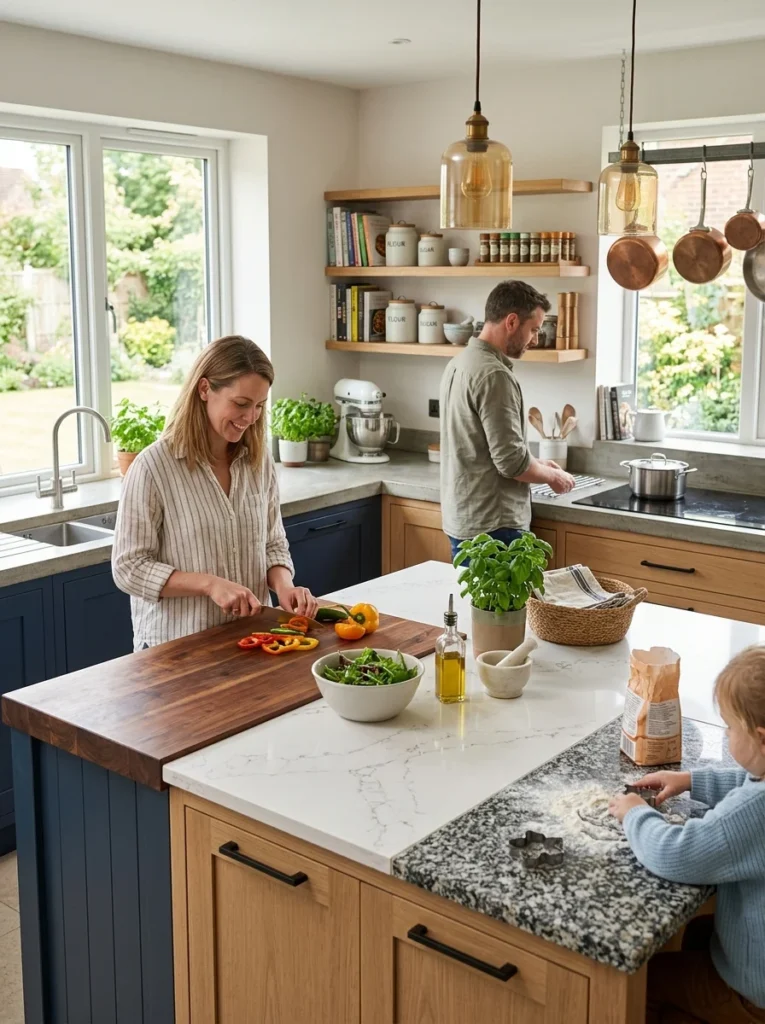
You can also mix materials, which is often the smartest move in a real kitchen: a tough quartz or granite across the main run and the hob area, and a warm wood section on the island for a softer feel and a spot to sit at. That way each material does what it’s best at, the workhorse surface where the heat and mess are, the pretty or warm one where it can be enjoyed without abuse. Mixing lets you have both the practicality and the character without compromising the whole kitchen to one material’s weaknesses.
The practical details people forget
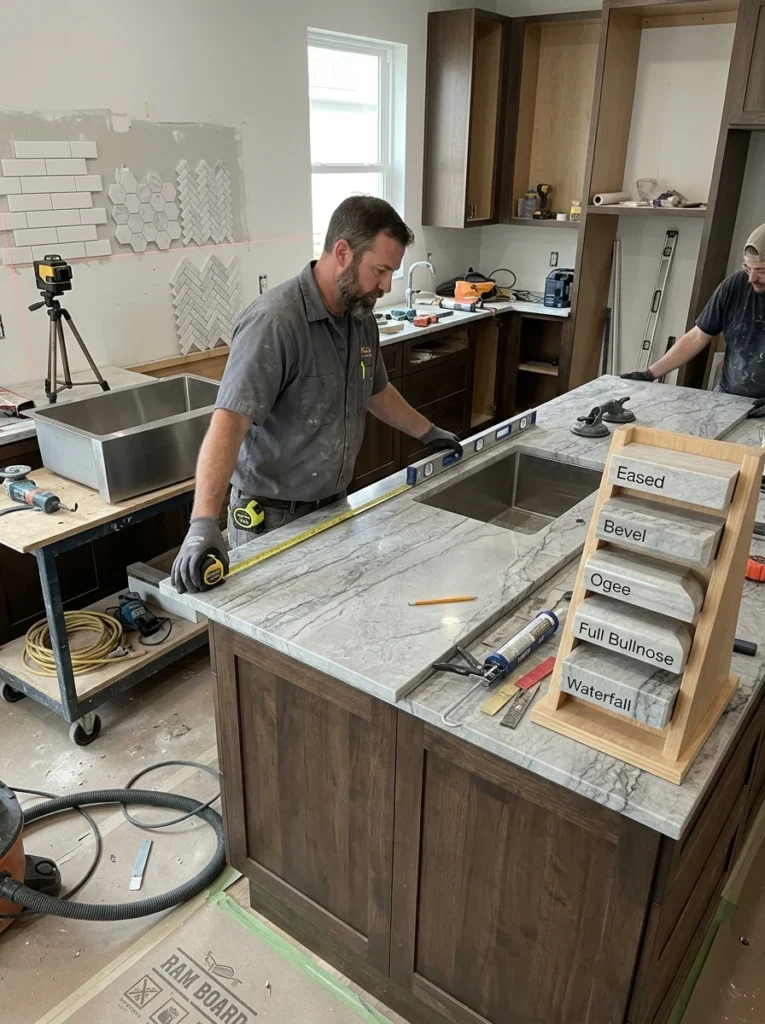
A couple of things beyond the material itself shape the result. First, factor installation and lead time into stone budgets: natural and engineered stone must be templated and fitted by professionals, which adds real cost and a wait, whereas laminate and wood are far more DIY-friendly. Get the full fitted price before you fall in love with a slab. Second, think about edges and seams: a thicker edge profile reads more solid and expensive, and where seams fall on a large or L-shaped worktop affects both looks and, on porous stone, where water might get in, so discuss seam placement with your fitter rather than leaving it to chance.
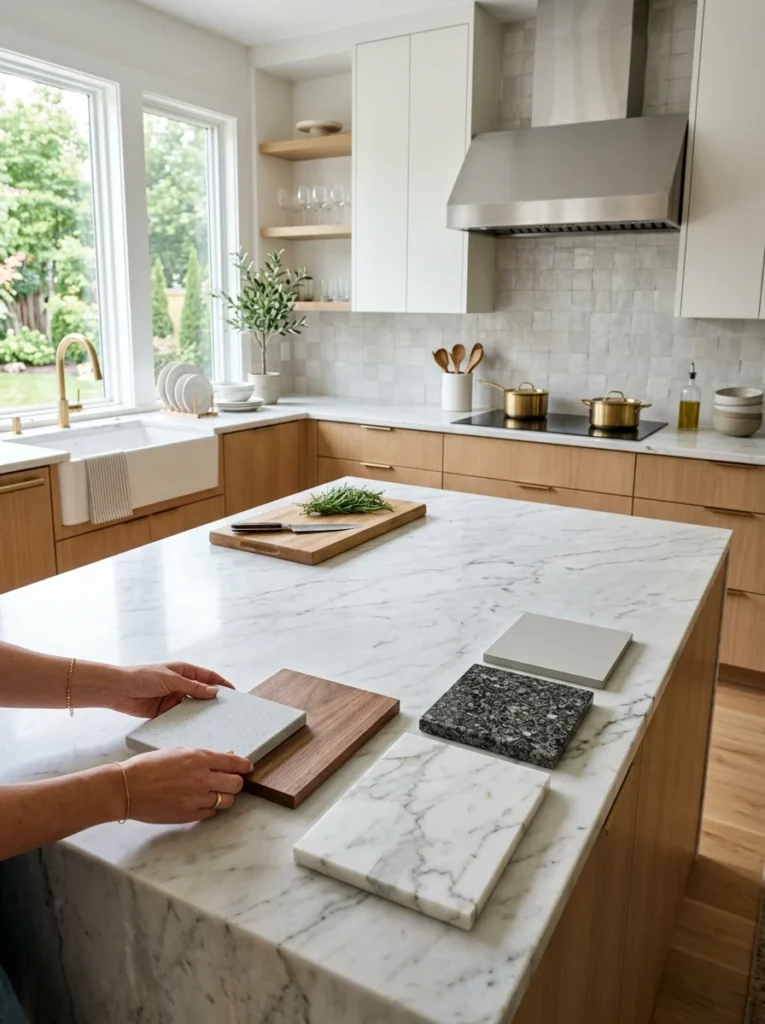
Also match the worktop to the sink and backsplash decisions, since they interact. An undermount sink needs a solid, water-tolerant surface to be fitted into. A grout-free slab backsplash in the same material gives a seamless look but adds cost. And whatever you choose, get a physical sample home and live with it in your own kitchen light for a few days before committing, because stone and laminate can look completely different under showroom lighting than under your own bulbs by your own cabinets. That small step would have saved me from my marble mistake, and it costs nothing but a little patience.
What my countertop mistake taught me
The marble taught me the whole framework in this article the hard way. I chose a soft, porous surface for a kitchen where I cook heavily with staining, acidic ingredients, purely because it was beautiful, and then spent two years managing etches and marks I’d never signed up for mentally. The stone did exactly what soft porous stone does; the mistake was entirely mine, for not asking how I cook before asking how it looks. If I’d run the how-you-cook question first, I’d have landed on quartz and had the look I wanted with none of the anxiety.
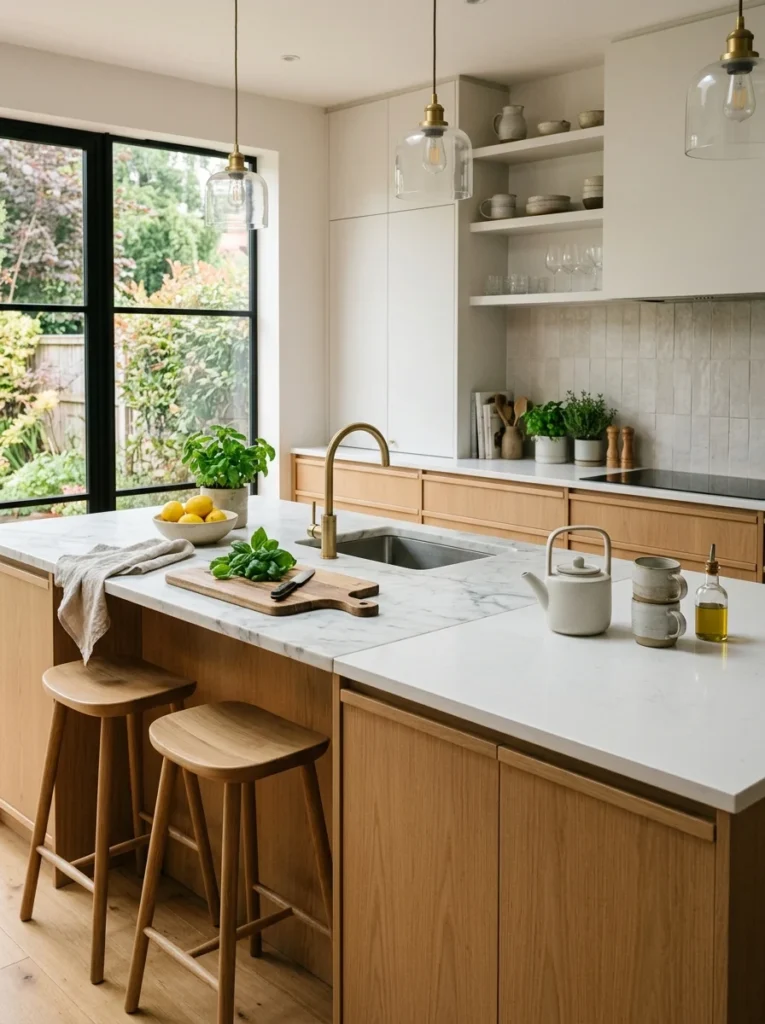
The second, smaller lesson: I judged the colour in the showroom, under bright directional lighting, and it read quite differently, cooler and greyer, once installed under my own warm kitchen lights. Countertop colour and pattern shift with the light around them, so a sample that looks perfect in a shop can look wrong at home. Now I never approve a worktop colour without seeing a sample in the actual room, at different times of day. It’s the same lesson that applies to paint, and it’s just as true for the surface you’ll be leaning on every day for years.
Common countertop questions
What is the most low-maintenance countertop?
Quartz is the standout for low maintenance, because it’s non-porous, doesn’t need sealing, and resists stains and bacteria, so daily care is just wiping it down. Its main limits are that it isn’t heat-proof (use trivets) and it costs more than budget options like laminate. For a busy kitchen where you don’t want to fuss, it’s the easiest to live with.
Is marble a good idea for a kitchen countertop?
Marble is beautiful but high-maintenance, because it’s soft and porous and etches and stains from acids like lemon and vinegar more easily than most surfaces. It suits low-use areas like a baking station, or people happy to seal it, wipe spills instantly and accept a lived-in patina. For a busy kitchen, quartz gives a similar look with far less worry.
What is the cheapest countertop material?
Laminate is by far the most budget-friendly, and modern versions look much better than their old reputation, with many stone and wood-look designs. The trade-offs are that it isn’t heat-resistant, can chip at the edges, and can’t be repaired once cut or burned. For tight budgets, rentals or first homes, it’s a sensible, fresh-looking choice.
Can I mix different countertop materials in one kitchen?
Yes, and it’s often the smartest approach. A tough surface like quartz or granite on the main run and hob area, paired with a warm wood section on the island, lets each material do what it’s best at, the hard-wearing one where the mess and heat are, the softer one where it can be enjoyed without abuse. It gives you both practicality and character.
Choose for your life, not the showroom
The perfect countertop isn’t the prettiest slab in the showroom; it’s the one that fits how you actually cook, how much upkeep you’ll really do, and what you can genuinely spend, with looks as the final tiebreaker rather than the starting point. Ask those questions in that order and the right material usually reveals itself. For most busy kitchens that’s quartz, but the honest answer depends entirely on you: the heavy cook, the budget-conscious renter, the marble lover and the hygiene-focused perfectionist should each land somewhere different. Match the surface to your real habits and you’ll have a worktop you enjoy for years instead of one you manage.
Before you sign off on anything, take a sample home and live with it in your own kitchen light for a few days. That single habit would have spared me a two-year lesson in what porous marble really means, and it’s the cheapest insurance there is against choosing the wrong surface for the way you actually live.