Layered lighting is one of the most discussed concepts in interior design and also one of the most misunderstood. Most people light a living room with a single overhead fixture and wonder why the room feels flat, clinical, or uncomfortable in the evenings. The answer is almost always lighting — not the furniture, not the color, not the decor. Understanding how to layer light properly transforms how a room looks and feels at every hour of the day.
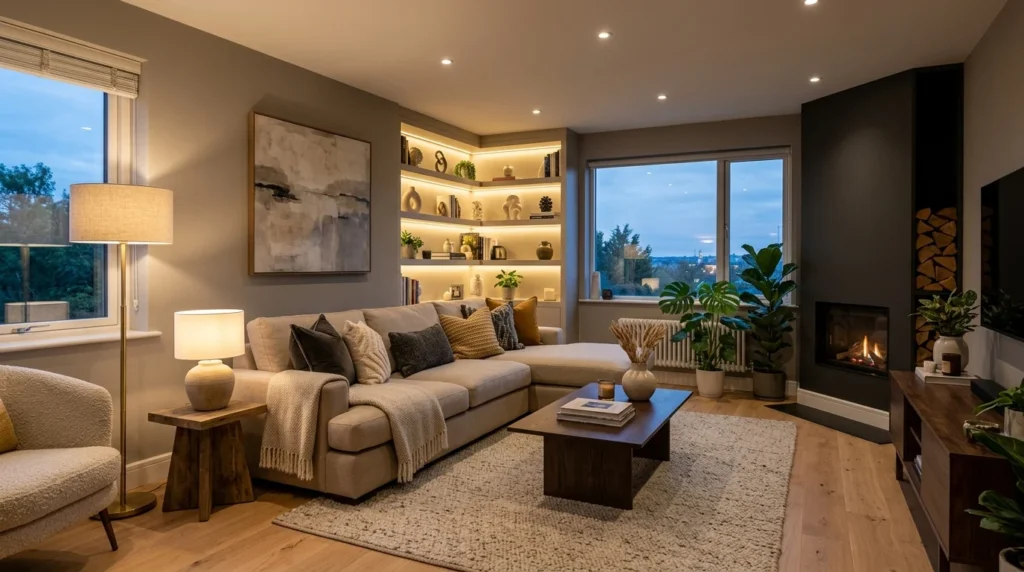
What layered lighting actually means
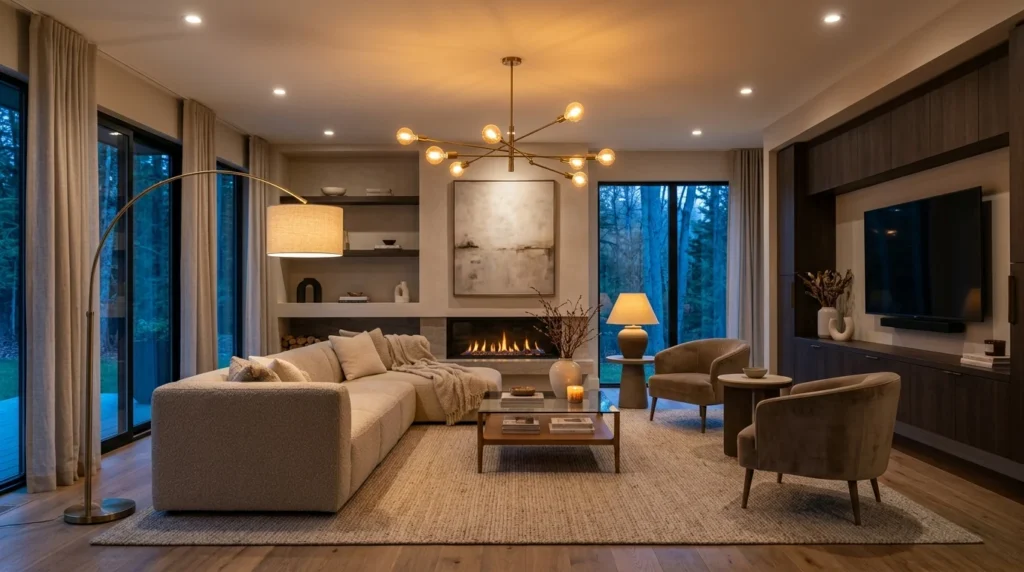
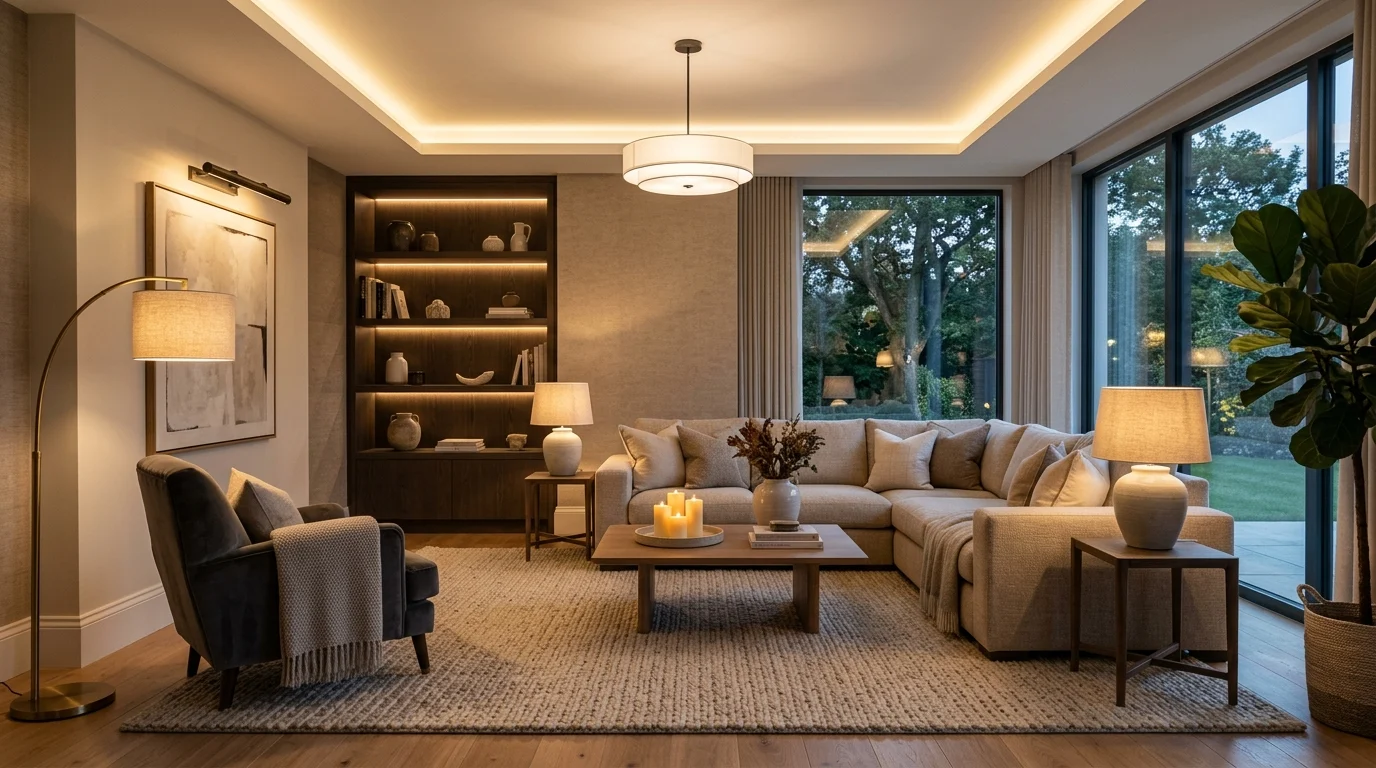
Layered lighting refers to using multiple light sources at different heights and for different purposes within one room. It is the opposite of relying on a single overhead light. The concept divides lighting into three distinct layers — ambient, task, and accent — and combines all three to create a flexible, warm, and visually interesting space.
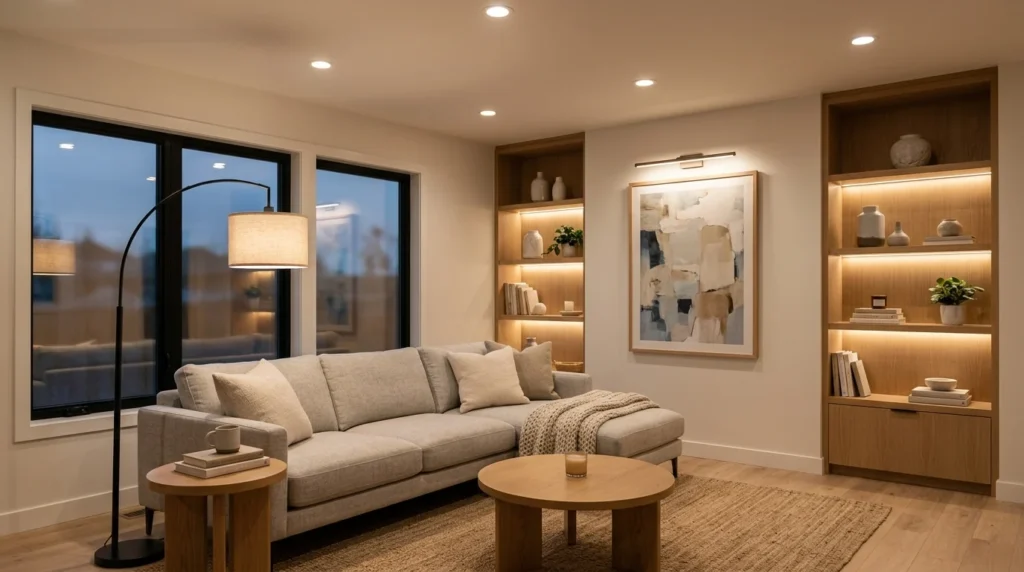
Layer 1: Ambient lighting (the base layer)
Ambient lighting is the general, overall illumination of a room. In a living room, this is typically achieved with ceiling-mounted fixtures — recessed downlights, a central pendant, a flush mount, or a chandelier. Ambient light should never be the only source in the room; it is the foundation that other layers build on. Warm bulbs (2700K to 3000K color temperature) are essential — cool white bulbs create an institutional, uncomfortable atmosphere.
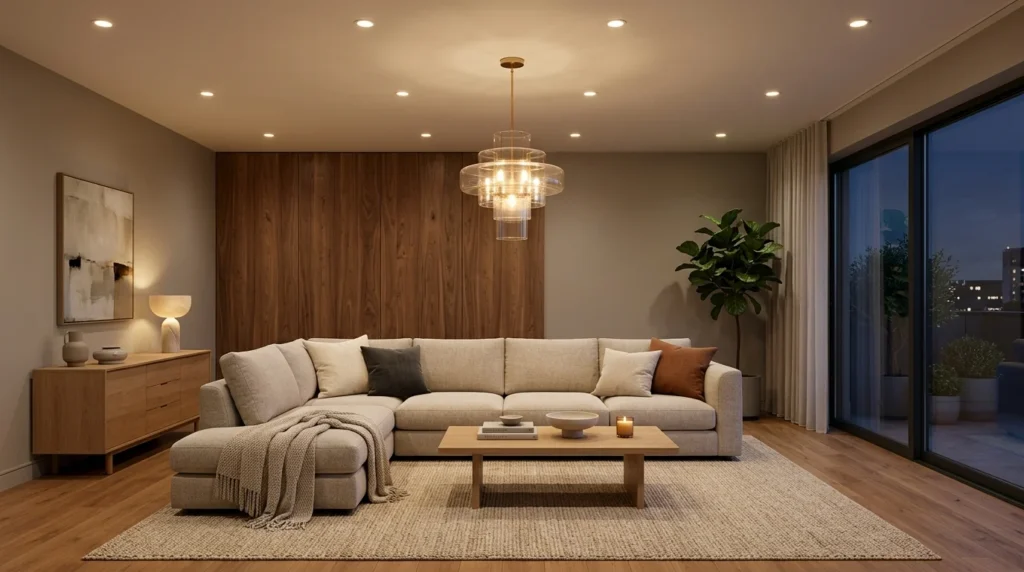
Layer 2: Task lighting (functional zones)
Task lighting illuminates specific areas where focused activity takes place. In a living room, this includes floor lamps positioned beside reading chairs, table lamps on side tables, and desk lamps on writing surfaces. Task lighting is brighter than accent lighting but softer than the overhead ambient layer. It creates pools of warm light that invite activity and give the eye something comfortable to rest on.
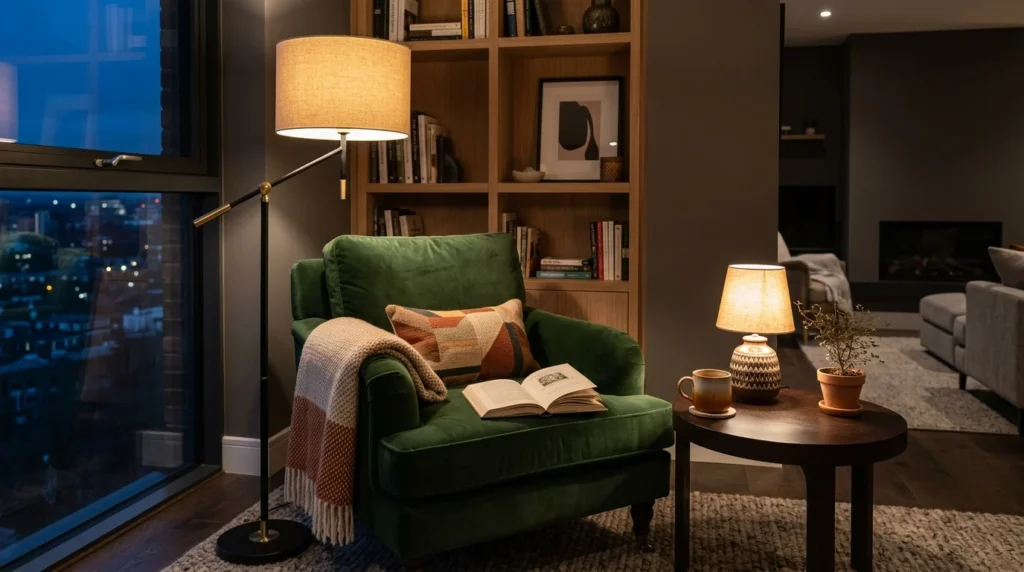
Layer 3: Accent lighting (mood and dimension)
Accent lighting adds drama, depth, and atmosphere. It highlights architectural features, artworks, plants, or decorative objects and creates shadow and contrast that make a room feel three-dimensional. Examples include picture lights above artwork, uplighters behind plants, LED strip lighting inside bookshelves, and candles or decorative string lights.
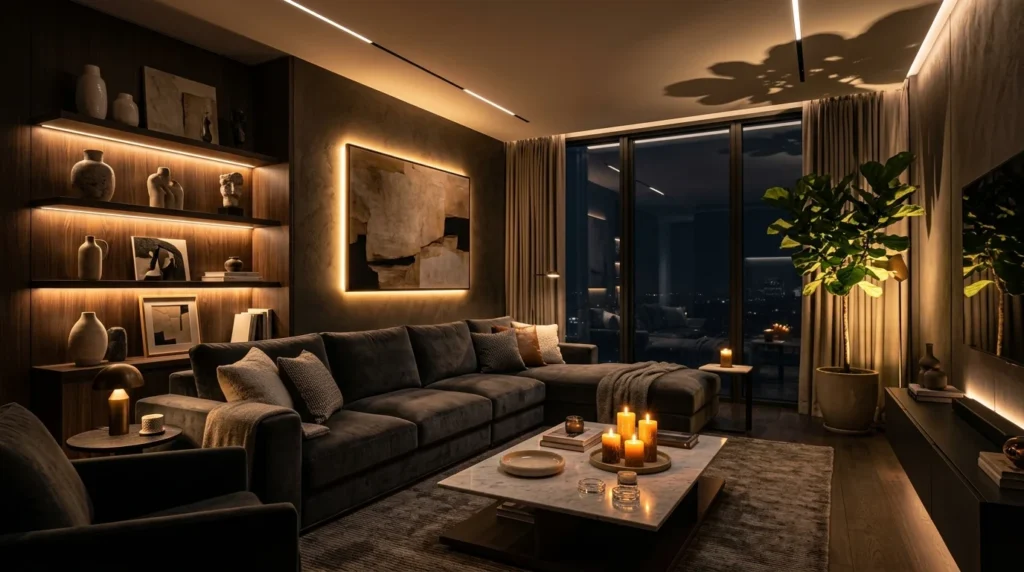
How many light sources does a living room need
- One ambient source: ceiling fixture or recessed downlights
- Two to three task sources: floor lamp, table lamps on either end of the sofa
- Two to four accent sources: candles, picture lights, shelf lighting, uplighters
- Total: five to eight light sources is the typical range for a well-layered living room
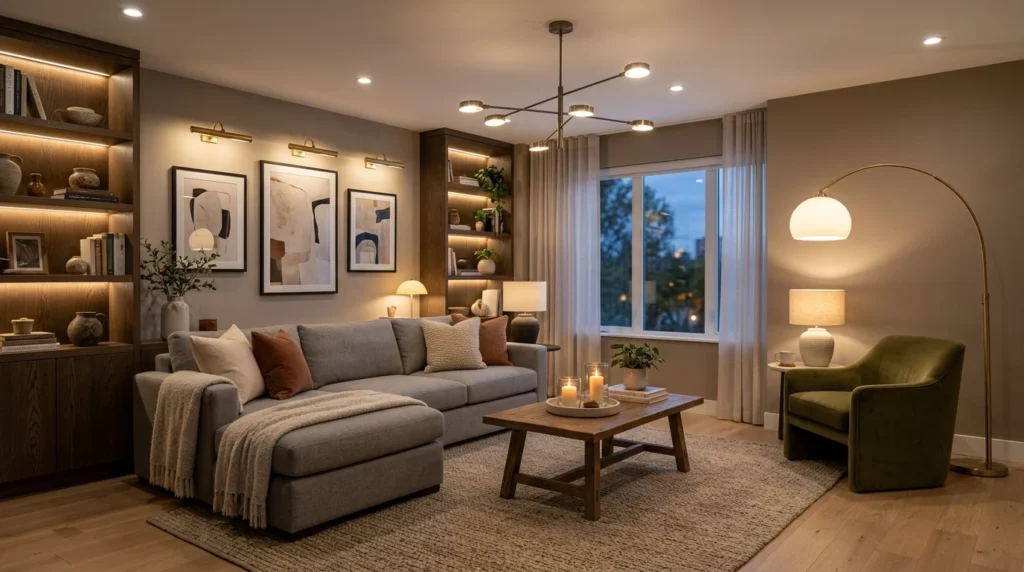
The importance of dimmers
Dimmers are arguably the single most impactful upgrade you can make to a living room’s lighting. They allow the same fixtures to serve multiple purposes — bright and functional during the day, warm and atmospheric in the evening. Fitting dimmer switches to every controllable light source in a living room takes an hour and costs very little relative to the transformation it creates.
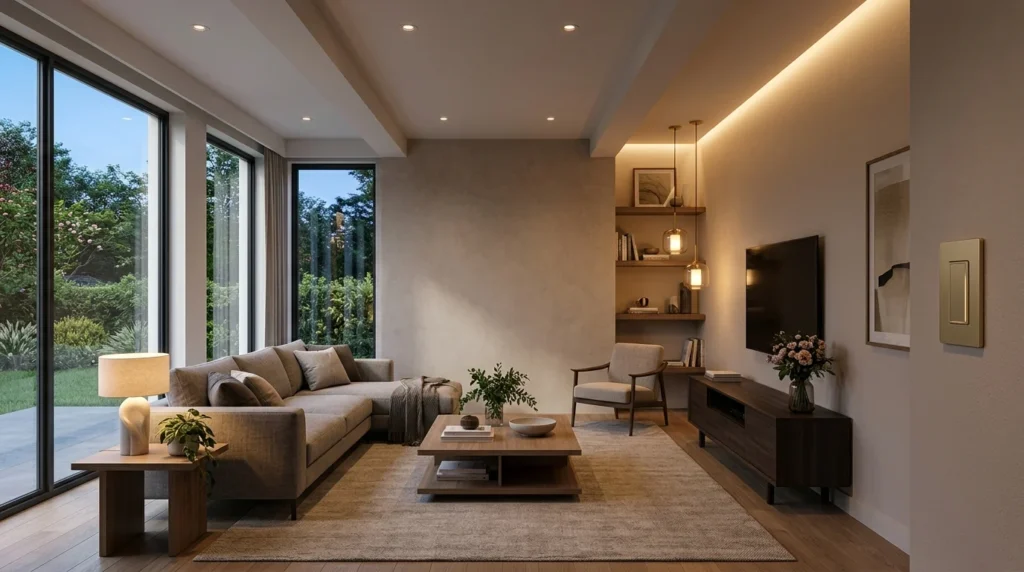
How to layer lighting without rewiring
- Use plug-in floor lamps and table lamps that do not require electrical work
- Install smart bulbs in existing fixtures to control color temperature and brightness
- Add battery-powered accent lights and LED strip tape to shelves and alcoves
- Use rechargeable LED candles for safe, long-lasting accent flame-effect lighting
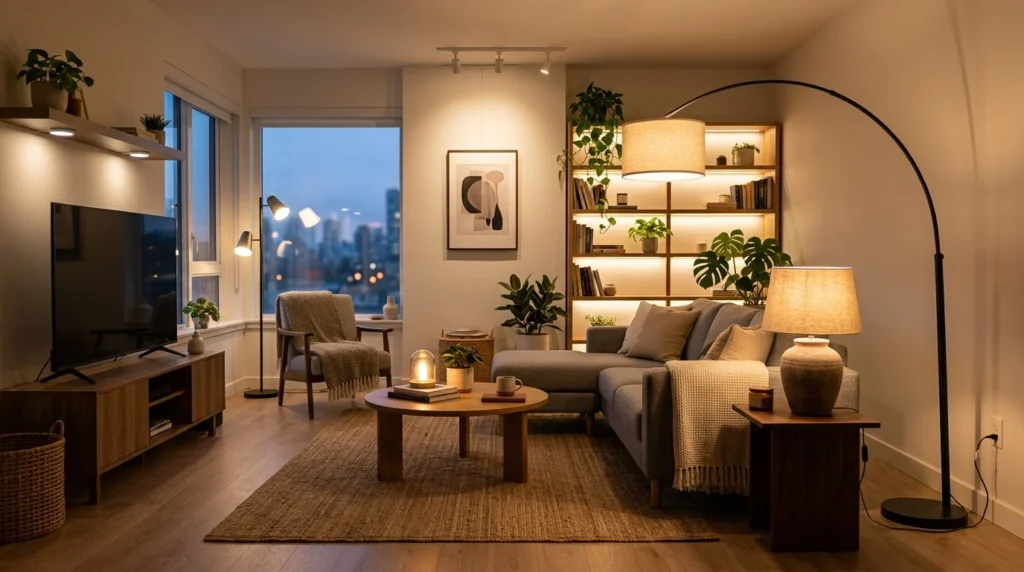
Light temperature guide for living rooms
- 2700K: warm white, closest to incandescent — most flattering for skin tones and evening use
- 3000K: soft white — slightly cooler, good for task areas
- 3500K+: neutral to cool white — avoid in living rooms; suits kitchens and offices instead