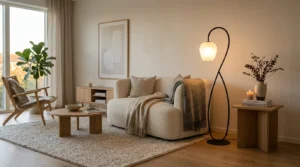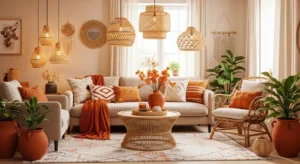
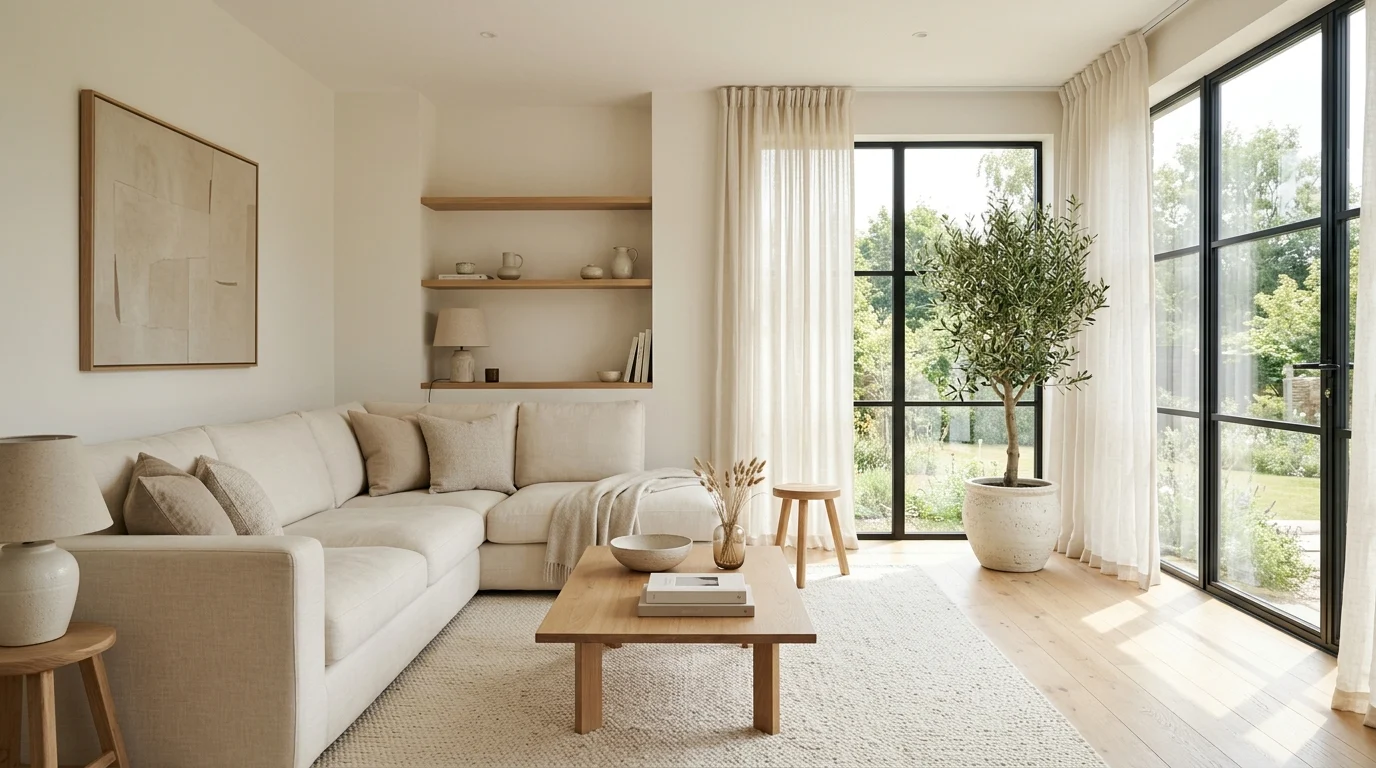
Minimalist living rooms often get a bad reputation for feeling cold, empty, and uncomfortable — more like a showroom than a home. But the best minimalist interiors are none of those things. They are warm, calm, and deeply considered spaces where every element has a clear purpose and the absence of clutter creates a genuine sense of peace. The key is understanding that minimalism is about quality and intentionality, not deprivation. These 18 ideas show how to design a minimalist living room that actually feels good to live in.

1. Choose warm whites over bright whites
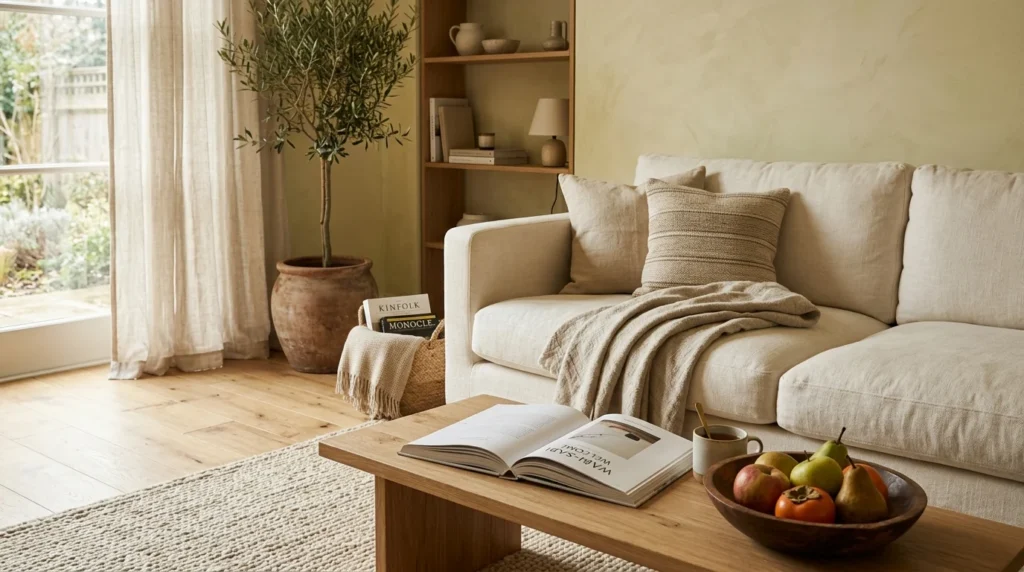
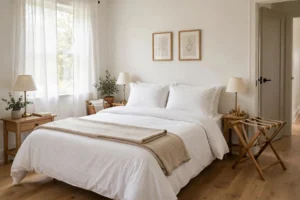
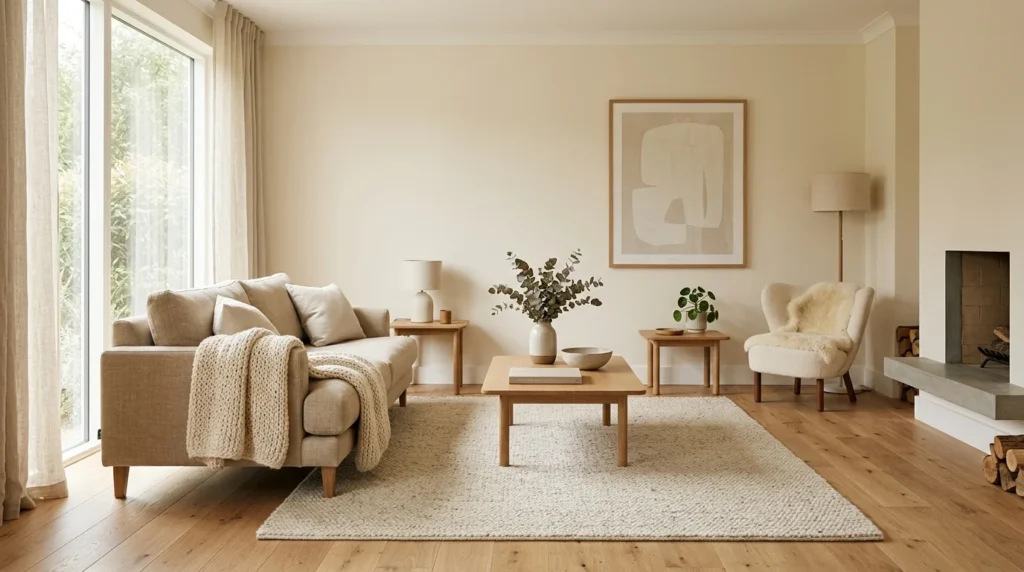
Warm white walls — those with yellow, peach, or pink undertones — make a minimalist room feel welcoming rather than clinical. Bright white can read as harsh under artificial light. Linen white, bone, and warm cream are the most livable minimalist wall colors.
2. Use one natural material as the anchor
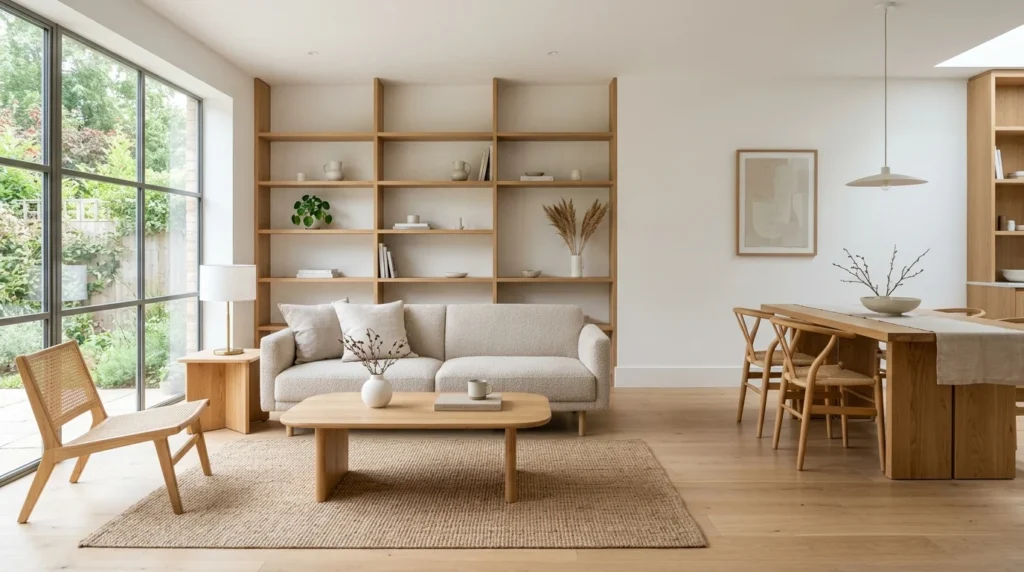
Choose one natural material — oak, linen, marble, rattan — and let it recur throughout the room in at least two or three places. Repetition of a single material creates cohesion and warmth without complexity.
3. Layer textures instead of colors
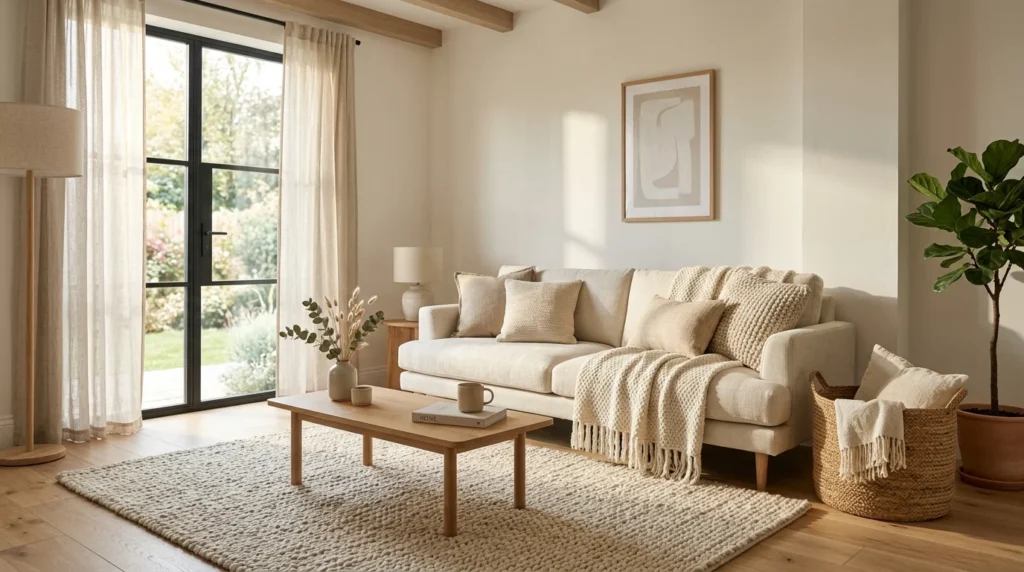
In a minimalist room, visual interest comes from texture rather than color. A linen sofa, a wool rug, a jute basket, and a cotton throw create a rich, layered look that is still calm and restrained on the eye.
4. Invest in one quality sofa in a neutral tone
In a minimalist living room, the sofa is the centerpiece. A well-made sofa in oatmeal, cream, sand, or taupe that holds its shape over time is worth the investment. It will carry the room for years and never date.
5. Keep the floor as clear as possible
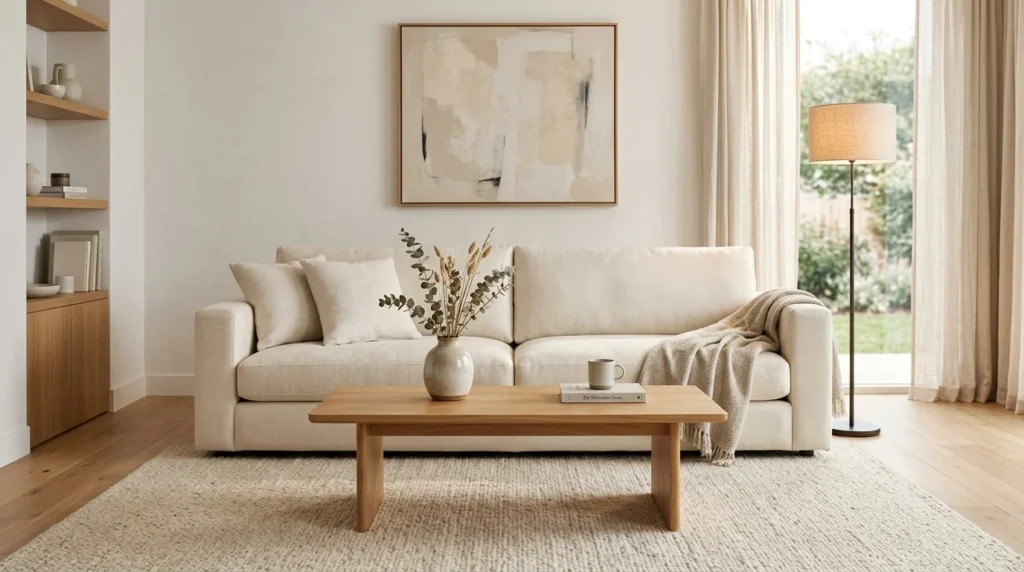
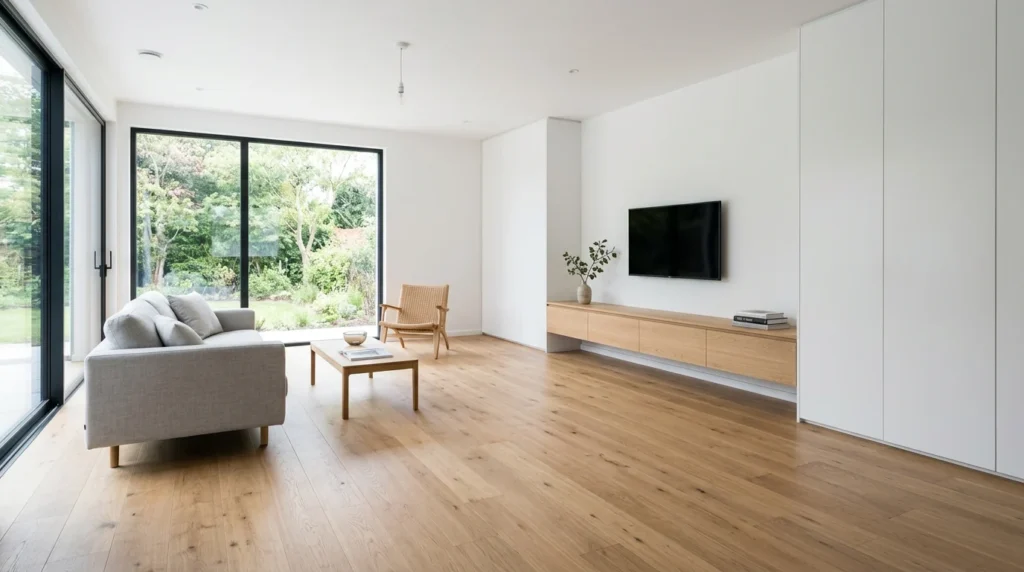
Clear floors create the perception of more space and make even a modest room feel open. Store everything that does not need to be visible — remotes, throws, magazines — in closed storage. The less that sits on the floor, the calmer the room feels.
6. Choose furniture with clean, simple lines
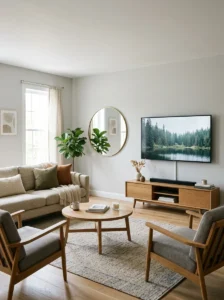
Furniture with tapered legs, smooth profiles, and no decorative carving or tufting suits a minimalist aesthetic. Avoid anything overly ornate or heavily textured. Simple silhouettes allow the eye to rest.
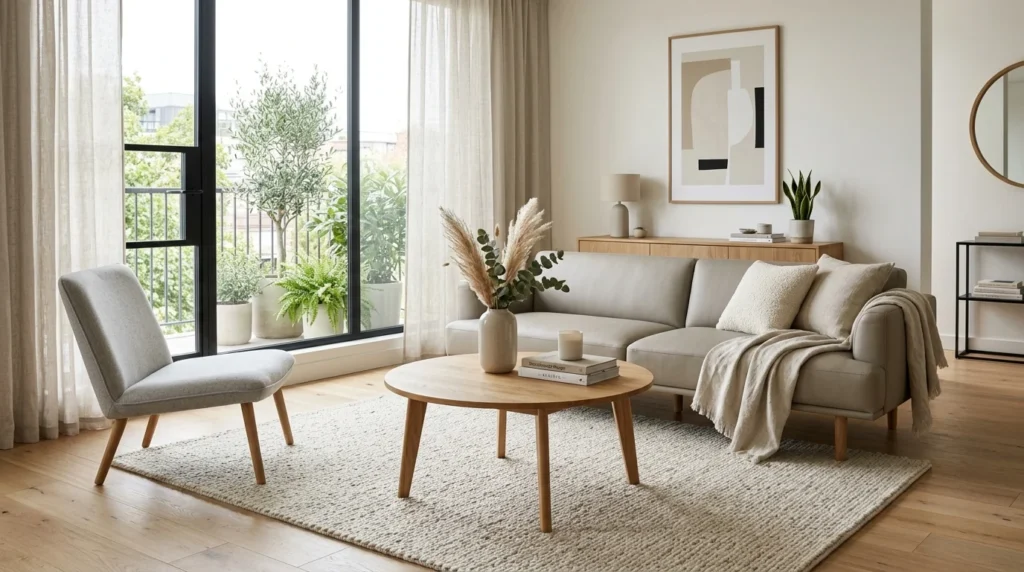
7. Use plants to add warmth without clutter
A single large-leafed plant — a fiddle leaf fig, a monstera, or an olive tree — adds living color and organic warmth to a minimalist room without visual noise. One large statement plant is more effective than several small ones.
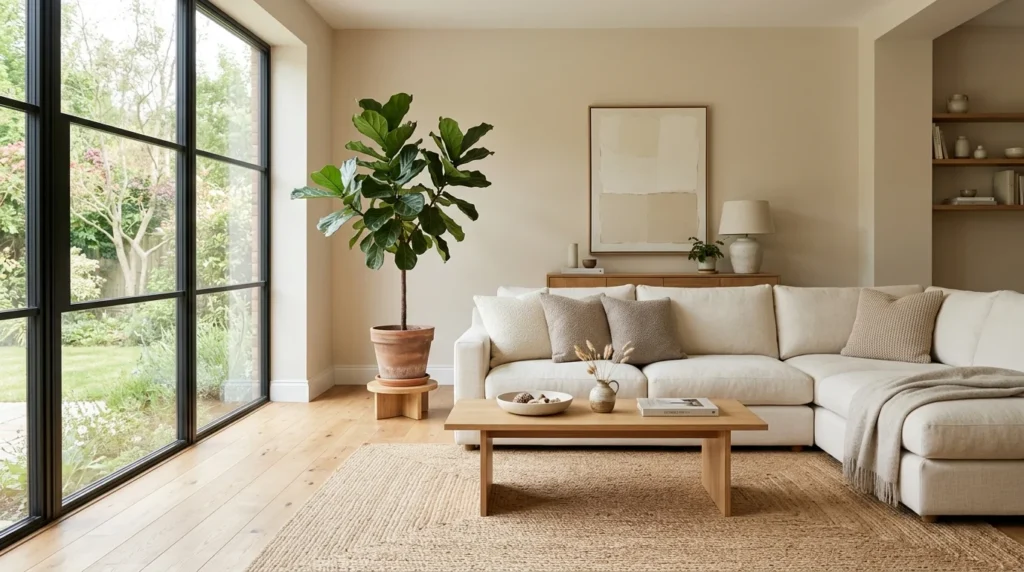
8. Keep the color palette to three tones maximum
A minimalist room typically uses a dominant neutral, a secondary warm tone, and one accent. For example: warm white walls, natural oak floors and furniture, and one dusty sage or terracotta accent through cushions and ceramics.
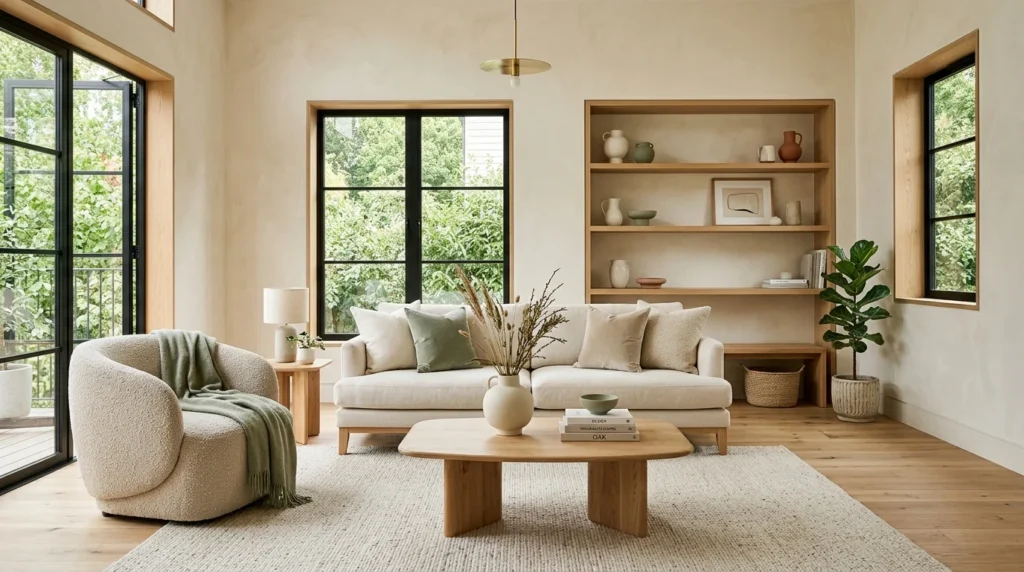
9. Use concealed storage wherever possible
Visible clutter is the enemy of minimalist design. Built-in cabinets, storage ottomans, media units with closed doors, and baskets with lids all allow objects to exist in the room without being seen. The room feels intentionally empty rather than actually empty.
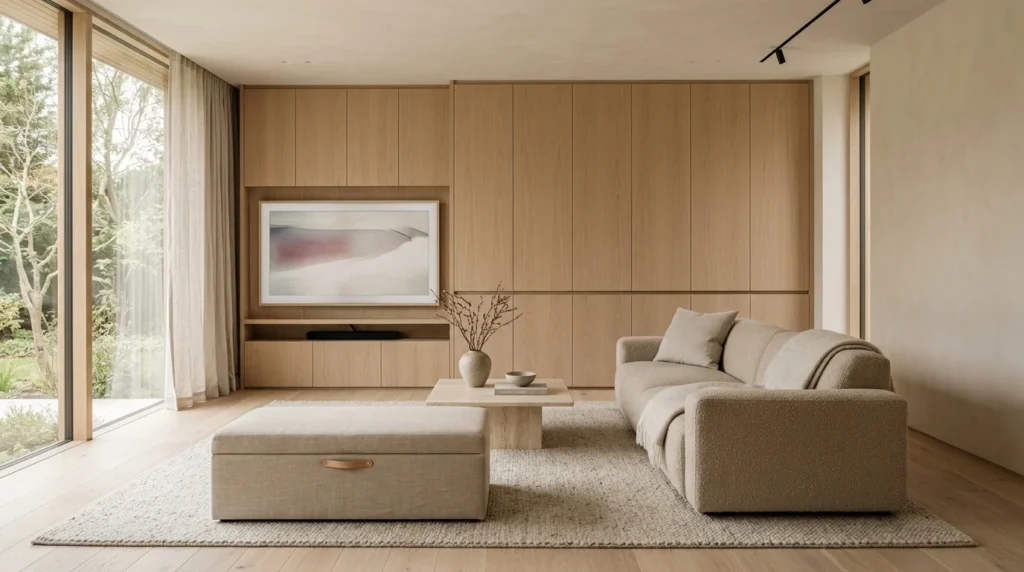
10. Hang one large piece of art instead of several small ones
One large, impactful artwork creates a focal point without the visual complexity of a gallery wall. In a minimalist room, this is often the most expressive element — choose it carefully because it will do significant work.
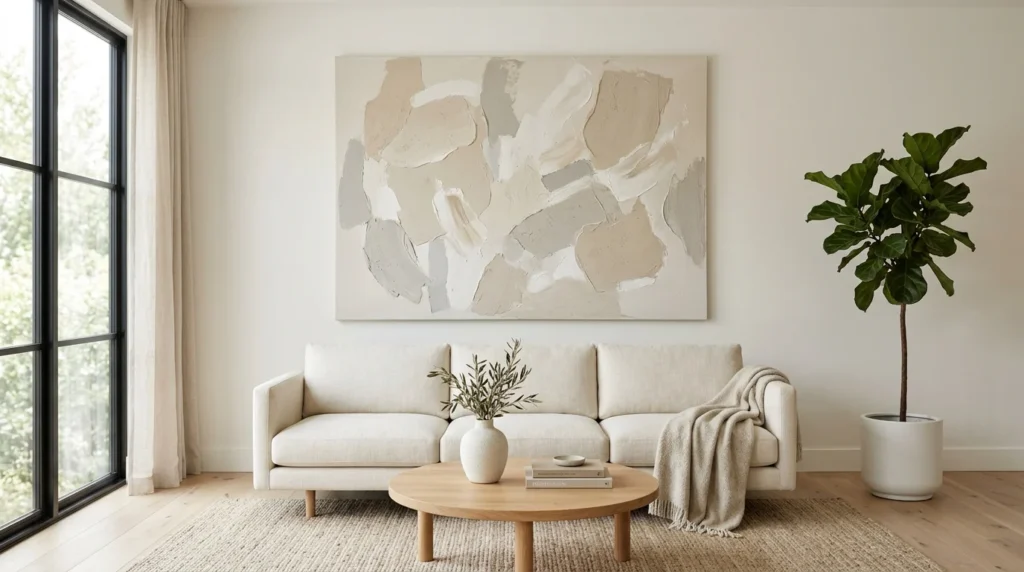
11. Edit accessories to only the most meaningful
Display only what genuinely matters to you and remove the rest. Three considered objects on a shelf — a beautiful ceramic, a small plant, and a book — create more impact than ten miscellaneous items.
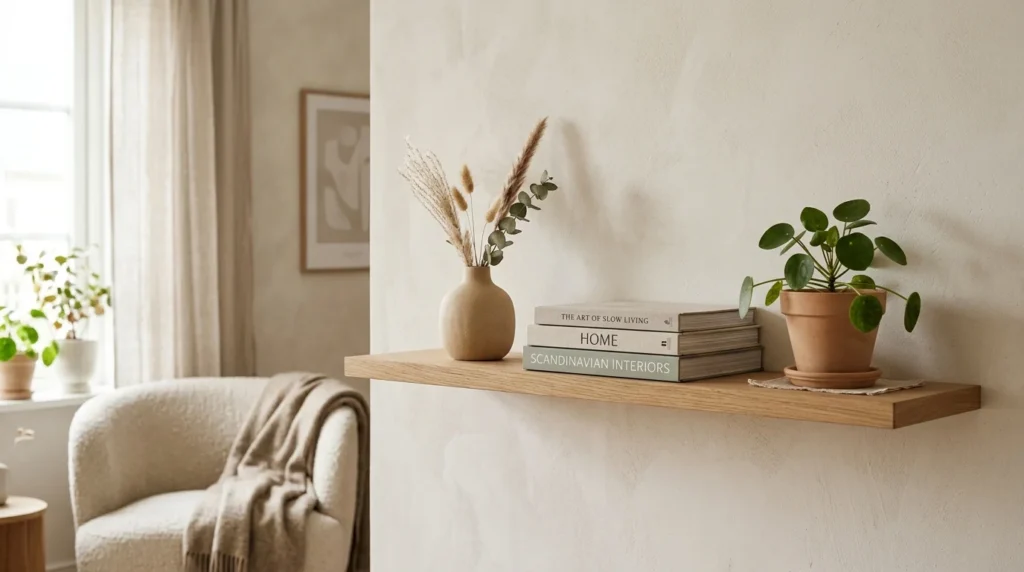
12. Let natural light be a design feature
Minimalist rooms work best when natural light is treated as part of the design. Use sheer linen curtains or leave windows bare where privacy allows. Light moving across a plain wall throughout the day is one of the most beautiful elements a minimalist living room can have.
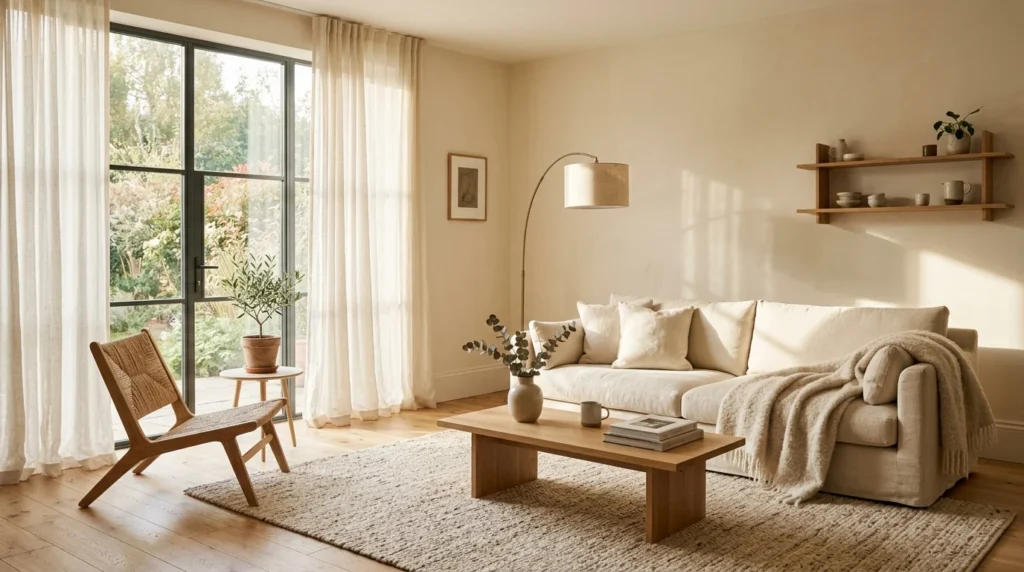
13. Choose a low-profile coffee table
A low coffee table — especially one in natural wood or stone — sits close to the ground and makes the seating area feel more spacious and relaxed. Avoid tables with thick legs or substantial visual weight that compete with the sofa.
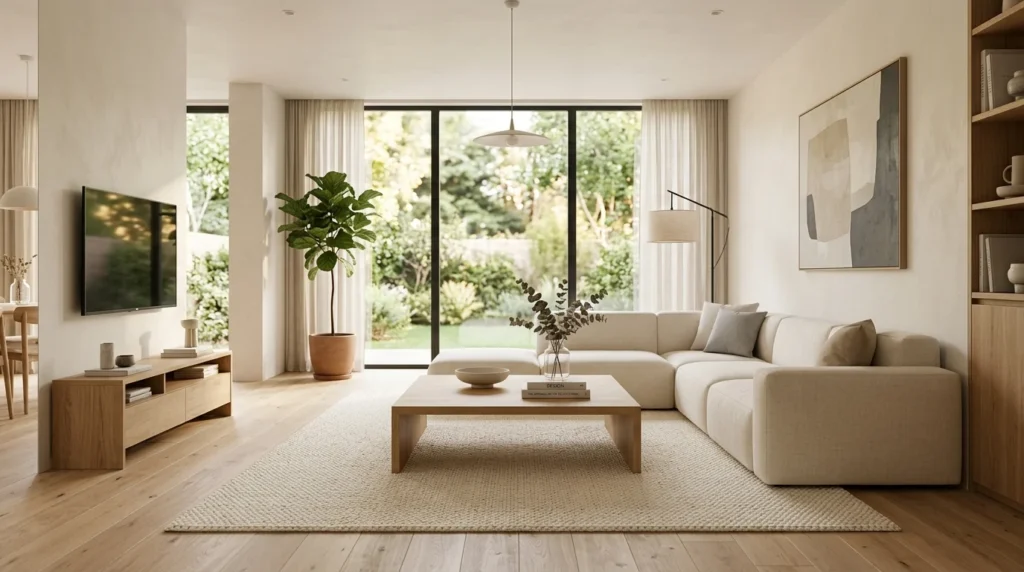
14. Use a monochromatic color scheme confidently
A room in varying tones of the same color family — cream walls, ivory sofa, oatmeal rug, natural linen cushions — is deeply calming and elegant. The tonal variation creates interest without the distraction of multiple colors.
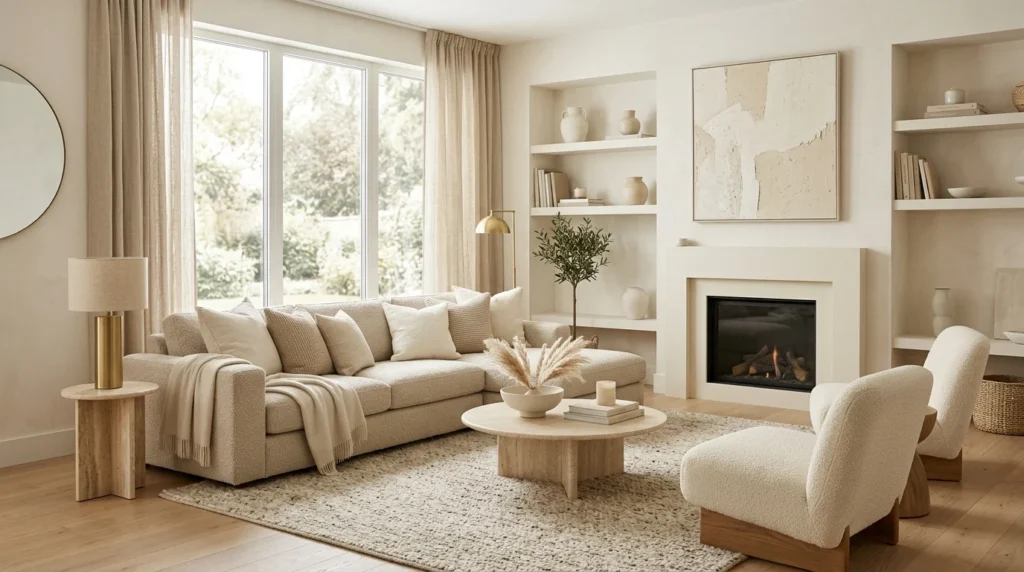
15. Keep window treatments simple
Long, straight linen or cotton curtains in a neutral color that match or complement the wall are the most minimalist option. Avoid patterned curtains, overly decorative rods, or layered treatments that add visual complexity.
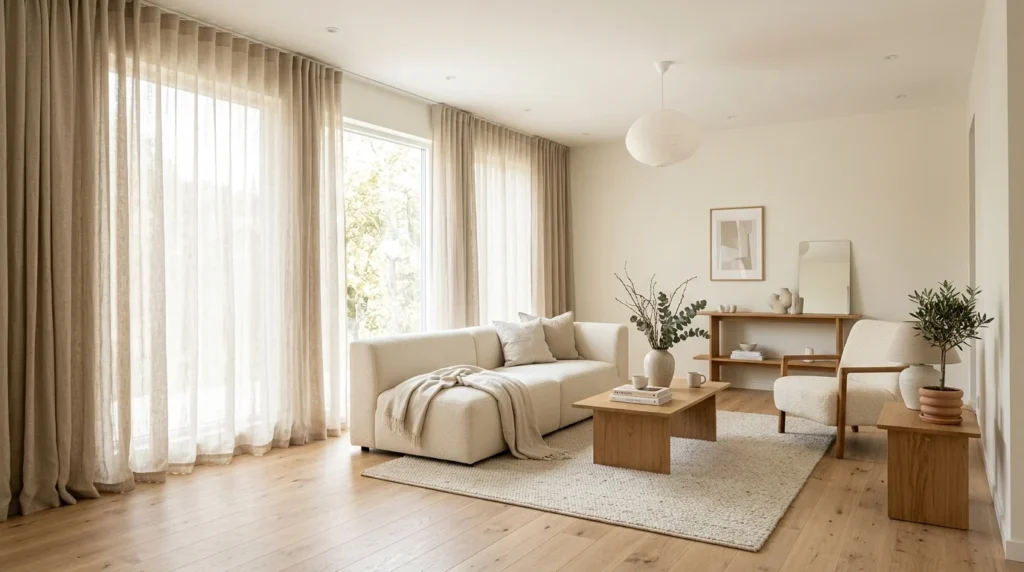
16. Incorporate warm metals sparingly
One or two brushed brass or warm gold metal accents — a lamp base, a side table leg, a candle holder — add warmth and a gentle visual punctuation point without dominating the space.
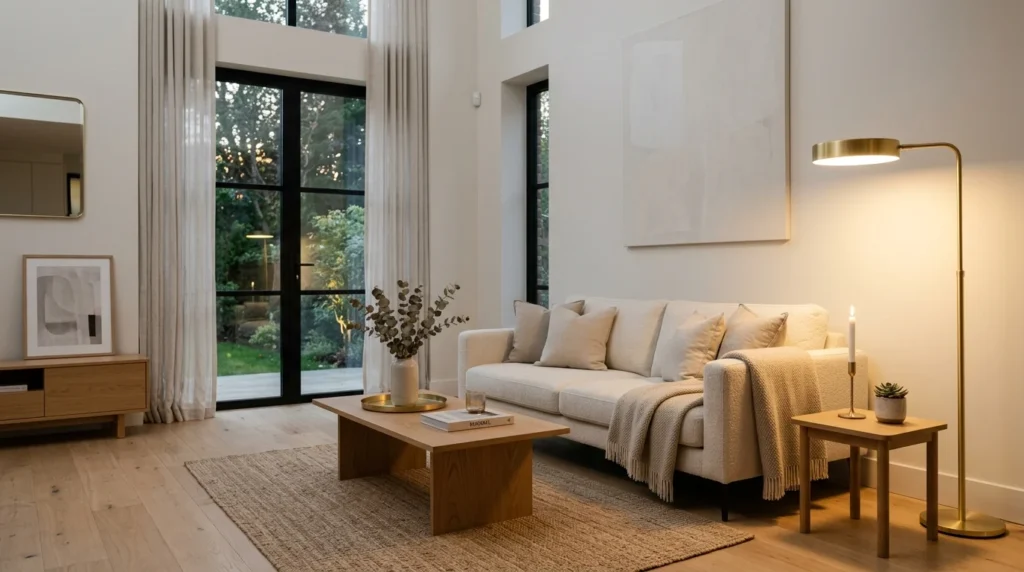
17. Use a statement floor lamp as functional sculpture
A well-designed floor lamp serves both as a light source and as a sculptural object. In a room with little decorative content, a beautiful lamp earns significant visual real estate and helps define the seating area.
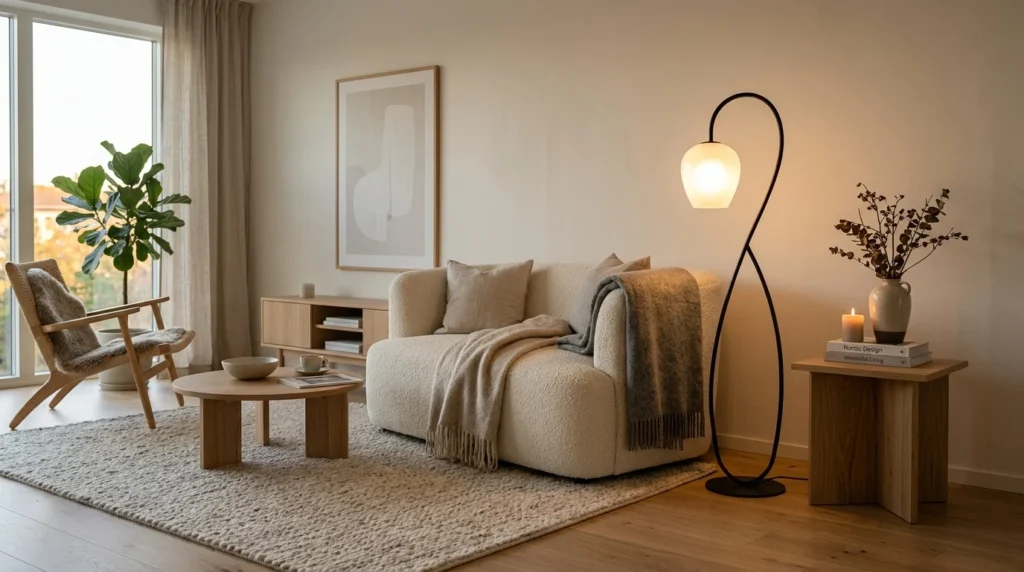
18. Allow imperfection and human warmth
The warmest minimalist rooms include small signs of real life — a stack of books that is actually being read, a throw that someone actually uses, a worn wooden bowl that holds fruit. Minimalism should feel inhabited and human, not like a display.