
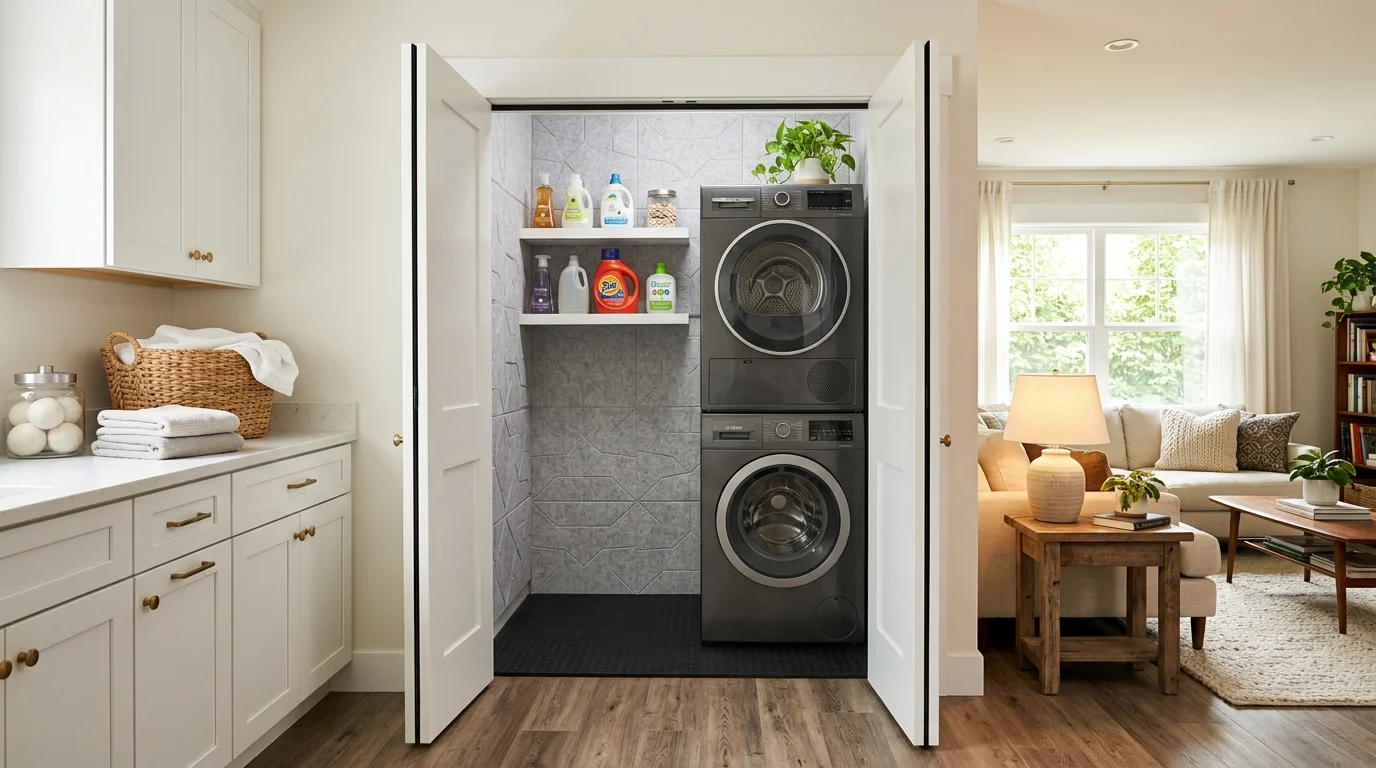
When we converted a small closet next to our living room into a stacked washer and dryer setup, I hadn’t really thought through what that would mean acoustically until the first time I started a load during a movie night and the spin cycle’s rattling hum became impossible to ignore over the dialogue. It took a bit of trial and error, and admittedly a few purchases that didn’t help nearly as much as I’d hoped, before I landed on a combination of fixes that actually made a genuine, noticeable difference. Some of it was about the machines themselves, but a surprising amount came down to the room and wall construction around them.
If your laundry area sits close to a living room, bedroom, or home office, the noise from a running washer or dryer can be a genuine daily annoyance rather than just an occasional inconvenience. Here’s what actually helped, starting with the sources of the noise itself before moving to the structural fixes around it.
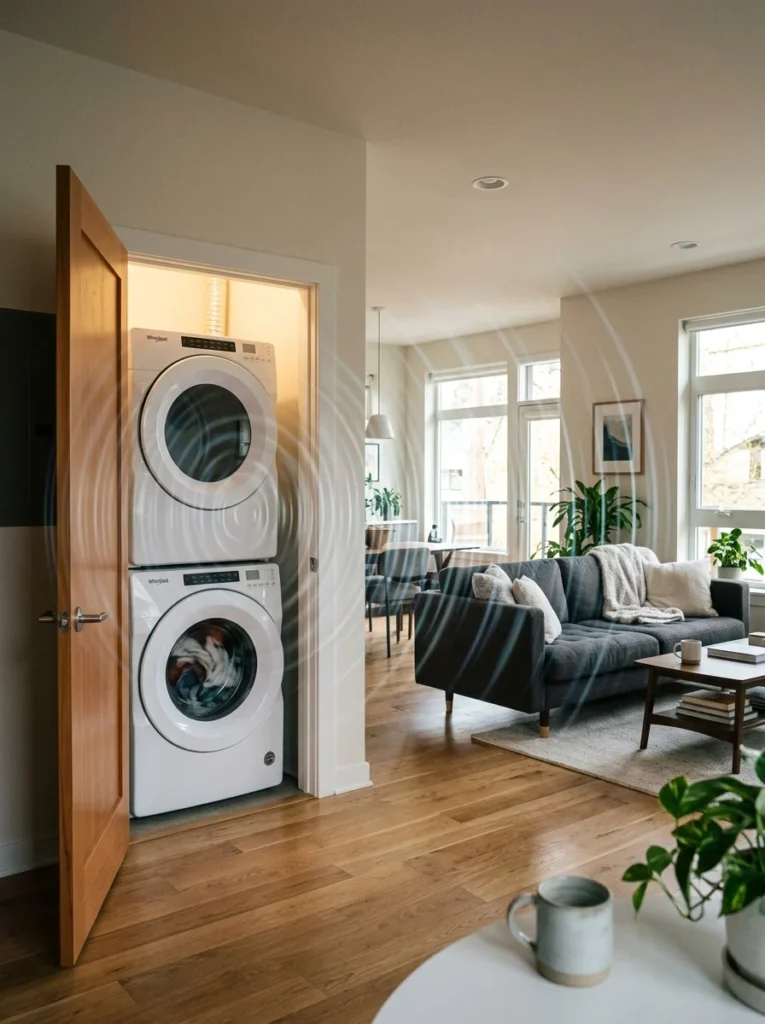
Identify whether the noise is vibration, airborne sound, or both
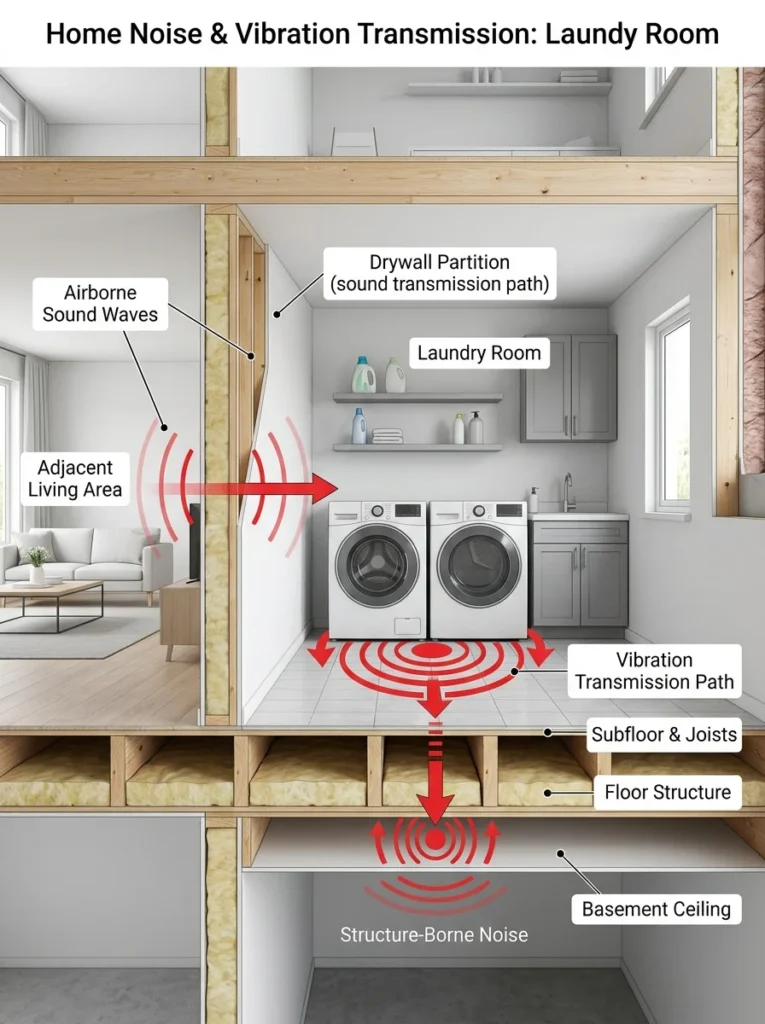
Laundry room noise generally comes from two distinct sources that require different solutions: vibration transmitted through the floor and walls, often from an unbalanced load or a machine not properly leveled, and airborne sound, the hum, spin, and general operational noise traveling directly through the air and thin walls into an adjacent room. Identifying which type is the bigger contributor in your specific situation, by noticing whether the noise seems to come mostly through the floor versus mostly through the wall or door, helps you prioritize the right fixes rather than spending money on a solution that doesn’t address your actual problem.
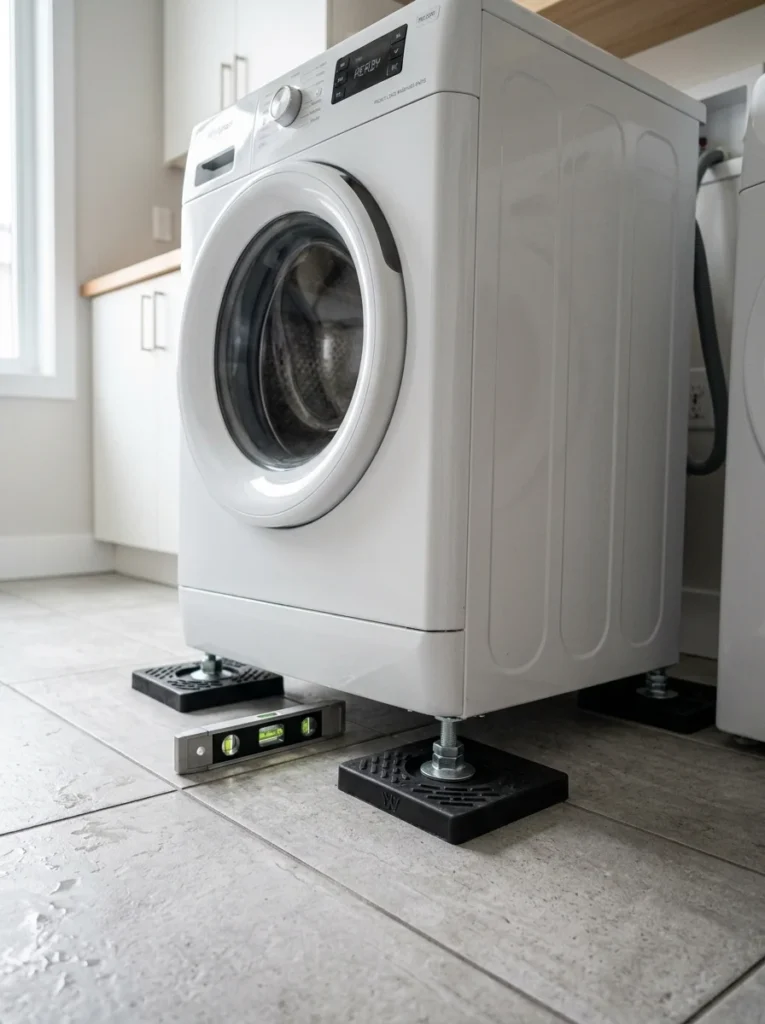
Address vibration first with proper leveling and anti-vibration pads
An unlevel washing machine is one of the most common and most fixable sources of excessive noise and vibration, since an unevenly balanced machine rocks and shakes considerably more during the spin cycle than a properly leveled one. Checking and adjusting the machine’s leveling feet, using a simple level tool to confirm all four corners sit evenly, often reduces noise noticeably on its own. Adding rubber or specifically designed anti-vibration pads underneath each leg further absorbs vibration before it transfers into the floor, which is often the single most effective and least expensive fix available for vibration-related noise.
Consider an anti-vibration mat beneath the entire appliance
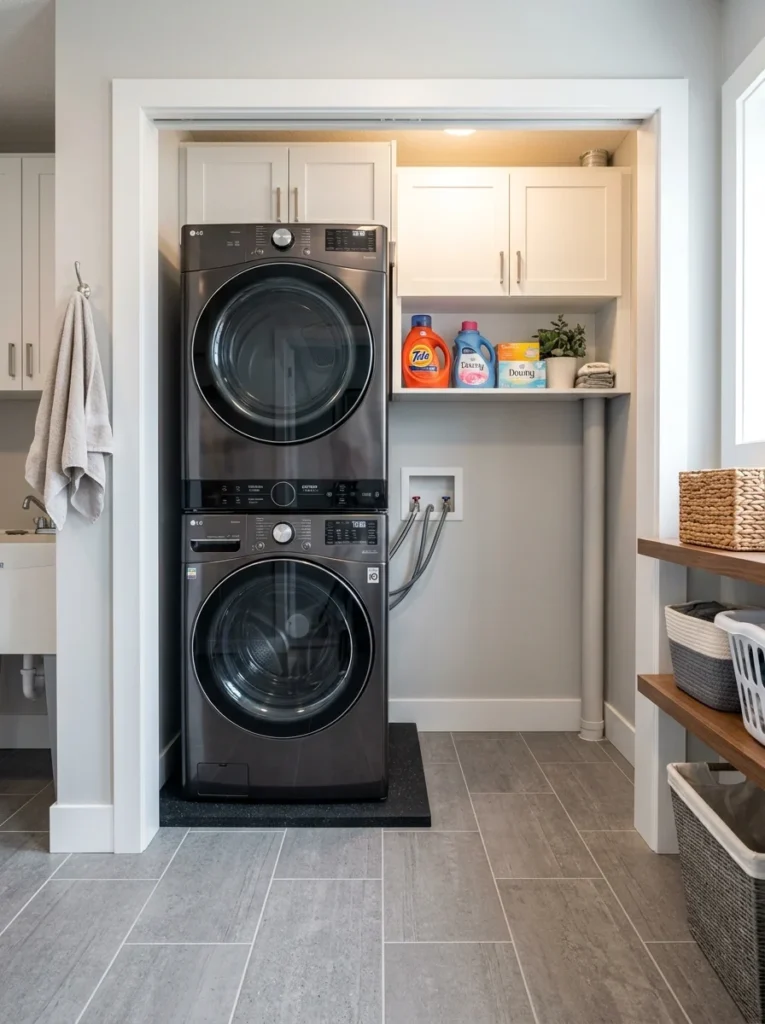
Beyond individual leg pads, a full anti-vibration mat placed under the entire washer, and sometimes the dryer as well, provides broader vibration dampening across the whole appliance footprint rather than just at four small contact points. This is particularly worth considering for a stacked washer-dryer unit or a setup on an upper floor, where vibration transmitted through the floor structure to rooms below is often more noticeable than airborne sound alone.
Add mass and density to the shared wall
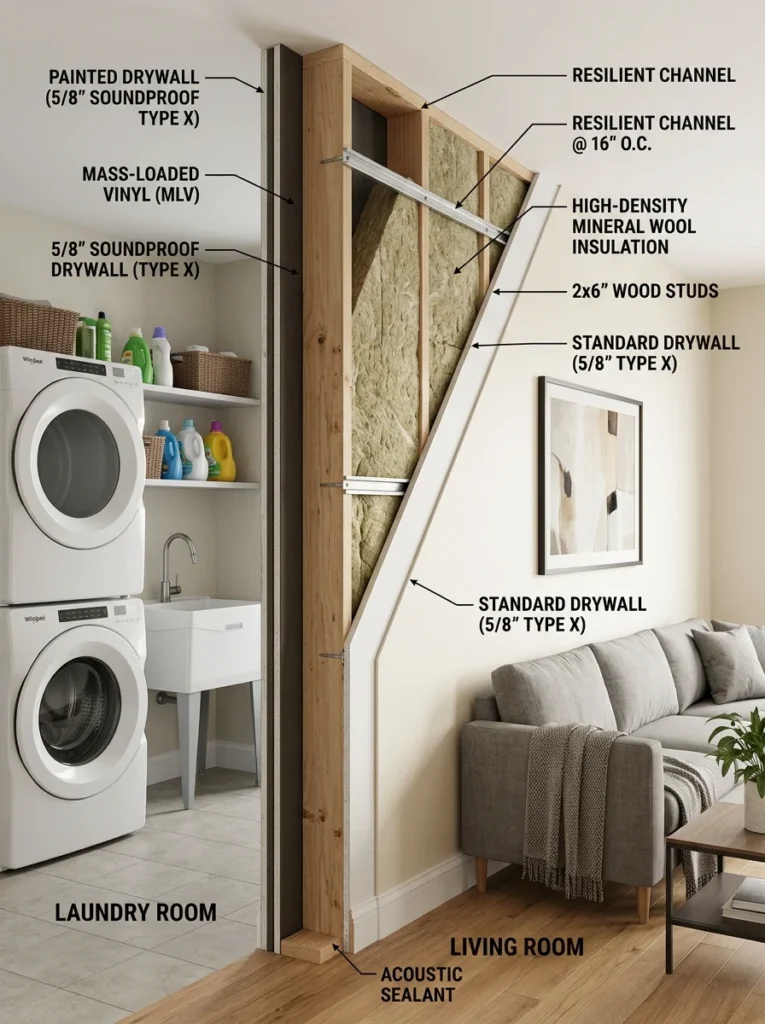
Airborne sound travels more easily through thin, lightweight walls than through denser, more substantial ones, which is why adding mass to a shared wall between a laundry room and an adjacent living space meaningfully reduces how much sound actually passes through. Adding a layer of soundproofing drywall, or a mass-loaded vinyl barrier installed behind standard drywall during a renovation, increases the wall’s density and its resulting ability to block sound transmission, though this is a more involved project best considered if you’re already planning some wall work rather than as a standalone fix.
Seal air gaps around the door and any wall penetrations
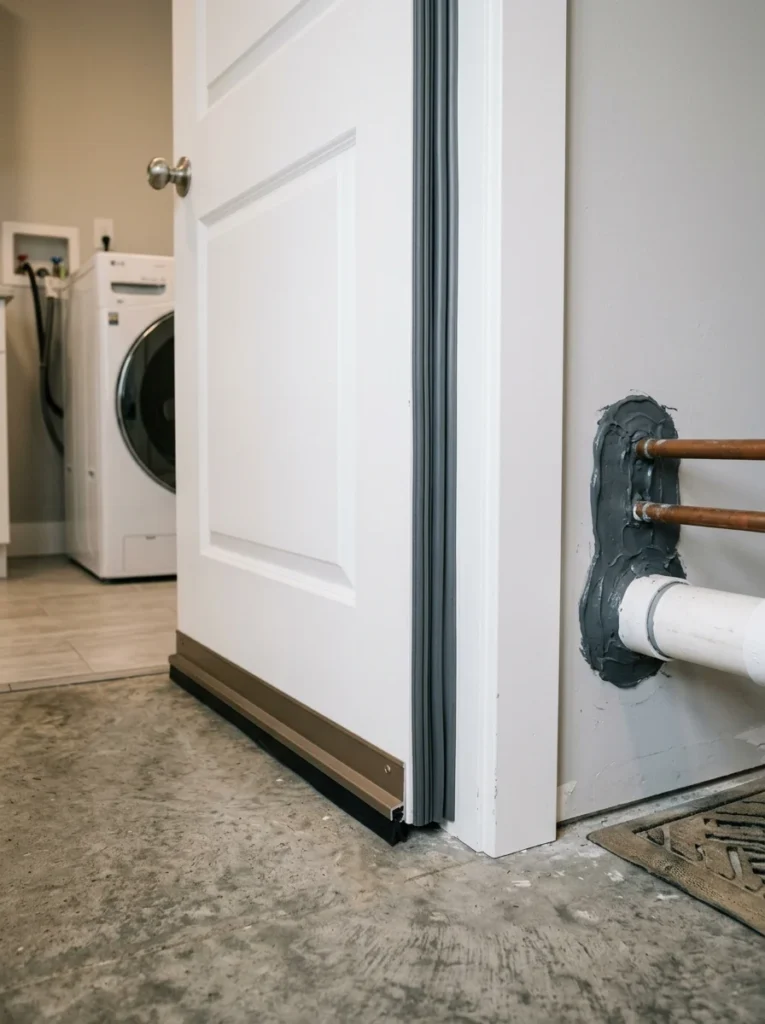
Sound travels efficiently through even small air gaps, around a door’s edges, through a gap beneath the door, or around any pipe or vent penetrating the wall, so sealing these gaps can meaningfully reduce sound leakage without requiring a full wall reconstruction. A door sweep along the bottom of the laundry room door, adhesive weatherstripping around the door frame, and acoustic caulk around any pipe or vent penetrations all close these small but cumulatively significant gaps where sound otherwise slips through easily.
Upgrade to a solid-core door if the current one is hollow
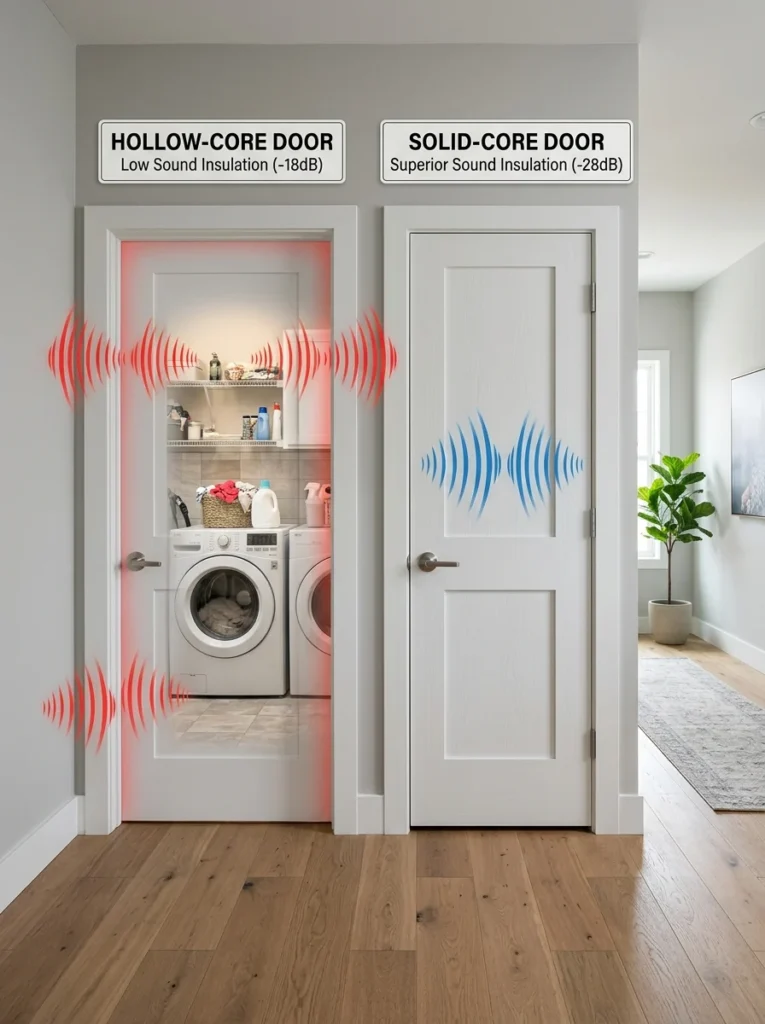
Many interior doors, particularly in older homes or those built to a standard budget, are hollow-core doors, which offer minimal sound blocking compared to a solid-core door of the same size. Replacing a hollow-core laundry room door with a solid-core version significantly improves sound blocking at one of the most direct paths sound takes into an adjacent room, and it’s a relatively straightforward, moderate-cost upgrade compared to more extensive wall soundproofing work.
Add acoustic panels or dense curtains inside the laundry room
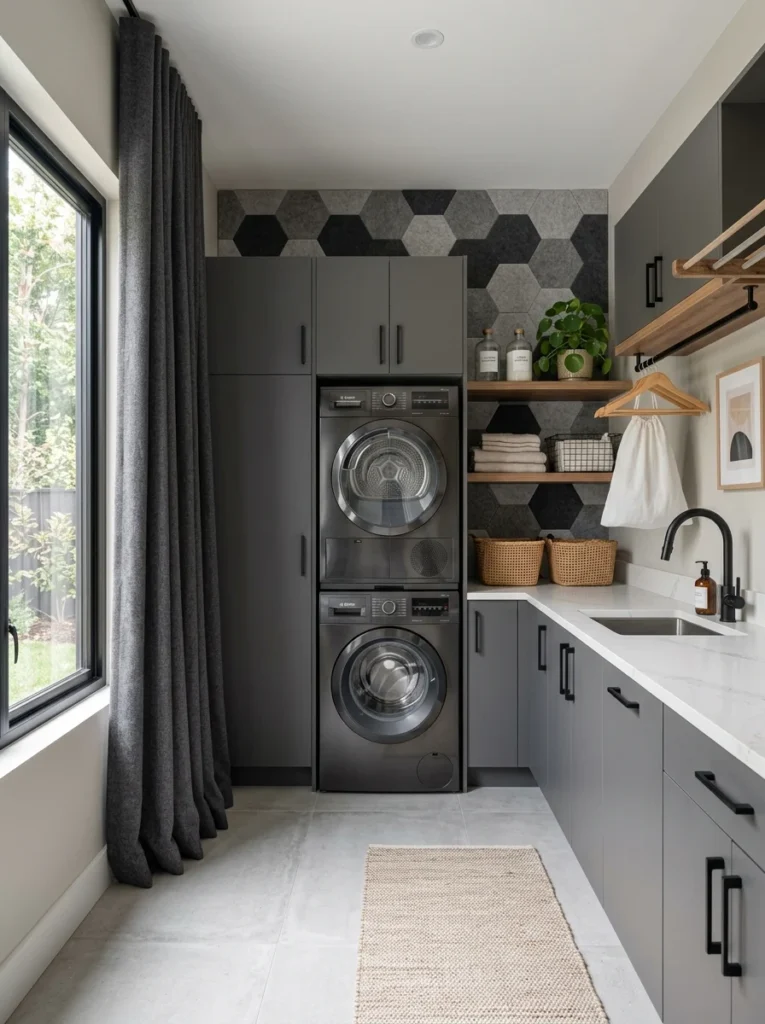
Hard, reflective surfaces inside a laundry room, tile, bare drywall, a hard floor, bounce sound around rather than absorbing it, which can amplify how loud the room feels both inside and to adjacent spaces. Adding acoustic panels to the walls, or hanging a dense, heavy curtain over the door or an adjoining wall, introduces some sound-absorbing material into the room that reduces this reflective amplification, complementing the wall’s mass-based sound blocking rather than replacing it.
Consider the appliance’s own noise rating when replacing machines
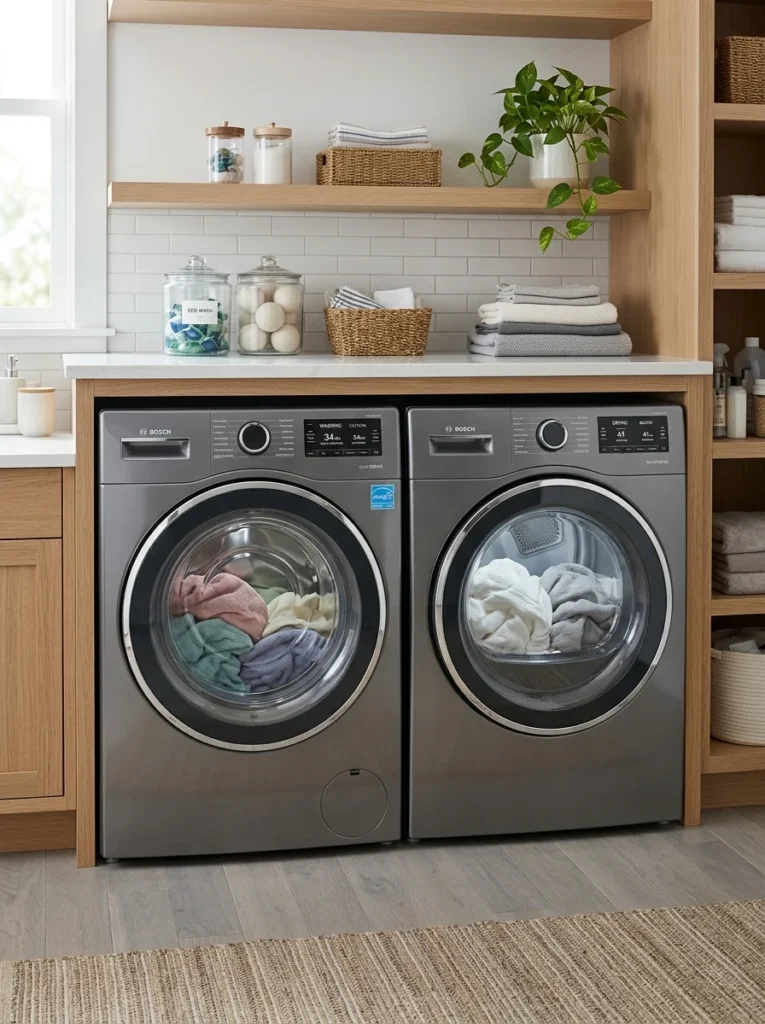
If you’re due for a new washer or dryer, checking a specific model’s decibel rating or noise level specification before purchasing can meaningfully reduce the noise problem at its actual source, rather than only working to contain noise from an inherently louder machine after the fact. Front-load washers with a good suspension system, and dryers with better internal insulation and quieter motor designs, generally produce noticeably less noise and vibration than older or more budget-oriented models, which is worth factoring into a purchase decision if noise near living spaces is a genuine ongoing concern.
Address ductwork and vents as a potential sound path
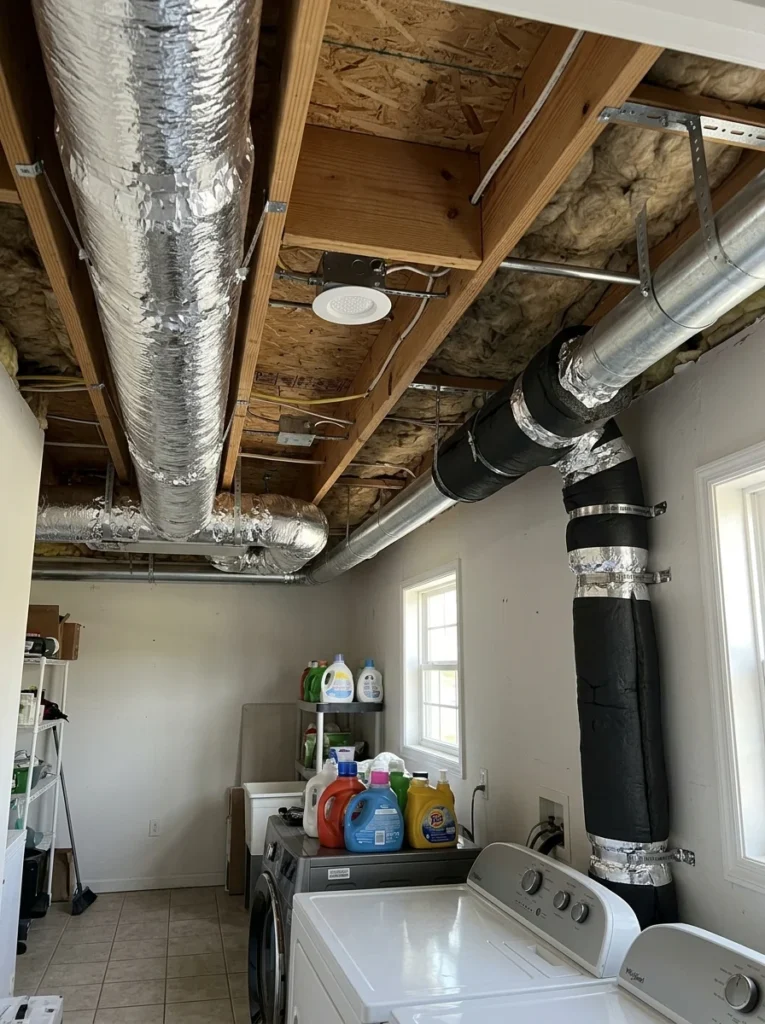
Dryer vent ductwork and any shared HVAC ductwork running near or through a laundry room can act as a sound pathway, carrying operational noise further into the home than the walls alone would suggest. Insulating exposed ductwork where it’s accessible, and ensuring dryer vent connections are properly sealed rather than loosely fitted, reduces this less obvious but sometimes significant contributor to sound traveling beyond the laundry room itself.
Time noisier loads around your household’s actual schedule
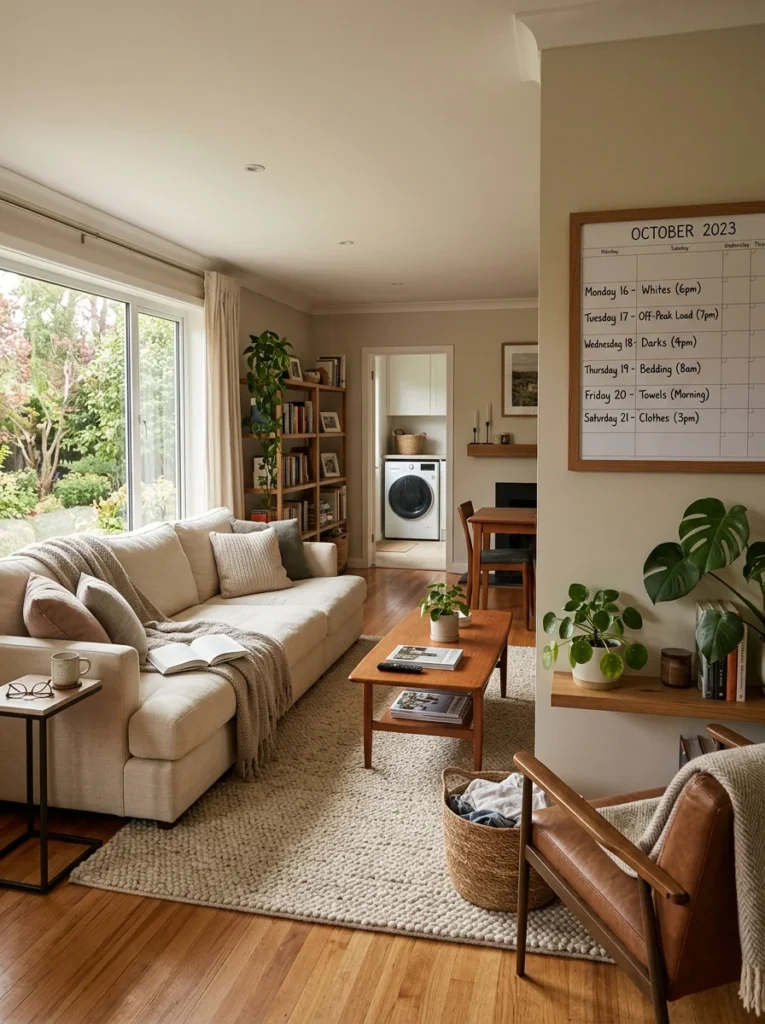
Even with meaningful soundproofing improvements in place, running particularly heavy or unbalanced loads, or using a machine’s most aggressive spin cycle, during hours when the adjacent living space sees quieter activity, watching a movie, working from home on a call, avoids the remaining, harder-to-eliminate noise at the times it would matter most. This isn’t a substitute for genuine soundproofing work, but it’s a free, immediate step that complements whatever physical fixes you do end up implementing.
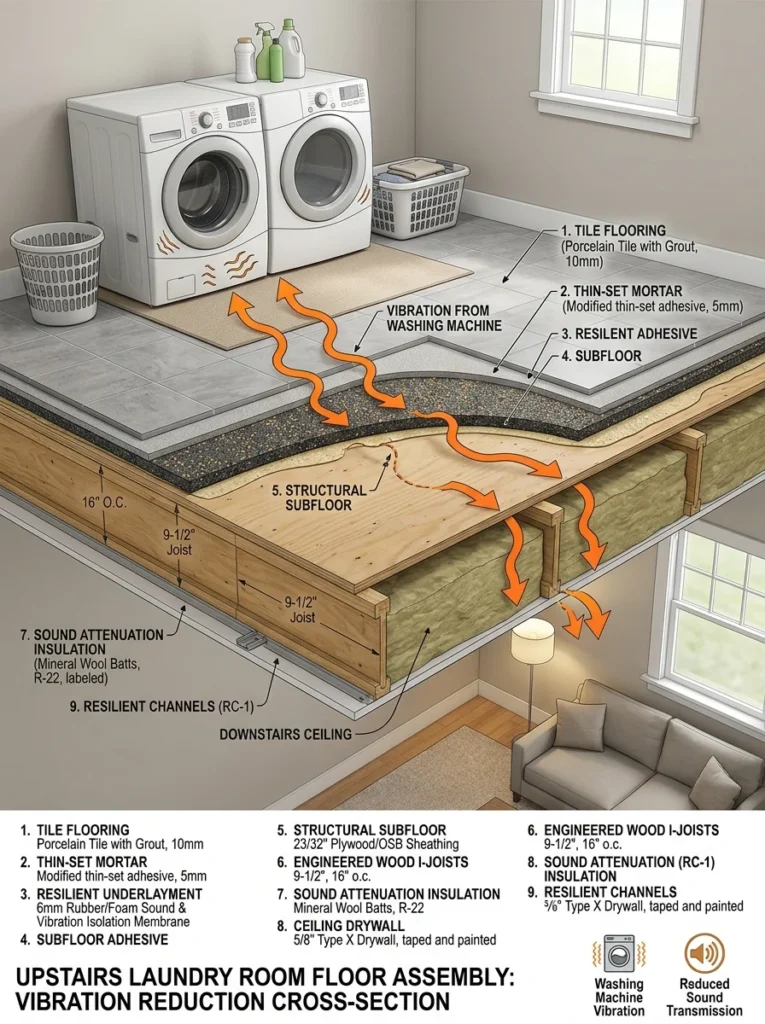
Consider floor isolation for upper-level laundry rooms
A laundry room located on an upper floor, directly above a living space below, transmits vibration and impact noise through the floor structure itself, which can be more noticeable downstairs than the airborne sound heard from an adjacent room on the same level. Installing a resilient underlayment beneath the laundry room’s flooring, specifically designed to decouple the floor surface from the structural subfloor, reduces how much vibration and impact noise transfers down into the ceiling and living space below. This is a more involved fix, generally requiring floor removal and reinstallation, but it’s worth considering if you’re already planning to update the laundry room’s flooring for other reasons.
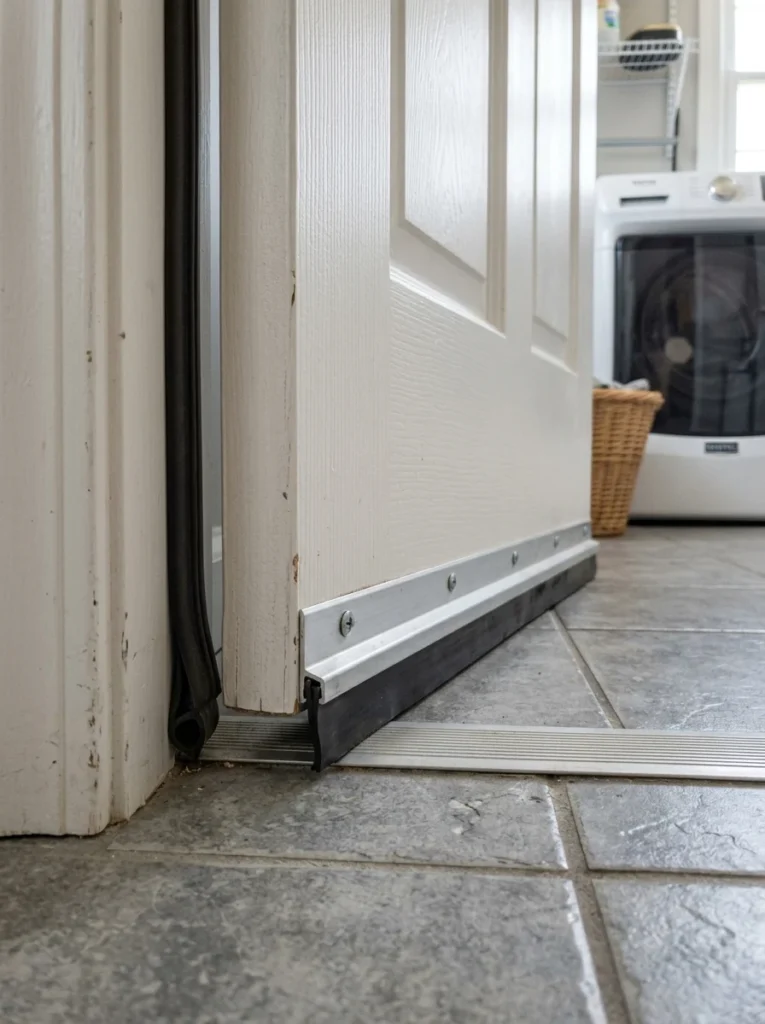
Don’t overlook the threshold and gap beneath the door
Even a solid-core door loses much of its sound-blocking benefit if a significant gap remains underneath it, since sound travels easily through this often-overlooked opening. An adjustable door sweep, installed along the bottom edge of the door, closes this gap while still allowing the door to open and close normally, and it’s one of the simplest, most affordable additions on this entire list. Pairing a door sweep with a compressible weatherstrip seal around the door’s remaining edges, top and sides, addresses the small perimeter gaps that a sweep alone doesn’t cover, together creating a considerably more complete seal around the whole door frame.
What’s the biggest source of laundry room noise, vibration or airborne sound?
It varies by situation, but an unlevel or unbalanced washing machine is one of the most common sources of vibration-related noise, while general operational hum and motor noise contribute more to airborne sound. Identifying which is more noticeable in your specific case helps prioritize the right fix.
Does a solid-core door really make a noticeable difference?
Yes, a solid-core door blocks significantly more airborne sound than a standard hollow-core door, since hollow doors offer minimal resistance to sound passing through, making this one of the more effective moderate-cost upgrades for a laundry room near living spaces.
Can I soundproof a laundry room without major renovation work?
Yes, several effective fixes don’t require opening up walls, including anti-vibration pads or mats under the appliance, sealing door and vent gaps, adding a door sweep, and using acoustic panels or dense curtains inside the room, all of which meaningfully reduce noise without a full wall reconstruction.
Does choosing a quieter washer or dryer model actually matter?
Yes, checking a specific model’s decibel rating before purchasing can reduce noise at the source, since front-load washers with good suspension systems and dryers with better insulation and quieter motors generally produce noticeably less noise than older or more budget-oriented models.
Does the gap under a laundry room door really matter for noise?
Yes, even a solid-core door loses much of its sound-blocking benefit if a noticeable gap remains underneath it, since sound travels easily through openings like this. An adjustable door sweep closes this gap effectively and is one of the simplest, most affordable fixes available.
Meaningfully reducing laundry room noise near living spaces comes down to addressing both vibration, through proper leveling and anti-vibration pads, and airborne sound, through door upgrades, sealed gaps, and added wall mass where a bigger renovation is already planned. None of these fixes require relocating the laundry room itself, and most can be tackled incrementally as budget allows, starting with the cheapest, most immediately effective options.
Our own laundry closet, once a source of genuine movie-night frustration, is now considerably quieter thanks to a properly leveled machine, an anti-vibration mat, and a solid-core door replacing the flimsy hollow one that came with the space originally, plus a simple door sweep that closed off the last bit of sound sneaking underneath. If your own laundry area is causing similar frustration, start with checking the machine’s leveling and adding vibration pads; that alone solved a meaningful portion of our own noise problem before we ever touched the door or walls.