My first apartment out on my own had a bedroom with, somehow, no closet at all, just four plain walls and a door, which I discovered only after I’d already signed the lease and started moving boxes in. For the first few months, everything lived in a pile of open suitcases and cardboard boxes stacked against one wall, which was about as functional and pleasant to live with as it sounds. It took some real problem-solving, and accepting that I needed to think completely differently about storage than I would in a bedroom with a built-in closet, before the room actually started functioning like a real bedroom instead of a glorified storage unit with a bed in it.
A closet-free bedroom is more common than people expect, particularly in older homes, converted spaces, or studio apartments, and it’s entirely possible to create genuinely functional, even attractive storage without one. Here’s what actually worked, organized from the biggest structural solutions to the smaller finishing touches.
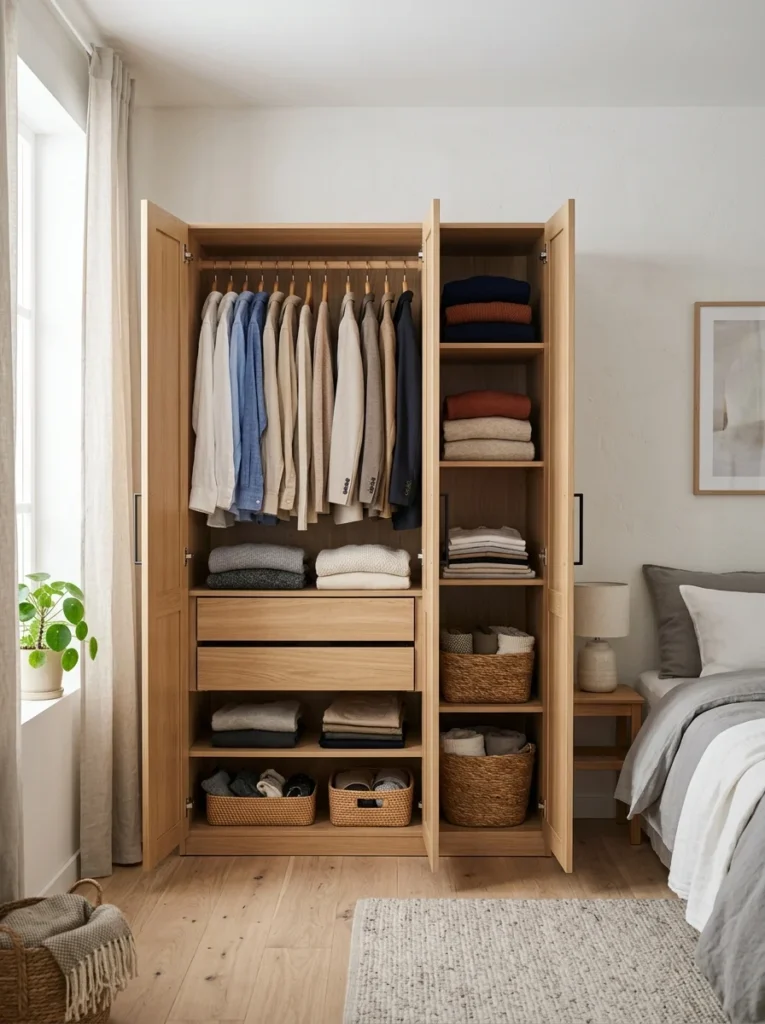
Consider a freestanding wardrobe as the primary solution
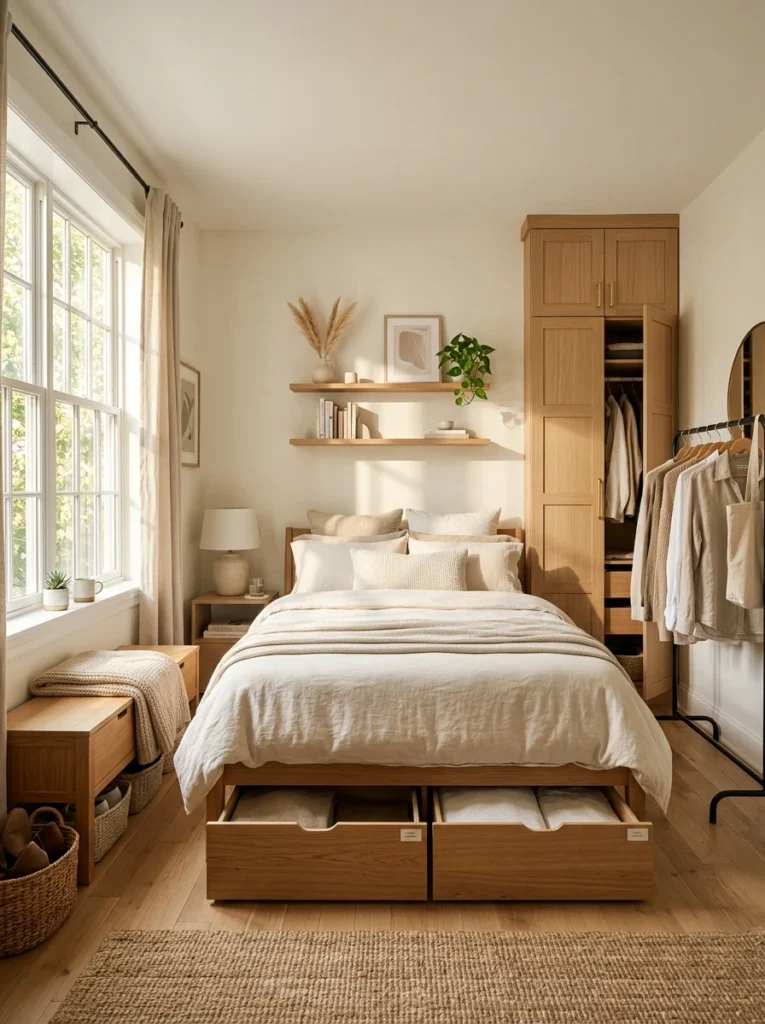
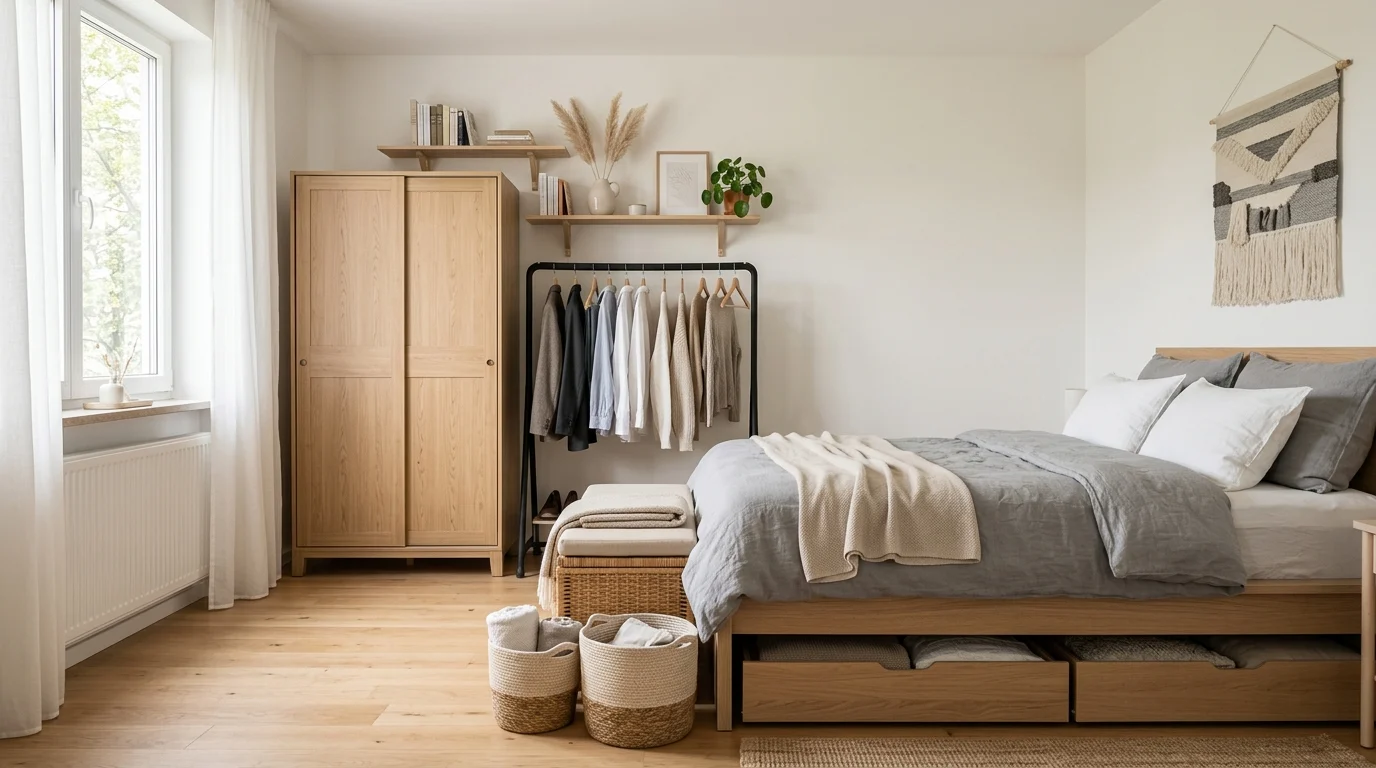
A freestanding wardrobe is the most direct substitute for a built-in closet, offering hanging space, and often shelving or drawers, in a single piece of furniture that can go virtually anywhere in the room. Wardrobes range considerably in size and price, from compact, single-door units suited to a smaller wardrobe or minimal clothing needs, to larger, multi-door units with a full mix of hanging space, shelves, and drawers for a more complete closet replacement. Choosing a wardrobe with adjustable interior shelving offers more flexibility to reconfigure the storage as your needs change over time, rather than being locked into a fixed interior layout.
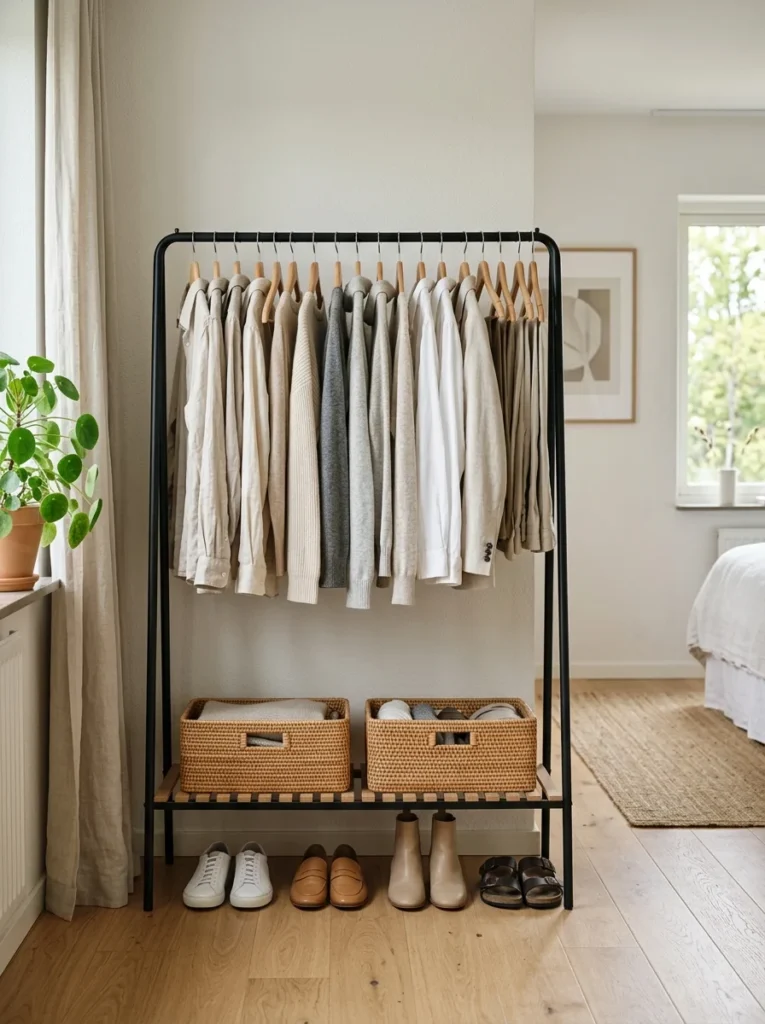
Use a clothing rack for an open, accessible alternative
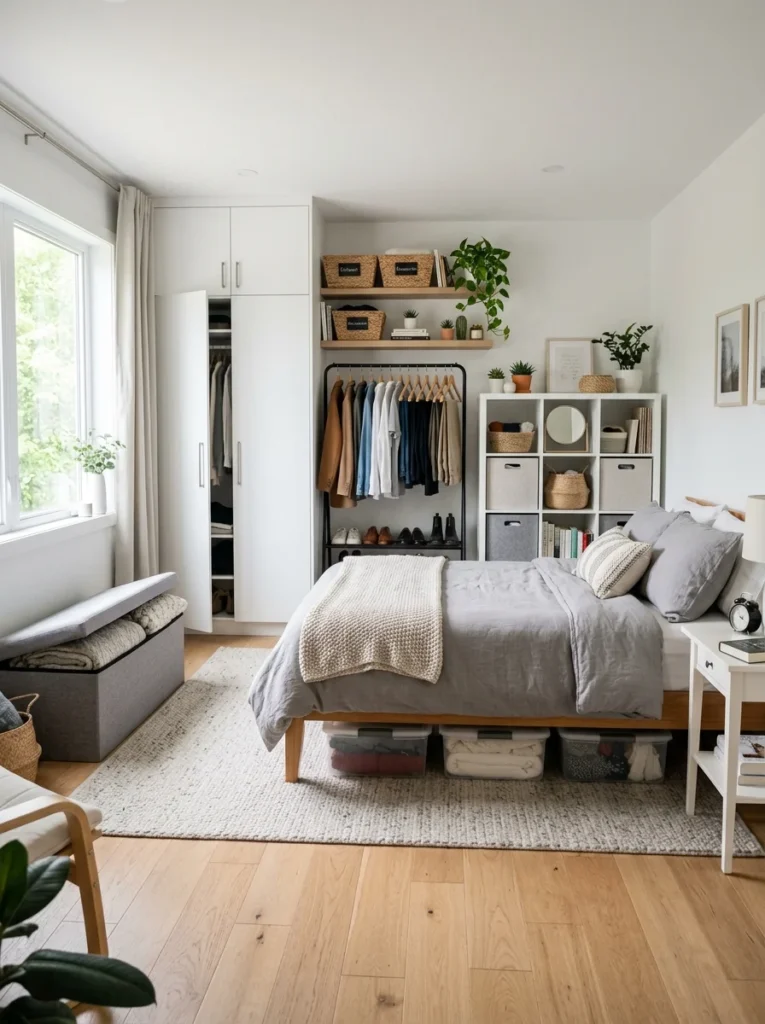
An open clothing rack, whether a simple single-bar design or a more elaborate multi-tier version with added shelving, offers a lower-cost, often more space-efficient alternative to a full wardrobe, particularly in a smaller room where a bulky wardrobe might feel overwhelming. The open, visible nature of a clothing rack does mean your clothing choices become part of the room’s visual design, which works well if you keep the rack tidy and curated, but can look cluttered if it’s overloaded or used as a catch-all for items that don’t have another home.
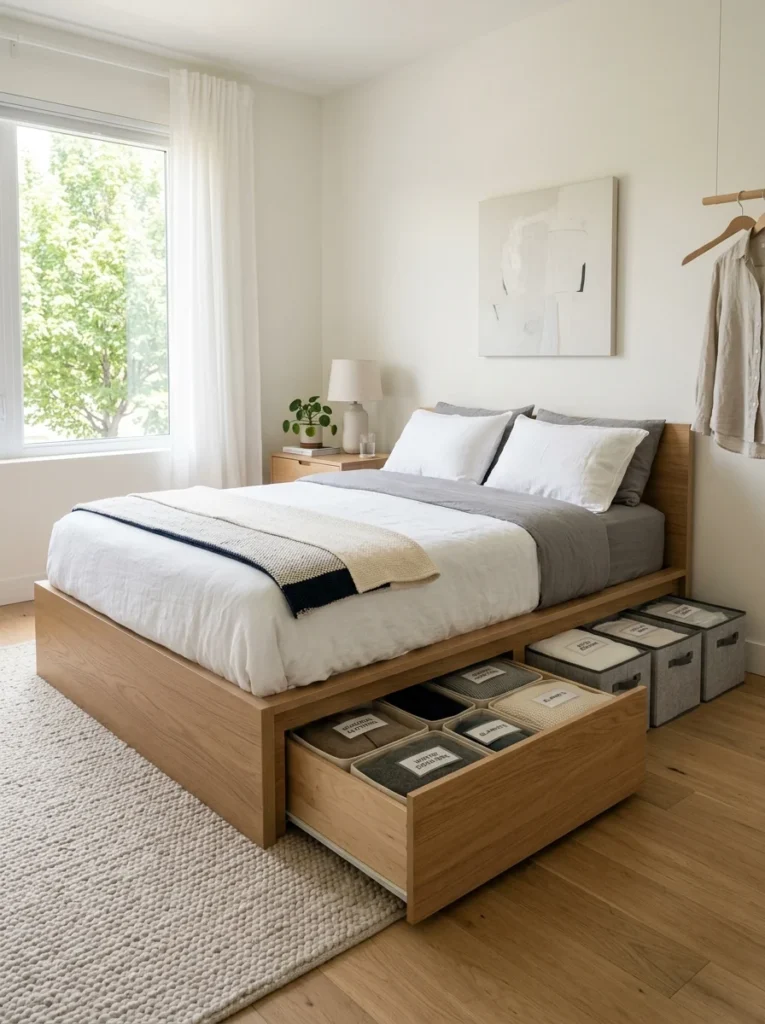
Maximize under-bed storage
The space beneath a bed is often significantly underused, and it’s one of the most valuable storage zones available in a closet-free bedroom. Storage bins or drawers specifically designed to slide under a standard bed frame can hold folded clothing, out-of-season items, or extra linens, keeping them accessible but out of sight. A bed frame with built-in drawers underneath takes this concept even further, essentially building dedicated storage into the bed itself rather than requiring separate bins purchased and managed on their own.
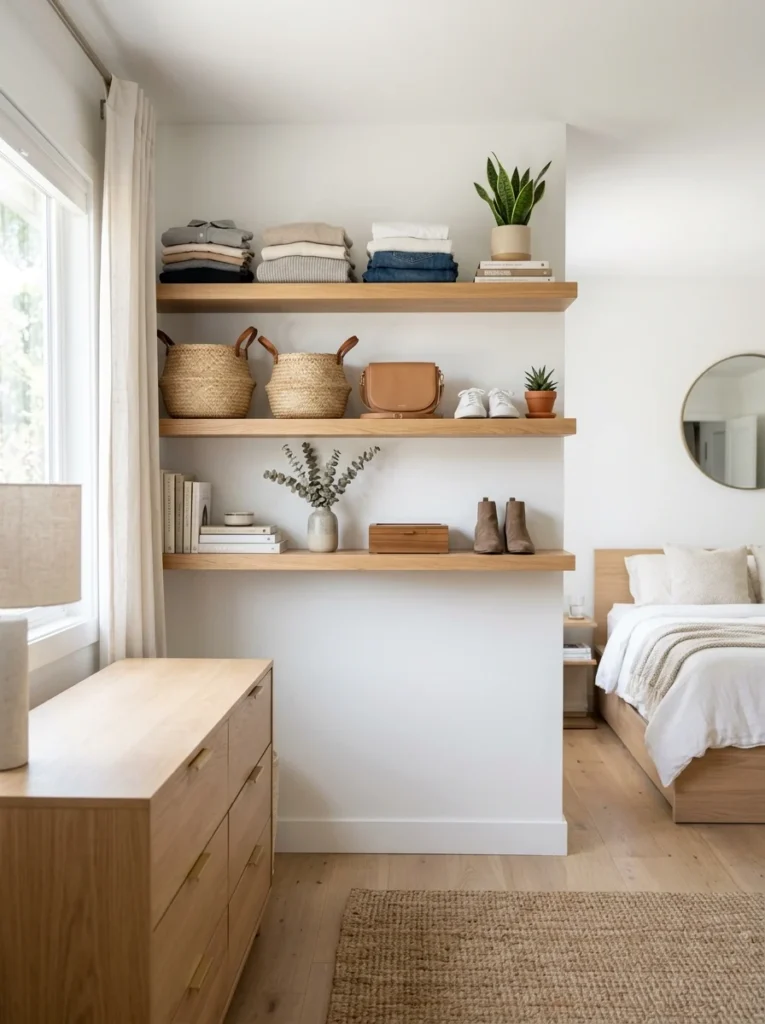
Install wall-mounted shelving for folded items and accessories
Open shelving mounted on the wall provides storage for folded clothing, shoes, bags, and accessories without requiring floor space, which matters considerably in a smaller room already working without a dedicated closet. Using matching baskets or bins on these shelves keeps the look tidy and organized rather than a visibly messy stack of folded items, while still providing easy, open access to what’s inside without needing to open cabinet doors.
Add a tall, narrow storage cabinet in an unused corner
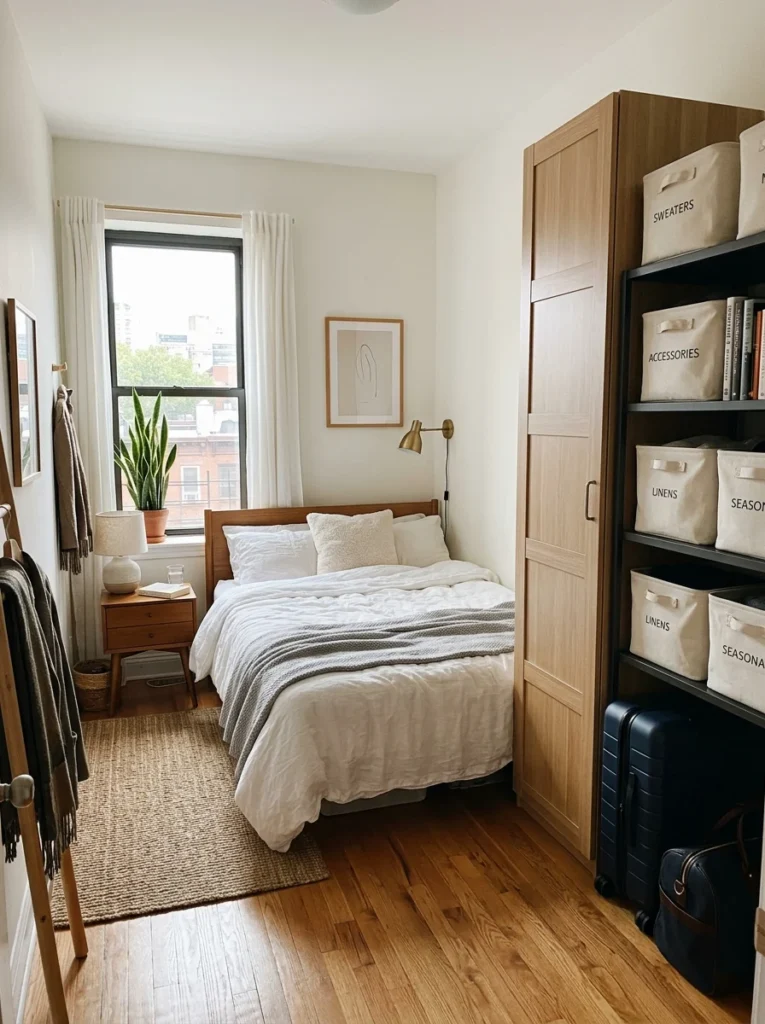
A tall, narrow cabinet takes up minimal floor footprint while still offering substantial vertical storage capacity, making it a particularly efficient option for a smaller bedroom’s unused corner or awkward narrow space. This type of cabinet can hold folded clothing, shoes, or general storage bins, functioning as a compact, enclosed alternative to open shelving for anyone who prefers a more concealed, tidy look than open shelves provide.
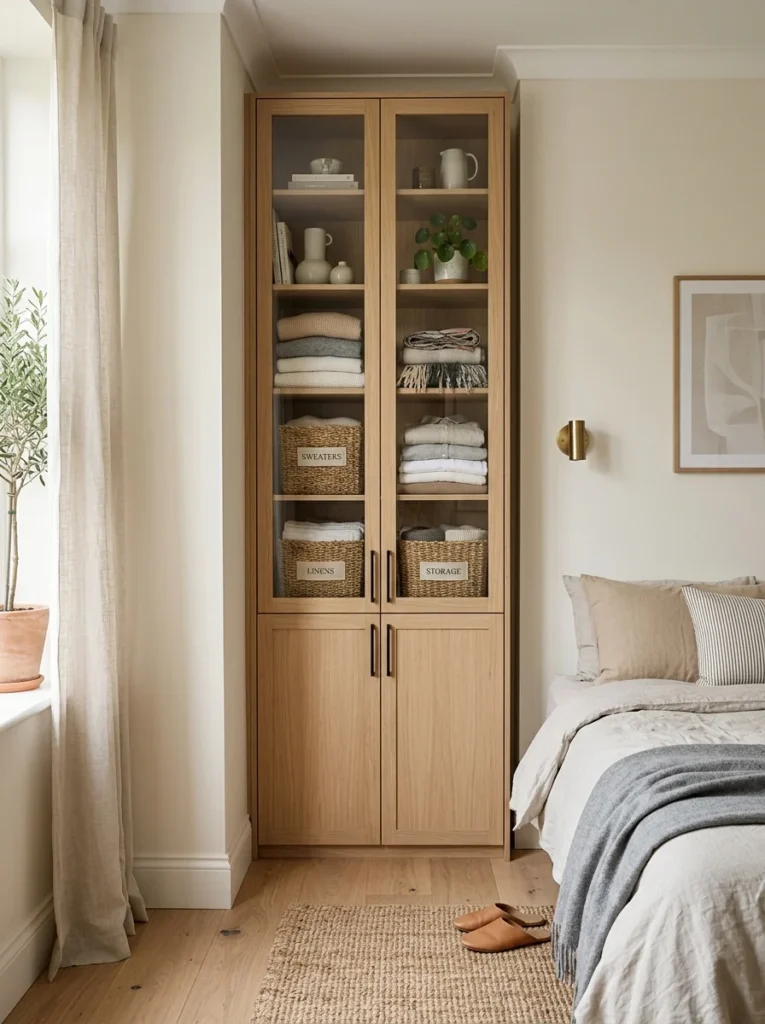
Use the back of the door for additional storage
An over-the-door organizer, whether designed for shoes, accessories, or general storage with clear pockets, adds meaningful storage capacity using a space that’s otherwise almost always left completely unused. This is one of the cheapest, easiest additions on this entire list, requiring no tools or mounting hardware beyond hanging it over the top of an existing door, and it works well for smaller items, shoes, belts, jewelry, that don’t need a large dedicated storage piece of their own.
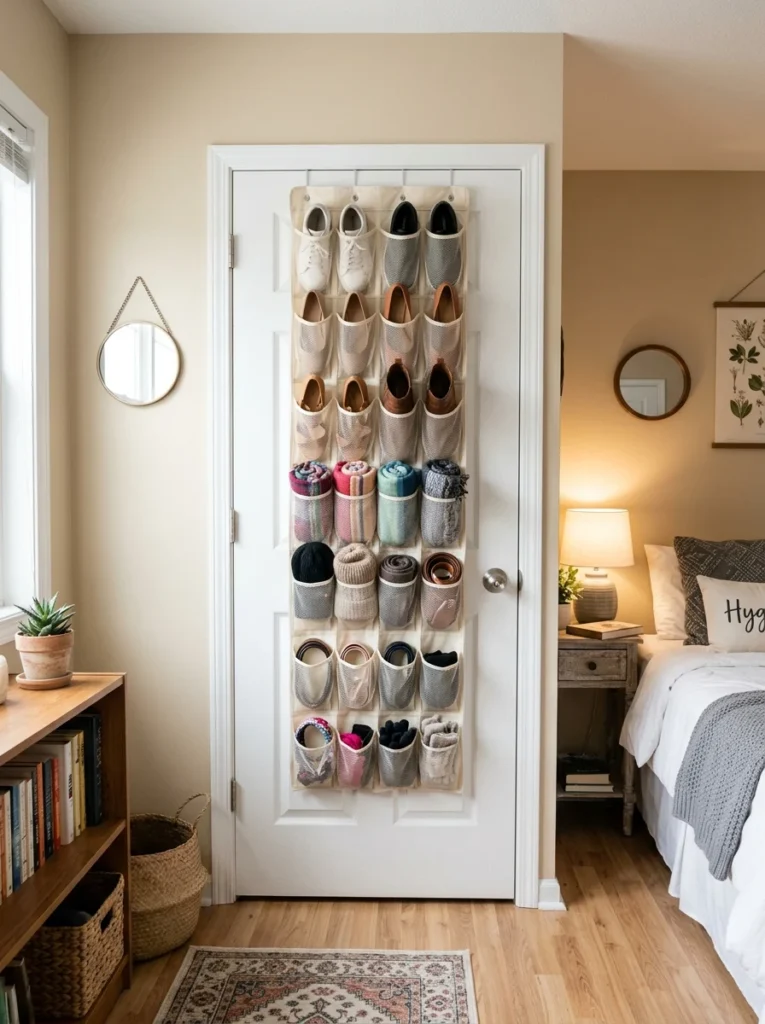
Consider a room divider or curtain to conceal a designated storage zone
If the room has enough space to dedicate a specific corner or section purely to storage, a decorative room divider, or even a simple curtain hung from a ceiling-mounted track or tension rod, can conceal a small clothing rack, shelving unit, or set of storage bins behind it, creating a makeshift closet area within an otherwise closet-free room. This approach works particularly well in a larger bedroom or studio apartment where a bit of floor space can reasonably be sacrificed for a dedicated, visually contained storage zone.
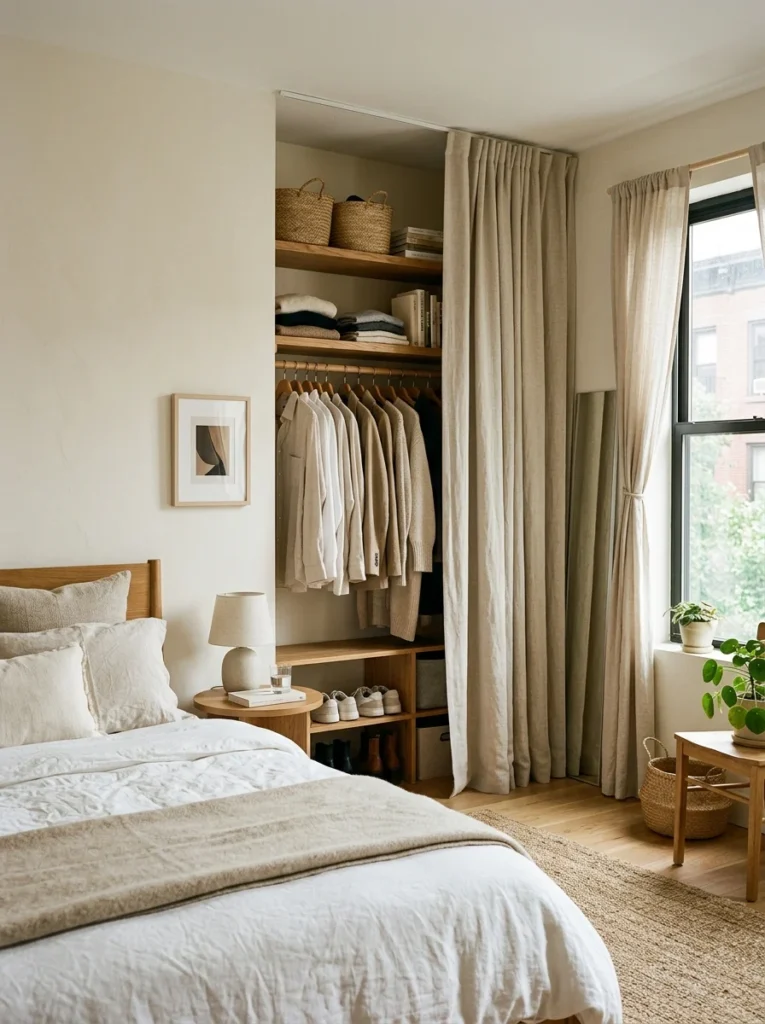
Use vacuum storage bags for out-of-season items
For clothing not needed during the current season, heavy coats in summer, lightweight clothing in winter, vacuum storage bags compress items down to a fraction of their normal size, making them far easier to tuck under a bed, into a small cabinet, or onto a high shelf without taking up the same volume of space they would if stored normally. This frees up your more accessible, primary storage for the clothing you’re actually reaching for during the current season.
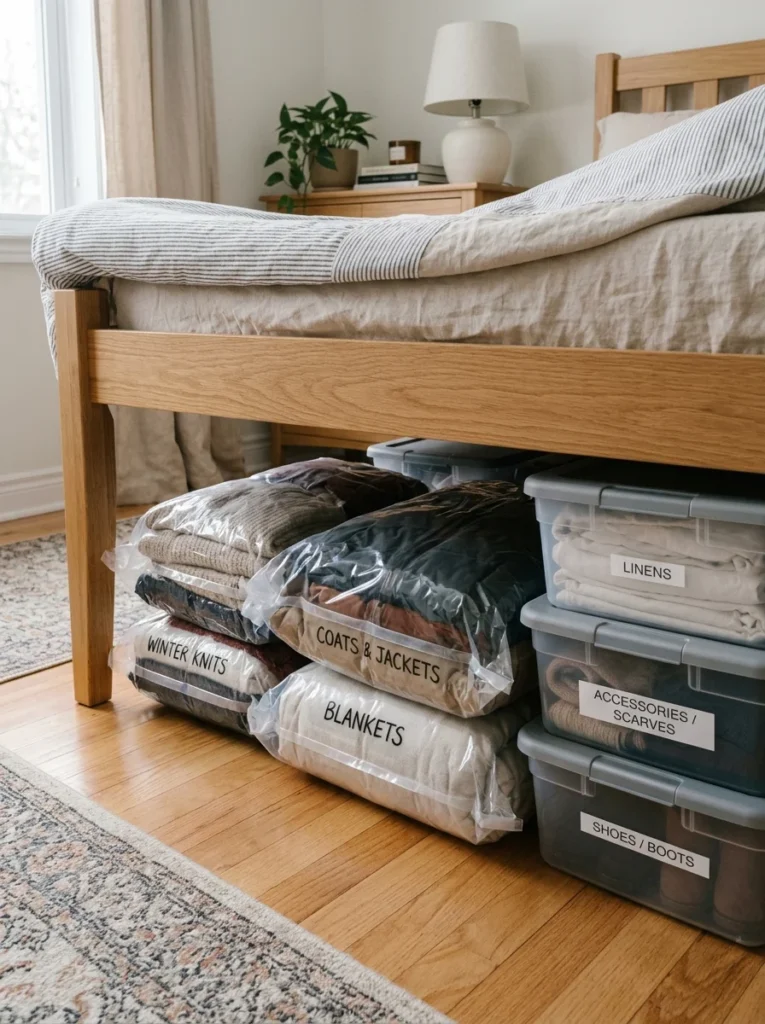
Choose multi-functional furniture with built-in storage
A storage ottoman or bench at the foot of the bed, a nightstand with drawers rather than an open shelf, or a bed frame with built-in drawers all quietly add storage capacity without requiring any additional dedicated furniture piece or floor space beyond what the room already needed for that furniture anyway. Choosing multi-functional pieces like these throughout the room compounds over time into meaningfully more total storage capacity than furniture chosen purely for its primary function alone.
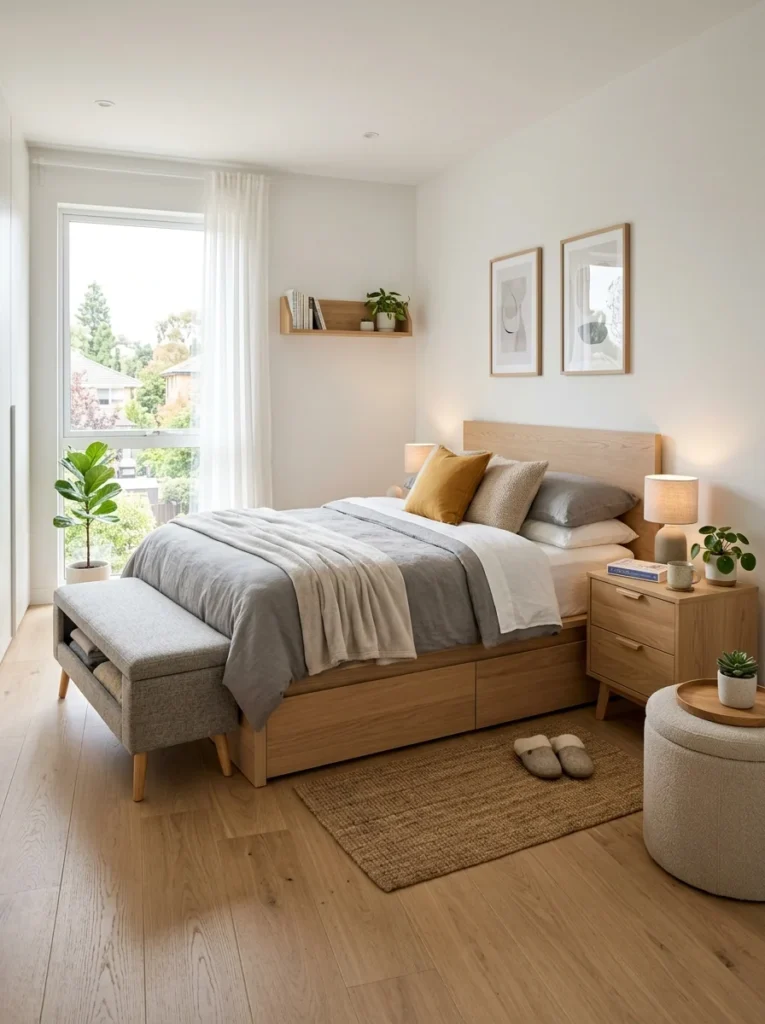
Keep only current-season, frequently used items easily accessible
In a bedroom without a large closet’s generous capacity, rotating your accessible storage seasonally, keeping only what you’re actually wearing or using regularly within easy reach, and storing everything else, out-of-season clothing, special occasion items, elsewhere, whether vacuum-sealed under the bed or in a separate closet elsewhere in the home, keeps your limited primary storage from feeling perpetually overstuffed and disorganized.
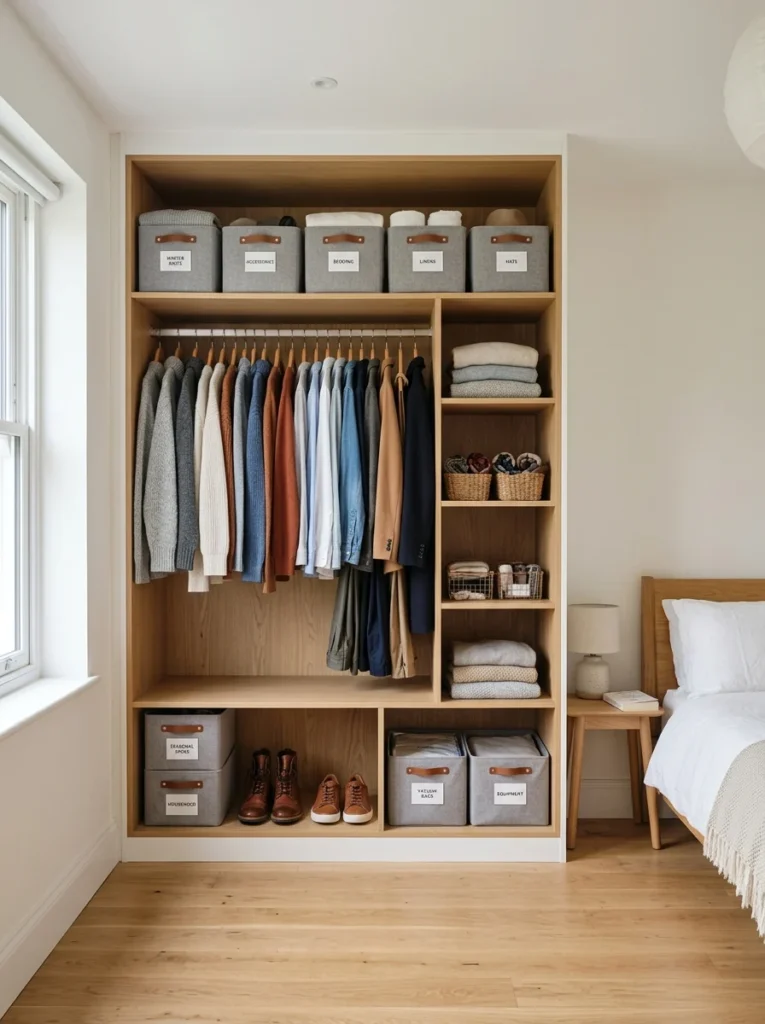
Install a pegboard or hook system for frequently used items
A wall-mounted pegboard, or a simpler row of hooks, gives frequently worn items, a jacket, a bag, a scarf, an easily accessible spot that doesn’t require opening a drawer or cabinet door, which is particularly useful for whatever you tend to grab on your way out the door each day. This kind of system also has the practical benefit of keeping those frequently used items visible and top of mind, rather than getting lost or forgotten in a drawer alongside less frequently worn pieces.
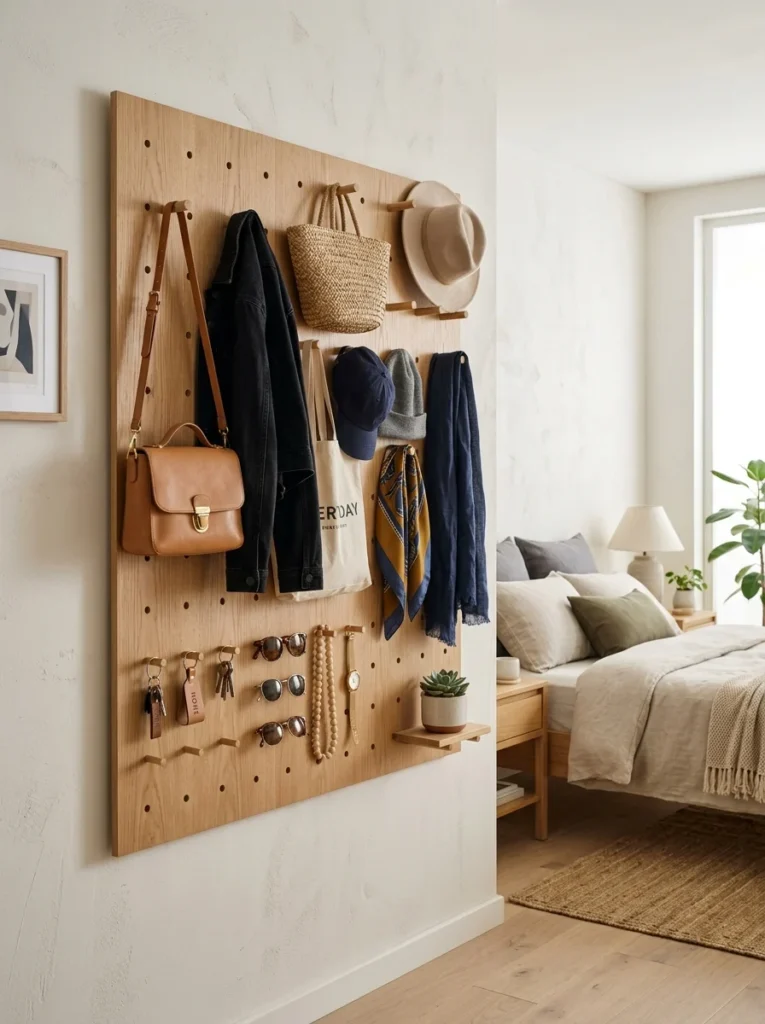
Choose renter-friendly solutions that don’t require drilling
If you’re renting and can’t drill into walls for shelving or a pegboard, several of these solutions still work using freestanding furniture or removable hardware instead. A freestanding wardrobe, clothing rack, or tall cabinet requires no wall mounting at all, and adhesive hooks rated for the appropriate weight can hold lighter items without any permanent damage to the walls. A tension rod mounted between two walls, in a closet-sized nook or even just in a corner, can create a makeshift hanging space using only pressure rather than any drilled hardware, making it a fully reversible option for anyone unable or unwilling to make permanent changes to a rental.
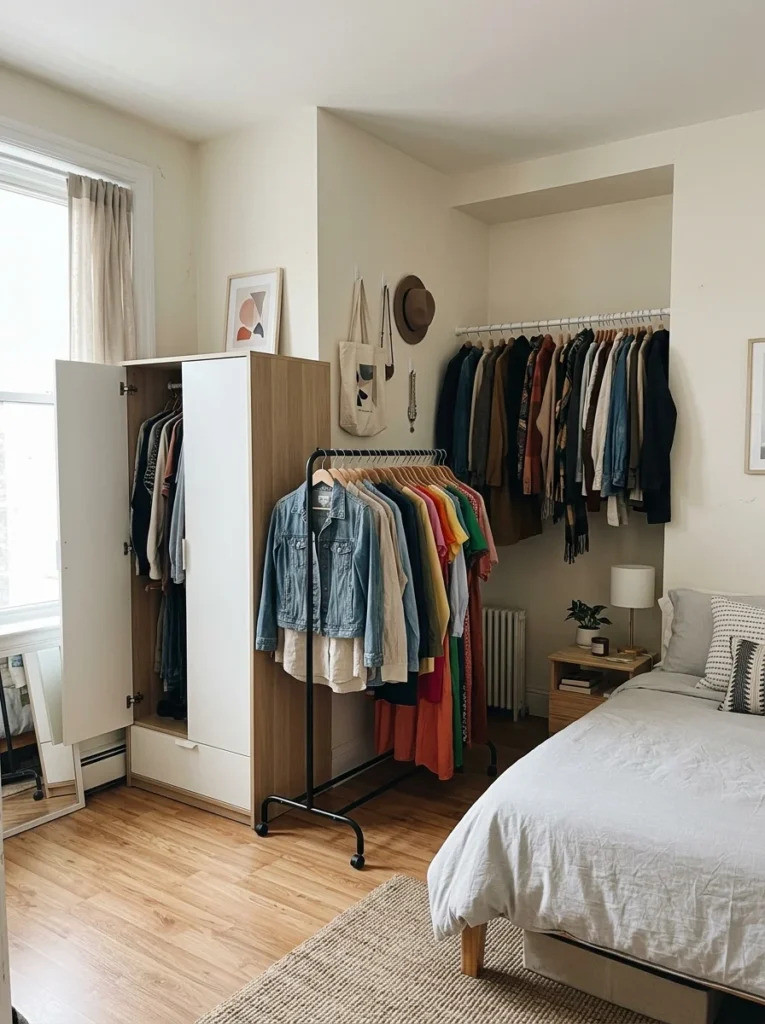
Don’t overlook dedicated shoe storage
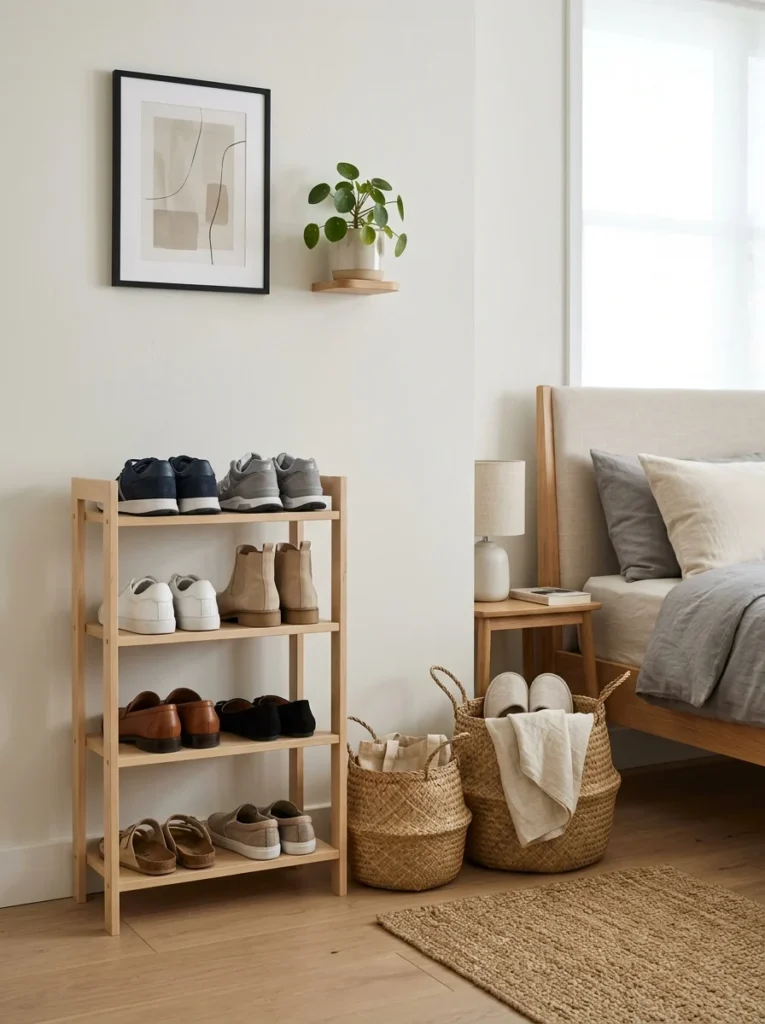
Shoes are easy to overlook when planning closet-free storage, but they take up meaningful floor space if left scattered rather than given a designated spot. A slim shoe rack that fits along a wall or inside a wardrobe’s lower section, an over-the-door shoe organizer, or under-bed bins specifically sized for shoes all keep them contained and off the main floor area, which matters considerably in a smaller room already working with limited space.
Common closet-free bedroom storage questions
What’s the best closet alternative for a bedroom with no closet at all?
A freestanding wardrobe is generally the most complete substitute, offering hanging space and often additional shelving or drawers in a single piece of furniture, though a combination of an open clothing rack, under-bed storage, and wall-mounted shelving can work just as well depending on the room’s size and your specific storage needs.
How much storage can under-bed space actually provide?
Under-bed storage bins or a bed frame with built-in drawers can hold a meaningful amount of folded clothing, linens, or out-of-season items, often equivalent to a couple of dresser drawers’ worth of space, making it one of the most valuable and underused storage zones in a bedroom.
Is an open clothing rack a good option for a small bedroom?
Yes, an open clothing rack is often more space-efficient than a full wardrobe in a smaller room, though it requires keeping clothing tidy and curated, since the rack’s contents become a visible part of the room’s overall look rather than being concealed behind cabinet doors.
How do vacuum storage bags help in a bedroom without a closet?
Vacuum storage bags compress out-of-season or infrequently used clothing down significantly, making it much easier to store under a bed, in a small cabinet, or on a high shelf without taking up the space that clothing would otherwise require if stored in its normal, uncompressed form.
What’s a good renter-friendly storage option without drilling?
Freestanding wardrobes, clothing racks, and tall cabinets require no wall mounting at all, while weight-rated adhesive hooks and tension rods offer additional hanging options without any permanent damage to walls, making them well suited to a rental where drilling isn’t an option.
A closet-free bedroom can absolutely function with genuine, organized storage capacity, it just requires thinking in terms of furniture and vertical space rather than relying on a single built-in solution. A freestanding wardrobe or clothing rack, combined with under-bed storage, wall shelving, and a few multi-functional furniture pieces, adds up to real storage capacity distributed throughout the room rather than concentrated in one missing closet.
That first apartment’s closet-free bedroom eventually became genuinely functional, once I stopped treating the lack of a closet as a temporary problem to tolerate and started actually building a real storage system around it, a simple wardrobe, some under-bed bins, and an over-the-door organizer solved what had felt like an impossible situation in those first few chaotic months. If you’re facing the same challenge, start with a wardrobe or clothing rack and under-bed storage; those two additions alone will handle the bulk of what a closet would have provided, with everything else filling in the smaller gaps from there.