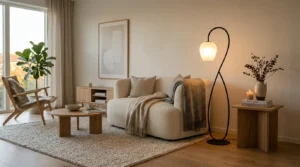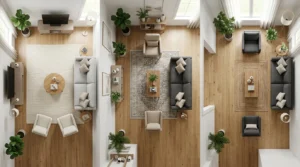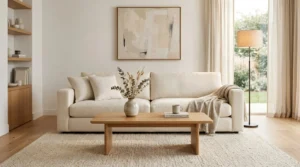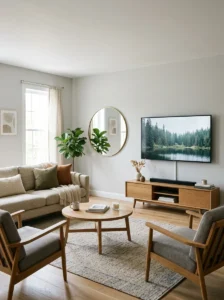
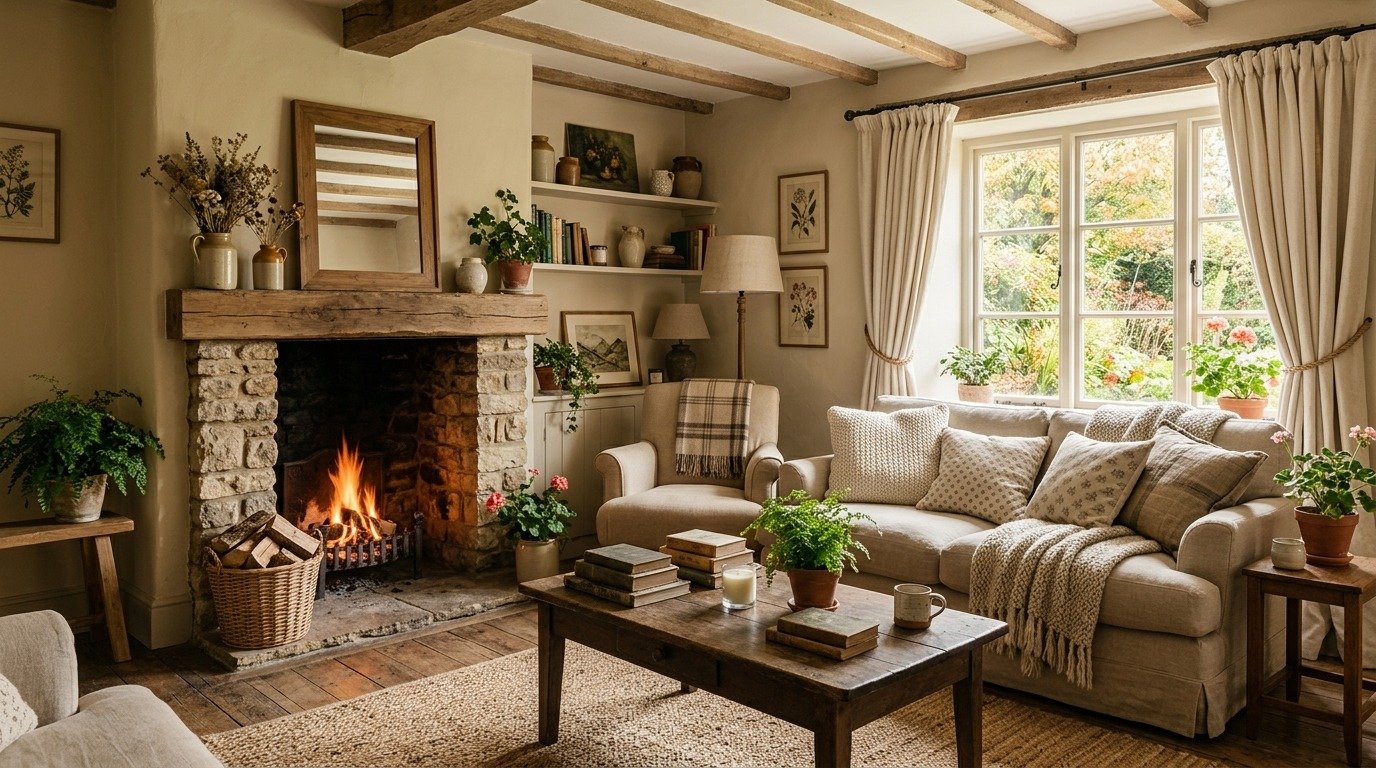
A modern cottage living room works when warm wood does the heavy lifting and everything else stays calm. Think honey oak, walnut, and weathered pine paired with cream walls, linen upholstery, and simple silhouettes — no fussy trim, no dark lodge feeling, and no room that looks like a showroom. The goal is a space that feels lived in from day one: a sofa you can sink into, a coffee table with room for mugs and books, and wood tones that add warmth without making the room feel small. Start with one anchor piece, then repeat its wood tone in two or three smaller places so the room feels connected rather than collected at random. Keep lines straight, cushions soft, and surfaces useful. The fifteen ideas below give you exact sizes, realistic costs, and the mistakes to skip, so you can build the look in stages — one weekend, one piece, one wall at a time — without guessing at scale or overspending on the wrong wood finish.
Start With a Warm Wood Accent Wall Behind the Sofa
A single wood wall gives a modern cottage living room instant warmth without painting the whole room a dark colour. Use vertical shiplap or slim tongue-and-groove planks in white oak or pale pine, finished with a clear matte seal so the grain stays visible. Cover only the sofa wall, from floor to ceiling, and keep the other walls warm white. For a standard sofa wall, budget roughly $400–$900 for materials if you install it yourself, or $1,200–$2,500 with a carpenter. Avoid glossy varnish, which reads as dated, and avoid wide, rough barn boards that can make a small room feel heavy. Tip: leave a 5–10 mm gap at the ceiling and cover it with a slim trim piece, so seasonal movement does not crack the paint line.
Add a Reclaimed Beam Mantel Over the Fireplace
A chunky beam mantel turns a plain fireplace into the cottage focal point while keeping the rest of the room modern. Choose a reclaimed oak or pine beam about 15–20 cm tall and 15–20 cm deep, cut 15–30 cm wider than the firebox on each side. Mount it 110–125 cm above the hearth for a comfortable display height, using hidden steel brackets rated for its weight. Expect $150–$450 for the beam itself and $100–$300 for fitting. Avoid beams with deep cracks, active insect damage, or a heavy dark stain that fights pale walls. Tip: style it with just three items — a mirror or art piece, a small plant, and one candle group — so the wood, not the clutter, draws the eye.
Choose an Oak Coffee Table With Rounded Corners
An oak coffee table anchors the seating area and softens a cottage room, especially in homes with children or pets. Look for a table 100–120 cm long and 50–60 cm wide, with a height 2–5 cm lower than your sofa seat — usually 40–45 cm tall. Rounded corners prevent bruised shins and make traffic flow easier around it. Solid oak tables cost roughly $300–$800, while oak veneer over a stable core runs $150–$350. Avoid glass tops, which show every fingerprint, and avoid tables so large that you cannot walk comfortably around them. Tip: leave at least 45 cm between the table and the sofa so you can sit down and put your feet up without shuffling furniture. A lower shelf or drawer also helps hide remote controls and coasters, keeping the top clear for everyday use.
Use a Wood Slat Screen to Define the Living Zone
In an open-plan home, a wood slat screen marks the living area without closing it off or blocking light. Build or buy vertical slats 4–6 cm wide with 2–3 cm gaps, in oak or ash, mounted in a slim frame from floor to about 210–240 cm high. A 120 cm wide screen typically costs $250–$700 ready-made, or less if you cut slats yourself. Avoid solid panels, which defeat the open feeling, and avoid staining the slats much darker than your floor, which can chop the room in half visually. Tip: align the slat direction with your longest wall so the screen reads as architecture, not as a piece of furniture pushed into a corner. If you rent, ask about a freestanding version on feet, which gives the same division without drilling into floors or ceilings.
Lay Light Wood Flooring and Warm It With a Wool Rug
Light wood floors are the quiet base of a modern cottage room: they bounce light around, show less dust than dark floors, and pair with almost any sofa colour. Choose wide planks, 15–20 cm across, in a natural oak or pale ash finish with a matte seal. Engineered oak costs roughly $6–$12 per square foot installed, depending on your region and subfloor work. Avoid orange-toned finishes, which clash with cream and sage, and avoid high-gloss seals that highlight scratches. Tip: layer a wool rug at least 160 × 230 cm under the front legs of the sofa and chairs, so the seating group feels grounded and the wood still shows around the edges. In kitchens that open into the living room, carry the same flooring through both spaces so the rooms feel larger and connected.
Bring in a Walnut Sideboard for Closed Storage
A walnut sideboard solves the cottage storage problem — blankets, games, chargers, and remotes — without a wall of bulky cabinets. Pick a low sideboard 140–180 cm long, 40–45 cm deep, and 70–85 cm tall, with doors rather than open shelves for the messiest items. Walnut veneer sideboards cost about $500–$1,200, while solid walnut starts higher and suits a long-term investment piece. Avoid sideboards deeper than 50 cm in a narrow room, where they eat into walkways, and avoid matching every other wood exactly. Tip: keep the top mostly clear with one lamp-free vignette — a stack of books and a small vase — so the sideboard looks intentional rather than like extra storage. Measure door swing clearance before ordering, especially if the sideboard sits near a hallway entrance or a radiator cover.
Refresh Window Trim and Doors With Painted Wood Detail
Fresh trim is a low-cost way to add cottage character when you cannot replace floors or furniture. Paint existing window frames, skirting, and interior doors in warm white or soft cream, and add a simple flat or shaker-style architrave about 9–12 cm wide if yours is thin and dated. A room with two windows and one door usually needs two litres of trim paint and a weekend of careful prep. Avoid ornate Victorian moulding, which fights the modern part of the look, and avoid painting over dirty or peeling trim without sanding first. Tip: use a satin finish on trim and a matte finish on walls, so the woodwork stands out subtly without looking shiny. Keep one spare tin of the exact trim colour labelled, because touched-up scuffs are far easier to fix than a full repaint.
Install Open Oak Shelves Beside the Fireplace
Open oak shelves beside a fireplace display books and ceramics while keeping the cottage feel light and useful. Fit two or three shelves, each 25–30 cm deep, with 35–45 cm of vertical space between them for books and taller vases. Solid oak shelves 90–120 cm long cost roughly $60–$150 each, plus brackets. Avoid loading every shelf edge to edge, which turns display into clutter, and avoid shelves so high that you need a step stool for everyday items. Tip: leave about one-third of each shelf empty, group items in odd numbers, and repeat one wood tone from elsewhere in the room so the shelves feel built in. Anchor the lowest shelf at a height you can reach without stretching, and reserve the top shelf for lighter, decorative pieces only.
Mix Wood Tones on Purpose, With One Dominant Finish
A modern cottage room looks collected, not chaotic, when wood tones are mixed with a clear plan. Choose one dominant finish — usually the floor or the largest furniture piece — then add one lighter and one darker accent, and stop there. For example, pair light oak floors with a walnut sideboard and pale pine accessories. This rule costs nothing extra, but it prevents the common mistake of buying five unrelated browns. Avoid reddish cherry next to cool grey-washed oak, which rarely sits comfortably together, and avoid matching everything exactly, which can look flat and new. Tip: photograph your floor and largest piece before shopping, so you can compare tones in the store instead of relying on memory. If a new piece clashes badly, try swapping its handles, tray, or cushion covers first before returning a well-made item.
Pick a Cottage Sofa on Turned Wood Legs
The right sofa balances cottage softness with modern simplicity, and its legs matter more than most people expect. Look for a sofa 200–230 cm long with a seat depth of 55–65 cm, loose linen or cotton-blend cushions, and visible turned or tapered wood legs 12–18 cm tall. Those legs lift the sofa off the floor, show more wood, and make vacuuming easier. A good quality sofa in this style costs roughly $900–$2,200. Avoid oversized rolled arms that swallow a small room, and avoid stain-prone white fabric if you have pets — choose a washable, mid-tone cover instead. Tip: order fabric swatches and check them against your wood floor in daylight before committing. Test the seat firmness in person when possible, since a sofa that looks soft online can feel much firmer after a week.
Build a Wood Reading Nook With a Bench and Cubbies
A built-in wood bench turns an awkward window wall or alcove into the most-used seat in the house. Build a bench 45–50 cm high and 45–55 cm deep, with open cubbies or drawers below for books and blankets, and a back panel or cushion in washable linen. A simple pine or birch-ply bench 150–180 cm long costs roughly $300–$800 in materials, or $900–$2,000 fitted. Avoid a bench deeper than 60 cm, which wastes floor space, and avoid hard, thin cushions — use a 10 cm foam cushion with a removable cover. Tip: add a small wall-mounted shelf at elbow height for a mug and a book, so the nook works without a side table. Add a small cushion rail or backrest pad if the wall is cold, so long reading sessions stay comfortable through winter.
Whitewash Ceiling Beams Instead of Removing Them
Existing ceiling beams are a cottage asset, but dark stain can make a low ceiling feel lower. Whitewashing keeps the texture while lifting the room: mix white paint with water, brush it on, and wipe back so grain shows through. This works best on beams at least 240 cm above the floor, so the room still feels open. Materials cost very little — usually under $100 for a living room — though prep and taping take a full day. Avoid painting beams solid white, which erases their character, and avoid leaving them dark if your ceiling is under 230 cm. Tip: test the wash on the least visible beam first, and let it dry fully before judging the colour, since wet whitewash looks much lighter.
Place a Chunky Wood Console Behind the Sofa
A console behind a floating sofa adds a surface for books, a plant, and keys without pushing the sofa against a wall. Choose a console the same height as the sofa back or up to 5 cm lower, about 25–35 cm deep, and 10–20 cm shorter than the sofa length. Pine or oak consoles in this size cost roughly $200–$600. Avoid consoles deeper than 40 cm, which push the sofa too far into the room, and avoid tall consoles that block the view across an open-plan space. Tip: anchor the console with a large basket underneath for throws, so the back of the sofa looks finished from the kitchen or dining side too. If space is tight, choose an open-frame console rather than a solid one, so the area behind the sofa still feels light.
Hang a Long Wood Picture Ledge for Flexible Art
A wood picture ledge lets you change art with the seasons without drilling new holes each time. Mount one or two ledges, each 120–180 cm long and 8–10 cm deep, at eye level — usually 145–155 cm to the centre of the display. Oak or pine ledges cost about $40–$120 each, plus fixings rated for the weight of framed art. Avoid hanging the ledge above a radiator, where heat can warp frames, and avoid crowding it with small frames that read as clutter from across the room. Tip: lean one large frame at one end and two smaller frames beside it, overlapping slightly, for a relaxed cottage arrangement that still looks deliberate. Check the ledge fixings can hold your heaviest frame, and use museum putty on small items if children or pets pass nearby.
Layer Warm Wood With Linen, Wool, and Woven Baskets
Warm wood needs soft textures beside it, or a cottage room can feel hard and echoey. Pair wood furniture with linen cushion covers, a chunky wool throw, a jute or wool rug, and two or three woven baskets for throws and magazines. Keep the palette to cream, sage, oat, and one muted accent such as terracotta or dusty blue, so the wood stays the warmest element. Baskets cost $20–$60 each and instantly hide clutter. Avoid shiny synthetic throws, which fight the natural materials, and avoid adding more than three basket styles, which can look busy. Tip: put the largest basket by the sofa arm, where it is actually reached for, not hidden in a corner. Rotate throws and cushion covers seasonally, keeping heavier wool for winter and lighter linen for warmer months.
Frequently Asked Questions
Can warm wood work in a small modern cottage living room?
Yes, if you keep the wood light and the pieces slim. Pale oak, whitewashed pine, and open shelving add warmth without the visual weight of dark, chunky furniture. Leave wood flooring visible around rugs, choose leggy furniture, and limit dark walnut to one accent piece so the room stays bright and open.
How do I stop mixed wood tones from clashing?
Pick one dominant tone, add one lighter and one darker tone, and stop at three. Check samples against your floor in daylight, and avoid pairing strong red-brown wood with cool grey-washed wood. Repeating each tone at least twice — for example, walnut on the sideboard and a tray — makes the mix look planned.
Is real wood worth the cost over wood-look alternatives?
Real wood is worth it for pieces you touch daily, such as a coffee table, sideboard, or mantel, because it ages well and can be sanded and refinished. For floors in busy homes, quality engineered oak gives a real-wood surface with better stability. Use wood-look options only for low-touch areas where budget matters most.
Conclusion
A modern cottage living room does not need a full renovation — it needs warm wood used with restraint, in the right sizes, and in the right places. Start with your floor or one anchor piece, add a wood wall or mantel if the room needs a focal point, and finish with leggy furniture, open shelving, and soft linen and wool textures. Keep to three wood tones, leave breathing space around each piece, and spend on the items you use every day rather than on matching sets. Done this way, the room will feel warm in winter, light in summer, and comfortable every day in between — a cottage look that suits modern life without feeling themed or fussy.