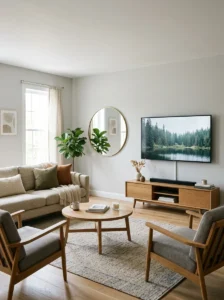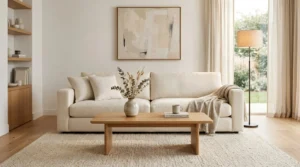
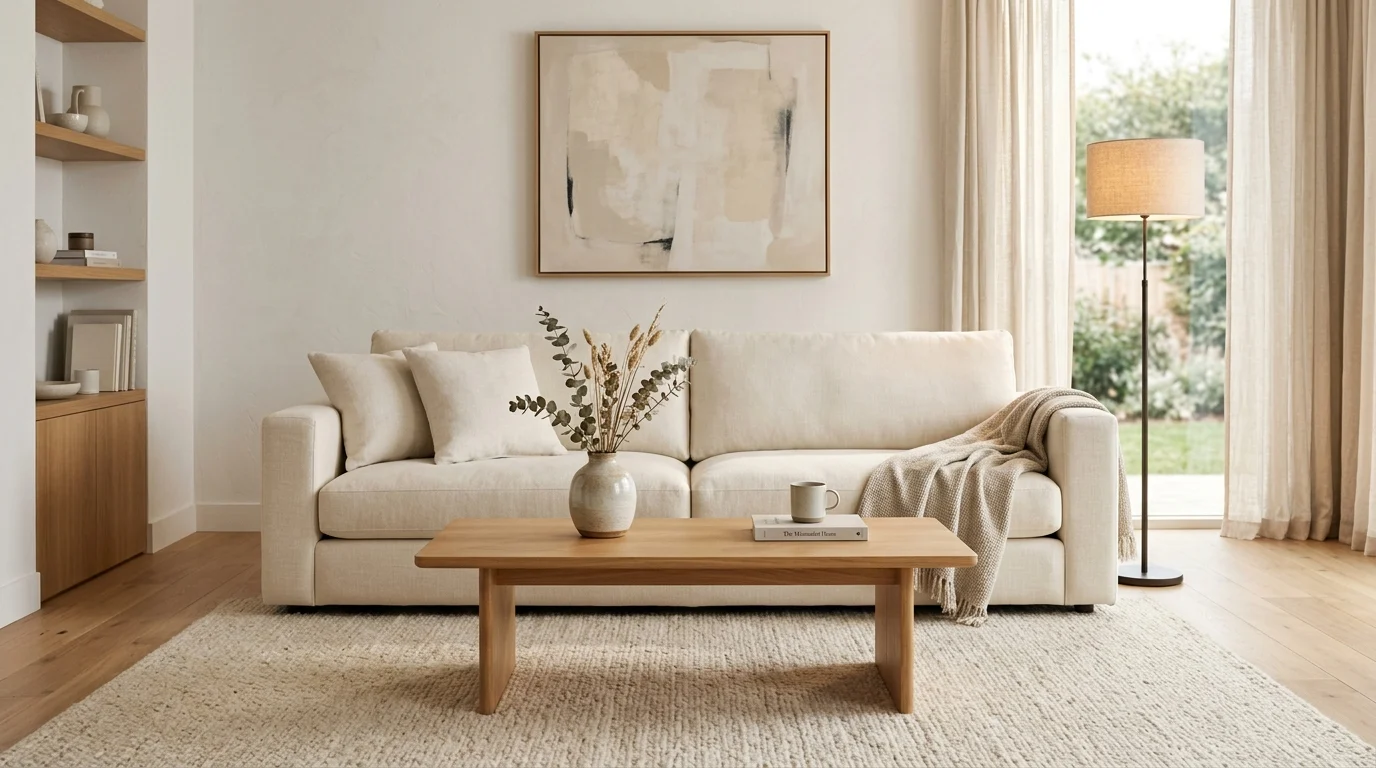
A curved sofa changes how a living room feels before you add a single cushion. The rounded back softens sharp corners, pulls people slightly toward each other, and makes a boxy room look considered rather than just furnished. It works in a small apartment, where a gentle arc can sit neatly against a wall without blocking a walkway, and it works in a large open-plan space, where a deep curve can define a seating zone without a rug or a partition. The key is proportion. A sofa that is too deep will swallow a small room, while a shallow curve in a large room can look lost. Measure your wall, leave clear paths of at least 30 inches, and choose a fabric that suits how you actually live, not just how a showroom looks. The ideas below cover sizes, layouts, materials, and pairings, with practical costs and mistakes to avoid, so you can choose a curved sofa that feels soft, looks modern, and still leaves room to move.
Face the Curve Toward a Fireplace for a Natural Gathering Spot
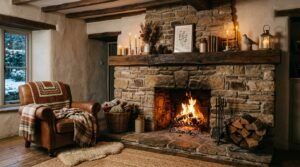
A curved sofa facing a fireplace creates a gathering spot that feels intentional without any extra furniture. Place the centre of the sofa 8 to 10 feet from the fireplace opening, with the arc opening toward the fire so everyone has a clear view and no one sits with their back twisted. A three-seat curved sofa of 84 to 96 inches wide suits most standard living rooms, while a 72-inch loveseat version works when the hearth wall is under 10 feet wide. Leave 18 inches between the sofa front and a coffee table, and keep side tables within arm’s reach at each end. Avoid pushing the sofa flush against the hearth or blocking heat vents, and avoid a rectangular rug that fights the curve. Tip: centre a round or oval coffee table in the arc so drinks stay reachable from every seat.
Choose a Compact Curved Loveseat for a Small Apartment
A compact curved loveseat gives a small apartment the soft look of a curved sofa without overwhelming the floor. Look for models 68 to 78 inches wide and 34 to 38 inches deep, with a seat height of 17 to 19 inches, so the piece fits a 10-by-12-foot room and still leaves a 30-inch walkway. Place it against the longest wall, or float it 4 to 6 inches off the wall if you need space for curtains behind it. Pair it with one slim armchair rather than two, and choose legs that lift the base 4 to 6 inches so the floor shows through and the room feels larger. Avoid deep 42-inch models in a studio, because they eat into circulation space fast. Tip: buy a loveseat in a light neutral and add colour with two 18-inch cushions you can swap seasonally.
Use a Curved Sectional to Zone an Open-Plan Room
A curved sectional is one of the simplest ways to zone an open-plan living area without building a wall or adding a screen. Choose a sectional with a total span of 110 to 130 inches for a large room, and position the curve so its back faces the dining area or kitchen, creating a clear boundary that still lets light and conversation pass. Keep at least 36 inches behind the sectional for a walkway, and anchor the arrangement with a rug that extends 6 to 8 inches beyond each end of the sofa. Expect to pay $1,800 to $4,500 for a well-made fabric curved sectional, more for leather or custom bouclé. Avoid placing the sectional so its back blocks a doorway or a kitchen island path. Tip: add a narrow console behind the curve for lamps and books, which finishes the back view from the dining side.
Style a Bouclé Curved Sofa for Soft Texture
Bouclé gives a curved sofa its softest, most inviting finish, with a nubby texture that catches light and hides minor wear. Choose a bouclé in ivory, oatmeal, or light grey for a calm modern room, and check that the fabric has a rub count above 30,000 for everyday use. A standard three-seat bouclé sofa runs $1,200 to $3,000, depending on frame quality and whether cushions are feather-wrapped. Vacuum weekly with an upholstery head, blot spills at once, and keep the sofa out of direct sun to prevent yellowing. Avoid dark bouclé in a home with light-coloured pets, because loose fibres show, and avoid harsh stain removers that can flatten the loops. Tip: pair bouclé with smooth wood and matte black metal so the texture stays the star without the room feeling fluffy all over.
Try a Velvet Curved Sofa in a Rich, Liveable Colour
Velvet makes a curved sofa look plush and tailored, especially in deep green, rust, navy, or dusty rose. The pile follows the curve beautifully, so seams and shaping look smooth rather than bulky. For a family room, choose performance velvet with a stain-resistant finish and a rub count above 40,000, and budget $1,400 to $3,500 for a quality three-seater. Place velvet away from a south-facing window without sheer curtains, because strong sun can fade the pile unevenly. Brush the fabric weekly in one direction to keep the nap even, and avoid placing sharp pet claws or rough denim directly against it for long periods. Tip: balance a rich velvet sofa with cream walls, a light rug, and brushed brass accents so the colour feels warm, not heavy.
Pick a Leather Curved Sofa for a Structured Modern Look
Leather gives a curved sofa structure and a clean modern edge, and it ages well when the hide and frame are good. Look for top-grain or full-grain leather, a kiln-dried hardwood frame, and seat cushions with high-resilience foam wrapped in feather or fibre. A leather curved three-seater typically costs $2,500 to $6,000, with custom colours and sizes at the higher end. Keep it 12 inches or more from radiators and fireplaces, condition it every six to twelve months, and wipe spills promptly with a dry cloth. Avoid bonded leather, which peels on curves faster than on flat sofas, and avoid placing it in a sun-drenched bay window without UV-filtering glass or curtains. Tip: soften leather with a wool throw and linen cushions, which stop the seating area from feeling cold or formal.
Pair the Curve With a Round Coffee Table
A round coffee table is the most forgiving partner for a curved sofa, because it echoes the arc and leaves no sharp corners to bump into. Choose a table 36 to 44 inches in diameter for a three-seat sofa, and keep its height within 1 to 2 inches of the seat height, usually 17 to 19 inches. Leave 16 to 18 inches between the sofa edge and the table edge so you can sit down and reach a cup without stretching. Stone, walnut, and travertine all work, with prices from $250 for a simple wood top to $900 or more for stone. Avoid a large square table, which cuts across the curve and creates awkward dead corners. Tip: use a single low tray on the table to corral remotes and coasters, leaving the rest of the surface clear for use.
Hang an Arched Mirror or Art Above the Sofa
An arched mirror or arched artwork above a curved sofa repeats the shape on the wall and makes the whole arrangement look planned. Hang the piece so its bottom edge sits 6 to 8 inches above the sofa back, and choose a width about two-thirds of the sofa width, roughly 56 to 64 inches for a 90-inch sofa. A full-length arched mirror also bounces light around a darker room, while a large arched print adds colour without new furniture. Budget $150 to $600 for a quality arched mirror and $100 to $400 for framed art at this size. Avoid hanging a small 24-inch piece, which looks lost above a wide curve, and avoid a heavy frame without proper wall anchors. Tip: centre the arch exactly on the sofa centre, not on the wall centre, when the sofa sits off-centre in the room.
Face Two Curved Sofas Toward Each Other
Two curved sofas facing each other create a conversation room that feels like a lounge rather than a television room. Place them 7 to 9 feet apart, facing each other, with a round or oval coffee table centred between them and 16 to 18 inches of clearance on each side. This layout suits rooms at least 14 feet wide and works best when the sofas are similar in size, ideally 78 to 90 inches each, so neither side dominates. Costs double a single-sofa layout, so budget $2,400 to $6,000 for two fabric sofas before tables and lighting. Avoid this layout in a narrow room, where the gap becomes a corridor, and avoid facing sofas directly at a television from both sides. Tip: add a low bookshelf or a pair of floor lamps at the open ends to close the arrangement without blocking entry.
Tuck a Curved Sofa Into a Bay Window
A bay window and a curved sofa are a natural match, because the sofa follows the window line and turns an awkward nook into the best seat in the house. Measure the bay at its widest point and at the wall returns, then choose a sofa 6 to 10 inches narrower than the bay opening so curtains can still move freely. A 72- to 84-inch curved loveseat usually fits a standard three-panel bay, with a seat depth of 36 inches or less to keep the walkway clear. Add sheer curtains for daytime privacy and a slim side table for books and tea. Avoid a sofa that blocks radiator heat or forces you to climb over cushions to open a window. Tip: use a low-profile back, under 32 inches high, so the sofa does not block light or the view from the rest of the room.
Keep the Sofa Neutral and Let Cushions Carry Colour
A neutral curved sofa is the safest long-term choice, because the shape already makes a statement and the fabric does not need to. Choose warm white, greige, light grey, or camel in a washable or performance fabric, and then add colour with cushions in two or three tones that repeat elsewhere in the room. Use 20-inch square cushions at the ends and 18-inch cushions toward the centre, with one lumbar cushion of 14 by 24 inches for lower-back support. A neutral three-seater costs $1,000 to $2,800 in most fabric ranges, and cushion covers cost $25 to $60 each to swap later. Avoid mixing more than three cushion patterns at once, which can make the curve look busy. Tip: pick cushion colours from your rug or artwork, not from a trend colour alone, so the room stays coherent when you change one piece.
Build a Conversation Circle With Swivel Chairs
A curved sofa plus two swivel chairs forms a conversation circle that still works for television and reading. Place the chairs opposite the sofa ends, angled slightly inward, with 30 to 36 inches between chair and sofa so people can swivel without bumping knees or a table. Choose chairs 28 to 32 inches wide with a seat height close to the sofa, 17 to 19 inches, and a swivel base that turns a full 360 degrees quietly. Budget $400 to $1,200 per swivel chair for good construction. Avoid heavy recliners in this layout, because they break the light, curved line and need extra clearance behind them. Tip: put a small round side table between the two chairs so guests have a place for a drink without reaching across the main coffee table.
Let the Curved Back Divide a Studio or Large Room
In a studio or a large living room, the back of a curved sofa can act as a soft room divider that does not block light. Float the sofa with its back toward a bed, desk, or dining table, leaving 36 to 42 inches behind it for a walkway and a narrow console if space allows. Choose a sofa with a finished back, no exposed staples or raw fabric, because the back will be visible from the other zone. A 90- to 110-inch curved sofa works for this job in most open rooms, and a console 10 to 12 inches deep fits neatly behind it. Avoid a tall back above 36 inches if you want sightlines to stay open, and avoid placing the divider so it blocks the main path to a door. Tip: add a table lamp on the console so the far side of the sofa looks finished at night, not like the back of furniture.
Layer Arc Lighting Over a Curved Sofa
Arc lighting follows the shape of a curved sofa and gives even, glare-free light for reading and relaxing. Place an arc floor lamp behind one end of the sofa, with its base 12 to 18 inches behind the sofa back and the shade hanging 60 to 72 inches above the floor, centred over the seating area. Choose a warm bulb of 2700K to 3000K and a dimmer, so the light can shift from bright reading to soft evening glow. Arc lamps cost $150 to $700, with marble-base models at the higher end for stability. Avoid a lamp whose arc reaches less than halfway across the sofa, which leaves one end dark, and avoid a shade that hangs below eye level when seated. Tip: pair the arc lamp with a small table lamp at the opposite end for balanced light and no dark corners.
Choose Washable, Family-Friendly Fabric for Everyday Curves
A curved sofa in a busy family home needs fabric that can handle spills, pets, and daily use without losing its shape. Look for removable, machine-washable covers, performance fabric with a rub count above 40,000, and stain-resistant treatment rated for food and drink. Slipcovered curved sofas cost $1,100 to $3,000, and replacement covers usually run $200 to $500, which is far cheaper than reupholstering. Test that covers come off and go back on easily before you buy, and keep one spare set if the sofa is a light colour. Avoid dry-clean-only bouclé or silk blends for a main family sofa, because one spill can become a costly repair. Tip: choose a mid-tone fabric, such as warm grey or sage, which hides everyday marks better than pure white while still looking soft and modern.
Frequently Asked Questions
Is a curved sofa practical for everyday living?
Yes, when the size and fabric suit the room. A curved sofa with a seat depth of 36 to 40 inches, removable covers, and a sturdy hardwood frame works for daily sitting, reading, and television. The main limits are wall fit and table pairing, so measure first and choose a round table to match the arc.
What size curved sofa should I buy for a small living room?
For a room under 150 square feet, choose a curved loveseat of 68 to 78 inches wide and no more than 38 inches deep. Leave at least 30 inches for walkways and pair it with one chair rather than two, so the room stays open and easy to move through.
Does a curved sofa work with a television?
Yes, if the curve faces the screen and the viewing distance is right. Sit 8 to 10 feet from a 55- to 65-inch television for a standard three-seater, keep the screen at eye level when seated, and use swivel chairs for side seats so no one watches from a sharp angle.
Conclusion
A curved sofa works best when you treat the curve as a layout decision, not just a shape. Measure the wall and the walkways, match the table and rug to the arc, and choose a fabric that fits your household. Done that way, a curved sofa softens a modern living room, brings people closer together, and still leaves the room practical for everyday life. Start with size, then colour and texture, and let the details follow the curve rather than fight it.