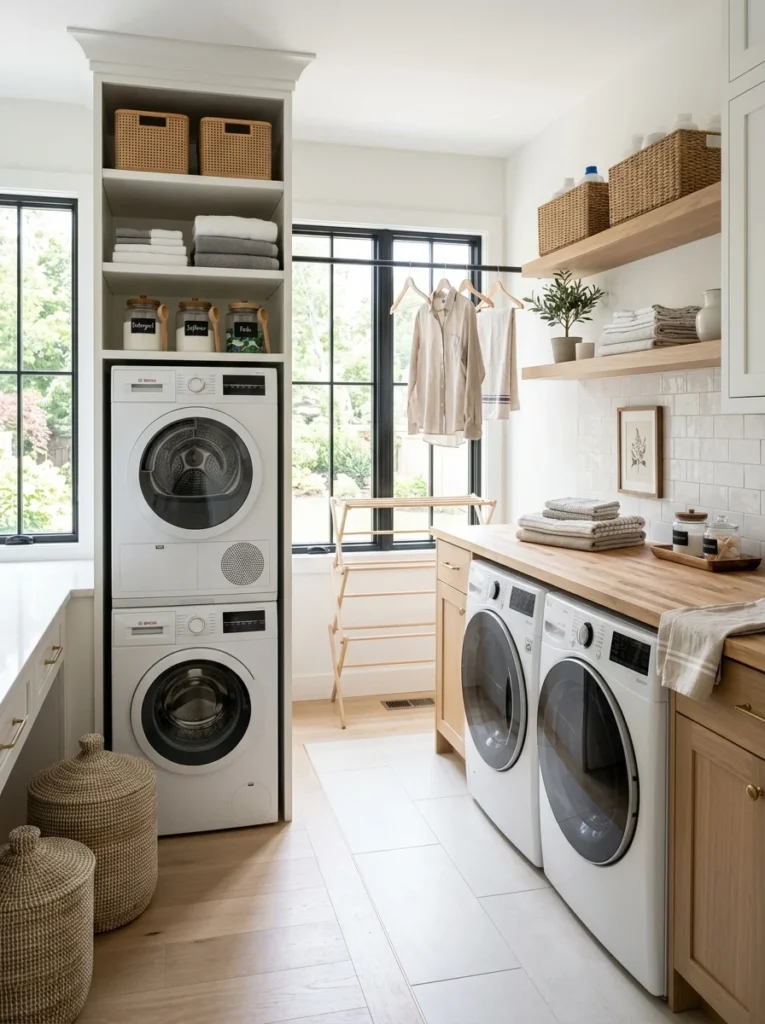
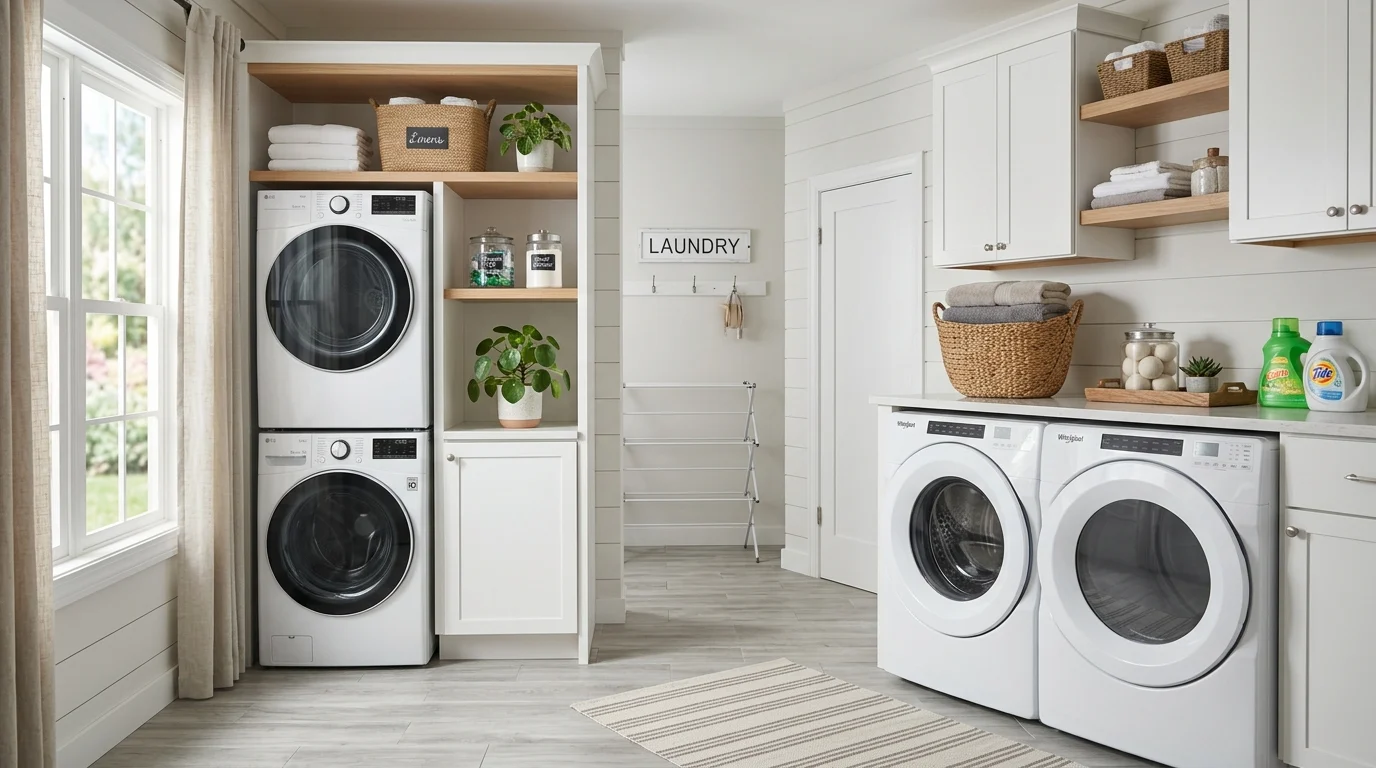
When we moved from an apartment with a side-by-side washer and dryer into a house with a narrow laundry closet that could only fit a stacked setup, I assumed the transition would be purely about space and nothing else. It wasn’t until I actually lived with the stacked version for a while that I noticed the real differences went beyond footprint, loading a top-loading stacked dryer felt noticeably different day to day than reaching across to a side-by-side dryer at counter height, and figuring that out through actual use rather than a showroom comparison taught me more about the decision than any spec sheet had.
If you’re choosing between these two configurations for your own home, the right choice depends on more than just how much floor space you have available. Here’s an honest comparison of both, covering where each genuinely works better.
Understanding the basic configuration difference
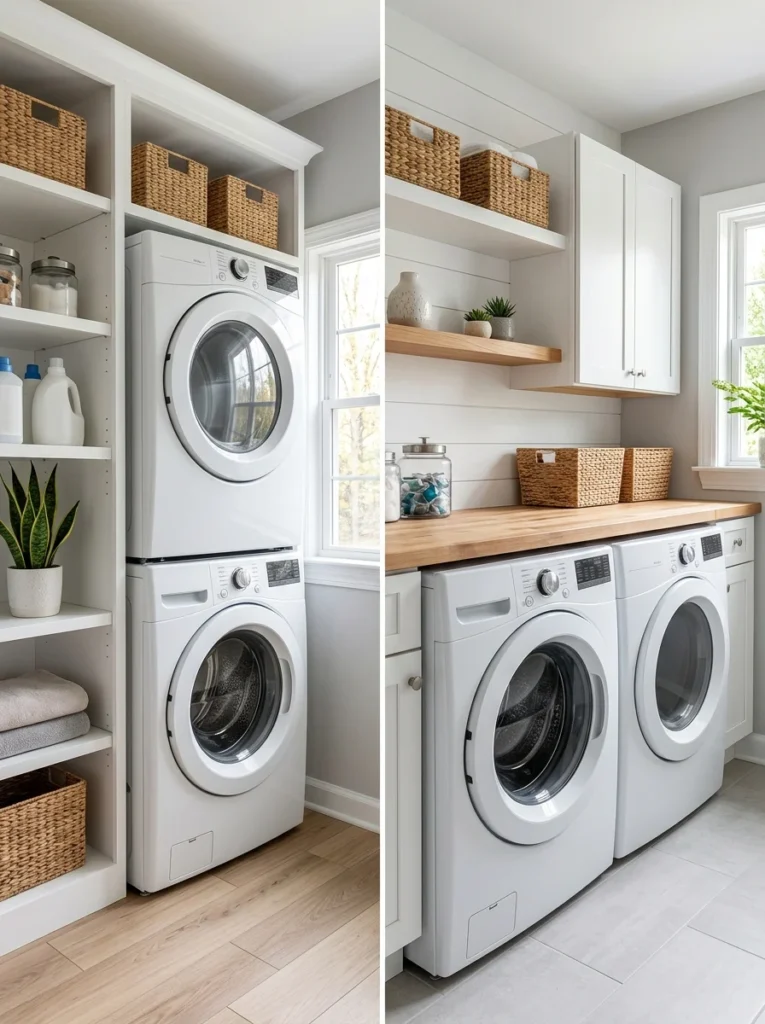
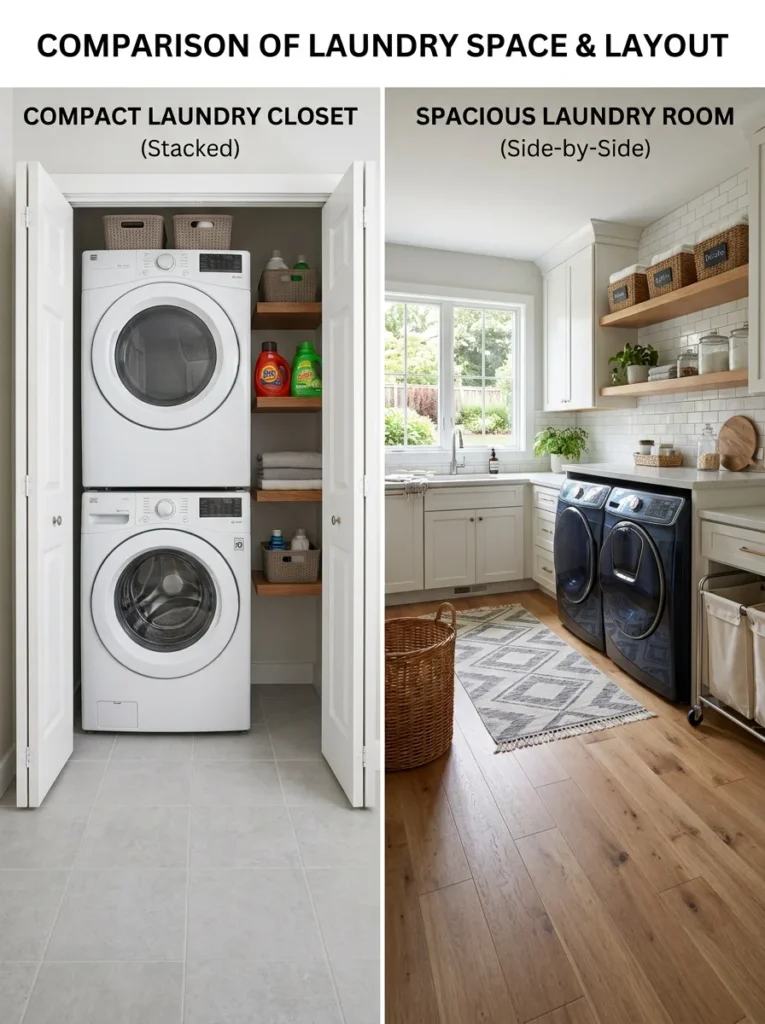
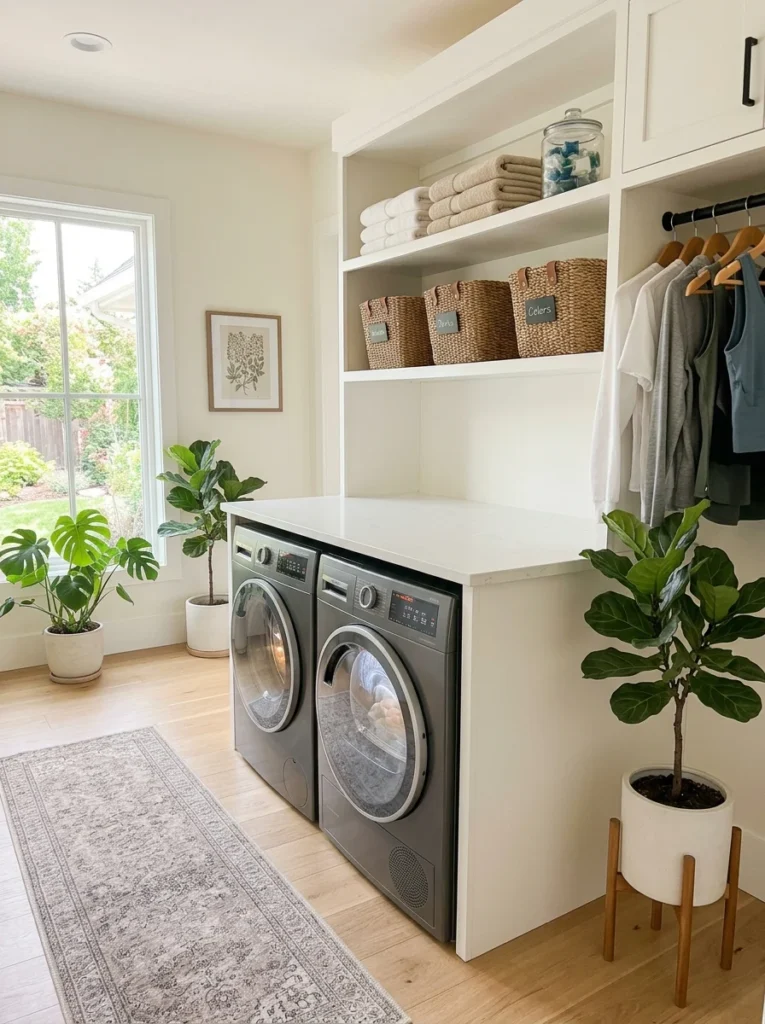
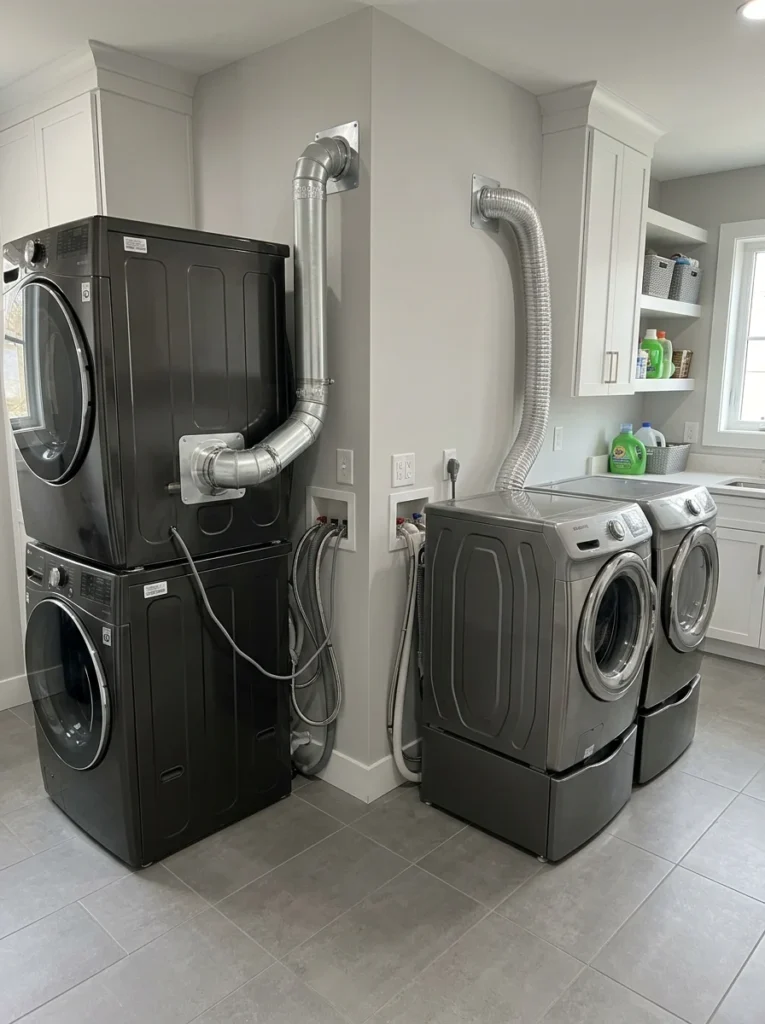
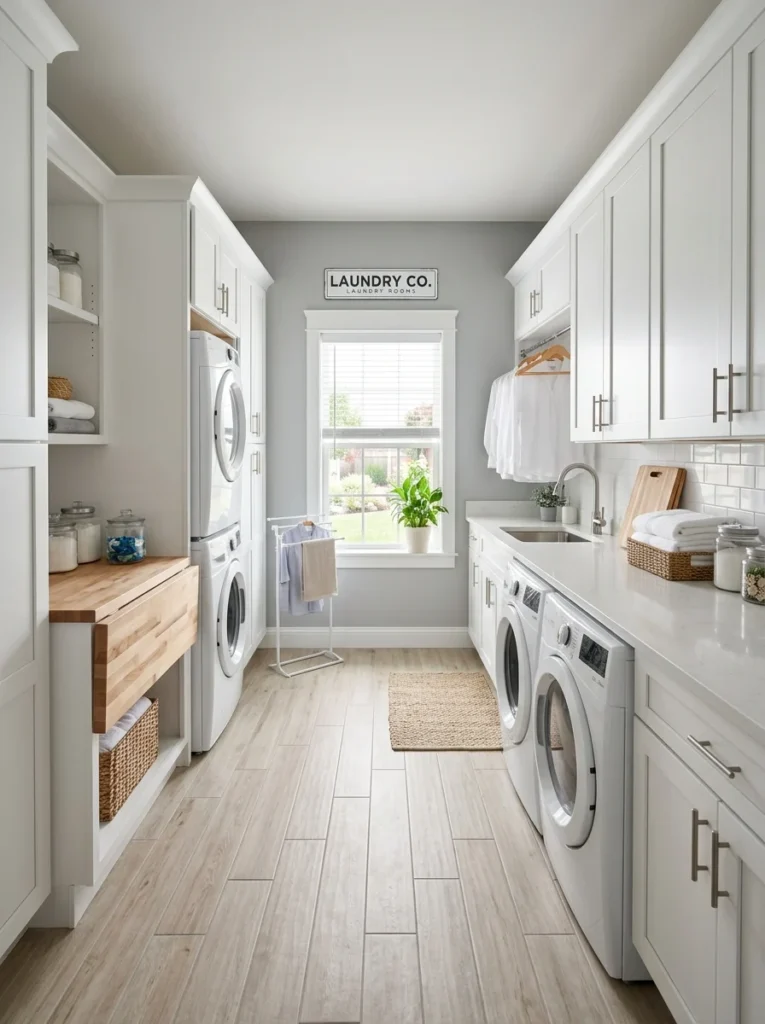
A side-by-side setup places the washer and dryer next to each other on the same level, typically requiring a wider footprint but keeping both machines at a similar, easily accessible height. A stacked setup places the dryer directly on top of the washer, either through machines specifically designed to stack or a dedicated stacking kit for compatible models, significantly reducing the total floor footprint required at the cost of the dryer sitting considerably higher off the ground.
Space requirements: the most obvious tradeoff
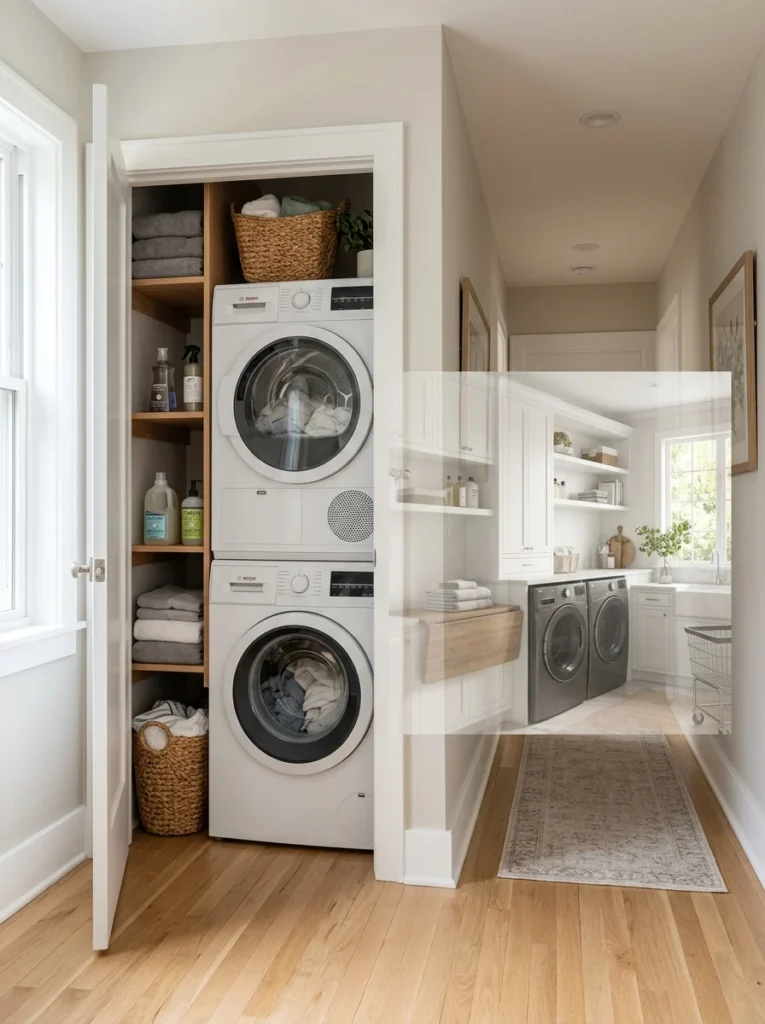
A stacked configuration is the clear winner when floor space is limited, since it requires roughly half the footprint of a side-by-side setup, fitting into a narrow closet, hallway nook, or small dedicated laundry space that a side-by-side pair simply couldn’t accommodate. If you have ample floor space available, this advantage becomes less relevant, and the decision shifts more toward the other factors covered below rather than space alone.
Accessibility and ease of loading
A side-by-side setup keeps both machines at a similar, comfortable height, generally easy to load and unload without significant bending or reaching for most adults. A stacked setup places the dryer considerably higher, which some people find awkward for loading and unloading, particularly when handling heavy, wet laundry being transferred from the washer below, while others adjust to it without much difficulty after a short adjustment period. For anyone with mobility limitations, a shorter stature, or simply a strong preference for consistent, comfortable loading height, this is one of the more genuinely significant differences between the two configurations.
Cost differences to expect
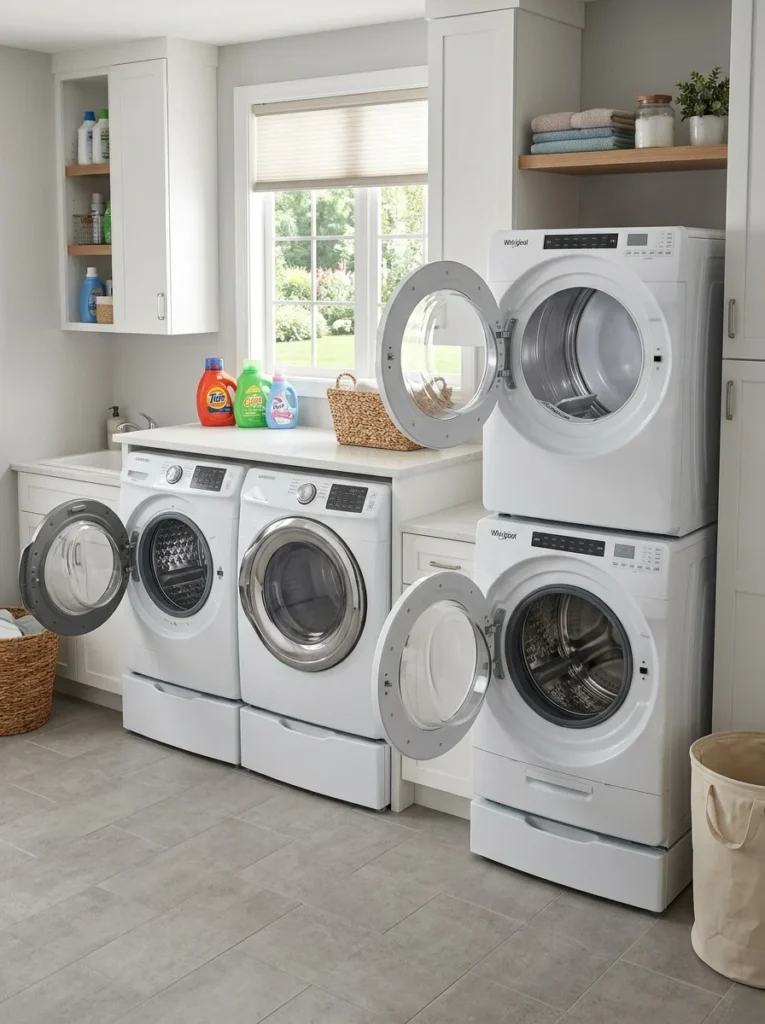
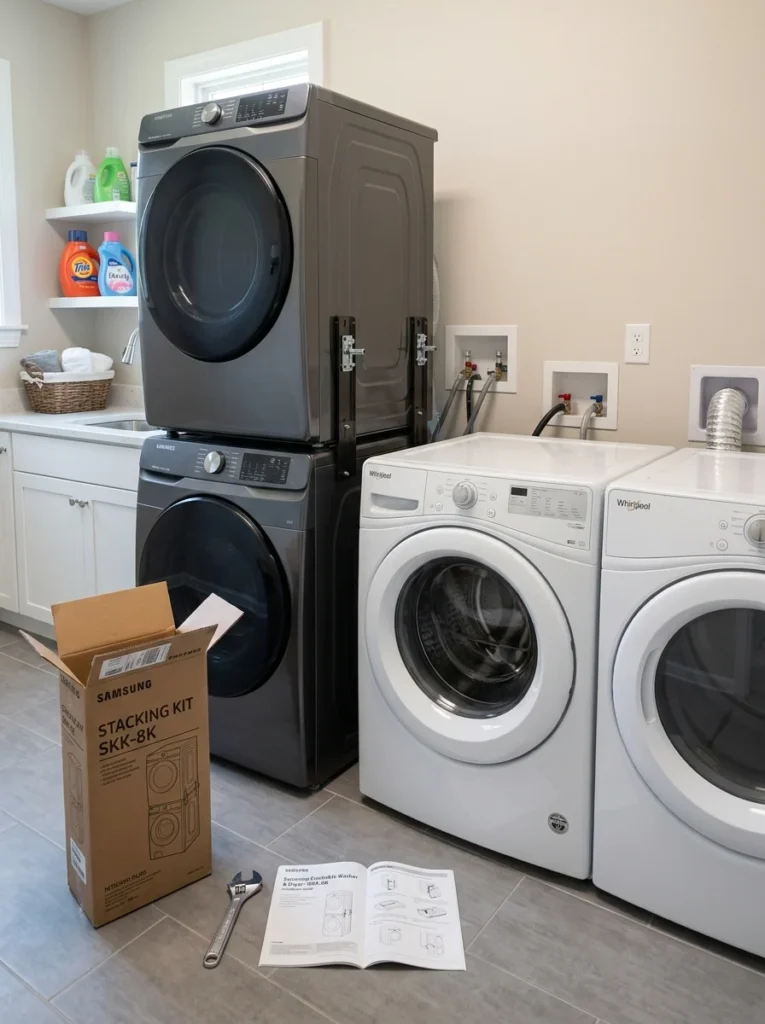
A side-by-side setup using standard washer and dryer models doesn’t require any additional specialized hardware, though it does require more available floor space to accommodate both machines next to each other. A stacked setup often requires a specific stacking kit, an accessory that securely connects the dryer to the washer beneath it, if the two machines aren’t sold together as a purpose-built stacked unit already designed to fit together. This stacking kit adds a modest additional cost, though it’s generally a minor expense relative to the machines themselves.
Compatibility and matching requirements for stacking
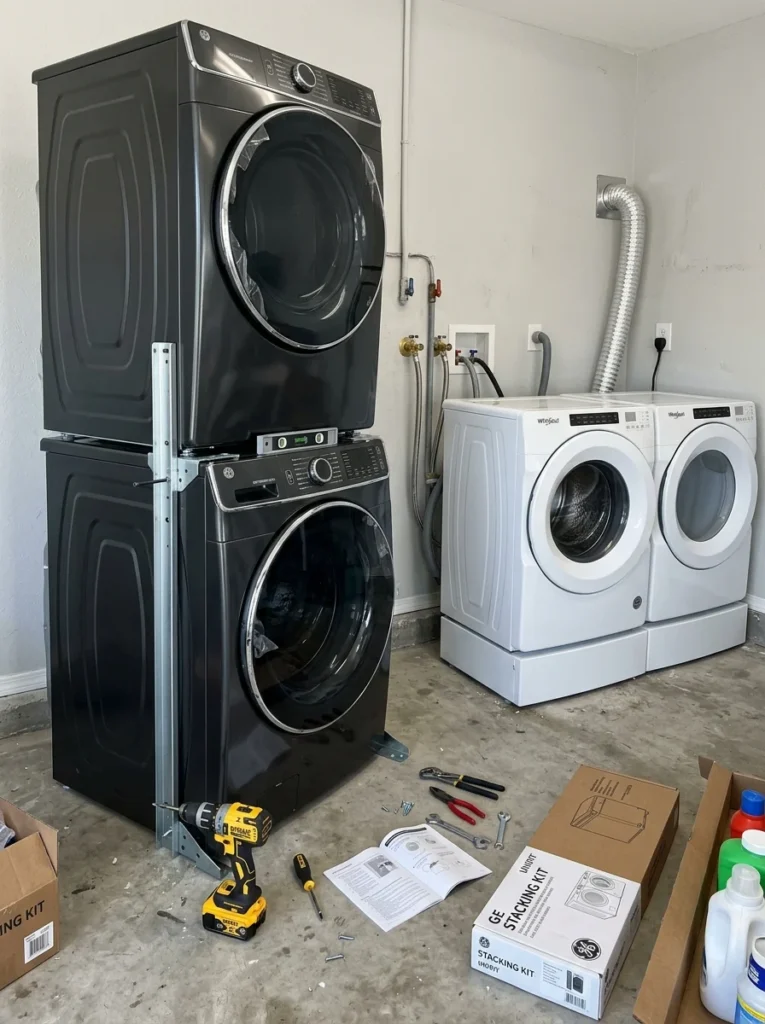
Not every washer and dryer can be safely stacked together; compatibility depends on matching dimensions, weight capacity ratings for the stacking kit, and whether the specific manufacturer explicitly supports stacking that particular model combination. Attempting to stack incompatible machines, or skipping a proper stacking kit in favor of simply placing one machine on top of the other without secure hardware, creates a genuine safety risk, since an improperly secured dryer sitting on top of a washer that vibrates during its spin cycle can potentially shift or even topple. Always confirming manufacturer-approved compatibility before stacking any two specific machines is an essential safety step, not an optional consideration.
Capacity considerations for each configuration
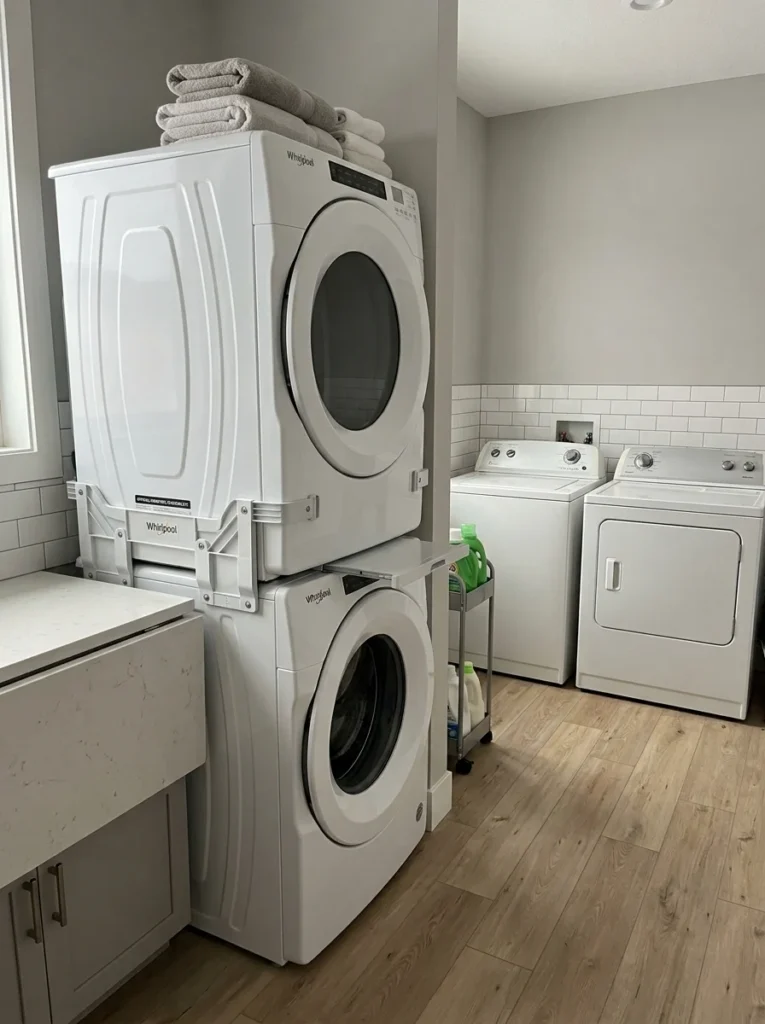
Side-by-side setups generally offer more flexibility in choosing larger-capacity machines, since floor space, rather than height restrictions, is typically the main limiting factor. Stacked setups, particularly those using compact or specifically designed stackable models, sometimes have somewhat smaller capacity options compared to the largest available side-by-side models, though many standard full-size machines can still be stacked with the right kit, so this gap has narrowed considerably as more full-size models have become explicitly stackable in recent years.
Noise and vibration differences
A stacked configuration can sometimes transmit more noticeable vibration between the two machines during operation, particularly if the stacking kit isn’t properly secured or if the washer isn’t correctly leveled beneath the dryer resting on top of it. A side-by-side setup, with each machine independently in contact with the floor, generally distributes vibration somewhat more predictably between the two, though a poorly leveled machine in either configuration can still create noise and vibration issues regardless of whether it’s stacked or positioned beside its counterpart.
Repair and maintenance access
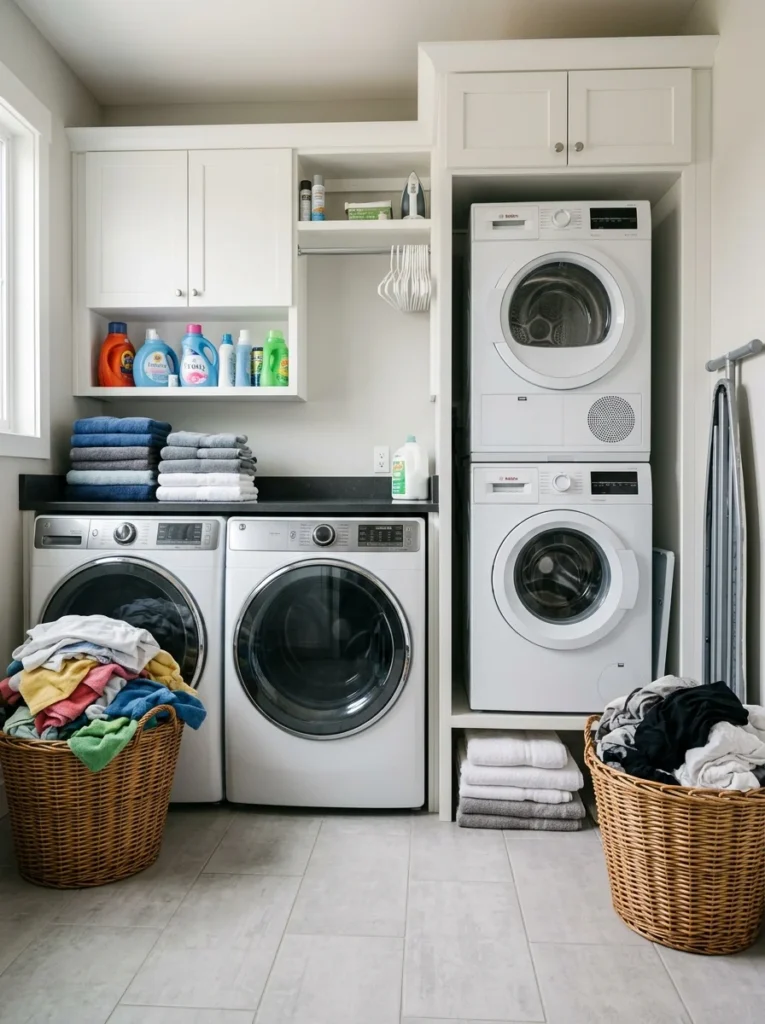
A side-by-side setup generally offers easier access for repairs or maintenance, since each machine sits independently and can be serviced, or even temporarily moved, without needing to first remove or account for a second machine stacked on top. A stacked setup can complicate dryer repairs specifically, since the dryer sitting on top of the washer sometimes needs to be at least partially removed or accessed with the stacking kit’s hardware in mind, which can occasionally add complexity or cost to a repair visit compared to a straightforward side-by-side unit.
Which configuration suits which type of home
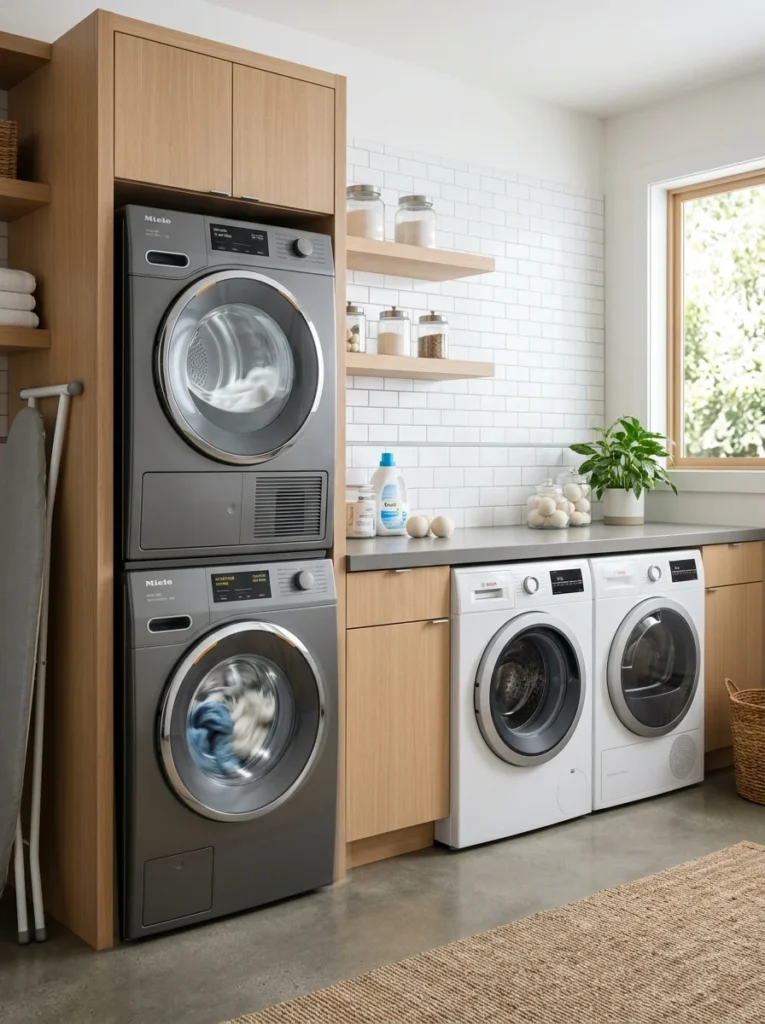
A stacked setup makes the most sense for apartments, condos, smaller homes, or any dedicated laundry closet where floor space is inherently limited and a side-by-side configuration simply wouldn’t physically fit. A side-by-side setup makes more sense in a larger dedicated laundry room where floor space isn’t a significant constraint, particularly for households prioritizing easy, consistent-height loading and unloading, or those who want the flexibility to choose the largest available capacity machines without worrying about stacking compatibility.
Consider a hybrid option: a stackable unit placed side by side
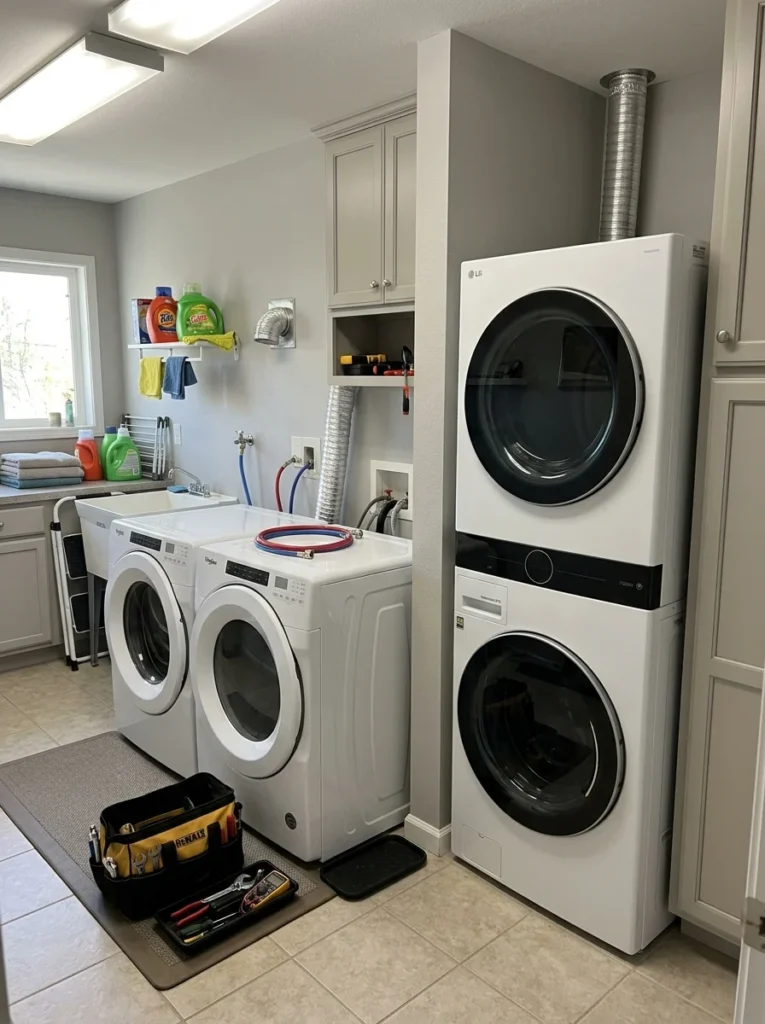
It’s worth noting that many stackable washer and dryer models can also be placed side by side if space allows, offering flexibility to switch configurations later if your living situation changes, moving from a small apartment to a larger home with more laundry room space, for example. This isn’t true of every model, particularly all-in-one combination units, so checking whether a specific stackable model also functions well in a side-by-side configuration is worth confirming if you want this flexibility built into your purchase.
Ventilation and venting considerations for each setup
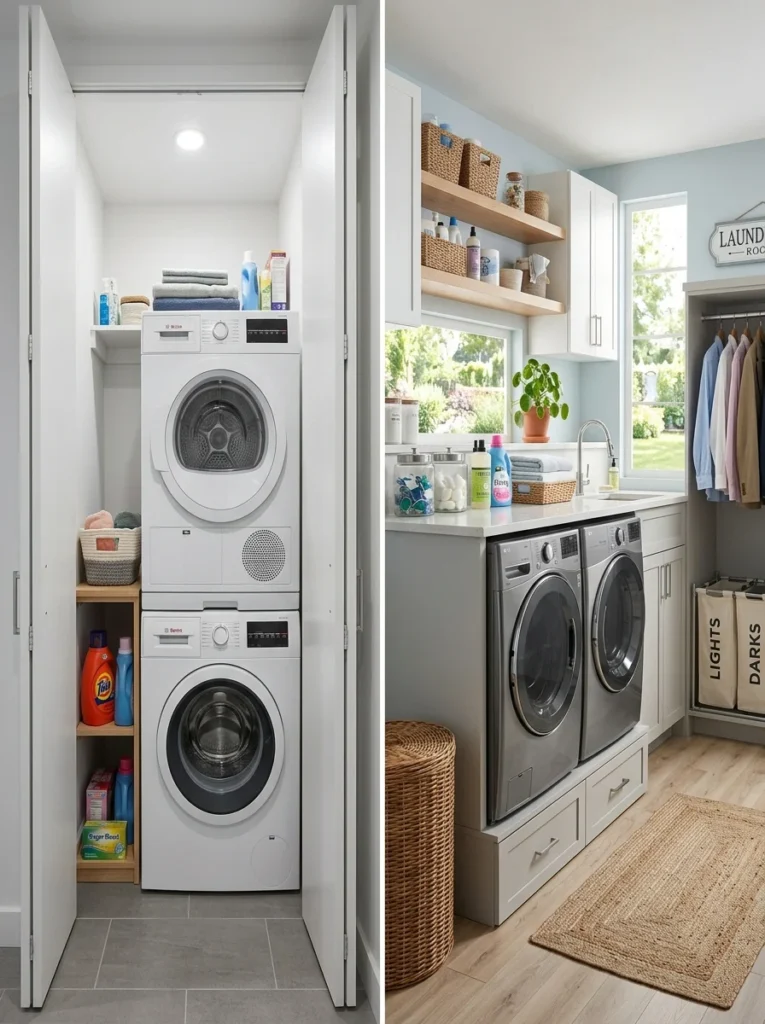
Dryer venting requirements are generally similar for both configurations, requiring a properly connected vent duct leading outside to expel hot, moist air along with lint. However, a stacked configuration can sometimes make the rear venting connection slightly more awkward to access during installation or if the vent hose ever needs to be checked or cleared, simply because the dryer sits at a higher, sometimes less accessible position with less room to maneuver behind it. A side-by-side setup generally offers a bit more working room behind each machine for initial installation and any future vent maintenance, which is worth factoring in if you anticipate needing to service the venting yourself down the line.
Think about long-term flexibility and resale considerations
If you anticipate moving within a few years, considering how a stacked or side-by-side configuration might suit a future home’s laundry space is worth some thought, particularly since, as mentioned, some stackable models offer the flexibility to be placed side by side later if a future space allows for it, while dedicated side-by-side-only machines don’t offer the reverse flexibility of being stacked. From a home resale perspective, a well-organized laundry closet with a properly installed stacked unit is generally viewed just as favorably as a side-by-side setup by most buyers, since the configuration itself matters less to resale value than the space simply being functional, clean, and properly finished.
Installation effort and whether you can DIY it
A side-by-side setup is generally straightforward for most homeowners to install themselves, connecting water lines, power, and the dryer vent without needing to manage the additional step of securing a stacking kit. Stacking a dryer on top of a washer requires more careful handling, since the dryer needs to be safely lifted into position and properly secured with the stacking kit’s hardware, which some homeowners handle themselves with a second person to help lift, while others prefer hiring a professional installer specifically for the stacking step to ensure it’s done safely and correctly, particularly with a heavier, full-size dryer.
Common stackable vs. side-by-side washer and dryer questions
Can any washer and dryer be stacked together?
No, stacking compatibility depends on matching dimensions, weight capacity ratings, and explicit manufacturer support for that specific model combination. Attempting to stack incompatible machines without a proper, approved stacking kit creates a genuine safety risk.
Is a stacked washer and dryer harder to use than a side-by-side setup?
Some people find loading and unloading a stacked dryer, positioned higher off the ground, slightly more awkward than a side-by-side dryer at a more consistent height, though many adjust to it without significant difficulty after a short adjustment period.
Does stacking a washer and dryer save money?
Not necessarily on the machines themselves, though a stacking kit does add a modest additional cost if the machines aren’t sold as a purpose-built stacked unit. The main savings from stacking come from requiring less floor space, which can be valuable in a smaller home rather than a direct cost reduction on the appliances.
Is it harder to repair a stacked washer and dryer?
Repairs, particularly to the dryer, can sometimes be more involved in a stacked configuration, since the dryer may need to be at least partially removed or accessed with the stacking kit’s hardware in mind, compared to a side-by-side setup where each machine can typically be serviced independently and more easily.
Choose based on your space and daily habits
The right choice between a stacked and side-by-side washer and dryer configuration comes down primarily to available floor space, followed by how much loading height and repair accessibility genuinely matter to your household’s daily habits. A stacked setup makes the most sense when floor space is limited and you’re comfortable with the dryer sitting higher, while a side-by-side setup makes more sense when space allows and consistent, easy-access height is a priority.
Our own stacked setup, once an adjustment after years with a side-by-side pair, has become simply how we do laundry now, and the space it freed up in that narrow closet was well worth the small adjustment period getting used to the dryer’s higher loading height. If you’re deciding between the two for your own home, measure your available space honestly first; that single factor will likely narrow the decision down considerably before the other considerations even come into play.